REVIEW · NEW DELHI
5-Days Luxury Golden Triangle Tour to Agra and Jaipur From Delhi
Book on Viator →Operated by Golden India Tour · Bookable on Viator
Five days, three cities, one unforgettable trail. This tour strings together the Golden Triangle at a good pace, with guided stops across Delhi, Agra, and Jaipur, plus hotel stays and a private, air-conditioned driver throughout. What makes it feel “luxury” in real life is the mix of scheduled entrances, on-the-ground local guiding, and the logistics handled for you from one city to the next.
I especially like the Taj Mahal sunrise plan and the way the days are structured so you’re not just driving and hoping. In Delhi, you hit major landmarks like Humayun’s Tomb, Qutub Minar, and Jama Masjid, then you end Old Delhi with a Chandni Chowk cycle rickshaw ride (at your own expense).
One possible drawback: you’ll do a lot of sighting in a short window, and some days are physically long because the route is built around driving (about 3 hours to Agra, and roughly 5 hours back toward Delhi/Gurugram/Noida on Day 5). Add in Taj crowds and the early start, and you’ll want good shoes and a water plan.
In This Review
- Key things worth knowing before you go
- The Delhi–Agra–Jaipur route in 5 days (and why it works)
- Day 1 in Delhi: from Humayun’s Tomb and Qutub Minar to Old Delhi by evening
- Day 2 in Agra: Agra Fort plus Mehtab Bagh for Taj photos
- Day 3: Taj Mahal at sunrise, then Fatehpur Sikri to reach Jaipur
- Day 4 Jaipur power day: Hawa Mahal, City Palace, Jantar Mantar, and two forts
- Day 5 back toward Delhi/Gurugram/Noida: a relaxed ending
- Price and value: what you’re really paying for
- The small practical things that make or break the trip
- Should you book this 5-day Golden Triangle tour?
- FAQ
- What cities are included on the Golden Triangle tour?
- Is pickup from Delhi included?
- Are hotels included in the price?
- What meals are included versus not included?
- Do you visit the Taj Mahal at sunrise?
- Is the Chandni Chowk cycle rickshaw ride included?
- What is the cancellation policy for this tour?
Key things worth knowing before you go
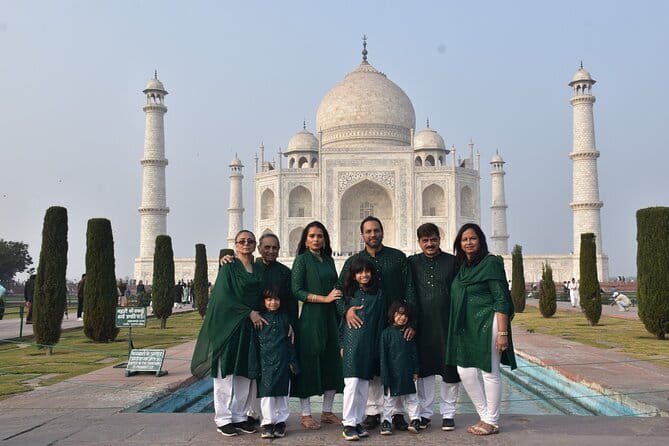
- Taj Mahal at sunrise time with admission included, which helps you dodge the worst heat and photo-frenzy
- A private air-conditioned vehicle for transfers, so you’re not stuck with random ride options
- Guided monument visits across Mughal-era Delhi, Agra Fort, and Jaipur’s royal sights with local support
- Hotel stays for 4 nights are available if you choose the option that includes hotels (twin sharing)
- Old Delhi street time includes Chandni Chowk, with an optional cycle rickshaw segment at your own cost
The Delhi–Agra–Jaipur route in 5 days (and why it works)
If you want the classic Golden Triangle without turning your trip into a self-directed scavenger hunt, this itinerary is built for you. You’ll move through Delhi first with a full day of monuments, then swing to Agra for the Taj and Agra Fort, then finish in Jaipur for palaces, observatories, and forts.
The pace is “active but organized.” You get scheduled stops with entry tickets listed for many sights, and you also get practical help along the way—especially in Agra, where you arrive, check in, and then tour in the afternoon and evening.
A big value here is transportation. A private air-conditioned vehicle runs you between sights and between cities, which matters a lot in India where traffic can mess with timing. You’ll still need a flexible mindset, but the tour setup keeps the plan from falling apart.
You can also read our reviews of more tours and experiences in New Delhi



Day 1 in Delhi: from Humayun’s Tomb and Qutub Minar to Old Delhi by evening
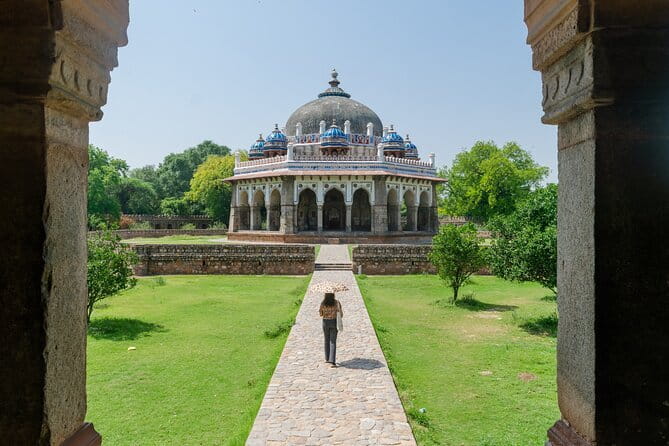
Day 1 is essentially your Delhi “greatest hits,” with a nice split between grand Mughal monuments and the calmer museum-and-avenues feel of central New Delhi before the Old Delhi intensity.
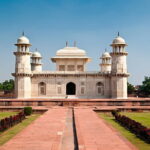
Humayun’s Tomb (about 2 hours, admission included) is a strong start. It’s a Mughal-era burial complex built in 1570, linked to the second Mughal emperor, Humayun, and commissioned by his wife. The cool part isn’t just the monument—it’s that you’re seeing early Mughal architecture that helped shape what later became the Taj Mahal style.
Next, Qutub Minar (about 1 hour, admission included) brings you a different architectural story. It’s a UNESCO World Heritage site and a major Indo-Islamic monument, built in the 12th century. This stop is quick, but it’s one of those “you get why it’s famous” moments.
Then comes a slower reset with Lotus Temple (about 45 minutes, admission included). This is a Bahá’í House of Worship, designed by Iranian architect Fariborz Sahba and opened to the public in December 1986. If you’ve been in India’s street energy all day, this is a breather.
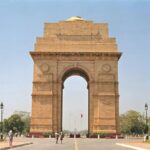
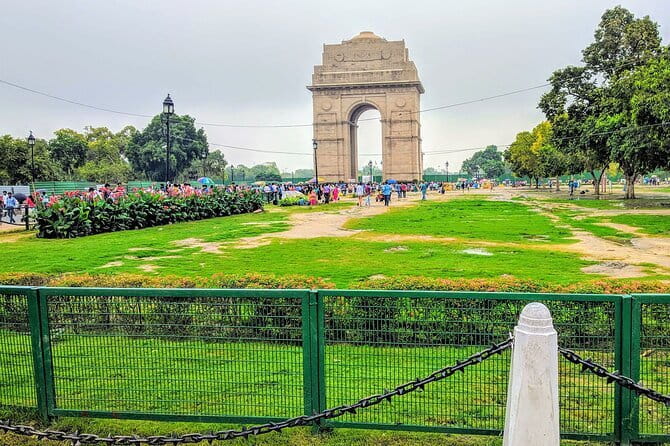
From there, you move into the government-area highlights: India Gate (free) and Parliament House (admission included), plus Rashtrapati Bhavan (free). These are shorter stops, but they help you understand how the capital is laid out—what’s ceremonial, what’s functional, and where modern India sits on top of earlier layers.
In the afternoon, Old Delhi takes over with Jama Masjid (about 2 hours, admission included). This is the capital’s largest mosque and a peaceful pause in a noisy district. You’ll appreciate the contrast after the central sights.
Finally, Chandni Chowk and Raj Ghat close the day. Chandni Chowk is your street-level immersion, and the highlight is the cycle rickshaw ride (45 minutes, at your own expense). If you’re short on time in Delhi, this is a practical way to experience the maze without trying to navigate it by yourself.
Raj Ghat (about 30 minutes, admission included) gives the day a reflective ending. It’s the simple memorial marking where Mahatma Gandhi was cremated after his assassination in 1948, and the surroundings feel well maintained and calm.
Day 2 in Agra: Agra Fort plus Mehtab Bagh for Taj photos
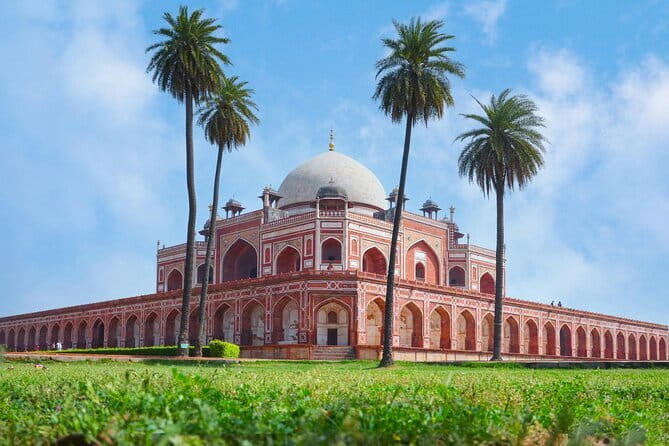
You’ll leave Delhi after breakfast and travel to Agra by expressway (about 3 hours driving). The tour plan gives you time to arrive, meet the guide, and get settled at your hotel, which is important because Agra is where you start shifting gears from sightseeing to the Taj-focused segment.
In the afternoon, you visit Agra Fort (about 1 hour, admission included). This UNESCO World Heritage site sits on the Yamuna River and served as the Mughal emperors’ main residence. It’s one of the best “behind-the-scenes” kinds of monuments: less postcard, more power and history you can walk through.
Then the evening plan turns into a photo strategy. Mehtab Bagh (about 45 minutes, admission included) is your Taj photo stop from across the river. It’s known as the “garden of moonlit nights,” and it’s believed to have been designed by Shah Jahan to view the Taj away from the busiest crowd. Even if you don’t consider yourself a photographer, this is a smart timing move.
Why it’s good for your trip: it breaks up the day so Agra doesn’t feel like only one building. You’ll leave with more than one “wow” moment, and the Taj feels more dramatic once you’ve seen the fort nearby.
Day 3: Taj Mahal at sunrise, then Fatehpur Sikri to reach Jaipur
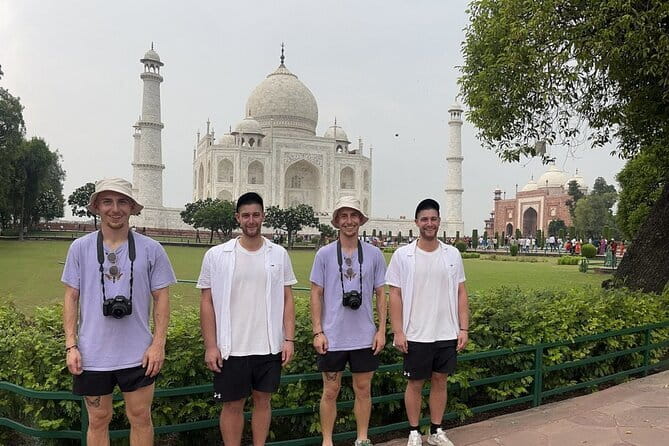
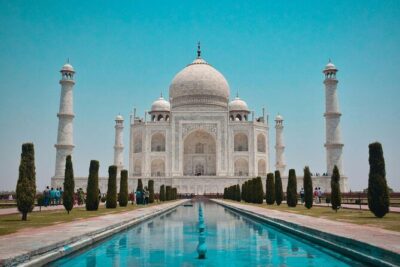
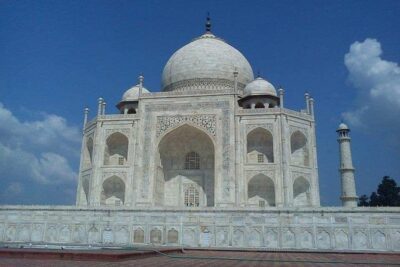
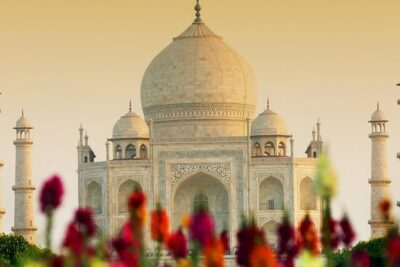
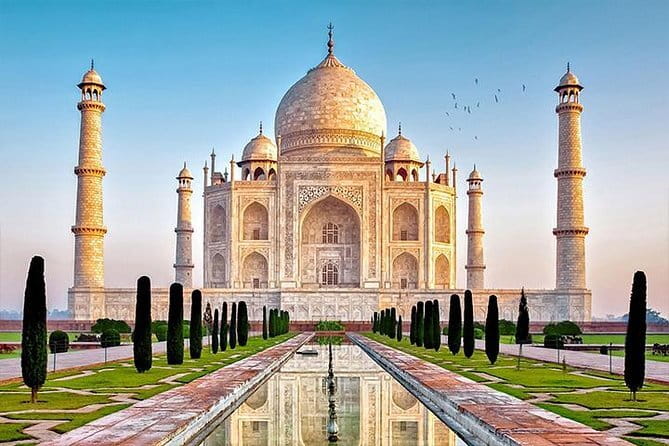
Day 3 is the big one. You go to the Taj Mahal at sunrise (about 2 hours, admission included). Sunrise matters because the light changes fast, crowds are usually easier to handle early, and the monument looks different than it does later in the day. The story is also clear: it was built by Shah Jahan in memory of Mumtaz Mahal, who died giving birth to their child.
A quick reality check: the Taj is popular for a reason, but you’ll still want to plan for people. The best way to enjoy it is to slow down and pick a few angles rather than trying to see everything in minutes.
After the Taj, you continue to Fatehpur Sikri (about 1 hour, admission listed as free). This is an Akbar-era Mughal capital complex, used as the empire’s capital for more than 10 years. You’ll also see the Jama Masjid here, one of the largest mosques in the region. In a short time, Fatehpur Sikri helps you zoom out from the Taj and understand the wider Mughal world.
Then you drive on to Jaipur—the “Pink City”—and check in at your hotel upon arrival. The itinerary doesn’t list a long sightseeing block in Jaipur on this day, which is good. After sunrise and multiple stops, you’ll feel thankful for the breathing room.
Day 4 Jaipur power day: Hawa Mahal, City Palace, Jantar Mantar, and two forts
Jaipur gets a full day, and it’s packed. The tour hits both the postcard sights and the places that make the city feel lived-in.
Start with Hawa Mahal (photo stop, about 30 minutes, admission included). The Palace of Wind is Jaipur’s distinctive pink landmark, built in the style that lets breezes flow through its façade. It’s short, but it’s a classic introduction.
Next comes City Palace (about 1 hour, admission included). This is the royal family’s residence area, a complex of courtyards, gardens, and buildings from different eras, with structures dating into the early 20th century. The value here is variety: you get to see how Jaipur’s royal identity evolved over time rather than only one “period.”
Then you move to science-meets-architecture with Jantar Mantar (about 1 hour, admission included). This UNESCO World Heritage site uses curved geometric structures designed to measure movement of stars and planets. If you like “why does this shape matter,” this is a fun stop because it feels practical, not just decorative.
For views and fort atmosphere, Jaipur shifts to the Aravalli Hills with Nahargarh Fort (about 1 hour, admission included) and Jaigarh Fort (about 45 minutes, admission included). Nahargarh gives you big city views and a sense of how the city sits below the hills. Jaigarh is described as the Fort of Victory and is known for robust architecture; it also houses the world’s largest cannon (as listed in the tour description).
Then the day picks up with a temple and a water structure:
- Birla Mandir Temple (about 30 minutes, admission included), a modern marble structure dedicated to Lord Vishnu and Goddess Laxmi, on the backdrop of Moti Dungri Hill
- Panna Meena ka Kund (about 30 minutes, admission included), a stepwell with symmetrical geometric design used for water storage and community life
The best way to enjoy Day 4 is to remember it’s not about “seeing everything perfectly.” It’s about getting the feel of Jaipur from many angles: royal spaces, astronomy, hill forts, and water engineering.


Day 5 back toward Delhi/Gurugram/Noida: a relaxed ending
Day 5 is designed for an easier finish. You start with a relaxed morning, then in the afternoon you drive back toward Delhi, Gurugram, or Noida, with the trip taking around 5 hours to your airport/hotel or other requested location.
This is a smart setup if you’re traveling on the same ticket toward an onward flight or another part of India. Instead of forcing one last monument marathon, you’re given a “recovery window,” even if you’re still traveling.
Price and value: what you’re really paying for

The headline price shown is $8.70 per person, but that number is hard to judge without seeing exactly which package option you choose. The tour description also says hotel accommodation is provided for 4 nights only if you book with an option that includes hotels, plus daily breakfast in that same case.
Here’s how I’d think about value when you book:
- If the price you choose includes hotels and breakfasts, you’re mainly paying for transport, private guiding, and entrance handling across three cities.
- If it doesn’t include hotels, you’re paying mostly for guiding and vehicle time, and you’ll need to budget lodging yourself.
Either way, what you do get clearly on the included side is a private air-conditioned vehicle and professional private local tour guides for sightseeing and transfers, plus bottled water. For many people, that’s the difference between an OK trip and a smooth one.
Also check the meal details carefully. The “Included” list mentions lunch, while the “Not Included” section lists lunches and dinners as not included. That mismatch is worth resolving when you confirm your option, so you don’t end up surprised mid-trip.
The small practical things that make or break the trip
This tour hits big sights, so your main job is being ready for India-style logistics. A few priorities:
- Start early when asked. Sunrise at the Taj is scheduled, and it’s a cornerstone of the itinerary. Show up ready, not rushed.
- Bring water and good shoes. The tour includes bottled water, but monuments and walking on uneven ground still need comfortable footwear. One piece of feedback also stressed the same idea.
- Plan for crowds at top monuments. The Taj Mahal in particular is going to have people. The sunrise timing helps, but you should still expect it.
- Chandni Chowk ride is at your own expense. The rickshaw segment is framed as an extra, so keep a little cash aside if you want to do it.
- Expect long driving days. Delhi to Agra is listed as about 3 hours, and Day 5 is listed as about 5 hours back toward your drop-off area.
On the guiding side, the feedback you have here highlights friendly, calm support. Names that show up include Mr. Ejaz (praised for being a “gem” of the team) and Ali (praised for kindness and professional support), and one driver name, Brij, was called exceptional—skilful and calm. Even if your guide isn’t those exact people, the pattern tells you this company tends to place emphasis on driver comfort and guide friendliness.
Should you book this 5-day Golden Triangle tour?
Book it if you want a structured Golden Triangle trip with private guiding, a private vehicle, and the big monuments placed in a sensible order. If you’re the type who hates figuring out transport between cities and wants your days mapped out, this does that well.
Don’t book it if you want lots of free time to wander slowly in every city, because the itinerary is full and you’ll move from stop to stop. Also, if you’re very price-sensitive, double-check which option you’re selecting—especially whether the quoted cost includes the 4-night hotel and daily breakfast.
If you decide to go, do one thing that improves the whole trip: confirm your meal package (since lunch is listed both ways) and pack for early starts at the Taj (shoes, water, and a calm morning mindset). This is a classic route, but your enjoyment will come down to readiness.
FAQ
What cities are included on the Golden Triangle tour?
The tour covers New Delhi, Agra, and Jaipur over about 5 days, with sightseeing in each city.
Is pickup from Delhi included?
Pickup is offered, and the tour operates with transfers and sightseeing using a private air-conditioned vehicle.
Are hotels included in the price?
Hotel accommodation for 4 nights on twin sharing is included only if you book the option that includes hotels. Daily breakfast is also included in that case.
What meals are included versus not included?
Lunch is listed in the included section, but the not-included section says lunches and dinners are not included. You should confirm exactly what your chosen package includes for meals when booking.
Do you visit the Taj Mahal at sunrise?
Yes. The itinerary schedules a sunrise visit to the Taj Mahal (admission ticket included) on Day 3.
Is the Chandni Chowk cycle rickshaw ride included?
The cycle rickshaw ride through Chandni Chowk is highlighted as a feature, but it’s noted as at your own expense.
What is the cancellation policy for this tour?
You can cancel for free up to 24 hours in advance for a full refund. If you cancel less than 24 hours before the start time, the amount paid is not refunded.