REVIEW · NEW DELHI
7 Day Golden Triangle Tour with Ranthambore Tiger Tour
Book on Viator →Operated by Tour Guide Delhi · Bookable on Viator
Tigers and marble monuments in one week can work. This tour strings together Delhi, Agra, Jaipur, and then gives you two real chances in Ranthambore National Park, not just a drive-by. You also get a sunrise Taj Mahal visit, which is the kind of timing that turns photos into memories.
What I like most is the way the days balance structure with breathing room: guided city blocks in the morning, then quieter breaks, hotel time, and planned safari windows. I also appreciate that the tour team stays on top of communication—people in the program have called out smooth planning and even a vehicle upgrade, including when the car was changed from a standard saloon to a roomier SUV, with the help of tour manager Ms. Sonia and chauffeur Mr. Raju. The one thing you’ll want to plan for is extra spending on monument entrance fees, since those are not included in the base price.
In This Review
- Key Things to Know Before You Go
- Golden Triangle Meets Ranthambore: A Week With Real Contrast
- Day 1 in Delhi: Jama Masjid, Chandni Chowk Rickshaws, and Qutub Minar
- Day 2 to Agra: Fort Time and a Mehtab Bagh Taj Moment
- Sunrise Taj Mahal and Fatehpur Sikri to Ranthambore
- Ranthambore Safari Strategy: Two Drives That Maximize Your Chances
- Day 5 Jaipur Arrival: Choose Galta Ji or Birla Mandir
- Jaipur Day 6: Fort Complex, City Palace, Jantar Mantar, and Hawa Mahal Views
- Day 7: Easy Departures from Jaipur or Delhi
- Price and Value: What $599 Covers and What You’ll Still Pay
- Who This Tour Fits Best (and Who Might Want Another Style)
- Should You Book This Golden Triangle + Ranthambore Tour?
- FAQ
- Where does the 7-day tour start and end?
- How long is the tour?
- Is pickup available?
- What’s included for hotels and meals?
- Are monument entrance fees included in the price?
- How many Ranthambore safaris are included, and how do you travel on them?
- What is the cancellation policy?
Key Things to Know Before You Go
- Sunrise Taj Mahal timing, with a guided Taj visit window that’s meant to catch the glow.
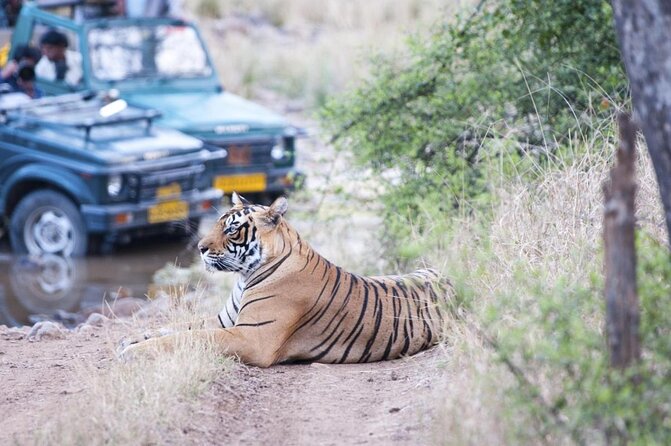
- Two Ranthambore safari drives in a shared jeep/canter—early morning and late afternoon for better odds.
- Old Delhi highlights built around Jama Masjid, Chandni Chowk, and a rickshaw ride through the lanes.
- Golden Triangle staples plus a curveball: Fatehpur Sikri on the way from Agra to Ranthambore.
- Good hotel tiers (3, 4, or 5 star options) plus AC transport and bottled water in the car.
Golden Triangle Meets Ranthambore: A Week With Real Contrast

If you like travel days that feel like a story, this one delivers. You start with Delhi’s layered heritage—mosques, memorials, and major UNESCO sites—then trade in royal Mughal grandeur in Agra, and finish in Jaipur’s palace-and-temple world before shifting gears to wildlife country.
What makes it feel worthwhile is the pacing. You’re not just stacking sights back-to-back; you’re also getting long enough windows to experience key places properly—especially the Taj. Then Ranthambore adds a different kind of travel thrill: waiting, scanning, and learning how wildlife drives your day more than a clock.
You can also read our reviews of more tours and experiences in New Delhi


Day 1 in Delhi: Jama Masjid, Chandni Chowk Rickshaws, and Qutub Minar
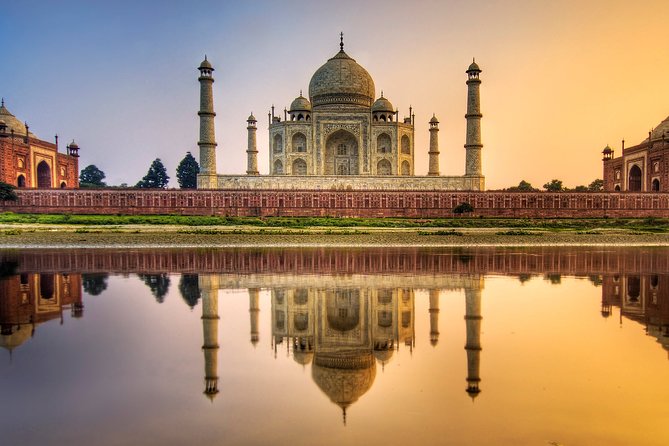
Delhi in this format is all about contrasts. You’ll begin with hotel or airport pickup in Delhi, Noida, or Gurgaon, then step into Old Delhi first—where the energy is immediate and you can feel history in the street layout.
Jama Masjid is the first big anchor. It’s described as India’s largest mosque (built by Shah Jahan in 1656), and it’s a huge space that helps you understand why crowds were always part of this city. Plan your expectations: you’re there to see scale and architecture, not to race through.
Then comes Chandni Chowk, and the rickshaw ride is a smart way to experience the market lanes without getting stuck negotiating every turn on foot. After that, you do a photo-based stop at the Red Fort from the outside. Since a large portion is occupied by the Indian Army, you shouldn’t expect full access—this is more about getting the landmark in your photos and moving efficiently to the next stop.
The rest of Day 1 slows things down with places that hit emotionally. Raj Ghat marks Mahatma Gandhi’s cremation site, and the simple black marble platform with an eternal flame creates a quiet pause in the middle of busy sightseeing. You also stop by India Gate (a war memorial) and take photo stops for Rashtrapati Bhavan and the Parliament House.
Finally, there’s Qutub Minar, a UNESCO World Heritage Site. It’s presented as the tallest brick minaret in the world (73 meters) with Indo-Islamic style—so even if your time is shorter, the visual impact usually lands fast. If you’re picky about photos, this is one of those stops where you’ll want to take a few extra minutes.
Day 2 to Agra: Fort Time and a Mehtab Bagh Taj Moment

After breakfast you’re driven to Agra, and the day is designed to get you set up before sunrise takes over your schedule. Agra Fort is your first major hit once you settle in. It’s a UNESCO World Heritage Site and was the Mughal emperors’ residence area under Akbar (built in 1565, later modified by Shah Jahan). Even if entrance fees are extra, the fort’s presence gives you context for why the Taj Mahal is so strategically and emotionally important.
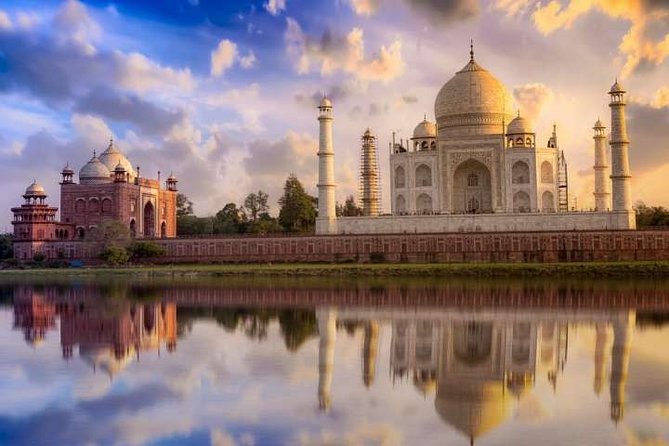
Later, the tour works in Mehtab Bagh, also known as the Moonlight Garden, for a sunset view of the Taj Mahal across the Yamuna River. That time-of-day choice matters. The marble changes color as the light fades, and you’re not just seeing the Taj—you’re seeing it from a perspective that feels calmer and less crowded than the main viewpoint approach.
This is a day where you’ll benefit from keeping your energy steady. By the time you return to your hotel in Agra, you’ll likely be ready for a proper rest—because the next morning is early on purpose.
Sunrise Taj Mahal and Fatehpur Sikri to Ranthambore
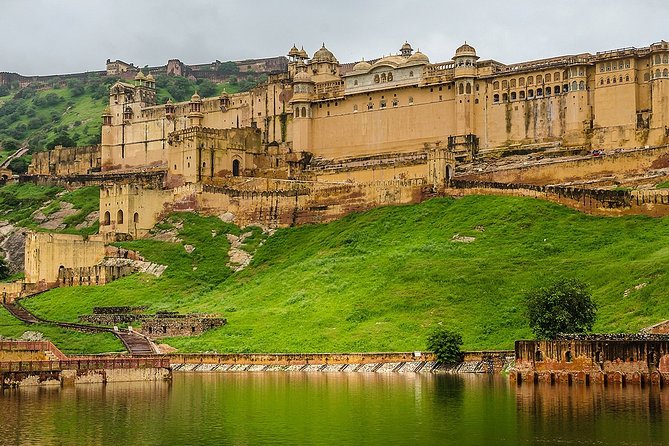
Day 3 is built around the big one: sunrise Taj Mahal. You’ll meet a private guide in the hotel lobby and head out early. The point of sunrise here isn’t just the famous look—it’s the chance to watch the ivory-white marble shift into golden hues as the light hits it. That’s the kind of timing that makes the Taj feel less like a postcard and more like a live event.
After you’ve explored, you’ll go back for breakfast and refresh, then transition toward wildlife country. Before Ranthambore, the tour adds Fatehpur Sikri, the abandoned Mughal capital near Agra (about 35 km west). It’s UNESCO-listed and built by Akbar in 1571. The key idea is that this place shows what imperial ambition looked like when it was happening—and then also what it looks like when the city is left behind.
From there you continue to Sawai Madhopur, arriving for your overnight stay. Even if you don’t see wildlife on the road, the environment changes. The pace of the week starts feeling more about anticipation than checking boxes.
Ranthambore Safari Strategy: Two Drives That Maximize Your Chances
This is the heart of the tour. You’ll have an early pickup (around 6:00 AM) for the first safari drive in Ranthambore National Park. The safari window is designed for around 2–3 hours, which matters because tiger spotting isn’t a quick swipe. It’s about positioning, patience, and listening for what the guides notice.
The tour specifically frames Ranthambore as one of India’s famous tiger reserves, and the wildlife you may spot includes Bengal tigers along with other animals like leopards, deer, and exotic birds (depending on conditions). You should treat sightings as an outcome you try for, not a guarantee. With that said, the structure here improves your odds because you’re not relying on a single drive.
After the morning safari, you return to the hotel for breakfast and lunch time, plus a midday break. That’s not filler—it’s smart scheduling. Waiting in the heat all day isn’t fun, and wildlife days work better when you can reset.
Then you do the second safari at about 2:30 PM for another 3–4 hours. This timing helps because animals can become more active later in the day, and you’re back in the park when other patterns of movement may show up. Two drives also give you a better chance of learning what you’re actually seeing. By the second outing, you tend to recognize tracks, understand where the best sightlines usually are, and communicate more effectively with the guide.
You sleep in Sawai Madhopur after the evening drive, so your safari day doesn’t end with a long transfer. That’s a small detail that makes a real difference.





Day 5 Jaipur Arrival: Choose Galta Ji or Birla Mandir
On Day 5 you drive from Ranthambore back into Rajasthan’s urban energy with a trip to Jaipur after breakfast. The travel time is planned as a few hours, giving you a shift from park-life back to city-life—different air, different pace.
Once you check into your Jaipur hotel, you get a lighter evening option: Galta Ji Monkey Temple or Birla Mandir. The choice depends on what you’re in the mood for.
- Galta Ji is known for seven sacred water tanks (kunds) and is associated with rhesus macaques and langur monkeys. If you like devotional sites with a lively feel, this one usually satisfies.
- Birla Mandir is a modern white-marble Hindu temple dedicated to Vishnu and Lakshmi. It’s described as featuring intricate carvings and symbolic sculpture work, so it tends to appeal if you like clean architecture and detail.
Either way, this evening stop is a chance to ease in. It isn’t a full-day palace marathon, which helps you stay fresh for tomorrow’s bigger Jaipur sights.
Jaipur Day 6: Fort Complex, City Palace, Jantar Mantar, and Hawa Mahal Views
Day 6 is where Jaipur’s major highlights stack up, but the tour keeps them mostly organized into blocks so you don’t bounce around endlessly.
You start with Jaipur Fort, described as a UNESCO World Heritage Site and built with pale yellow and pink sandstone and white marble. It’s tied to Raja Man Singh I and later expansions under Jai Singh I. Even if you’re only there for a set visit window, the fort complex gives you the “why” behind Jaipur’s royal reputation.
Next is a quick photo stop at Jal Mahal (Water Palace), described as sitting in Man Sagar Lake. The description about multiple floors submerged when the lake is full is exactly the kind of viewpoint detail that helps you understand why this spot is so often photographed.
Then you move to City Palace, the royal residence built by Maharaja Sawai Jai Singh II. The listing emphasizes a fusion of Rajput, Mughal, and European influences, plus grand courtyards. For many people, this is where Jaipur shifts from looking like scenery into feeling like a living museum of power and design.
After that comes Jantar Mantar, the astronomical observatory UNESCO site. It has 19 instruments, including the world’s largest stone sundial (as described). If you enjoy history that’s tied to science and engineering, this stop is worth your attention. You’re not just seeing artifacts—you’re seeing how people measured the sky.
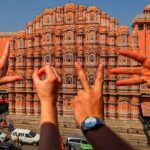
Then you get another photo stop: Hawa Mahal (Palace of Winds). It’s described as a five-story facade made of red and pink sandstone, designed so royal women could observe street life without being seen. Even from the outside, it helps you understand Jaipur’s social design choices, not only its architectural style.
You end with time for local markets—handicrafts, jewelry, textiles, and Rajasthan souvenirs are specifically mentioned. This is the right place to do shopping if you want something you can’t easily find at home.
Day 7: Easy Departures from Jaipur or Delhi
Day 7 gives you flexibility. After breakfast, you can either depart from Jaipur International Airport or head back toward Delhi for an airport drop-off in time for your onward travel.
This is the kind of final-day choice that can save you stress. If your flight home is easier from Jaipur, you don’t have to sit through a long return drive just to close out the tour. If your schedule is tied to Delhi, the tour handles the driver drop at your preferred Delhi location or airport.
Price and Value: What $599 Covers and What You’ll Still Pay
At $599 per person, the value depends on how you price your own time and how much you want to leave to logistics. For this week, you’re paying for AC transport, professional city tour guides, bottled water in the car, and hotel stays in a 3, 4, or 5 star range (based on your option). You’re also paying for two Ranthambore safaris in shared jeep/canter format, plus breakfasts and a guided Taj sunrise visit.
The big extra cost is monument entry fees. The tour lists those as $79 per person for monuments entrance, and many of the stops are marked as not included for admission tickets. So when you calculate your total budget, add that amount early instead of hoping it’s minor.
Also consider what you get for that price: you’re moving between five key “zones” (Delhi, Agra, Fatehpur Sikri area, Ranthambore/Sawai Madhopur, Jaipur) with a guide and transport planning the day. For a first-time trip, that saves mental energy—and for safari days, it matters because timing is everything.
Who This Tour Fits Best (and Who Might Want Another Style)
This tour fits best if you want a guided, efficient Golden Triangle with wildlife as a true highlight rather than an add-on. You’ll like it if you enjoy major landmarks with context from guides, and if you can handle early mornings for sunrise and safari drives.
It may not fit perfectly if you want total freedom and long independent stops. The schedule is built around set sightseeing blocks—Delhi’s Old City route, Agra’s fort and sunset viewpoint, and Jaipur’s major sights—so you’ll be moving on days where slower pacing might be your preference.
Should You Book This Golden Triangle + Ranthambore Tour?
Yes, if your ideal India week includes two different kinds of awe: Taj Mahal sunrise and a serious shot at wildlife in Ranthambore. The tour’s value feels strongest when you want organized logistics, professional guidance, and the comfort of hotel nights between major experiences.
Before you book, do two things: (1) budget for monument entrance fees (listed as $79 per person), and (2) mentally prepare for safari unpredictability. With two drives, your odds improve, and you’ll likely come away feeling you did the right thing—because the week isn’t just about seeing places, it’s about how those places are scheduled.
FAQ
Where does the 7-day tour start and end?
The tour starts and ends in New Delhi.
How long is the tour?
It runs for about 7 days.
Is pickup available?
Yes. Pickup is offered from Delhi Airport, hotel, railway station, or your preferred location in Delhi, Noida, or Gurgaon.
What’s included for hotels and meals?
Hotels are listed as good 3, 4, or 5 star options (based on your chosen option), and breakfast is included for 6 days.
Are monument entrance fees included in the price?
No. Monument entrance fees are listed as $79.00 per person and are not included.
How many Ranthambore safaris are included, and how do you travel on them?
You get 2 jungle safaris in Ranthambore in shared jeep/canter.
What is the cancellation policy?
You can cancel up to 6 days in advance for a full refund. If you cancel 2–6 full days before the experience start time, you get a 50% refund. If you cancel within 2 days of the start time, there is no refund.