REVIEW · NEW DELHI
7-Day Private Tour: Delhi, Agra, Jaipur, Jodhpur and Udaipur from Delhi
Book on Viator →Operated by Pacific Classic Tours India · Bookable on Viator
A week can feel like a highlight reel. This private route strings together major sights from Delhi to Udaipur, with UNESCO sites plus Rajasthan’s fort-and-palace country, led by local private guides. I like the built-in flow, especially the sunrise Taj Mahal timing and the way you’re chauffeured door-to-door without juggling plans. If you want lots of slow wandering in each city, one caution is the pacing: you’re moving almost every day.
You’ll also appreciate the practical touches that make big-ticket sightseeing easier, like hotel breakfast, a private air-conditioned car, and even a battery bus/golf cart return ride near the Taj Mahal. One possible drawback is that a few moments depend on conditions: Taj Mahal sunrise is weather-dependent, and Lotus Temple is listed as closed on Mondays.
In This Review
- Key Things I’d Watch Before You Book
- A 7-Day Delhi to Udaipur Route That Actually Feels Doable
- Day 1 in Delhi: Humayun’s Tomb, Qutub Minar, Lotus Temple, and the Lutyens-Style Monuments
- Day 2: Sunrise Taj Mahal Plus Agra Fort, Then on to Jaipur
- Day 3 in Jaipur: Amber Palace, City Palace, and Jantar Mantar
- Day 4: Jodhpur’s Blue Streets and the Clock Tower Market
- Day 5: Mehrangarh Fort, Jaswant Thada, Umaid Bhawan, then Ranakpur on the Way to Udaipur
- Day 6 in Udaipur: City Palace, Lake Pichola Cruise, Bagore Ki Haveli, and Monsoon Palace Views
- Day 7: Drop-Off in Udaipur
- The Price: What $608 Per Person Buys You in Real Terms
- Who This Tour Fits Best (and Who Might Want a Slower Plan)
- Practical Bits That Can Affect Your Day
- Should You Book This Delhi to Udaipur Private Tour?
- FAQ
- Where does the tour start and what time is pickup?
- How does the tour end in Udaipur?
- Is breakfast included during the trip?
- Are entrance tickets included?
- Is the Taj Mahal visit guaranteed at sunrise?
- Does the tour include a boat cruise in Udaipur?
- What should I know about Lotus Temple?
- Is the tour private?
Key Things I’d Watch Before You Book
- Sunrise Taj Mahal: early start, and the visit is weather-dependent, so be ready for plan changes
- Private driver + local guides: explanations are built in, not an optional add-on
- Fast-but-complete Golden Triangle: you cover Delhi, Agra, Jaipur, then swing into Jodhpur and Udaipur
- Lake Pichola at sunset-ish hours: a shared boat cruise is included for classic views
- Entrance fees are mostly covered: tickets for named sights are included, with a few extras noted
- A lot of driving days: long transfer blocks mean you’ll see many places, but you won’t settle in
A 7-Day Delhi to Udaipur Route That Actually Feels Doable
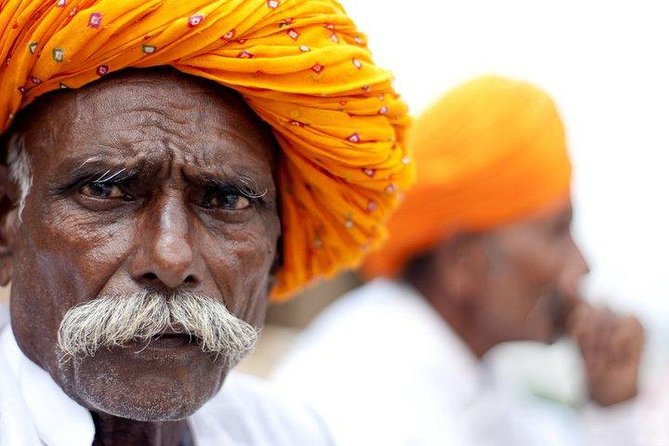
This tour is built for people who want the big names and the context behind them, without the stress of planning every ticket, timing window, and local transfer. You’ll spend six nights in 4-star hotels with breakfast, ride in a private air-conditioned vehicle, and meet local guides at the sights where they matter most.
The value shows in how the days are packaged. Delhi gets the essential Mughal and colonial-era landmarks, Agra adds the monuments people come for, then Rajasthan expands into fort architecture, royal city planning, and lake views. It’s not trying to be a slow cultural semester; it’s trying to be a sharp week-long circuit with enough structure that you can relax.
You can also read our reviews of more private tours in New Delhi



Day 1 in Delhi: Humayun’s Tomb, Qutub Minar, Lotus Temple, and the Lutyens-Style Monuments
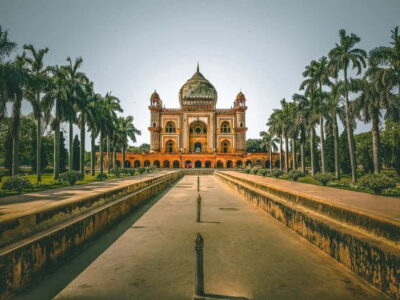
Day 1 starts with pickup around 9:00 am from your Delhi-area location (Delhi, Gurugram, or Noida). You go straight to Humayun’s Tomb, one of the standout Mughal monuments in Delhi. It’s the kind of place where details matter—arched forms, careful symmetry, and a layout that helps you understand how Mughal tomb architecture influenced later masterpieces.
Next comes Qutub Minar, the 73-meter tower at the Qutub complex. Even if you’ve seen photos, you usually get a better sense of scale in person. The surrounding ruins and tombs help you read the site as an evolving landscape rather than a single object.
Then you hit Lotus Temple, a calm counterpoint to the city’s motion. It’s shaped like a lotus and designed to feel peaceful, which is exactly what you need after two high-impact monuments. The one wrinkle: the listing notes Lotus Temple is closed on Mondays, so if your dates fall on a Monday you’ll want to confirm the replacement plan.
From there, you see India Gate, the 42-meter memorial arch tied to soldiers from several early 20th-century conflicts. It’s not a “wow” site the way the Taj Mahal is, but it’s important in understanding how Delhi’s public spaces memorialize modern history. The day also includes drive-bys around Parliament House and Rashtrapati Bhavan/President House.
Later you transfer to Agra in the late afternoon (about a 3-hour drive listed) and check in to your pre-booked hotel. That’s a smart move. You don’t just arrive exhausted—you’re positioned for an early start the next morning.
Day 2: Sunrise Taj Mahal Plus Agra Fort, Then on to Jaipur
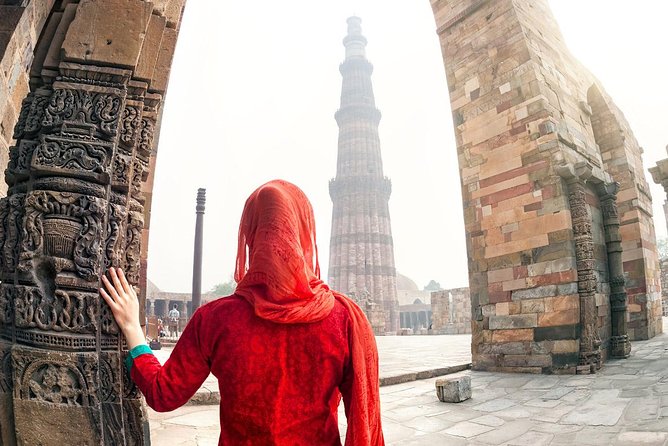
If you care about photographs but also want the monument’s mood, sunrise is a strong choice. Day 2 starts with an early visit to the Taj Mahal. This is the classic “teardrop on the cheek of eternity” monument, but the real reason it’s worth doing at sunrise is atmosphere: softer light, fewer crowds, and the chance to really look at the white marble and inlay patterns without fighting glare.
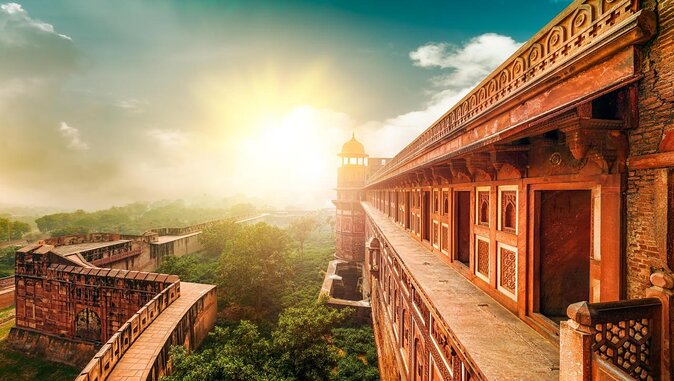
After that, you head to Agra Fort (UNESCO), a Mughal stronghold along the Yamuna. The fort experience is different from the Taj Mahal. Here you’re reading power and defense—walls, gates, and the palace-and-fort structure that shows how rulers lived and held territory.
Then it’s time to ride to Jaipur (Pink City) and check into your hotel. The itinerary keeps you moving, but it also gives you enough time to arrive and regroup before Jaipur’s sights begin.
Day 3 in Jaipur: Amber Palace, City Palace, and Jantar Mantar
Jaipur is where the tour really leans into Rajasthan’s “royal” look—forts, palaces, and carefully designed city spaces.
First stop: Amber Palace. This honey-hued fort rises from a rocky hillside about 11 km from Jaipur, and it’s a must-do on almost every Rajasthan trip. You’ll get a sense of why Rajput architecture is famous for dramatic placement and craftsmanship. The tour mentions a jeep ride at Amber Palace is an extra for certain traveler counts (listed as $3 per person, applicable for 5 and above), so plan around that if you’re in a larger group or want it.
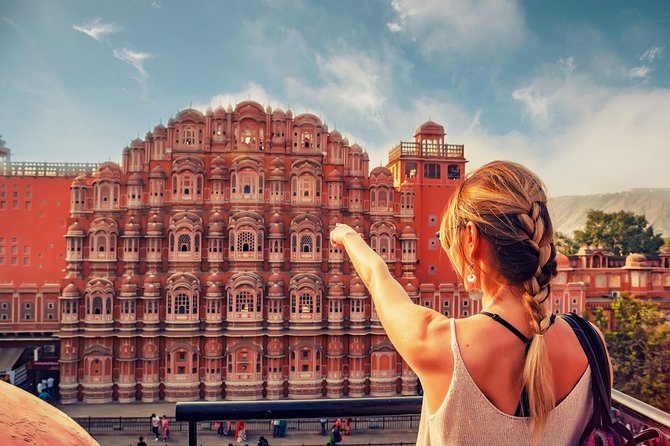
Then there are photo stops at Jal Mahal (Water Palace) and Hawa Mahal (Palace of Winds). Neither stop is long, but they work as picture breaks: Jal Mahal sits in the water near the cenotaphs of the maharanis, and Hawa Mahal’s five-story honeycomb facade is the Jaipur silhouette people travel for.
After the quick visual hits, you move into deeper history with City Palace of Jaipur. It’s the royal family residence complex—courtyards, gardens, and buildings clustered in the Old City. The museum portions help connect architecture to how the city was governed.
Finally, Jantar Mantar Observatory brings in the science side. This UNESCO site is a set of geometric instruments built to track celestial movement. It’s one of those stops that can feel dry—until you realize it’s architecture that did a job. The hour here is usually enough to understand the logic without turning it into homework.
Day 4: Jodhpur’s Blue Streets and the Clock Tower Market
Day 4 shifts gears. After breakfast, you drive to Jodhpur, described as the blue city. You’ll see why the color scheme works so well in the narrow lanes and stair-like streets—houses stacked like a puzzle, with incense and roses often mentioned as part of the feel.
The tour includes a visit to the Clock Tower Market (Ghanta Ghar) area in the evening. This is one of those places where you’re not just looking at a monument—you’re watching city life happen. It’s practical, too: you’ll get a feel for where locals shop and gather, which helps you orient yourself in a place that can feel confusing at first.
Admission tickets aren’t the main story here. The payoff is seeing Jodhpur’s street-level personality after you’ve already seen fort architecture earlier in the week.
You can also read our reviews of more tours and experiences in New Delhi





Day 5: Mehrangarh Fort, Jaswant Thada, Umaid Bhawan, then Ranakpur on the Way to Udaipur
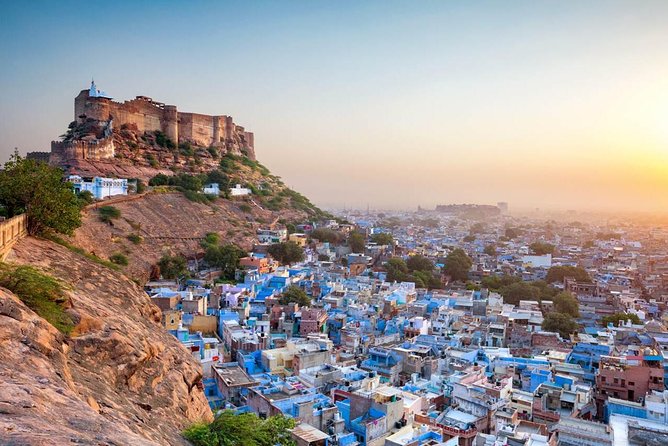
This is a full-bodied day—strong fort start, then royal memorials, then a museum, and finally a temple detour before reaching the lake city.
You begin with Mehrangarh Fort, one of the largest forts in India. The fort’s palaces and courtyards help tell a story of power and wealth through carved stone and strategic design. If you like seeing how rulers turned geography into defense and prestige, this stop delivers.
Next is Jaswant Thada, a 19th-century white marble cenotaph complex built in memory of Maharaja Jaswant Singh II and other nearby figures. It’s quieter than Mehrangarh, and that contrast matters: you get grand architecture first, then a more reflective space.
Then comes Umaid Bhawan Museum, located in a palace complex where part of the royal family residence is still in use. The museum is a good “reset moment,” and it helps you understand how everyday life and royal heritage intersected in Jodhpur’s elite spaces.
The day doesn’t end there. En route to Udaipur, you visit Ranakpur Jain Temple, noted for its near-perfect preservation over 500 years and its dramatic interior system of 1444 pillars, with no two alike. Even if Jain temple carvings aren’t your top interest, this is one of those places where craftsmanship forces attention.
Finally, you continue the drive to Udaipur (about a 6-hour drive listed) and check in. Udaipur’s lake setting helps the journey feel worth it.
Day 6 in Udaipur: City Palace, Lake Pichola Cruise, Bagore Ki Haveli, and Monsoon Palace Views
Day 6 is the lake-city day, and it’s designed around viewpoints and cultural interiors.
First you visit Jagdish Temple (30 minutes listed). It’s a busy Indo-Aryan temple built in 1651, with a carved main structure that enshrines Vishnu as Jagannath. Even in a short visit, it gives you a sense of how religious spaces function as part of daily city movement.
Next comes City Palace of Udaipur, the largest palace in Rajasthan, perched over the lake. The main part operates as a museum with mosaics and glass collections. You get both architecture and objects, which is key here: it’s a palace designed to impress, and the museum helps explain why.
Then the tour shifts to what you probably pictured when you booked Udaipur: Lake Pichola. You get a shared boat cruise, and the itinerary notes a sunset view. The lake’s shape and the Aravalli ridges in the background are part of the visual identity of the region, and the boat lets you see the city’s relationship to water instead of just walking past it.
After that, you visit Bagore Ki Haveli Museum, an 18th-century mansion overlooking Lake Pichola. The listing mentions period furniture and the way rooms have been turned into galleries and spaces for display. This is a good break from big fort walls because it’s about domestic scale—how wealth looked inside a home.
Finally, you head to Sajjangarh Monsoon Palace in early evening. It’s perched on a distant hill like a fairy-tale castle (the listing’s description), and the timing helps with views. It’s also a realistic “last wow” stop before your final morning.
Day 7: Drop-Off in Udaipur
After breakfast, the tour ends with drop-off at Udaipur airport, railway station, or your hotel. This works well if you’ve already booked your next travel leg and want a clean handoff rather than dealing with last-minute taxis.
One note to keep in mind from the tour details: dress code is smart casual, so plan for comfortable layers. Rajasthan days can warm up quickly, and evenings can feel cooler, especially around lake areas.
The Price: What $608 Per Person Buys You in Real Terms
At $608 per person, this tour isn’t cheap, but it also isn’t just “transport and a driver.” You’re paying for a stacked package:
- Six nights of 4-star hotels with breakfast
- Private air-conditioned vehicle for the route
- Experienced local private tour guides at sightseeing locations
- Entrance fees for the listed sights (with a few clear extras)
- A shared Lake Pichola boat ride
- Unlimited bottled water
- A battery bus/golf cart return ride near the Taj Mahal
For a first-time visitor, that combination can be the difference between a trip that feels planned and a trip that feels chaotic. The biggest hidden value is time: you’re not spending your energy lining up tickets, figuring out routes, or negotiating guides each day. You also don’t lose daylight to logistics because your itinerary is built around site timing.
If you’re the kind of traveler who already knows India well and enjoys self-guided pacing, you might find ways to spend less. But if you want a clean, guided circuit with major monuments and local context, the price lines up.
Who This Tour Fits Best (and Who Might Want a Slower Plan)
This is a great match for you if:
- You want Delhi + Agra + Rajasthan in one focused week.
- You prefer a private driver and guides rather than piecing everything together.
- You care about UNESCO sites and want help reading them.
It may feel like too much if:
- You want a deep, slow experience in just one or two places.
- You dislike early mornings (sunrise Taj Mahal matters here).
- You get stressed by frequent transfers and hotel check-ins.
A humorous way to say it: this trip is ideal when you want your camera memory card to work overtime, but you still want someone else handling the navigation.
Practical Bits That Can Affect Your Day
A few timing and policy items are worth knowing so you can plan smoothly:
- Taj Mahal sunrise visit is weather dependent.
- Lotus Temple is Monday closed in the itinerary notes.
- Jeep ride at Amber Palace is listed as an extra (and that cost depends on traveler count).
- Mandatory gala dinners on Christmas and New Year Eve are noted as not included and charged separately by the hotel.
- Vegetarian options are available if you ask in advance.
- You’ll want to keep smart casual clothes ready for temple and palace dress expectations.
Also: transfers are listed as approximate because traffic and timing change in real life. The best strategy is to treat the schedule as a guide and trust your driver.
Should You Book This Delhi to Udaipur Private Tour?
I’d say yes if you’re aiming for a high-coverage, guided first Rajasthan experience with minimal friction. The tour’s real strength is that it bundles hotel nights, guides, entrance fees for named sights, and key timing moments like sunrise Taj Mahal and the Lake Pichola boat cruise. That makes the week feel efficient without feeling totally rushed.
Book it if you want to see the headlines—Humayun’s Tomb, Qutub Minar, Taj Mahal, Amber, Mehrangarh, Ranakpur, and Udaipur’s palace-and-lake views—while still getting explanations that help you connect the dots.
Skip or consider an alternative if your ideal trip is slow, quiet, and deeply local in just one region. This route is built to move.
FAQ
Where does the tour start and what time is pickup?
Pickup is listed for around 9:00 am from your desired location in Delhi, Gurugram (Gurgaon), or Noida. The tour finishes with drop-off in Udaipur.
How does the tour end in Udaipur?
On the final day, after breakfast, the tour ends with drop-off at Udaipur airport, railway station, or your other desired location in Udaipur.
Is breakfast included during the trip?
Yes. The tour includes breakfast for six days, tied to the included hotel accommodation.
Are entrance tickets included?
Entrance fees are included for sights mentioned in the tour details. Some specific items are noted as not included, such as the jeep ride at Amber Palace (listed as $3 per person for 5 and above).
Is the Taj Mahal visit guaranteed at sunrise?
The Taj Mahal sunrise visit is subject to weather conditions.
Does the tour include a boat cruise in Udaipur?
Yes. It includes a shared boat ride on Lake Pichola, listed as a part of the day’s sightseeing.
What should I know about Lotus Temple?
Lotus Temple is listed as closed on Monday, so it may not run exactly as scheduled on Monday dates.
Is the tour private?
Yes. It’s a private tour/activity, and only your group will participate.