REVIEW · NEW DELHI
All Inclusive Old & New Delhi Private Day Trip with Tuk Tuk
Book on GetYourGuide →Operated by Sameday Taj Mahal · Bookable on GetYourGuide
Old Delhi is a sensory shortcut to Mughal times. This private day trip strings together Old Delhi lanes and New Delhi landmarks with a live guide, plus the fun of rickshaw and tuk-tuk-style street travel. I like the pacing that fits major highlights without turning the day into a blur, and I especially like how the guide explains what you’re seeing as you go. One thing to consider: with so many stops and city traffic, you’ll want comfortable shoes and patience if you book a long route window.
The best part is the guide-led flow. You get picked up from your chosen area, then you move from the big-picture Mughal sites to the street-level texture of Chandni Chowk markets, and later to iconic monuments in New Delhi. In the guide’s hands, even photo stops (like Red Fort from the outside) feel purposeful instead of random.
Finally, this is a “see a lot in one day” tour. That’s great if you’re short on time, but it means there’s less room to linger wherever you fall in love with the most.
In This Review
- Key highlights and what makes them work
- Getting picked up from anywhere and not wasting your morning
- Jama Masjid: your first big landmark and the Mughal story behind it
- Chandni Chowk by rickshaw/tuk-tuk: markets, colors, and fast orientation
- Red Fort photo stop: outside views still make sense
- Lunch break at a multi-cuisine restaurant: a good reset
- Humayun’s Tomb and the idea of a garden-tomb
- India Gate: a shorter stop that still earns its time
- Parliament pass-by and Qutb Minar: from governance to a victory tower
- Lotus Temple: a peaceful finish with a clear cultural stop
- The Gurudwara Bangla Sahib option: food, community, and a memorable kitchen moment
- Price and value: what $34 buys you in a Delhi day plan
- What you’ll like most (and what you should expect from the pace)
- Should you book this Old & New Delhi private day trip?
- FAQ
- What is included in the tour price?
- How long does the tour take?
- Which languages are available for the tour guide?
- Where can you be picked up and dropped off?
- Do I get a chance to ride through Old Delhi in a small vehicle?
- Are entry tickets included?
- Which major sights are visited during the day?
- Is cancellation flexible and can I pay later?
Key highlights and what makes them work
- Private guide, multiple languages (English, Russian, Spanish, French, Italian) with live explanations as you travel
- Old Delhi street time with a rickshaw/tuk-tuk-style ride that helps you handle narrow lanes
- Jama Masjid guided visit with a full hour to understand what you’re looking at
- A smart Old-to-New Delhi rhythm: Mughal monuments first, then Humayun’s Tomb, India Gate, Qutb Minar, Lotus Temple
- Skip-the-line entry option using a separate entrance
- Optional Sikh temple stop (Gurudwara Bangla Sahib) if time allows, often a standout for food and atmosphere
Getting picked up from anywhere and not wasting your morning
The tour is built around simple door-to-door time-saving. You can be collected from several areas—Old Delhi, Dwarka, Aerocity, Noida, New Delhi, Faridabad, and Gurugram—and dropped back to one of the same areas at the end. That flexibility matters in Delhi, where a “short drive” can turn into a time tax.
You’ll ride in a private, air-conditioned car for the main connections between Old and New Delhi. Then you switch to smaller transport in Old Delhi for the narrow lanes. The combination is practical: the car gets you there without stress, and the street ride helps you actually experience the kind of alleyway movement that cars can’t.
Because this is a private group, you’re not squeezed into someone else’s itinerary. In the best cases, your guide can adjust the flow to your pace and questions—something that came through strongly in guide reviews, including memorable service from Azhar Khan and Gourav.
You can also read our reviews of more private tours in New Delhi



Jama Masjid: your first big landmark and the Mughal story behind it
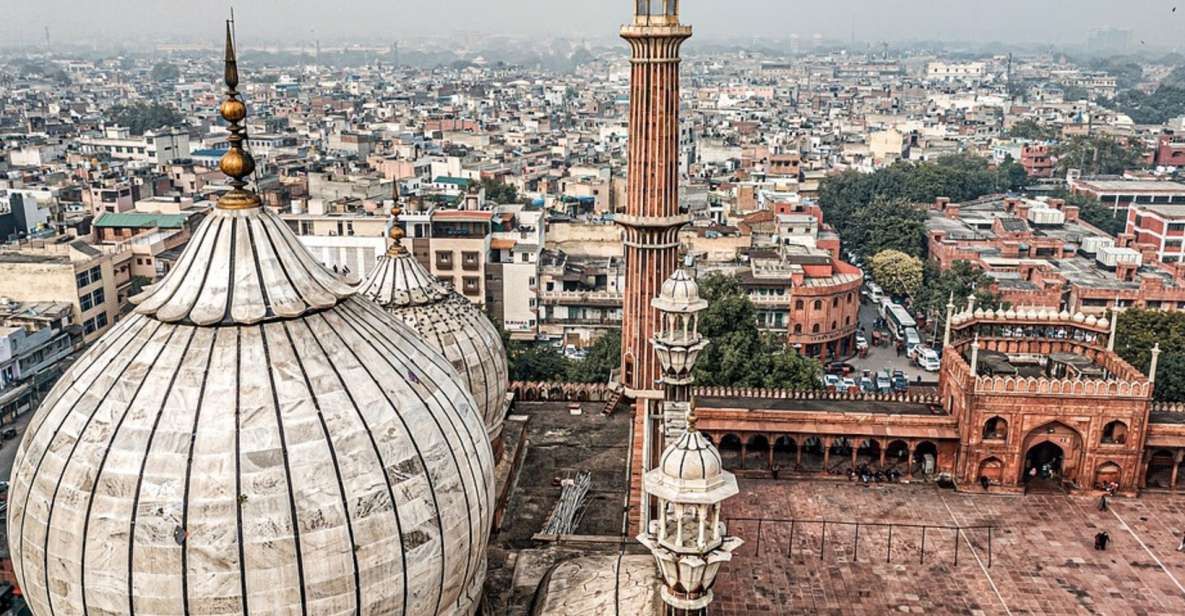
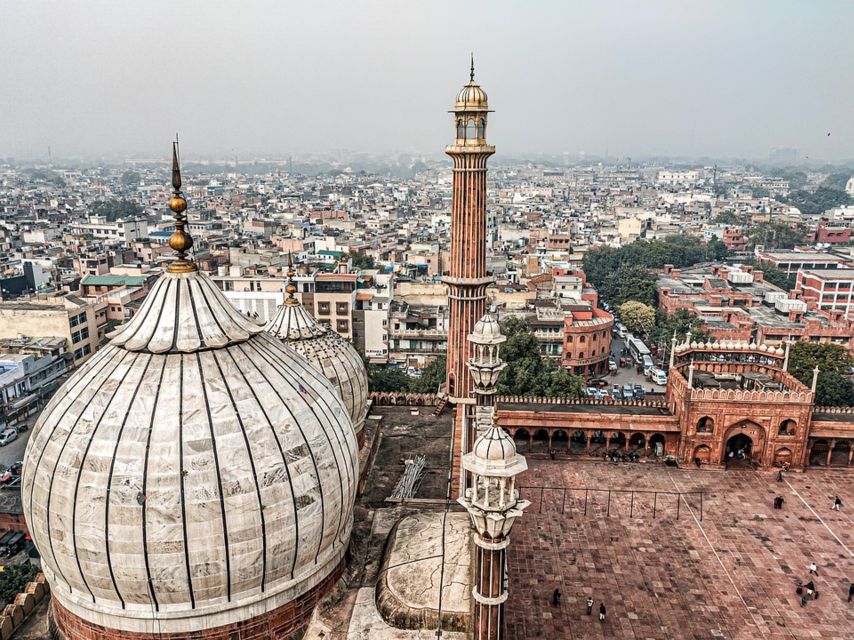
The day usually starts with Jama Masjid, one of the largest mosques in India. You get a guided visit (about an hour), plus time for photos. The key value here isn’t just the scale—it’s the context. A strong guide will connect the mosque to Mughal emperor Shah Jahan and explain how Jama Masjid fits into Delhi’s larger imperial story.
Why I like this first stop: it gives you a framework. Once you understand what Jama Masjid represents, Chandni Chowk isn’t just “a market.” You start seeing how the city’s religious and commercial life grew side-by-side.
A practical consideration: mosques and major religious sites usually involve crowd flow and rules about respectful behavior. Wear something comfortable, and plan to follow the site’s dress and entry guidance on the day.
Chandni Chowk by rickshaw/tuk-tuk: markets, colors, and fast orientation
After Jama Masjid, you head into Chandni Chowk—the heart of Old Delhi—and you do it in a way that makes sense for the streets. There’s a photo stop and a short visit (around 30 minutes), typically with a rickshaw ride that helps you move through lanes where cars would struggle.
This is the part of the day most people remember. Chandni Chowk is known for spice and dry-fruit stalls, silver jewelry, sarees, and general street commerce. Even if you don’t buy much, you’ll get a feel for how daily life runs here—sounds, smells, and the quick bargaining rhythm.
In reviews, the rickshaw ride through the market area was called entertaining and a real contrast to the monument-heavy sections. The trick is to treat this segment as orientation plus atmosphere. You don’t need to cover everything; you just need to walk away with a strong sense of what Old Delhi is like.
Red Fort photo stop: outside views still make sense
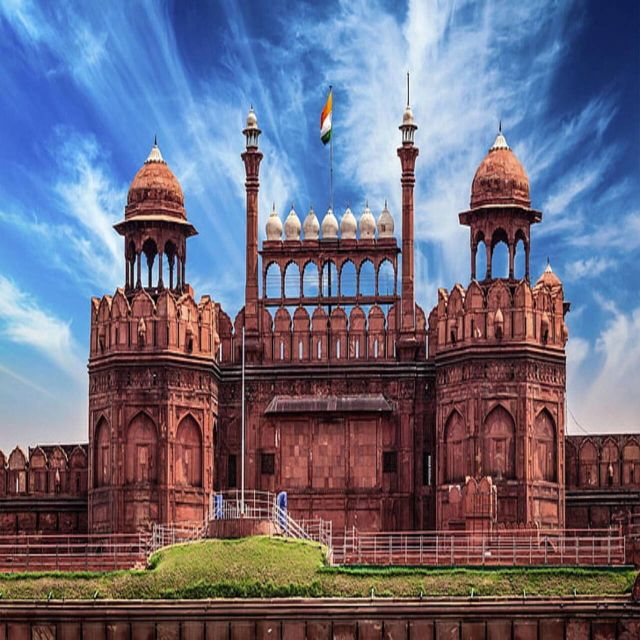
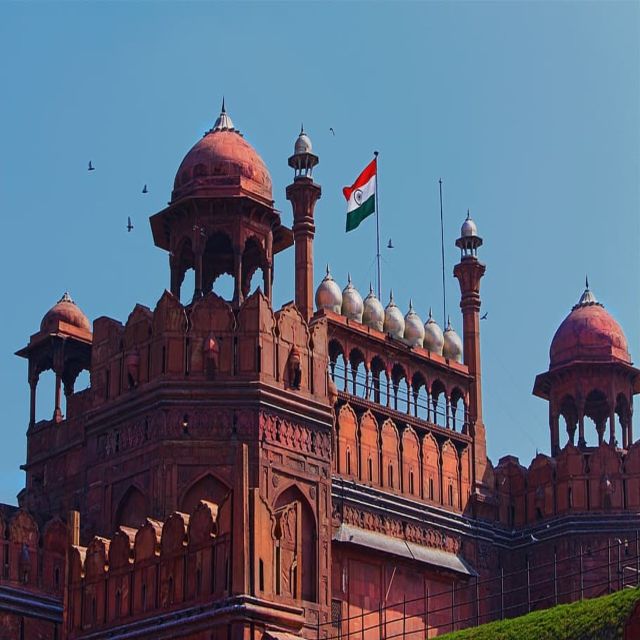
Next comes Red Fort. You’ll take pictures from the outside, with a pass-by/photo stop time (around 30 minutes). If you’re expecting a long inside tour, you might feel the limitation. But there’s a reason this works for a half-day structure: Red Fort is a major anchor landmark, and outside photos let you spot key views while keeping the schedule moving.
Think of it as “signature photos first, then explanations.” When a guide ties Red Fort to Shah Jahan’s shift of the Mughal capital from Agra to Delhi, the stop becomes more than just a skyline moment.
One consideration: since this is time-boxed, you’ll want to bring your camera settings ready and decide quickly which angles you want. Delhi sun can be intense, so photos usually go faster than you think.
Lunch break at a multi-cuisine restaurant: a good reset
After the Old Delhi portion, there’s a lunch break at a luxury and multi-cuisine restaurant. This matters because it gives your day structure. You get a break from walking and you reset before the New Delhi monuments begin.
The tour doesn’t specify menus, so treat lunch as your practical recovery time rather than a food-quest. If you care about dietary needs, it’s smart to mention it to your guide/driver ahead of time so they can steer you toward something suitable at the restaurant.
You can also read our reviews of more tours and experiences in New Delhi






Humayun’s Tomb and the idea of a garden-tomb
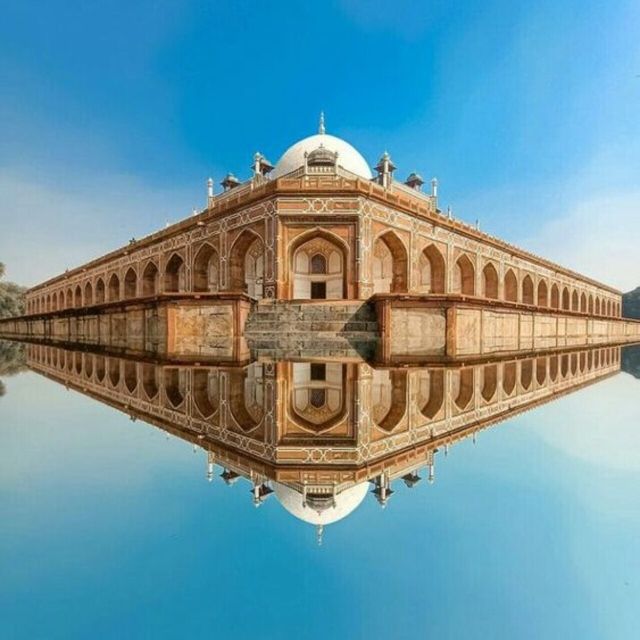
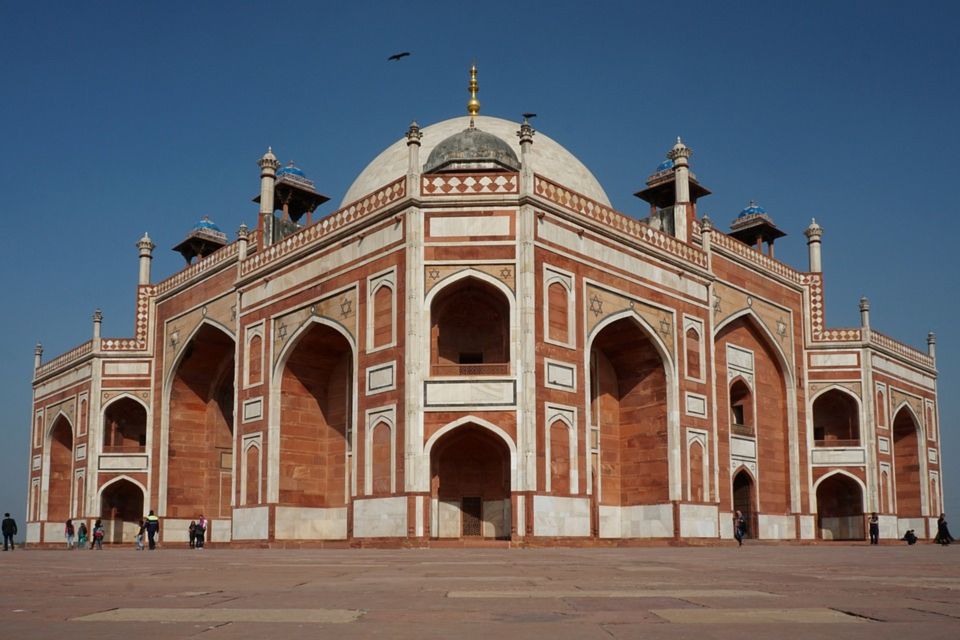
In New Delhi, Humayun’s Tomb is the next major stop, with a guided visit (about an hour). It’s described as the first garden-tomb on the Indian subcontinent, and that “garden” concept is key. You’re not just looking at architecture—you’re seeing an arrangement meant to shape movement through space and time.
I like this stop because it slows the day down in a good way. After the faster rhythm of Old Delhi, a well-guided monument garden can help you refocus on design details and the way Delhi’s history repeats through different styles.
As always at major heritage sites, you’ll want to follow the on-ground guidance for entry routes and respectful behavior. The guided portion is where you’ll get the meaning, so don’t skip the talk time.
India Gate: a shorter stop that still earns its time
India Gate is next, with a photo stop and a guided visit (about 30 minutes). It’s a war memorial dedicated to troops of British India who died in wars fought between 1914 and 1919.
This stop can feel “quicker” than the others, but it helps balance the day. You go from Mughal-era monuments to a 20th-century memorial, and you see how different layers of Delhi shape national identity.
If you’re someone who likes pausing for a few photos and a short explanation rather than a long walk, this is a good fit. If you want longer free time, you may feel the time is limited—but the tour’s goal is broad coverage.
Parliament pass-by and Qutb Minar: from governance to a victory tower
You’ll pass by Parliament House (with a sightseeing stop time of about 30 minutes) and then head to Qutb Minar. Qutb Minar is visited with a guided tour (about an hour) and is also described as a minaret and victory tower and a World Heritage Site.
This segment is strong for two reasons. First, the pass-by gives you a quick sense of modern Delhi’s scale and layout. Second, Qutb Minar shifts the story back to architectural legacy—one of the reasons Delhi works so well on a day-trip structure: different eras sit close enough to compare.
At Qutb Minar, your guide’s job is to connect what you’re looking at to why it matters historically and culturally. In reviews, the guides were praised for knowledge and for calmly answering questions. That’s the difference between seeing a monument and understanding why that monument is still a “must.”
Lotus Temple: a peaceful finish with a clear cultural stop
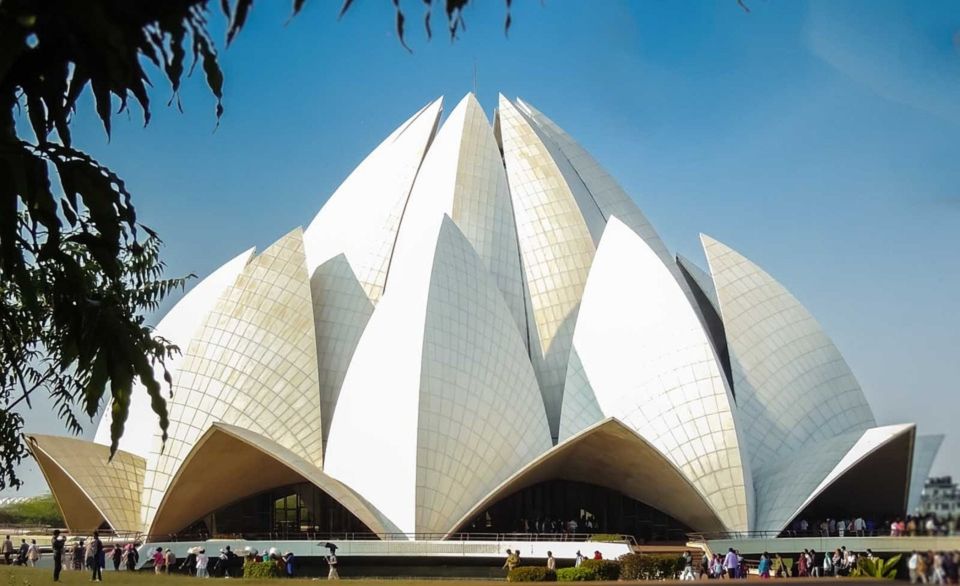
Lotus Temple rounds out the big monument run. You’ll stop for photos and get about an hour for a guided visit.
This temple is described as a Bahá’í House of Worship. It’s a great end-of-day choice because it often feels calmer than the high-traffic heritage circuit. Even if you’re not there for spiritual study, it gives your brain a breather before the ride back.
Practical tip: temples can have specific rules about photography, footwear, and movement. Your guide can usually help you follow the flow without drama—so pay attention early rather than trying to interpret everything on the spot.
The Gurudwara Bangla Sahib option: food, community, and a memorable kitchen moment
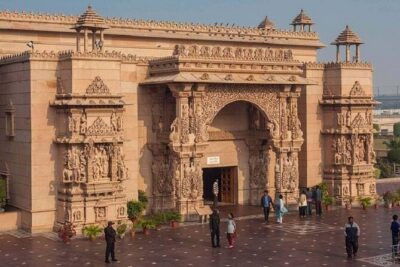
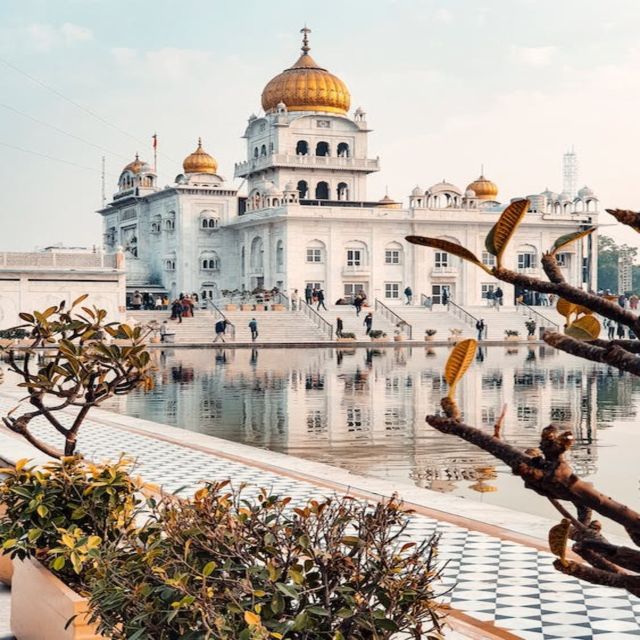
If time allows, the itinerary can add Gurudwara Bangla Sahib. It’s described as one of the most prominent Sikh houses of worship in Delhi, and this stop is worth considering because it often becomes a highlight.
One review specifically called out the Sikh temple and especially the kitchen as a standout. That’s a big clue about what you’ll experience: this is about community and the everyday systems that support worship, not just a building photo.
Whether you add this stop depends on your day length, but if you want one more cultural layer that isn’t purely Mughal/colonial or marble-and-stone, this is the logical choice.
Price and value: what $34 buys you in a Delhi day plan
At about $34 per person, this tour can feel like excellent value—mainly because the expensive parts are covered. You’re getting a private air-conditioned car, pickup and drop-off from multiple areas, entry tickets, a live guide service, mineral water bottles, and even the street-appropriate rickshaw ride element in Old Delhi.
The hidden value is the guide. When the guide is strong—and the reviews suggest guides like Azhar Khan and Gourav were—the explanations turn a checklist into a story you can remember. That’s hard to replicate on a DIY day, especially in Delhi where directions and context can be tricky.
The trade-off is that you’re packing a lot into 4 to 8 hours. If you’re the type who likes unstructured time, you may feel rushed at some photo stops (like Red Fort). If you want a guided “greatest hits” day that still includes genuine street time, this price can be a smart deal.
What you’ll like most (and what you should expect from the pace)
This tour works especially well if you want:
- A single-day framework that connects Old and New Delhi in an organized order
- Guided context at the big heritage stops (Jama Masjid, Humayun’s Tomb, Qutb Minar, Lotus Temple)
- Street experience in Old Delhi through a rickshaw ride, not just standing at viewpoints
- Language support with English, Russian, Spanish, French, or Italian guide service
What you shouldn’t expect:
- Tons of free time at each site
- A long inside visit at Red Fort (it’s outside/photo-focused)
- A slow museum-style day with deep lingering
If you’re visiting for the first time and time is tight, this is exactly the type of tour that helps you stop feeling lost and start feeling oriented.
Should you book this Old & New Delhi private day trip?
Yes, if you fit the “short on time, want the highlights with real context” profile. I’d book it if you want Old Delhi streets plus New Delhi monuments in one organized private day, and you’ll appreciate having a guide who can answer questions calmly and keep the pacing sensible.
If you hate schedule pressure, this probably isn’t your style. Also, if you’re hoping for long interior exploration at every major monument, consider a more focused itinerary with fewer stops.
Overall: this is a practical, guide-led “Old to New” day with enough street texture to feel like Delhi—not just a drive-through—plus multiple language options and included entry coverage. For a first-time Delhi visit, it’s a strong way to get your bearings fast.
FAQ
What is included in the tour price?
The tour includes pickup and drop-off, sightseeing by a private air-conditioned car, entry tickets, a rickshaw ride in Old Delhi, live tour guide service, mineral water bottles, and all taxes and charges.
How long does the tour take?
The duration is listed as 4 to 8 hours, depending on the starting time and how the day runs.
Which languages are available for the tour guide?
Tour guides are listed in English, Russian, Spanish, French, and Italian.
Where can you be picked up and dropped off?
Pickup is available from Old Delhi, Dwarka, Aerocity, Noida, New Delhi, Faridabad, and Gurugram, and drop-off is available from Faridabad, Dwarka, Noida, Gurugram, Old Delhi, New Delhi, and Aerocity.
Do I get a chance to ride through Old Delhi in a small vehicle?
Yes. You’ll include a rickshaw/tuk-tuk-style ride in Old Delhi for the Chandni Chowk area.
Are entry tickets included?
Yes, entry tickets are included, and there is also a skip-the-line option via a separate entrance.
Which major sights are visited during the day?
The tour includes Jama Masjid, Chandni Chowk, Red Fort (outside/photo stop), Humayun’s Tomb, India Gate, Parliament House (pass by), Qutb Minar, and Lotus Temple. Gurudwara Bangla Sahib can be added if time allows.
Is cancellation flexible and can I pay later?
Free cancellation is offered up to 24 hours in advance for a full refund. There’s also a reserve now & pay later option listed.