REVIEW · NEW DELHI
Private Delhi Spiritual Tour: Temples, Mosques & Markets
Book on Viator →Operated by Splendid Taj Holidays · Bookable on Viator
Golden domes and spice smells in one day. This private tour strings together major Delhi faith sites and classic old-market streets in about 7 hours, with a guide and private air-conditioned transport doing the hard work for you. I like that it hits both big-ticket monuments (Sikh, Islamic, Hindu) and the day-to-day trade you’ll actually see in Delhi.
Two things I especially like: the cycle rickshaw ride through Chandni Chowk and the careful stop-by-stop pace that keeps you from feeling rushed between crowded places. One consideration: if you travel on a Monday, Akshardham and Lotus Temple swap out for ISKCON Temple and Shri Kalkaji Temple, so you’ll want to plan your must-sees with that in mind.
In This Review
- Key highlights you should know
- Price and logistics: what $41 buys you
- Your day start: door-to-door pickup in Delhi
- Gurudwara Bangla Sahib: golden dome and the Sarovar calm
- Jama Masjid: Shah Jahan’s mosque at full scale
- Chandni Chowk by cycle rickshaw: the street-level Delhi view
- Khari Baoli spice market: where the air does the talking
- Swaminarayan Akshardham: modern monument energy and optional show
- Lotus Temple: a white-lotus space for quiet reflection
- A guide makes the difference (and Ahmed is a great example)
- What to expect from the rhythm of the day
- Who this private spiritual tour is best for
- Quick practical tips before you go
- Should you book this Private Delhi Spiritual Tour?
- FAQ
- What does the tour include?
- How long is the Private Delhi Spiritual Tour?
- Where does the tour start?
- Which major sites are visited?
- Are admission tickets included?
- What about meals and tips?
- Is the tour private or shared?
- What happens if I travel on a Monday?
- Do I need to bring ID?
- What is the cancellation policy?
Key highlights you should know
- Private, AC transport with door-to-door pickup from anywhere in Delhi
- Guided visits with admission included for the main religious stops
- Chandni Chowk by cycle rickshaw for a classic, street-level view
- Khari Baoli spice market with a strong focus on the wholesale spice trade
- Monday site swaps to keep the tour running if Akshardham and Lotus are closed
Price and logistics: what $41 buys you
At $41 per person for a 7-hour private tour, the value is less about a bargain and more about what’s included. You’re paying for a full package: private air-conditioned transport, pickup and drop-off from your chosen spot, bottled water, a professional tourist guide, parking/tolls/fuel/taxes, and admission tickets for several key monuments. On top of that, you get a cycle rickshaw ride—not just a photo stop from the sidewalk.
This matters in Delhi because time and comfort are the real costs. The itinerary is packed (multiple major sites plus market walking), so having a driver and guide means you can focus on what you came for instead of sorting routes, traffic, and timing. It’s also a true private tour, meaning only your group participates, not a shared bus with strangers.
Vehicle size depends on your group: sedan (4-seater) for 1–2 travelers, SUV (6-seater) for 3–5, and a minivan (12-seater) for 10+. So you can pick this for a small group or a bigger crew without feeling squeezed.
One practical note that can save you frustration: bring a valid photo ID. Some monuments have entry checks, and the tour info specifically calls that out.
You can also read our reviews of more private tours in New Delhi


Your day start: door-to-door pickup in Delhi
The tour begins with pickup from your preferred location—hotel, airport, railway station, or any address in Delhi. That’s not a small detail. In a city where “getting there” can take longer than “doing the visit,” door-to-door service helps you start calmly and helps you finish without a last-minute scramble.
From there, the itinerary flows site to site in a logical order, with about an hour at each major religious stop and shorter blocks for the markets. The pacing is built for seeing a lot without turning the day into a blur. You’ll get bottled water, and the car handles the travel time between areas so you’re not burning energy on transfers.
Because it’s private, you can also treat the day as your own plan, not a fixed group schedule. If you want to linger briefly while your guide explains a detail, you generally have the flexibility that shared tours often don’t offer.
Gurudwara Bangla Sahib: golden dome and the Sarovar calm
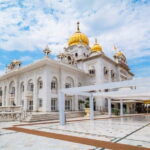
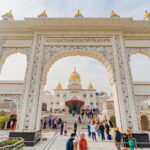
Gurudwara Bangla Sahib is one of Delhi’s most visually striking Sikh shrines. You’ll visit for about one hour, and the experience is anchored by the golden dome and the sacred pond called the Sarovar, known for healing waters.
What I like about starting here is the mood shift. After the usual city noise, the prayer hall and the spiritual rhythm of the place give you a reset. Your guide’s role matters a lot in this stop: the point isn’t just to look at architecture, but to understand what you’re seeing—why the pond is central, what the prayer space represents, and how the site reflects Sikh hospitality.
You’ll also get time to walk through the areas connected to the prayer and visitor flow. Admission is included, so you can focus on the experience rather than adding one more ticket step to your morning.
A small practical consideration: if you’re sensitive to crowds, early timing can help. This tour is designed to keep you moving, but Delhi’s big religious sites can still get busy.
Jama Masjid: Shah Jahan’s mosque at full scale
Next up is Jama Masjid, built in 1656 AD by Emperor Shah Jahan. This isn’t just another mosque stop—it’s built on a scale that changes how you view the city. With a vast courtyard that can hold up to 25,000 worshippers, the space feels monumental even if you don’t fully grasp the size until you stand there.
You’ll spend about one hour with a guide. The red sandstone and marble structure is the obvious visual draw, but the real value is the context your guide can provide: what kind of empire-era planning went into a site like this, and how architecture supports a place of gathering.
Admission is included, so you can walk in without adding friction. One thing to keep in mind: because this is a functioning place of worship, the energy can shift based on prayer times and visitor flow. Plan on being adaptable and respectful, and you’ll get more out of the stop.
Chandni Chowk by cycle rickshaw: the street-level Delhi view
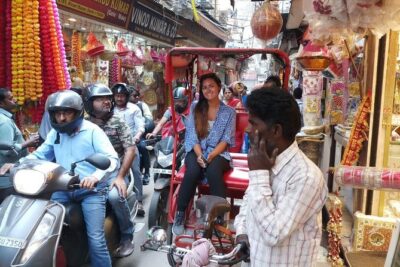
Then the tour changes gears into something more kinetic: a cycle rickshaw ride through Chandni Chowk, Delhi’s oldest market area, originally designed during the Mughal era. This ride is included, and it’s only about 30 minutes, which is perfect. You get the street view without having the day consume itself.
This is the stop where you really feel Delhi as a living city. You’ll pass through narrow lanes lined with shops and vendors, and the contrast versus the temples and mosques is immediate. Here, spirituality takes a back seat to daily commerce, and that’s the point. Delhi isn’t just monuments—it’s people building their lives around those old streets.
What I like: you’re not stuck staring at maps. The rickshaw gives you movement and orientation at the same time, helping you understand the layout of the market area.
A consideration: if you don’t like close quarters or you’re traveling with limited mobility, the market lanes and rickshaw entry/exits might feel tight. The tour is designed for most travelers, but it’s not a gentle, wide-open promenade.


Khari Baoli spice market: where the air does the talking
After Chandni Chowk, you’ll head to Khari Baoli, described as Asia’s largest wholesale spice market. You’ll spend about 30 minutes here, and the focus is on the stalls and the wholesale trade—spices, herbs, and teas—so the whole area smells like the product.
This stop is a great complement to the religious sites. It shifts your attention from faith and architecture to the local economy that feeds households and restaurants across Delhi. And because it’s wholesale-focused, you’ll likely see larger quantities and more serious trading energy than at typical retail street markets.
The tour doesn’t promise a souvenir market experience; it promises a market you can observe and learn from, and your guide can help translate what you’re seeing—why certain spices dominate a stall, how buyers typically think, and what terms you might hear while you’re there.
Practical tip: the tour doesn’t include meals. If you want a snack or drink during market time, plan ahead so you’re not rushed. Also, carry a little cash if you like street-food-style browsing—your car and guide handle the route, but the market is still the market.
Swaminarayan Akshardham: modern monument energy and optional show
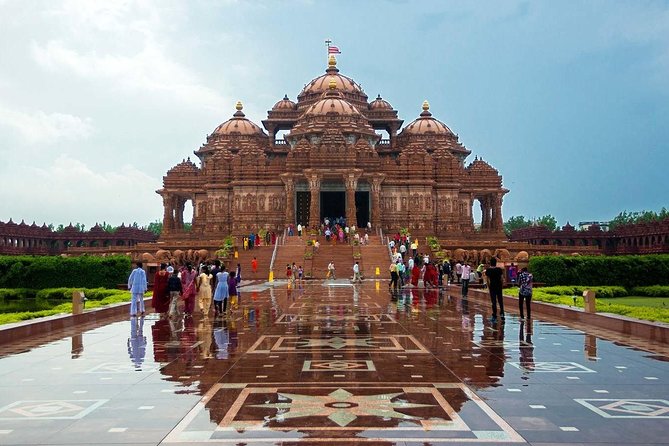
Akshardham is a different kind of stop. It’s not a centuries-old ruin or an imperial mosque—it’s a modern architectural marvel dedicated to Bhagwan Swaminarayan, with intricate carvings, exhibitions, and a musical fountain show that’s optional.
You’ll spend about one hour at Swaminarayan Akshardham Temple, with admission included. If you like scale, details, and the way a site can be both devotional and educational, this is the place to lean in. The carvings and the overall design give you plenty to look at, but the exhibitions can help you connect the dots beyond aesthetics.
One key planning detail: Akshardham and Lotus Temple are closed on Mondays. On those days, the tour swaps in ISKCON Temple and Shri Kalkaji Temple. That’s a smart backup, but it does mean your day’s feel can change depending on the weekday.
If you’re choosing your travel dates based on specific buildings, double-check your day of week before you book.
Lotus Temple: a white-lotus space for quiet reflection
You’ll finish at the famous Lotus Temple, known for its white lotus shape and for being open to people of all religions for meditation and reflection. The visit is about one hour, and admission is included.
This stop tends to slow things down. After the busy streets and the big-scale architecture of earlier sites, the Lotus Temple’s design encourages stillness. The prayer hall experience is built around quiet, not crowds-on-crowds touring. If you’ve had enough photos and you want a moment that feels more like breathing space, this is where it happens.
Like other religious sites, the atmosphere can vary based on the flow of visitors and prayer/moments of worship. The key is to treat it as a calm end to the day rather than another quick “see-and-go” stop.
A guide makes the difference (and Ahmed is a great example)
A tour like this lives or dies on the guide. The good news is this one comes with a professional tourist guide, and the difference shows up in explanations that connect architecture to meaning.
In one experience, the guide was Ahmed, and what stood out was how he handled both faith basics and technical detail—explaining culture and architecture without turning it into a lecture. That’s exactly what you want here. These places are impressive on their own, but you get more value when someone helps you read the symbolism.
Also, scheduling matters with multiple sites. In that same run, driver Rohit helped keep things moving and handled the day in a calm, practical way—especially when the schedule needed patience. Even in a private tour, timing can wobble with traffic and crowds, and a steady driver is part of the value.
What to expect from the rhythm of the day
This is a full-day tour with a tight but not frantic structure. Think: about an hour at each major religious site, plus a ride and a couple of market stops. By the time you reach Lotus Temple, you’re doing more than sightseeing. You’re moving through Delhi’s idea of harmony between faith communities and everyday life.
Here’s the basic rhythm you can count on:
- Religious landmark morning starts with Gurudwara Bangla Sahib and continues to Jama Masjid
- Street experience middle with Chandni Chowk by cycle rickshaw
- Spice and trade focus at Khari Baoli
- Big devotional architecture finish with Akshardham (or Monday alternatives)
- Quiet reflective end at Lotus Temple (or Monday alternative)
If you like variety—religion, architecture, markets, and the feel of older neighborhoods—you’ll probably enjoy how the day is stitched together.
If you prefer only one type of place (all museums, or all temples, or only markets), you might find the switch between sections a little jarring. But that’s also why this tour can feel like a balanced Delhi sampler.
Who this private spiritual tour is best for
This tour fits best if you want a first-time Delhi day that covers a lot of ground without you doing the logistics math.
I’d especially recommend it for:
- First-timers who want major Delhi religious sites plus markets in one go
- Couples and families who value private transport and not getting stuck in a big shared group
- Travelers who like learning the “why” behind a place, not just the “what”
It’s also a strong option if you’re short on time. Seven hours is enough to get meaning from several landmark stops, while still leaving you the evening free for dinner and a slower walk.
Quick practical tips before you go
- Bring a photo ID for entry checks at certain monuments.
- Wear comfortable shoes. You’re walking and moving through market and temple areas.
- Plan around meals not included. If you want a bite during the market portion, decide in advance so you don’t lose time.
- If Monday matters for your must-see list, remember the Akshardham/Lotus swap to ISKCON and Shri Kalkaji Temple.
Should you book this Private Delhi Spiritual Tour?
If your goal is a one-day snapshot of Delhi’s faith landmarks and old-school markets, this tour is a solid choice. The price is reasonable for what’s included—private AC transport, guide, admissions for key sites, bottled water, and the cycle rickshaw—and the private format keeps the day smoother.
I’d book it if you’re excited by contrasts: golden-domed calm, an enormous mosque courtyard, spice-market energy, and the quiet reset of Lotus Temple.
Skip it if you’re only interested in one theme (only temples, only markets) or you’re traveling on a Monday and Akshardham and Lotus are your top must-sees. In that case, make sure the Monday alternatives still match what you want.
Either way, this is the kind of day that helps you understand Delhi beyond a single monument—because it shows how old faith sites and everyday commerce occupy the same city space, just a few turns apart.
FAQ
What does the tour include?
It includes private air-conditioned transport, pick-up and drop-off, bottled water, a cycle rickshaw (tuk-tuk) ride, a professional tourist guide, all parking fees/tolls/fuel/taxes, and all sightseeing. Admission tickets are included for the main monument stops.
How long is the Private Delhi Spiritual Tour?
The duration is about 7 hours.
Where does the tour start?
The tour starts in Delhi, India, with pick-up offered from your preferred location within Delhi.
Which major sites are visited?
You’ll visit Gurudwara Bangla Sahib, Jama Masjid, Akshardham Temple, and Lotus Temple, plus Chandni Chowk by cycle rickshaw and Khari Baoli spice market.
Are admission tickets included?
Admission tickets are included for Gurudwara Bangla Sahib, Jama Masjid, Swaminarayan Akshardham, and Lotus Temple. The market and rickshaw parts are free or included as described.
What about meals and tips?
Meals and additional services are not included, and tips/gratuities are not included.
Is the tour private or shared?
This is a private tour. Only your booking group participates.
What happens if I travel on a Monday?
Akshardham and Lotus Temple remain closed on Mondays. Alternative visits to ISKCON Temple and Shri Kalkaji Temple will be arranged.
Do I need to bring ID?
You should carry a valid photo ID, as entry checks may be required at certain monuments.
What is the cancellation policy?
You can cancel for free up to 24 hours in advance for a full refund. If you cancel less than 24 hours before the start time, the amount paid is not refunded.