REVIEW · NEW DELHI
Delhi: Old Delhi’s Street Food, Temples & Spice Market Tour
Book on GetYourGuide →Operated by Explore Real India · Bookable on GetYourGuide
Old Delhi can feel like sensory overload, but this tour makes it manageable fast. You get street-food tastings picked for safety, then you mix in major religious stops and the huge spice market so the day feels like a tour of how Delhi actually works.
What I really like is the balance: food and faith side by side. The Sikh gurdwara stop includes its community kitchen (15,000+ people eat for free every day), and you also get guided context for the temples instead of just a quick look-and-go.
One thing to consider: it’s a walking-heavy, crowded-area experience, and temple visits come with strict etiquette. Plan for conservative clothes, and for some parts you’ll be expected to go barefoot after removing shoes and socks.
In This Review
- Key highlights you’ll remember
- Old Delhi in Three Hours: Food, Faith, and Spice Market Chaos
- Meeting at Lal Quila Metro (Gate 1) and How the Tour Actually Moves
- Sri Digambar Jain Lal Mandir: Barefoot Etiquette and Jain Basics
- Chandni Chowk Tastes: Lassi, Tea, and Street-Food Safety Without Guesswork
- Old Delhi Stops: Sikh Gurdwara, Red Fort Views, and a Centuries-Old Mosque
- The Sikh gurdwara and the mega kitchen
- Red Fort from outside
- A 370-years-old mosque (and the religious mix)
- Khari Baoli Spice Market: Sneezing Lessons, Secret Spice Mansion, and Great Photo Spots
- Rickshaw Ride Through Old Delhi: See It, Don’t Survive It
- The $42 Value: What You Get Versus What You Might Still Pay For
- Tips on Negotiating and Saving Money (Without Making It Awkward)
- Who This Tour Fits Best
- Should You Book This Old Delhi Food and Temples Tour?
- FAQ
- Where is the meeting point?
- How long is the tour?
- What’s included in the price?
- What language is the guide?
- What should I bring for temple visits?
- Do I have to remove shoes during temple visits?
- Are alcohol and drugs allowed?
- Is there free cancellation?
- Is the tour suitable for very young children or very elderly visitors?
Key highlights you’ll remember
- Safe street-food tastings: you eat a range of dishes with lassi, tea, and water included
- Asia’s largest spice market stop at Khari Baoli, plus photo-worthy views
- Sikh gurdwara with a massive free kitchen serving 15,000+ people daily
- Jain temple visit at Sri Digambar Jain Lal Mandir, with clear cultural guidance
- Rickshaw ride through Old Delhi to see the chaos up close (without navigating it alone)
- Landmarks from outside, including Red Fort, plus a mosque tied to centuries-old Delhi
Old Delhi in Three Hours: Food, Faith, and Spice Market Chaos
This is one of those tours where the 3 hours feel longer in a good way, because you’re not doing one thing. You’re tasting, walking, and learning how food, religion, and trade connect in Old Delhi.
The tour’s tempo matters. You start with an easy landmark meeting point at Lal Quila metro (Red Fort area), then you shift into short walks and quick guided stops. That keeps you from burning energy too early, especially if it’s your first day in Delhi and you’re still adjusting to the heat, sounds, and smells.
Most importantly, the tour is designed for the part of Old Delhi that scares people a bit: the street food and the crowded lanes. Instead of letting you fend for yourself, your guide keeps you moving and directs you to places that are presented as tried-and-tested for safety and hygiene.
You can also read our reviews of more food & drink experiences in New Delhi


Meeting at Lal Quila Metro (Gate 1) and How the Tour Actually Moves
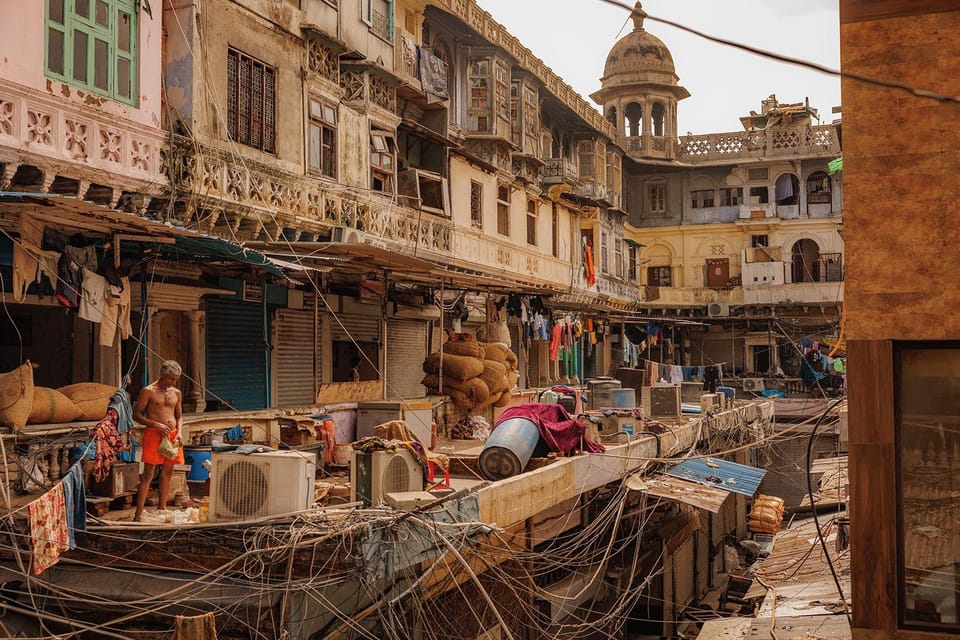
You meet at Gate No. 1 Lal Quila (Red Fort) Metro Station in Old Delhi. If you’re standing at Gate 4, it’s across the way, so you use the underpass to get to Gate 1. This sounds simple until you’re tired, phone signal is weak, and you’re trying to find the right person. Start early, because Old Delhi navigation can punish hesitation.
Once you begin, the itinerary is built around walking blocks that are short enough to stay energetic:
- a guided Jain temple segment,
- a quick walk into Chandni Chowk,
- food tasting right where it makes sense,
- then the longer Old Delhi and spice-market sections.
The tour is also bilingual-friendly. The guide works in English and Hindi, which helps a lot if you want to ask questions in real time rather than guess from signs.
Sri Digambar Jain Lal Mandir: Barefoot Etiquette and Jain Basics
The tour begins with a visit to Sri Digambar Jain Lal Mandir. You get a guided look that lasts about 16 minutes. That may not sound long, but it’s the right length for a first temple stop because it gives you meaning without turning the day into a lecture.
Here’s what you should plan for before you arrive:
- temple etiquette requires you to remove shoes and socks
- you’ll walk barefoot inside
- you need conservative clothing (no shorts for anyone)
Even if you’ve traveled in Asia before, temples in Old Delhi can feel strict and very specific. Bring a long-sleeved shirt and long pants. If you forget a scarf, the info says you can get one at the temple, so don’t panic.
The value of this stop is not just architecture. Jain temples carry a different worldview, and you’ll learn what you’re looking at and why people worship the way they do. For many first-timers, this is the moment Delhi stops being only street noise and starts becoming a place with systems and beliefs.
Chandni Chowk Tastes: Lassi, Tea, and Street-Food Safety Without Guesswork
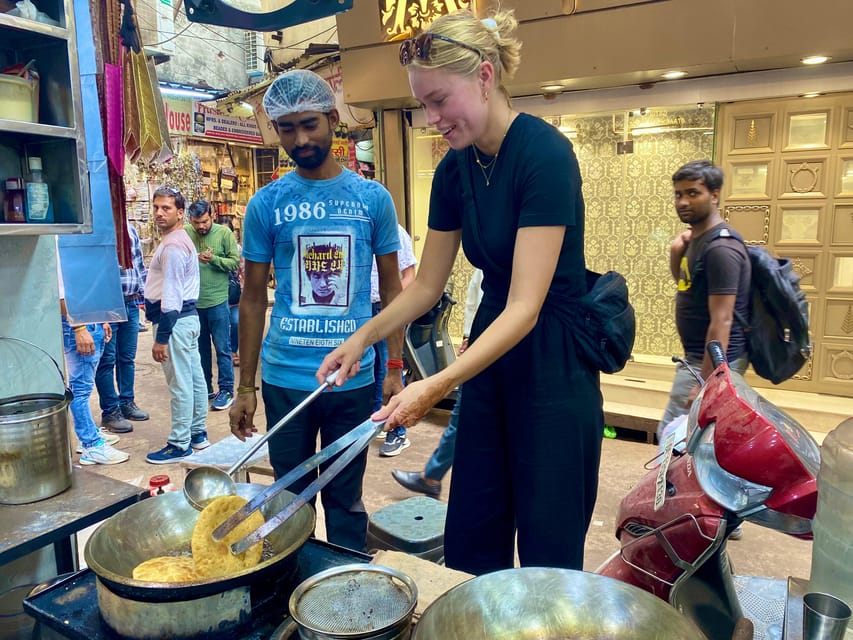
After the Jain temple, you head toward Chandni Chowk, with a short walk. Then comes the part most people book for: food tasting in Old Delhi.
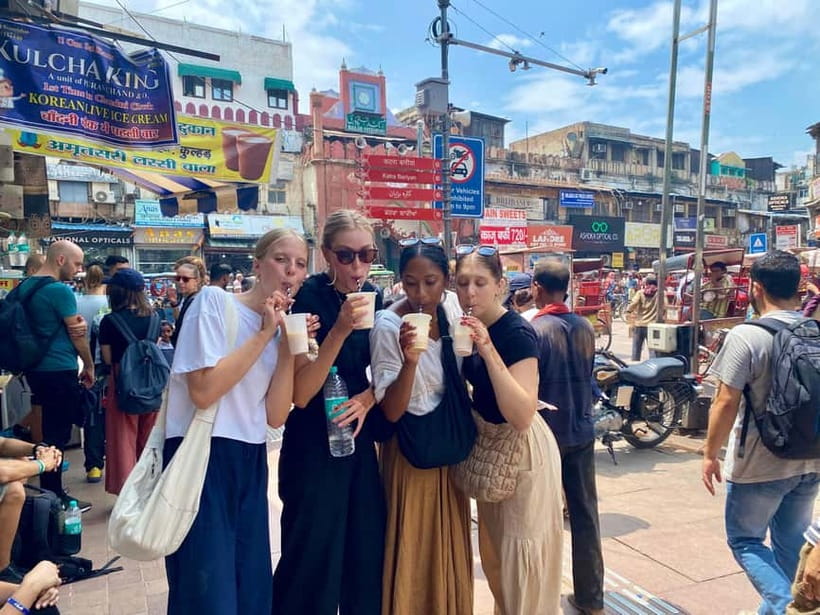
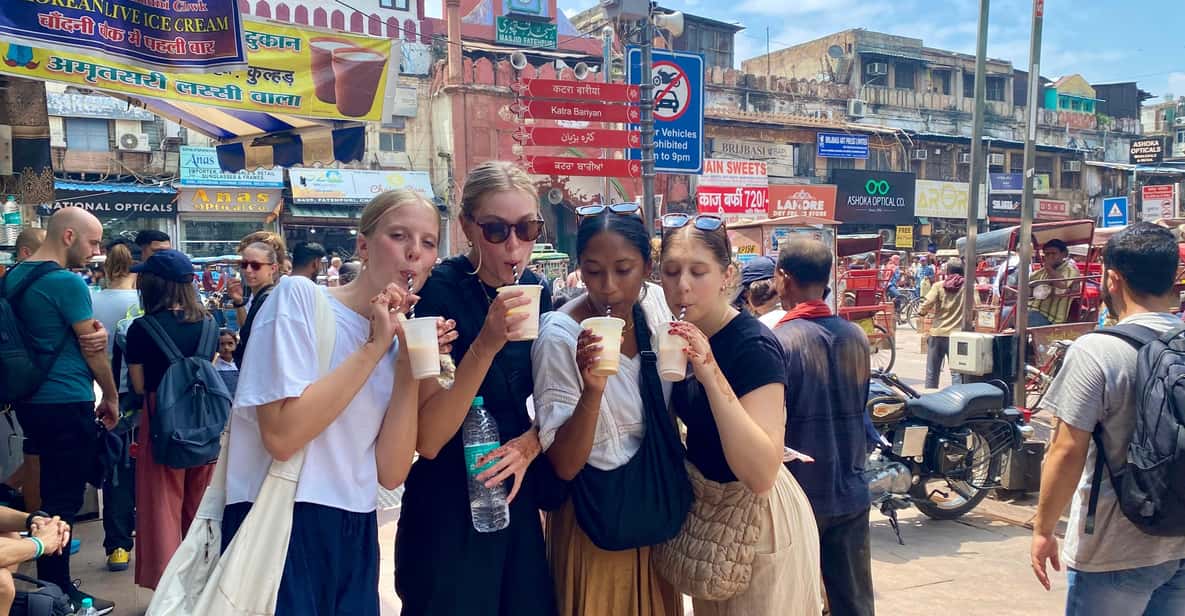
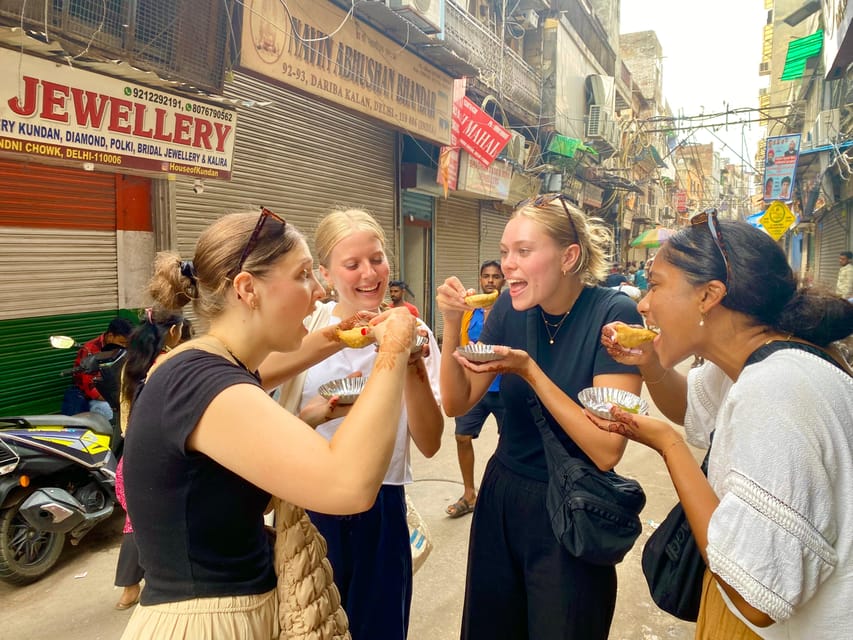
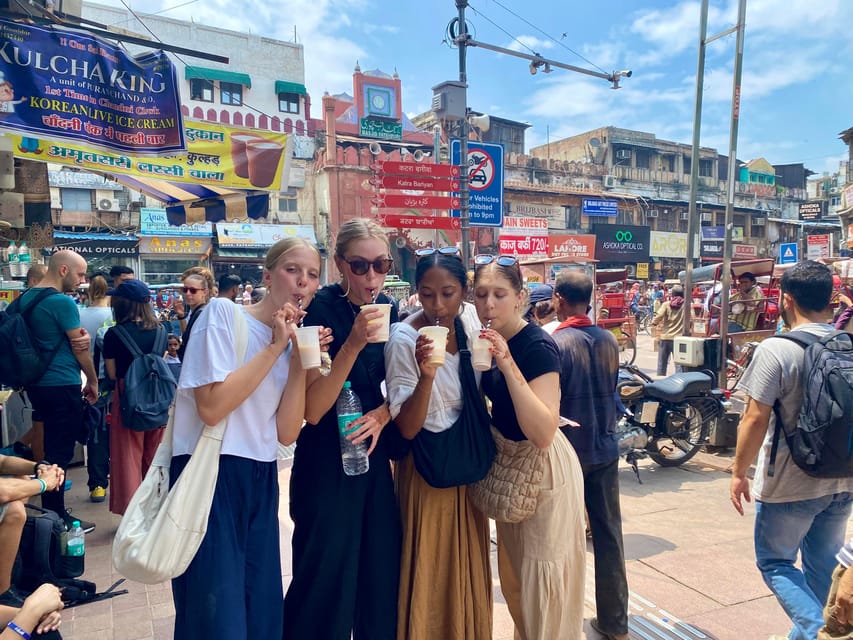
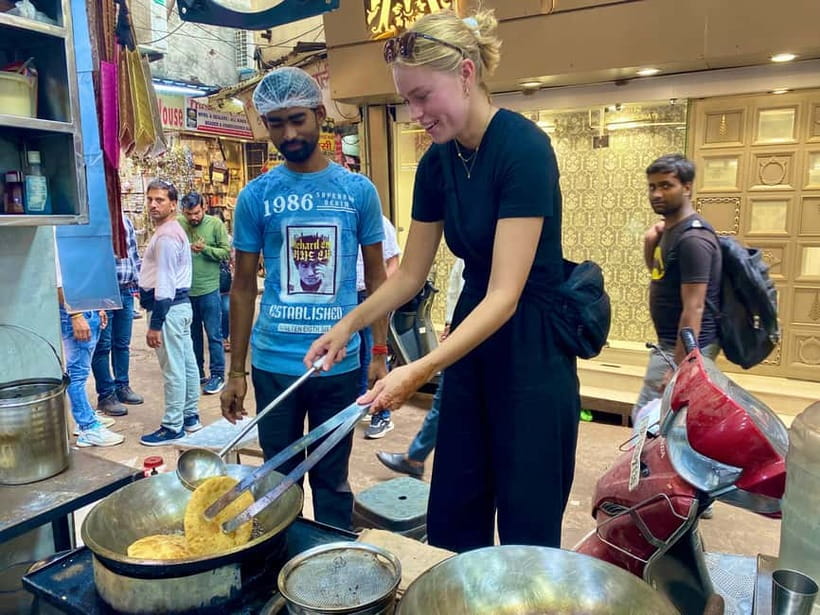
The key detail is that the tastings aren’t random. The tour is explicit about trying and testing street food for safety, and the guide keeps drinks on the same level: lassi, tea, and water are included. That matters because choosing food alone in Chandni Chowk can turn into an accidental game of roulette.
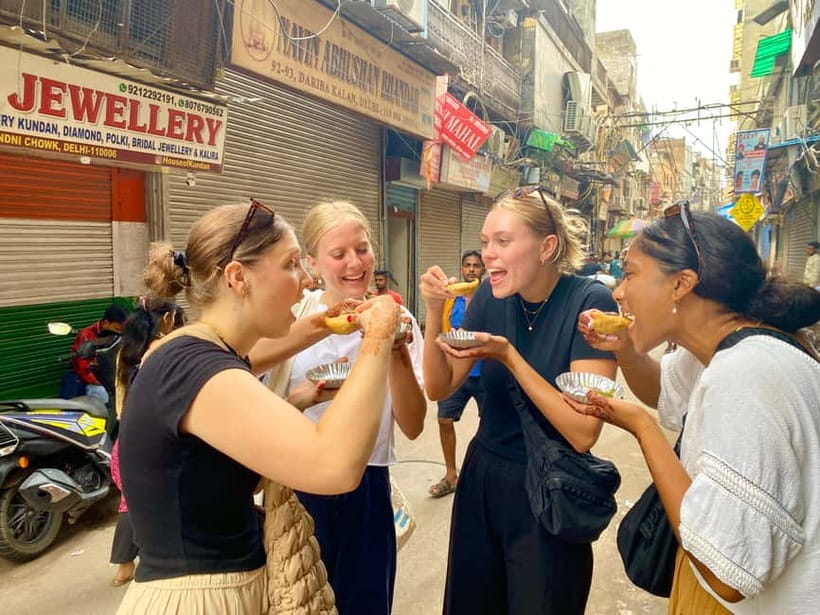
You’ll likely try a mix of sweet and savory items, and you’ll have a chance to ask about ingredients and food traditions as you go. You also get historical and cultural context tied to what you’re tasting, which makes the flavors stick in your memory instead of fading after the ride back.
A practical tip: bring hand sanitizer (or tissues). You’ll be eating with your hands at some stalls, and Old Delhi lanes can be dusty. Wet wipes are also useful. This is one tour where small hygiene habits pay off immediately.
Old Delhi Stops: Sikh Gurdwara, Red Fort Views, and a Centuries-Old Mosque
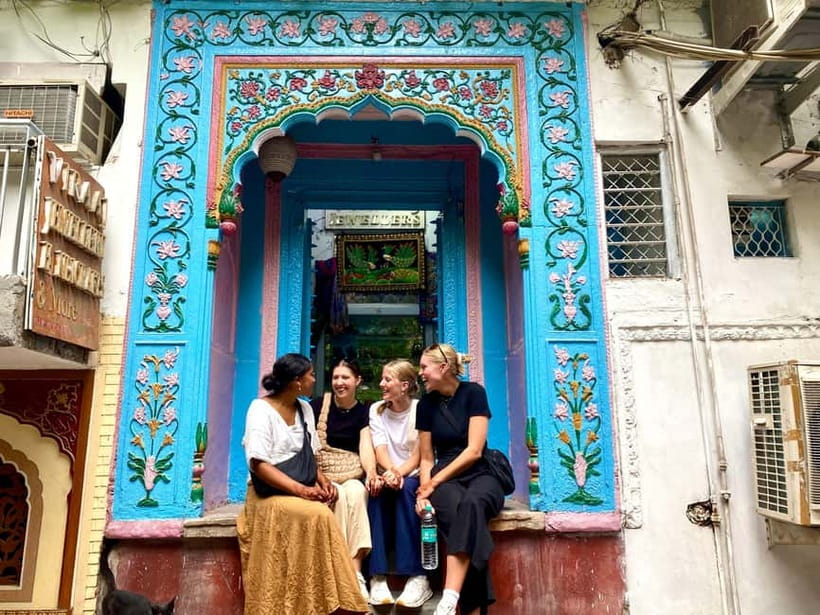
The heart of the cultural part happens in the main Old Delhi segment. You don’t just pass temples. You visit major religious sites and landmarks that help you read the neighborhood.
You can also read our reviews of more tours and experiences in New Delhi





The Sikh gurdwara and the mega kitchen
A standout is the Sikh gurdwara visit and its mega kitchen. The tour highlights that 15,000+ people eat for free every day. That’s not a marketing line to ignore. It changes how you see the area. Instead of religion as a photo stop, you see it as a functioning community service with a real daily rhythm.
You may also get moments that feel hands-on. One theme in the experience is that you might help with simple kitchen tasks like making chapati, depending on what’s happening during your visit. Even if you don’t get that chance, the scale of the kitchen and the idea of feeding people regardless of background is a powerful lesson.
Red Fort from outside
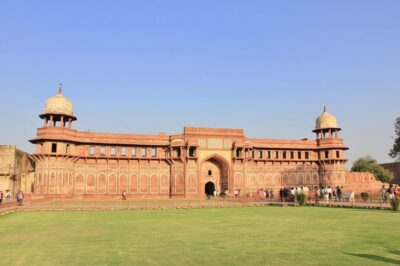
You also see Red Fort from outside. You’re not going inside here, but getting oriented with Red Fort while you’re already walking in the same neighborhood helps you connect the geography. It’s a good reminder that this market world sits beside some of Delhi’s biggest historic power centers.
A 370-years-old mosque (and the religious mix)
The tour also includes seeing a 370-years-old second-largest mosque. That religious diversity is one of Old Delhi’s defining traits. You’ll understand it better when the day alternates between Jain and Sikh spaces and then shifts to the mosque.
The quiet benefit: by the time you reach the street-food and spice parts again, you understand the neighborhood’s layers. Delhi stops feeling random.
Khari Baoli Spice Market: Sneezing Lessons, Secret Spice Mansion, and Great Photo Spots
Next comes Khari Baoli, one of the best places in Delhi to learn the language of smell. This is described as Asia’s largest spice market, and you’ll walk through it rather than just stare from a distance.
Be ready for two things:
- You’ll smell spices strongly. That’s the point.
- You might end up with the kind of sneezing that turns the whole street into a comedy show.
That sounds funny, but it’s also practical. The guide’s job here is to help you understand what you’re seeing and how spices connect to food flavors and trading traditions. You’ll also get tips that are more useful than just naming spices. You learn what certain ingredients do and why they’re used.
There’s also a secret spice mansion stop in the tour outline, plus photo time. One especially memorable moment is a viewing area where you can see the spice market and Old Delhi from higher floors, including a rooftop viewpoint described as a highlight.
If you care about photos for Instagram, this is where you’ll get them without forcing awkward angles in the busiest lanes. You’ll still be in the middle of activity, but you get a breather with a better view.
Rickshaw Ride Through Old Delhi: See It, Don’t Survive It
One of the most fun parts is the rickshaw ride in the chaotic market areas. This is the tour’s pressure-release valve. You’ve walked the lanes, you’ve seen the crowds, and then you move through them at street level in a way that keeps you oriented.
A rickshaw ride also gives you motion you can’t get while on foot. You catch glimpses of signs, storefront chaos, and street rhythm that you’d miss if you only walked straight lines.
Practical advice: wear comfortable shoes even though you’ll be barefoot during temple etiquette. During the ride and walks, you’ll want your feet steady and protected. Bring tissues or sanitizer too, because road dust and food-air mix happens quickly.
The $42 Value: What You Get Versus What You Might Still Pay For
For $42 per person over 3 hours, this tour earns its value in two ways.
First: it’s not only walking. You get all food tastings, plus drinks like lassi/tea/water, and you get the guide fee included. Street food tours can get expensive fast when you add costs one by one, so having tastings bundled is a big deal.
Second: the religious stops aren’t treated as extra. You’re paying for the time with a guide who explains what you’re seeing at the Jain temple and Sikh gurdwara, plus the spice market stop that would be harder to interpret alone.
What’s not included is also clear:
- personal expenses and shopping
- metro ticket, rideshare like Uber, and other extras
- travel and medical insurance
- emergency expenses
So you’ll still want a bit of cash for your own choices, but you’re not expected to fund the core experience.
Tips on Negotiating and Saving Money (Without Making It Awkward)
Old Delhi shopping can be intense. The tour includes a promise that your guide shares tips for negotiating and saving money in India. Even if you don’t plan to buy much, those tips help you understand when to pause, when to ask questions, and how to avoid overspending in loud markets.
Use the tastings and temple visits as your anchor. If you’re tempted to buy spices or small items, you’ll be more informed after the Khari Baoli stop. You’ll know what the market sells and what it means, instead of buying solely based on packaging and pitch.
Who This Tour Fits Best
This tour is a strong fit if you:
- want a first-day Old Delhi plan that includes both food and major sites
- prefer street food but don’t want to figure out safety alone
- like guided context more than just photo stops
- enjoy markets and spice culture
It may not be the best choice if you:
- don’t handle crowds well
- struggle with walking on busy streets for three hours
- are uncomfortable with temple rules like removing shoes and socks and dressing conservatively
Also, the tour notes it isn’t suitable for babies under 1 year and people over 95 years.
Should You Book This Old Delhi Food and Temples Tour?
If you want Old Delhi in a single afternoon without feeling lost, I think this one is a smart buy. The guide focus on safety for street food, plus the mix of Jain and Sikh sites, plus the spice market and rickshaw ride, means you get a full picture in only 3 hours.
Book it if you’re excited by the idea of learning as you eat. Skip it if you want a slow, quiet sightseeing day or if barefoot temple etiquette and packed streets stress you out.
If you can only pick one thing to do in Old Delhi early on, this is a good candidate.
FAQ
Where is the meeting point?
Meet at Gate No. 1 Lal Quila (Red Fort) Metro Station in Old Delhi. If you are at Gate No. 4, it’s across the way and you’ll need to take the underpass to reach Gate No. 1.
How long is the tour?
The tour lasts 3 hours.
What’s included in the price?
The cost includes all food tasting, all drinks (lassi/tea/water), the rickshaw ride, and the guide fee.
What language is the guide?
The live guide speaks English and Hindi.
What should I bring for temple visits?
Bring comfortable shoes, comfortable clothes, a long-sleeved shirt, long pants, and a headscarf. Also bring hand sanitizer or tissues, and an optional mask if you prefer.
Do I have to remove shoes during temple visits?
Yes. The tour info says that when visiting a temple you remove shoes and socks and walk barefoot.
Are alcohol and drugs allowed?
No. Alcohol and drugs are not allowed.
Is there free cancellation?
Yes. You can cancel up to 24 hours in advance for a full refund.
Is the tour suitable for very young children or very elderly visitors?
The tour is not suitable for babies under 1 year old or people over 95 years old.