REVIEW · NEW DELHI
Delhi: Same Day Sariska National Park Tour with Tiger Safari
Book on GetYourGuide →Operated by Same Day Tour Packages · Bookable on GetYourGuide
Early pickups, big wildlife country. This same-day Sariska Tiger Reserve run mixes an early tiger safari with a drive through the Aravalli hills and two easy sightseeing anchors: Kankwari Fort and Pandupol Hanuman Temple. I also like how the day is built around a clear safari window, with either a jeep or canter depending on availability.
The main drawback to plan for: tiger sightings aren’t guaranteed, and if the safari vehicle timing shifts, your sightseeing slots can get tighter.
In This Review
- Key Things To Know Before You Go
- A Very Early Start: Driving Delhi to Sariska
- Entering Sariska: Registration, Gate Time, and Choosing Your Safari Vehicle
- Safari Time in the Tiger Reserve: What the 10:00–13:00 Window Really Means
- Wildlife Odds and How to Make the Day Feel Worth It
- Kankwari Fort Inside the Park: A Nice Break From Just Wildlife
- Pandupol Hanuman Temple and the Mahabharata Connection
- Lunch, Breaks, and Staying Comfortable on a 12-Hour Day
- Price and Logistics: Does $135 Feel Like Good Value?
- Who This Works Best For (and Who Should Skip It)
- Final Call: Should You Book This Delhi to Sariska Tiger Safari Day Trip?
- FAQ
- How long is the Sariska tour from Delhi?
- What time is the pickup for the morning safari?
- How far is Sariska from Delhi?
- What type of safari vehicle will I use?
- Is lunch included?
- What languages are available for the live tour guide?
- Can I cancel and get a refund?
Key Things To Know Before You Go
- 02:00 AM pickup for the morning safari version, plus a long car day (about 12 hours total)
- Jeep vs canter safari is not your choice; it depends on availability
- Registration at the park gate happens on arrival, so you’re not just dropped at a random spot
- Kankwari Fort + Pandupol Hanuman Temple fit naturally after lunch if the schedule stays on track
- English-speaking options are available, with guides in multiple languages listed
- Bring flexibility: a good safari can still mean no tiger sighting, even on prime days
A Very Early Start: Driving Delhi to Sariska
This is a drive-out-and-drive-back kind of day. You’re looking at roughly 200 km, which usually means 4–5 hours by car, and then another long sit-through once you’re done with the park.
The morning safari version is the aggressive one: pickup is listed as around 02:00 AM, with the idea that you reach Sariska and are ready to register by late morning. In practical terms, that means you’ll want to treat the car time like part of the tour, not just the commute. One of the most appreciated parts of this trip is the change of pace you feel once you leave Delhi’s intensity behind—less city, more open countryside, and those Aravalli views stretching across the day.
Also, you get to choose among three pickup areas in the Delhi region: Gurugram, New Delhi, or Noida. Dropping you off is also covered at the end of the day to New Delhi, Noida, or Gurugram. That’s one reason this can feel easier than DIY: you’re not juggling timing, transfers, and finding your way out to the reserve.
Two practical tips here:
- Confirm your pickup time in advance. In the accounts provided, good days often start with clear driver details shared ahead of time.
- Eat en route. Breakfast is part of the flow, often at a local dhaba or restaurant, so you’re not trying to power a safari on empty.
You can also read our reviews of more tours and experiences in New Delhi


Entering Sariska: Registration, Gate Time, and Choosing Your Safari Vehicle
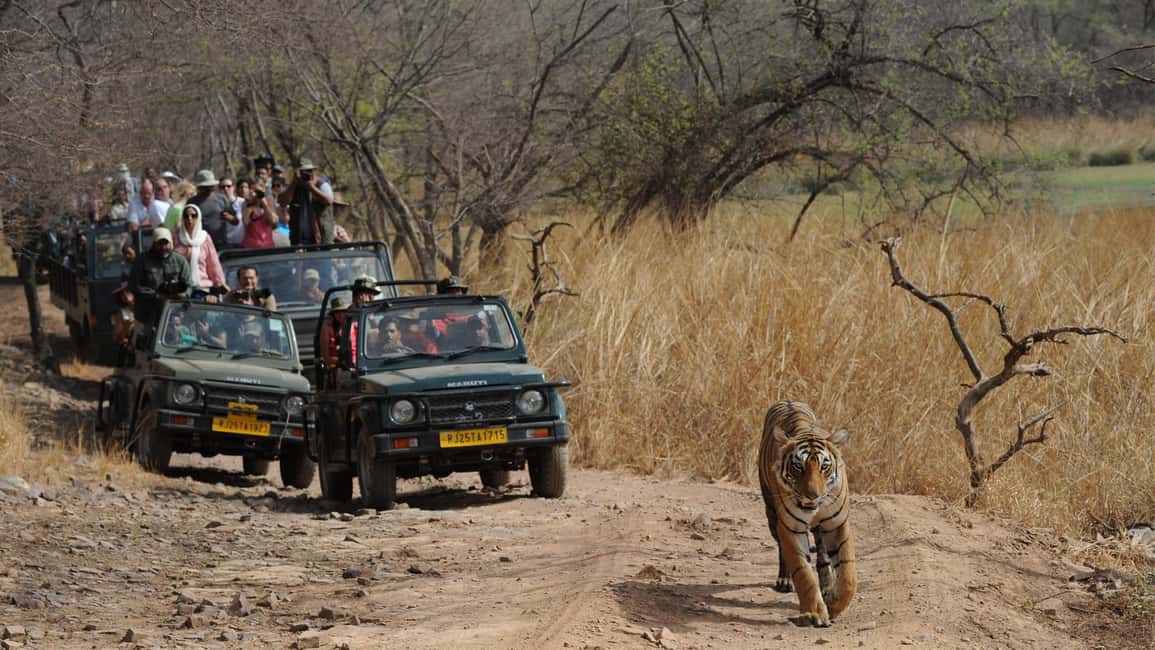
Once you arrive, you’ll head to the park entry gate and complete registration for the safari. This matters because it frames the rhythm of your day: your safari time is tethered to park processes, not just your itinerary.
Then comes the big decision point—sort of. You’re guided toward either a Jeep Safari or a Canter Safari, but the trip notes that it depends on availability. That’s not just logistics trivia. It affects the feel:
- Jeep safaris often feel more nimble for wildlife tracking.
- Canter safaris are bigger and can feel more like you’re moving with a group.
In one experience described, the safari didn’t end up matching the expectation of a fully private setup—people ended up on a van-like vehicle with more seats. The lesson isn’t to panic; it’s to set your expectation correctly: this is a private pickup and guide setup, but the safari vehicle can still be influenced by what the reserve can accommodate that day.
Good news: the included details say you’ll have help like skipping the ticket line and having a live tour guide in multiple languages (English, French, German, Japanese, Russian, Spanish). That reduces the little stress points when you arrive early.
Safari Time in the Tiger Reserve: What the 10:00–13:00 Window Really Means
Your morning safari window is typically scheduled for roughly 10:00 AM–1:00 PM. That’s not random. By late morning you’re into safer daylight for spotting animals, and the reserve’s activity zone tends to be more “readable” than the earliest hours.
The reserve is known for Bengal tigers, but it’s important—again—for your planning—to understand the truth of safaris: you’re not buying a guaranteed tiger encounter. You’re buying access, time, and a trained search effort.
And the value of the safari often shows up in everything around the animal sightings:
- Deer species such as chital and sambar
- Nilgai
- Leopard sightings (when luck allows)
- Birdlife and general habitat activity
If you’re hoping only for tiger photos, you’ll be disappointed. If you’re open to wildlife spotting plus the scenery of the Aravalli terrain, you’ll likely have a more satisfying day even when the big cat doesn’t appear.
One small scheduling reality: some experiences report safari timing that can run late (for example, about half an hour). If your guide also has your fort and temple stops timed tightly, delays can steal minutes from sightseeing. I’d treat Kankwari Fort and Pandupol Hanuman Temple as flexible stops, not sacred appointment times.
Wildlife Odds and How to Make the Day Feel Worth It
Let’s talk about what you can realistically control. You can’t force a tiger to step into view. You can, however, choose how you experience the safari.
Here’s how to play it smart:
- Focus on animal behavior, not only animals. When you spot deer moving, birds acting up, or tracks near a water source, you’re watching the ecosystem do its thing.
- Be ready for heat. One account specifically calls out that it was hot, and in Sariska that’s a real factor. Bring a hat and water, and don’t wait until you feel drained.
- Stay patient and let the search effort work. One guide is praised for patience and for doing their best to find a tiger even when the outcome wasn’t what people wanted.
If you get a tiger, you’ll remember that moment forever. If you don’t, you can still come away feeling you spent the day in real wildlife habitat—not just in a car headed toward a “maybe.”
Kankwari Fort Inside the Park: A Nice Break From Just Wildlife
After lunch, the tour adds historical stops that help break up the wildlife-only focus. The first is Kankwari Fort, described as an ancient fort located within the park area.
This is a good choice because forts offer a different kind of “spotting.” You’re switching from scanning bushes to looking at stone, vantage points, and old structures. In a day that starts around 02:00 AM, this helps prevent safari fatigue.
Two things to keep in mind:
- Fort stops can become a sprint if the safari runs late.
- The best approach is to treat the fort visit as a chance to breathe, reset, and take a few photos—rather than expecting it to be a long museum-style stop.



Pandupol Hanuman Temple and the Mahabharata Connection
Next up is Pandupol Hanuman Temple, tied to the Mahabharata. That mythological connection makes the stop feel more than just a roadside temple. It’s also a quiet counterpoint to the safari intensity.
Temple timing can also be a practical buffer for your day. If the safari schedule shifts, you still likely have an opportunity for a short visit, some calm walking, and a quick moment to step away from the car.
If you plan to visit at a slower pace, keep your expectations realistic: this is still a 12-hour day trip with a long drive back to Delhi. You’ll enjoy the temple more if you don’t try to turn it into a full cultural day by itself.
Lunch, Breaks, and Staying Comfortable on a 12-Hour Day
Lunch is not included, but the plan is straightforward: you eat at a nearby restaurant or resort after the safari. Some of those places are said to offer excellent Rajasthani cuisine, which is a nice bonus because it lets you taste the region after leaving Delhi behind.
This is also where you manage your energy. The safari is concentrated and often alert-feeling, then you sit in transit for hours. If you go for a heavy, greasy meal, you may feel sluggish later. A more balanced plate keeps you comfortable for the fort and temple portions.
The car day can also include comfort stops on the route. In the experiences shared, good drivers kept the day easy with breaks and friendly guidance. That’s another reason private transport is valuable here: the day doesn’t feel like a cattle schedule.
If you’re using this tour with a flight at night, you’ll appreciate that the return is designed to bring you back late—typically around 10:30–11:00 PM.
Price and Logistics: Does $135 Feel Like Good Value?
At $135 per person, this tour isn’t the cheapest way to see Sariska, but it also isn’t wildly priced for what’s included. You get:
- Private pickup and drop-off
- A private guide
- Air-conditioned car
- Bottled mineral water
- Safari access via jeep or canter (availability-based)
- All taxes and parking
Then you pay extra for the one obvious item: lunch.
The value question really comes down to what you care about:
- If you want a tiger safari with minimal hassle from Delhi and you value not driving yourself, the price can feel fair.
- If you’re only looking for sightseeing and would rather travel at your own pace, you may find cheaper options—but you’ll sacrifice the “door-to-door, timed day” convenience.
One caution from the experiences provided: there can be confusion if the safari vehicle arrangement changes last-minute (for example, someone was asked to pay more because the vehicle wasn’t full). My advice: ask your operator to clarify the exact safari vehicle plan before you arrive at the park, and don’t accept surprise price changes once you’re already at the reserve.
Also note: the trip lists private group, but safari vehicle availability can still change your on-the-ground setup. If you’re very sensitive to group size during the safari, confirm how the safari is typically arranged for your specific slot.
Who This Works Best For (and Who Should Skip It)
This is a strong fit if you:
- Want a same-day Sariska experience from Delhi
- Are comfortable with a very early morning and a long car day
- Appreciate wildlife time plus a couple of cultural stops
- Prefer a guide and driver who keep the day moving
It’s not suitable for people with mobility impairments, based on the tour’s own note.
If you’re traveling with kids, it can still work, but be realistic about the early pickup and heat. If you’re an early bird and wildlife-focused, you’ll likely love the pace.
Final Call: Should You Book This Delhi to Sariska Tiger Safari Day Trip?
I’d book this tour if you’re aiming for a practical day that mixes wildlife access with simple, meaningful stops like Kankwari Fort and Pandupol Hanuman Temple. The private pickup from Gurugram/New Delhi/Noida plus an included guide and safari vehicle makes it feel easier than building the day on your own.
I’d think twice if:
- You’re expecting a tiger guarantee (you won’t get one).
- You hate schedule risk. Safari delays can shrink sightseeing time.
- You’re not comfortable paying attention to how the safari vehicle is arranged.
If you do book, go in with the right mindset: you’re buying time in Sariska and the chance to see Bengal tigers and other wildlife, not a guaranteed big-cat encounter. Manage the heat, be patient during the search, and treat every sighting—big or small—as part of what makes the day special.
FAQ
How long is the Sariska tour from Delhi?
The tour duration is 12 hours.
What time is the pickup for the morning safari?
For the morning safari, the pickup time is listed as 02:00 AM.
How far is Sariska from Delhi?
Sariska is about 200 km from Delhi, typically taking 4–5 hours by car.
What type of safari vehicle will I use?
You can take either a Jeep Safari or a Canter Safari, depending on availability.
Is lunch included?
No, lunch is not included.
What languages are available for the live tour guide?
The live tour guide is available in English, French, German, Japanese, Russian, and Spanish.
Can I cancel and get a refund?
Yes. Free cancellation is available up to 24 hours in advance for a full refund.