REVIEW · NEW DELHI
Delhi Street Art Tour
Book on Viator →Operated by Reality Tours & Travel Pvt Ltd · Bookable on Viator
Street art in Delhi is more than wall paint. This half-day tour links Lodhi Garden history with today’s public murals, and it does it with local guidance, small-group pacing, and city transit instead of a car shuffle.
I especially like how the route mixes three very different vibes: trendy Khan Market streets, the calm of a huge garden, and then the story-filled mural blocks in Lodhi Colony. I also like that the tour keeps you moving at a human pace—so you can actually look at details instead of speed-walking past them.
One thing to consider is the weather. The experience works best with good conditions, and if it’s canceled for poor weather, you’ll get a different date or a full refund.
In This Review
- Key points before you go
- Street art in Delhi, paired with tombs and markets
- Price and what you get for about $30
- How the 9:00 start shapes your morning
- Stop 1: Khan Market for street-level context and city energy
- Stop 2: Lodhi Garden’s 15th-century tombs and Mughal-era details
- Stop 3: Lodhi Art District and why the mural stories matter
- Guides and group size: the difference between seeing art and understanding it
- Getting between stops: public transport without the headache
- What to bring and how to pace yourself
- Is this tour worth it for your travel style?
- Should you book the Delhi Street Art Tour?
- FAQ
- How long is the Delhi Street Art Tour?
- What is the starting time and meeting point?
- Where does the tour end?
- How much does it cost?
- What’s included in the price?
- Are admissions required for the stops?
- How big is the group?
- What kind of transportation will we use?
- Is hotel pickup included?
- What if the weather is bad?
Key points before you go
- Small-group feel: the cap is listed as a maximum of 18 travelers, with the tour described as limited to a max of 25.
- Transit-first route: you’ll use public transportation, then add short walks and rides between mural stops.
- Three-neighborhood arc: Khan Market to Lodhi Garden to Lodhi Art District gives you contrast and context.
- Free tastings for the road: water plus a complimentary coffee, tea, or cold drink keeps energy steady.
- Art with explanations: murals are discussed with the artist and story behind the walls, not just a photo stop.
- Stops are admission-free: each listed stop has free admission ticket notes.
Street art in Delhi, paired with tombs and markets
Delhi street art can feel like a modern layer pasted over something older. This tour does the opposite. It sets you up to see how the city keeps speaking across time—first through architecture and monuments in and around Lodhi, then through murals in Lodhi Colony, and finally through the everyday rhythm of Khan Market.
You get the best of both worlds: a calm pocket of greens and stone in Lodhi Garden, then the more open, talk-to-the-walls feeling of the art district. You’ll also get a sense of how people actually live and socialize in these neighborhoods, not just how they pose for photos.
You can also read our reviews of more tours and experiences in New Delhi



Price and what you get for about $30
At $30.21 per person for roughly 3 hours, this is one of those deals where the value comes from the structure. You’re paying for a guided route that connects three specific areas, plus local English support, plus water/cold drink, plus public transport.
It’s not a private driver tour. That means you’re not paying premium prices for comfort—you’re paying for local context and good pacing. In a city like Delhi, that matters. A street art stop without an explanation can turn into generic “nice colors.” With a guide, you start noticing recurring themes, techniques, and the reasons certain walls got painted in the first place.
Also, the tour is described as a shared experience with discounts for groups. If you’re traveling with friends, it can be even better value.
How the 9:00 start shapes your morning
This runs as a half-day with a 9:00 am start. The meeting point is at Inner Circle, Connaught Place (Connaught Place), and the tour ends at Sujan Singh Park North, Sujan Singh Park, Khan Market.
That matters because you’re not stuck doing a long mid-afternoon crawl. You’ll finish while the day is still young, so you can keep exploring afterward—either in Khan Market or farther into central Delhi.
The route is designed to be efficient without feeling like a sprint. Expect a mix of public transport, short rides (some accounts mention bicycle rickshaws and other small rides), and walking inside and around each area. The walking isn’t presented as a marathon, but good footwear helps because you’ll be on your feet while you look up, around, and into alley-like sections.
Stop 1: Khan Market for street-level context and city energy
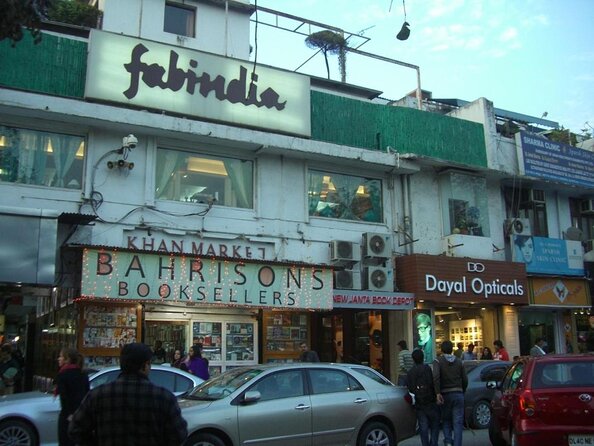
You begin at Khan Market, described as one of Delhi’s posh hangouts where people come to dine, chat in cafes, and shop the latest trends. This stop only runs about 20 minutes, which is just enough time to set your mindset for the rest of the tour.
Khan Market is a useful first chapter because it grounds you in modern Delhi. Before you go see older ruins and then street murals, you get a quick feel for how the city looks and moves right now—clothes, crowds, storefronts, casual conversation. Even if you’re not shopping, it helps you calibrate what “today” looks like so “then and now” hits harder later.
What to watch for here: how people interact with the street (not just the buildings). You’ll also be in a lively area, so it’s a good time to hydrate and get your bearings before the calmer stops.
Stop 2: Lodhi Garden’s 15th-century tombs and Mughal-era details
Lodhi Garden is where the pace slows. This stop lasts about 1 hour, and the setting is a 90-acre garden with tombs, mosques, and bridges built during the 15th-century Sayyid and Lodhi periods.
For me, this is the “oh right, Delhi is layered” moment. The point isn’t only that these are old monuments. It’s that the guide helps you read them—how design choices reflect a particular era, and how the garden layout and architecture work together. The tour specifically mentions the guide explaining nuances of Mughal design, so you’re not just looking at stone from a distance.
The upside: Lodhi Garden gives you breathing room from traffic and noise. It also frames the art portion in a smart way, because you’re learning how Delhi creates meaning through form, not only through imagery.
The consideration: this stop is long enough that you’ll want to actually pause. If you treat it like a quick photo run, you’ll miss the point. Bring your attention, not just your camera.






Stop 3: Lodhi Art District and why the mural stories matter
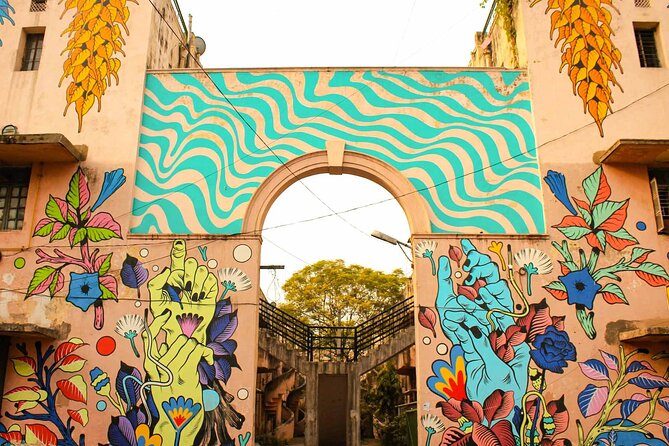
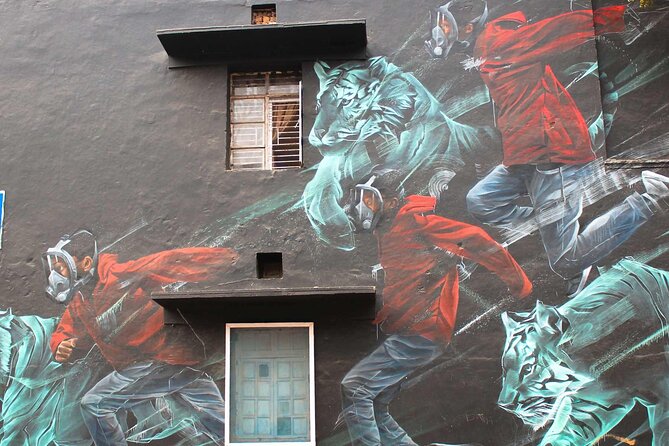
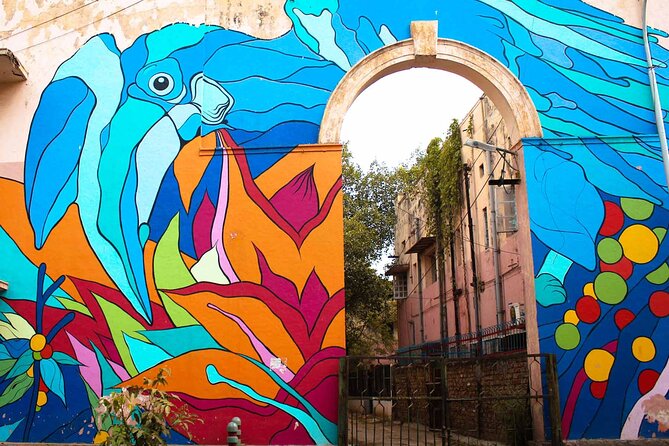
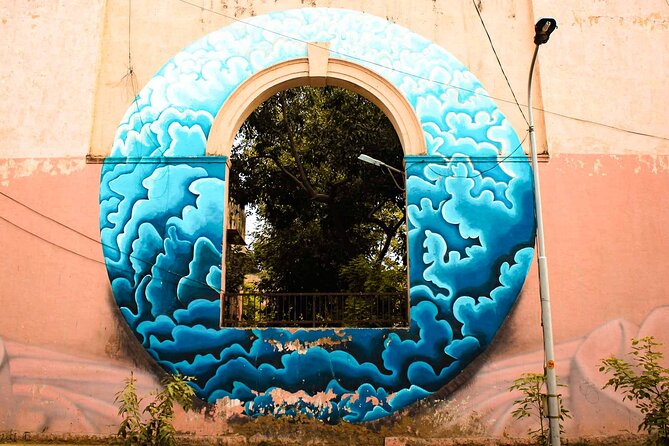
The final stretch goes into Lodhi Art District in Lodhi Colony, described as the heart of street art in Delhi and India’s first public art district. This part runs about 1 hour 30 minutes, and it’s where the tour earns its name.
Instead of stopping at random painted walls, the focus is on the artists and the stories behind the murals. That matters because street art can be misunderstood as just decoration. With the guide acting as an art expert, you start connecting the mural choices to neighborhood identity—what people care about, what changed, and what the artists wanted to say.
If you’re the type who likes to look closely, this is where you’ll be happiest. You’ll likely notice how the compositions repeat familiar patterns, how different walls communicate different messages, and how the neighborhood setting shapes the impact of each piece.
Practical tip for this stop: take your time. The best mural viewing is slow viewing. If you rush, you’ll miss the little details the guide points out.
Guides and group size: the difference between seeing art and understanding it
This is a shared tour, capped at a small number of people—listed as a maximum of 18 travelers, and described elsewhere as a maximum of 25. That size is the sweet spot for a street art walk. Big groups get loud, slow, and hard to manage. Small groups let you ask questions and actually hear answers without shouting.
The guide talent is one of the strongest signals from the experience accounts. Names that show up include Rajiv, Naresh, Stanley, and Chitty. What I like about this kind of setup is that guides aren’t only reciting facts; they’re described as friendly, attentive, and willing to answer questions. That turns the tour into a conversation, which is exactly what you want for street art—because the meanings aren’t always obvious at first glance.
Also, the tours are described as well organized and calm in the middle of a fast-moving city. That combination helps you enjoy the art instead of feeling dragged along.
Getting between stops: public transport without the headache
The tour includes public transport, and the movement style is part of the charm. You get to experience how locals transit and you avoid the logistics headaches of figuring out routes yourself mid-day.
Some accounts specifically mention using the metro, plus short hops by bicycle rickshaw and other small rides, followed by walking. That mix is practical: you’re not wasting time in the wrong places, and you’re not forcing long commutes between very close areas.
One of the smartest “city sense” takeaways here is that the route is built around neighborhoods, not far-flung sights. That keeps the tour focused and makes it easier to keep your brain switched on for each new mural or monument.
What to bring and how to pace yourself
Since this tour requires good weather, check conditions the day of. If it’s hot, plan to lean into hydration and shade where available. Water and a cold drink are included, so you’re not starting empty—but you’ll still feel better if you bring a small personal water habit on top.
Wear shoes that can handle a mix of walking and uneven street edges. You’ll also want something for sun protection if the sky is clear, because Lodhi Garden and mural areas are outdoors and you’ll be looking up often.
If you’re a photo person, this is a great tour for pictures with meaning, not just random snapshots. However, don’t treat every stop as a photo contest. Stop. Look. Then take one or two good shots once you understand what you’re seeing.
Is this tour worth it for your travel style?
This tour fits best if you like these kinds of experiences:
- You want a story-led walk rather than a checklist of sights.
- You enjoy modern street art and want context about artists and themes.
- You like contrast: market energy, garden calm, then mural intensity.
- You’re happy using metro and local transport instead of a private car.
It may not be the best fit if you want long museum-style explanations at each place. Khan Market is quick, Lodhi Garden is structured for viewing, and the mural district portion is where depth happens. You also need to be okay with outdoor time and rely on good weather.
Should you book the Delhi Street Art Tour?
I’d book it if you want Delhi in layers: history with monuments, present-day life with Khan Market, and the neighborhood voice through Lodhi Art District murals. For about $30, the value comes from the guided connections—transit included, free stops, and a route that actually teaches you how to look.
If you’re choosing between a generic city tour and something more focused, this one is the more interesting bet. You’ll leave with clearer ideas about how Delhi expresses itself—from stone to paint—without spending the whole day trapped in traffic.
FAQ
How long is the Delhi Street Art Tour?
It runs for about 3 hours.
What is the starting time and meeting point?
The start time is 9:00 am. You meet at Inner Circle, Block B, Connaught Place, New Delhi (Inner Cir, Block B, Connaught Place).
Where does the tour end?
The tour ends at Khan Market, Sujan Singh Park North, Sujan Singh Park, New Delhi.
How much does it cost?
The price is $30.21 per person.
What’s included in the price?
The tour includes a local English-speaking guide, public transport, and water/cold drink.
Are admissions required for the stops?
Admission tickets are listed as free for Khan Market, Lodhi Garden, and the Lodhi Art District stop notes.
How big is the group?
The group is capped at a maximum of 18 travelers, and the tour is described as having a maximum of 25 participants.
What kind of transportation will we use?
The tour includes public transportation. You should expect a mix of transit plus walking, and some ride segments between areas.
Is hotel pickup included?
No. There is no hotel/residence pickup and drop-off.
What if the weather is bad?
This experience requires good weather. If it’s canceled due to poor weather, you’ll be offered a different date or a full refund.