REVIEW · NEW DELHI
Delhi’s historical 7 hours experience tour
Book on Viator →Operated by SyN Travels · Bookable on Viator
Delhi is a lot. This tour makes it make sense fast. You get a tuk-tuk or rickshaw ride through tight Old Delhi lanes around the spice market, then pivot to major Mughal and British-era stops like Humayun’s Tomb and Qutub Minar with clear explanations from guides such as Shahnawaz. I also like the pacing choice: you’re not just stuck in a car, and you do get short, meaningful walks where the city’s daily life is actually visible.
One thing to consider: it’s a packed 7-hour itinerary, so you will move from site to site and you may not spend long inside every monument, especially where entry tickets are not included.
In This Review
- Key things that make this Delhi historical tour work
- The quick idea: why this 7-hour route feels efficient (and still human)
- Tuk-tuk and rickshaw riding through Old Delhi streets
- Jama Masjid: Shah Jahan’s huge mosque, built 1650 to 1656
- Old Delhi spice market riding: Khari Baoli in action
- The Red Fort stop: a major Mughal symbol from the outside
- Raj Ghat: Gandhi’s cremation ground and a calmer reset
- Agrasen Ki Baoli: an old reservoir you can feel the history in
- India Gate: the 42-meter monument and the civic postcard view
- Optional Gurudwara Bangla Sahib: calm, meaningful, and very central
- Humayun’s Tomb: the garden tomb that many people call the highlight
- Lotus Temple: the white marble lotus shape, and why Monday matters
- Qutub Minar: the 12th-century tower that ends the day with scale
- Price and value: what $29 buys you in the real world
- Who this tour suits best (and who should pick something else)
- Should you book this Delhi 7-hour historical tour?
- FAQ
- How long is the Delhi historical tour?
- What is the price per person?
- Is hotel pickup included?
- What is included in the tour price?
- Is lunch included?
- Which sites have admission tickets not included?
- Is Lotus Temple open every day?
- What happens if the weather is bad?
Key things that make this Delhi historical tour work
- Tuk-tuk or rickshaw time in Old Delhi so you see the spice-market street energy without losing hours to traffic.
- Mughal-to-New-Delhi routing that hits famous names across both halves of the city in one day.
- Guides like Shahnawaz who explain history in an easy-to-follow way, and can keep things flexible.
- Most monument stops are free, while a few have admission tickets not included so you can plan your spend.
- Hotel pickup with an air-conditioned vehicle, which matters in Delhi heat and crowds.
- Lotus Temple and Gurudwara options let you tailor the day depending on what you want most.
The quick idea: why this 7-hour route feels efficient (and still human)
Delhi can overwhelm your senses in the first ten minutes. This tour’s big strength is that it respects reality. You get a mix of loud-and-busy Old Delhi moments (smells, sights, movement) and calmer monument settings (gardens, courtyards, big architecture) without pretending you can see everything in a week.
The route also makes sense geographically. You start with Old Delhi landmarks, then work your way toward New Delhi icons and Mughal monuments. That saves you from crisscrossing the city in peak traffic, and it helps you keep a steadier rhythm for photos and explanations.
And yes, this is the kind of tour where the guide matters. In the feedback you’ll see names like Shahnawaz and Sha, with praise for being well prepared and flexible, plus one-on-one style service for solo travelers. That is exactly what you want when the city is chaotic and you’re trying to understand what you’re actually looking at.
You can also read our reviews of more historical tours in New Delhi



Tuk-tuk and rickshaw riding through Old Delhi streets
This is not a sit-and-stare city sightseeing day. One of the core experiences is an open tuk-tuk or rickshaw ride through narrow lanes on the way to the spice market area around Chandni-style bazaars and Khari Baoli.
Why this matters for you:
- You see the street layout at human speed. Delhi’s Old Delhi lanes are tight, and from a car you’d mostly get whiplash and partial views.
- You smell the spices and feel how trade actually moves. The spice market air is heavy and layered, and it becomes part of the experience, not just background.
What to expect:
- You’ll spend about 45 minutes on this ride, with the focus on watching day-to-day activity rather than just taking a single photo spot.
- It’s a sensory stop. If you’re sensitive to strong smells or crowded conditions, go in with that in mind.
A small practical note: the tour combines vehicle time with walking. That means you’ll want comfortable shoes and a bit of patience for street-level movement and crowd flow.
Jama Masjid: Shah Jahan’s huge mosque, built 1650 to 1656
Your morning-or-midday start includes Jama Masjid, a major Mughal-era mosque built by Emperor Shah Jahan between 1650 and 1656. It’s described as the largest mosque in India, built with red sandstone and white marble.
This stop is special because it’s not just architecture. It’s architecture on a scale that forces you to look up and then to notice details. The red-and-white color contrast is dramatic, and the size makes it feel like a city inside a city.
How to plan your time:
- You’ll have around 30 minutes here.
- The tour does not include the admission ticket for this stop, so if you want entry, expect that to be an extra cost.
Best for:
- First-timers who want a top-tier Mughal monument early, before Delhi’s crowds and heat get fully intense.
Possible drawback:
- With only about half an hour, you’ll need to prioritize what you want most: a quick sweep and photos, or a slower look for details.
Old Delhi spice market riding: Khari Baoli in action
After Jama Masjid, the itinerary pivots straight into what most people really come to Old Delhi for: a spice market where trade is still happening.
This portion is built around a busy, sensory route through the market area (often associated with Khari Baoli and spice trading). The emphasis is on seeing daily life—traders at work, goods moving, and the smell of mixed spices hanging in the air.
You’ll get about 45 minutes, and this stop specifically includes the admission ticket for the ride experience. That’s good value because it avoids the common issue where you think a tour covers everything but then you still get hit with extra fees.
What you’ll probably love most:
- The contrast between static monuments and living street commerce.
- The feeling that you’re being guided through the practical spaces people use every day, not just a highlight strip for tourists.
What to watch for:
- Crowd density. Old Delhi marketplaces can get packed, so build in the mindset that you may have to pause and reposition for photos.
The Red Fort stop: a major Mughal symbol from the outside
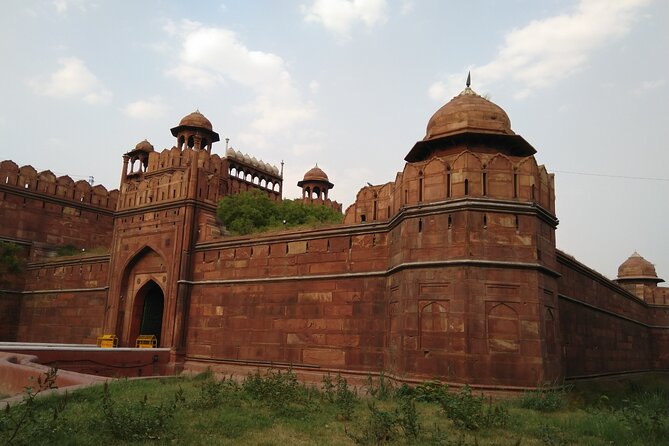
The itinerary includes a stop for the Red Fort, described as Shah Jahan’s massive citadel built in 1648 as part of his capital city, Shahjahan-Abad. In this tour format, it’s presented as a symbolic stop.
That’s not a bad thing. Red Fort is a huge draw, and even outside the main complex you can appreciate the scale and the Mughal-era idea of how power was designed into the city.
What you should know:
- The provided information here describes it as a major sight, but it doesn’t clearly state admission inclusion for the Red Fort itself. So treat this as a time for viewpoints and context, then plan extra time or ticketing on another day if you want a full inside visit.
Best for:
- People who want to connect the dots between Mughal rule, monumental architecture, and the geography of Old Delhi.






Raj Ghat: Gandhi’s cremation ground and a calmer reset
Then you shift gears to Raj Ghat, the cremation ground of Mahatma Gandhi. After his assassination, the last rituals were performed here. It’s described as a beautiful garden area where visitors come to reflect and learn.
This stop works because it resets your brain after busy lanes. It’s quieter, with a more contemplative pace. Even if you know the basics of Gandhi’s role, this kind of place gives you an emotional anchor.
Timing:
- You’ll have about 30 minutes.
- Admission is listed as free.
What to expect:
- A gentle moment of stillness in the middle of a city-day sprint.
Agrasen Ki Baoli: an old reservoir you can feel the history in
Next is Agrasen Ki Baoli, a reservoir historically used to harvest rainwater for local community use. It’s described as an attractive, old site in New Delhi, tied to the 14th century, with mention that it was built by Lodhis or Tughlaqs and remained popular.
This stop is a good choice for you if:
- You’re tired of only seeing the headline monuments.
- You like places that feel partially off the tourist circuit but still matter historically.
Timing:
- About 20 minutes, with free admission.
Practical reality:
- Because it’s shorter, treat it as a photo-and-context stop. Ask the guide what makes it functionally important as a water structure, not just a beautiful ruin.
India Gate: the 42-meter monument and the civic postcard view
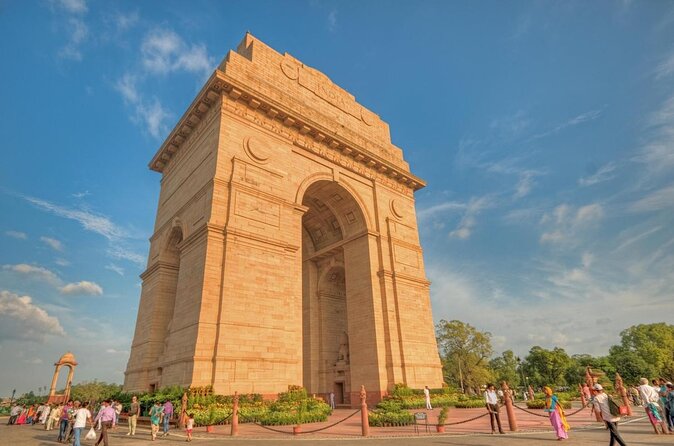
After that, you move to India Gate, one of Delhi’s most familiar New Delhi landmarks. It’s placed in a garden setting and described as looking over the President House to the west. The gate is 42 meters high.
This part is great for atmosphere and orientation. India Gate helps you understand why New Delhi feels more planned: wider roads, formal garden spaces, and monuments placed like anchors.
Timing:
- Around 30 minutes, with free admission.
What you should do:
- Use this stop for an easy photo, then listen to the guide’s framing so the monument doesn’t feel like just another big structure.
Optional Gurudwara Bangla Sahib: calm, meaningful, and very central
You’ll also see Gurudwara Bangla Sahib offered as an optional stop. It’s described as the biggest Gurudwara in Delhi for the Sikh religion, and it’s among nine old gurudwaras of Delhi.
This is listed with free admission and about 30 minutes.
Why it can be worth your time:
- It gives you a different thread in the city’s religious life, beyond Mughal architecture.
- If you want one spiritual stop without a huge time commitment, this is the kind of option that works.
Small caution:
- It’s optional. If your priority is purely Mughal monuments, you might skip it to preserve time for later stops.
Humayun’s Tomb: the garden tomb that many people call the highlight
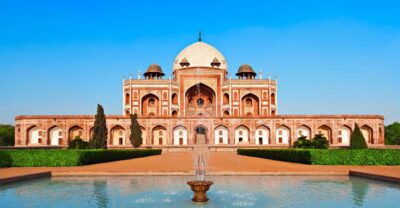
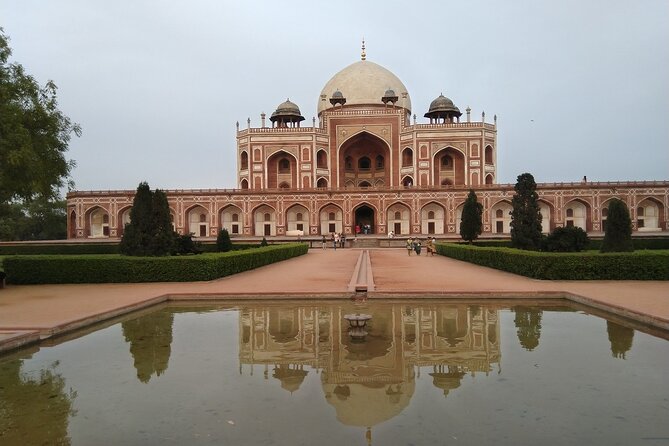
If you like your monuments with a setting, Humayun’s Tomb is one of the best matches on this route. It’s described as the last resting place of the Second Mughal Emperor of India, in a lush green garden with pathways and water channels around the main tomb.
This stop is frequently praised as a standout. People often call it the highlight because it’s more than a building. It’s a whole designed garden space, and the architecture feels calm even while the surrounding city is loud.
Timing:
- About 45 minutes.
- Admission is listed as not included for this stop.
Best way to use your time:
- Don’t race. The layout is made for a slower look. If you’re rushed, you miss why it feels so special.
Lotus Temple: the white marble lotus shape, and why Monday matters
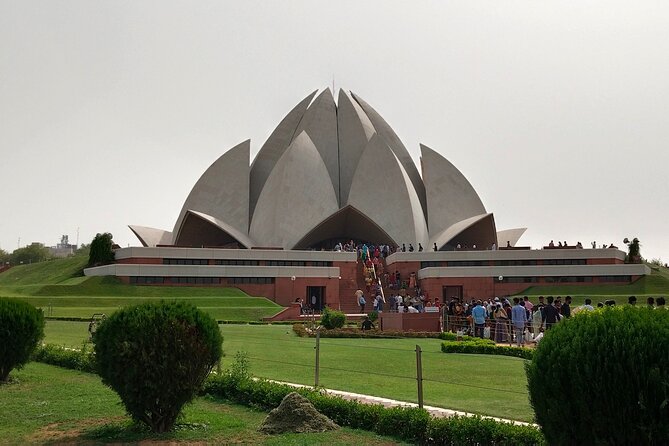
Next is Lotus Temple, offered as optional. It’s described as a garden temple shaped like a lotus flower and connected to the Bahai religion. It’s located near the popular computer market of Nehru Place, and the big practical detail: it’s closed on Monday.
Timing:
- About 30 minutes.
- Admission is listed as free.
Why it can be a great mid-afternoon choice:
- It’s a visual break from stone-and-fort style monuments.
- The lotus shape reads instantly in photos and on the ground.
If you’re planning based on day of week:
- If your day includes Monday, swap expectations. The tour notes the closure, so you’ll want your guide to adjust your plan.
Qutub Minar: the 12th-century tower that ends the day with scale
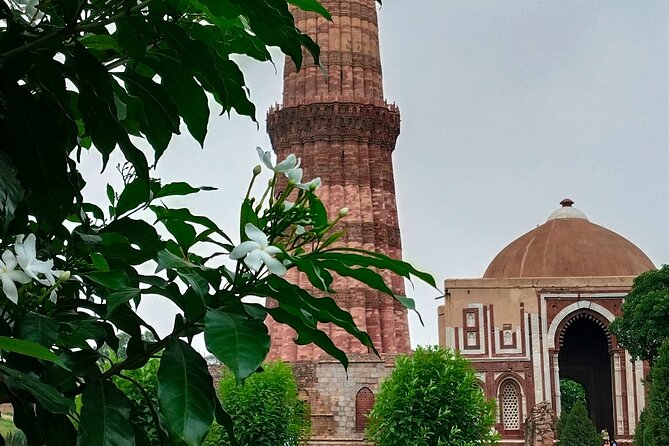
The last named major stop is Qutub Minar, an 800-years-old tower built to commemorate the dominion of the Sultan dynasty by Qutbuddin Aibak in the 12th century. It’s described as a brick and red sandstone tower.
This is the kind of sight that changes your perspective. It’s tall, old, and it gives you a sense of scale that’s different from the Mughal-era gardens.
Timing:
- About 40 minutes.
- Admission is listed as not included for this stop.
Who will love it:
- Architecture fans and anyone who likes the story of how Delhi’s dynasties changed the skyline over centuries.
Price and value: what $29 buys you in the real world
At $29.00 per person for an approximately 7-hour private tour, the value mostly comes from three things you’d otherwise pay for or struggle to organize:
- Transport comfort: an air-conditioned vehicle with bottled water, plus parking fees handled.
- Site coverage: you hit multiple major categories of Delhi—Old Delhi bazaars, Mughal monuments, and New Delhi memorial architecture.
- Guide-led context: guides like Shahnawaz (and the flexible, organized service mentioned in the feedback) can turn quick sightseeing into actual understanding.
What you should budget for:
- Lunch is not included, so you’ll need a plan for food (either before, during, or after).
- Some monuments list admission tickets not included, including Jama Masjid, Humayun’s Tomb, and Qutub Minar. If entry is important to you, it’s wise to carry some extra cash or card for those.
Also, you get a mobile ticket and the tour includes private transportation. That matters in Delhi because the time you save from dealing with street logistics can be the difference between a good day and a stressful one.
Who this tour suits best (and who should pick something else)
This tour fits you well if:
- You’re short on time and want a credible cross-section of Delhi’s key landmarks in one day.
- You like the combo of market energy plus major monuments.
- You want a private guide experience rather than a huge group.
You might choose a different option if:
- You want long, inside visits at every monument. This day is designed for smart coverage, not slow museum pacing.
- You already know Delhi’s history deeply and just want free-form photo time. You may find the schedule tight.
Should you book this Delhi 7-hour historical tour?
If you want a day that helps you make sense of Delhi quickly, this is a strong pick. The biggest wins are the Old Delhi tuk-tuk/rickshaw ride with spice-market street life, plus the mix of monumental sights like Jama Masjid, Humayun’s Tomb, and Qutub Minar. The private setup and well-regarded guides such as Shahnawaz also push it from basic sightseeing into something more worth your time.
Book it if your priority is smart coverage and good guidance. Bring flexibility, expect a packed route, and plan for lunch plus any separate monument entry fees where they are not included.
FAQ
How long is the Delhi historical tour?
The tour runs for about 7 hours (approx.).
What is the price per person?
It costs $29.00 per person.
Is hotel pickup included?
Yes, pickup is offered, and private car transfers are included.
What is included in the tour price?
Included items are an air-conditioned vehicle, bottled water, private transportation, parking fees, and monument fees if the option with entrance is chosen. The Old Delhi rickshaw/spice market ride includes an admission ticket.
Is lunch included?
No, lunch is not included.
Which sites have admission tickets not included?
The tour lists admission ticket not included for Jama Masjid, Humayun’s Tomb, and Qutub Minar.
Is Lotus Temple open every day?
No. Lotus Temple is closed on Monday.
What happens if the weather is bad?
The experience requires good weather. If it’s canceled due to poor weather, you’ll be offered a different date or a full refund.
If you tell me your travel dates (and whether you want Lotus Temple and/or the Gurudwara stop), I can help you choose the best priorities for this exact 7-hour schedule.