REVIEW · NEW DELHI
3-hour Old Delhi Heritage Walking tour with Rickshaw Ride
Book on Viator →Operated by Go City Adventures · Bookable on Viator
Old Delhi can feel like a living maze. This 3 to 4 hour walk gives you a route that hits big landmarks and the daily market life around Jama Masjid and Khari Baoli, without leaving you to figure it all out on your own. You also move with a guide, so the crowd noise turns into clues instead of confusion.
I especially like the mix of sacred places and street markets in one tight loop. You’ll see Mughal-era architecture at Jama Masjid, pause at painted Jain havelis, then end up at a Sikh shrine where people cook and serve in the langar kitchen. Another favorite for me is the transportation variety: walking plus a rickshaw ride and a cycle rickshaw into the spice market, which makes Old Delhi feel practical instead of overwhelming.
One drawback to keep in mind: this is a packed, stop-by-stop tour, and it can feel rushed if you’re hoping for long, quiet time in each place. Also, Jama Masjid has a separate entrance fee (₹450), so the low starting price isn’t the full cost.
In This Review
- Key points at a glance
- Why this 3-hour Old Delhi route makes sense
- Meeting at Connaught Place and getting into Old Delhi
- Jama Masjid: Mughal courtyards, big domes, and the calm inside
- Dariba Kalan and Kinari Bazaar: trades you can read with your eyes
- Naughara’s painted havelis and the Jain temple pause
- Paranthey Wali Gali and Gurudwara Sis Ganj Sahib with langar
- Khari Baoli by cycle rickshaw: Asia’s spice market in motion
- Rickshaw ride plus snacks: fun, but don’t assume every group gets the same stops
- Price and logistics: $7.92 looks low, so know what to budget
- Pacing, shopping time, and how to keep the tour focused
- What this tour feels like on the ground
- Who should book this, and who might want a different plan
- Should you book this Old Delhi heritage walk with rickshaw ride?
- FAQ
- How long is the Old Delhi Heritage Walking tour with rickshaw ride?
- Is pickup and drop-off included?
- Do I need to pay an entrance fee for Jama Masjid?
- What should I wear and do at places of worship?
- Is a rickshaw ride and spice market visit included?
- Is free cancellation available?
Key points at a glance

- Tight route, big payoff: you fit mosques, bazaars, Jain sites, and a major spice market into about 3 to 4 hours.
- Real food moments: street snacks are part of the experience, with examples like jalebi, samosa, and chai showing up depending on the group.
- Shoes off, respect on: you remove shoes at places of worship, and knees/shoulders must be covered.
- Cycle rickshaw through the spice lanes: you ride into Khari Baoli, described as Asia’s largest spice market.
- Metro ticket included: along with pickup options and an English-speaking guide.
- Shopping pressure is a wildcard: some past tours had too much vendor time, so go in expecting a firm pace and be ready to say no politely.
Why this 3-hour Old Delhi route makes sense
Old Delhi is not the place where you want to wander “to see where it goes.” Streets are narrow, people move fast, and storefronts blur together until you’re not sure what you just walked past. This tour solves that problem by giving you a structured line through the area, with enough time at each stop to notice details.
You also get multiple “angles” on the neighborhood. One stop is architectural and historical, another is about trades and old shopfronts, and another is about how people actually live right now. If your time is short, this format is a smart use of a few hours.
Your group size is capped at 50, which matters in a crowd-heavy place. If you’re traveling with kids, older adults, or anyone who moves slowly, this still can be manageable because the stops are frequent and the route is short—but you’ll want comfortable shoes and a bit of patience.
You can also read our reviews of more walking tours in New Delhi


Meeting at Connaught Place and getting into Old Delhi

You start at United Coffee House, Inner Circle, E-15, Block E, Connaught Place. That location is helpful because Connaught Place is a common reference point for arriving travelers, and it’s easier to find than some deeper Old Delhi corners.
From there, the tour can include pickup and drop-off (and there are also upgrades that mention transfers from anywhere in Delhi). Even when you’re using public transport, the tour includes a Metro/Subway ticket, which is one less thing to juggle while you’re adjusting to the city.
Practical tip: if you’re arriving on your own, plan to be early. One review story described a confusing late-arrival situation, and in a place like Old Delhi, being a few minutes off can turn into stress. Aim to be on time, keep your meeting spot saved on your phone, and don’t be afraid to ask your guide for a clear next-step plan.
Jama Masjid: Mughal courtyards, big domes, and the calm inside
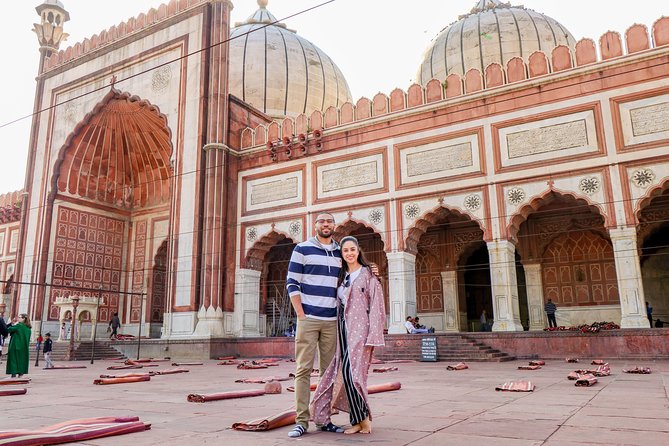
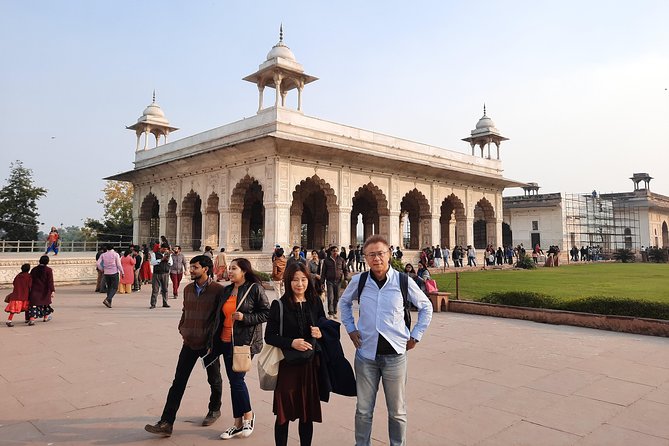
Jama Masjid is the tour’s anchor stop. You’ll spend about 45 minutes there, with time to admire the Mughal-style courtyards and domes while your guide explains stories tied to Shah Jahan and Old Delhi’s Islamic heritage.
Plan your budget for this: the Jama Masjid admission fee is not included and is listed as ₹450 per person. The base tour price looks easy, but this is the one predictable extra cost you should have ready.
Also plan for the worship-site rules:
- You’ll need knees and shoulders covered.
- You’ll remove shoes at places of worship, and they’re stored safely for you.
If you’re sensitive to crowds, Jama Masjid can still feel busy, especially near entry points. I like that the tour doesn’t try to “power through” it; you do get a real chance to look up and slow down long enough to catch the architecture.
Dariba Kalan and Kinari Bazaar: trades you can read with your eyes
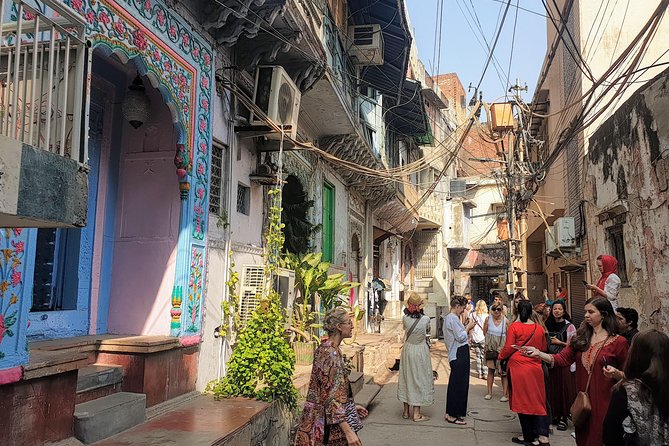
After Jama Masjid, you head into two market lanes that feel like Old Delhi’s behind-the-scenes economy.
Dariba Kalan is the jewelry lane. You get about 10 minutes walking through shops known for silver and traditional ornament work, and your guide points out older facades and explains the trading legacy behind the street. Even with a short stop, this is useful because it teaches you how to interpret what you’re seeing. Instead of “pretty shop, pretty shop,” you start noticing the craft types and the neighborhood’s role in supply chains.
Then comes Kinari Bazaar, the wedding and trousseau market. Expect about 15 minutes here, with shelves stacked with laces, borders, sequins, and decorations. This stop is great if you want a window into North Indian wedding culture without needing a full separate trip. The details are visual and fast to absorb, which fits the tour’s short format.
A realism check: market stops can feel like they’re aimed at selling. Some past experiences included too much time at shops. If you want the cultural part more than the shopping, keep your attention on what the guide says about what’s being made and why, not on trying to browse everything.
Naughara’s painted havelis and the Jain temple pause

Next you slow down in a quieter pocket: Naughara, the row of nine houses. You’ll get about 20 minutes to pause in a cul-de-sac with beautifully painted havelis, and your guide connects the architecture to Jain merchant history. This is a photo-friendly break from the traffic and crowd pressure of the bazaar streets.
Then you move to a Jain Temple, with around 15 minutes inside. You’ll be able to observe intricate carvings, painted ceilings, and calm ritual moments that reflect Jain principles like non-violence and simplicity.
This stop is the one I’d call “breathing room,” even though you’re still in a crowded city zone. It helps your mental map. After mosque and market sensory overload, the temple’s quieter rules and steady pace make the whole tour feel more balanced.
If the temple is closed on the day you go, don’t assume it’s a failure of the tour. One review noted it was closed during their visit, and that sort of mismatch can happen with heritage sites in working neighborhoods.
You can also read our reviews of more historical tours in New Delhi



Paranthey Wali Gali and Gurudwara Sis Ganj Sahib with langar
There’s a quick stroll past Paranthey Wali Gali, the famous lane for sizzling stuffed breads. The tour doesn’t frame it as a full food crawl, but it’s a good moment to connect the sights with the smells you’ve already been picking up around Old Delhi.
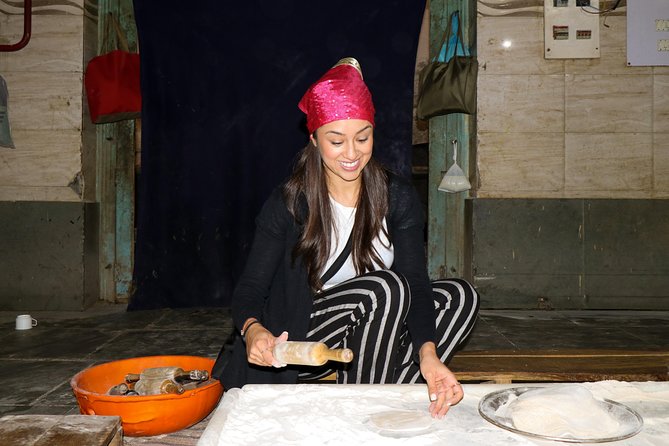
The real heart here is Gurudwara Sis Ganj Sahib. You’ll spend about 30 minutes, and the experience is more than just architecture. You explore the shrine and you also learn about the langar—the community kitchen—where volunteers cook and serve food. Seeing people working side by side for service is one of the clearest ways to understand Sikh seva in a non-abstract way.
One detail I really value from this stop: you’re not only being told about the idea. You can watch the process—something that many visitors find sticks with them long after the tour ends.
Dress code still applies at places of worship, so plan your outfit accordingly. And expect the shrine area to be populated. A face mask was suggested by a reviewer because the spice smell in the broader area can be strong; it’s not required, but it’s a reasonable comfort option if you’re sensitive.
Khari Baoli by cycle rickshaw: Asia’s spice market in motion

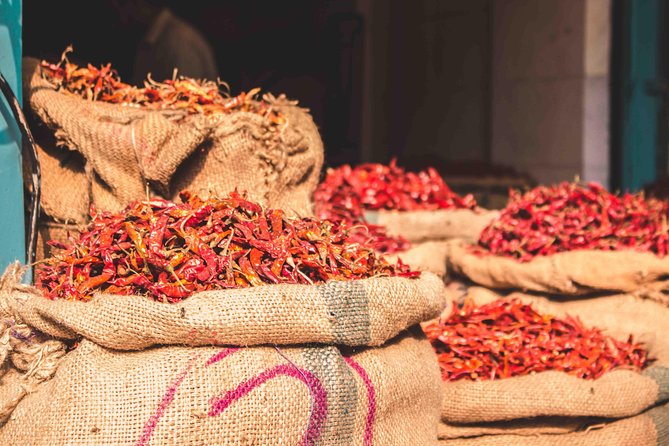
This is the stop that turns “market talk” into a full sensory experience. Khari Baoli is described as Asia’s largest spice market, and the tour includes a cycle rickshaw ride into the spice lanes.
You’ll get about 30 minutes here: walking through fragrant lanes, learning how spices are used in Indian cooking and Ayurveda, and interacting with local traders. Even if you don’t buy anything, you learn how spices move from bulk trade to everyday meals. That knowledge changes what you see the next time you spot a spice stall back home.
What to expect physically: the area is busy and the air can be intense. If you have asthma, allergies, or just don’t enjoy strong aromas, this is where a mask and a short break plan can make the experience more comfortable.
Also, remember that strong smells don’t automatically mean the food is unsafe. Still, keep your boundaries. If your stomach is sensitive, stick to what you can handle and use the guide to help you decide what makes sense.
Rickshaw ride plus snacks: fun, but don’t assume every group gets the same stops
The tour includes a rickshaw ride and mentions snacks in the experience summary. Some reviews described enjoying snacks along the way—jalebi, samosa, and chai showed up in at least one account—so it’s fair to say you’re likely to taste something classic.
That said, not every experience matches the exact written promise. One review complained that snacks were not provided, and another set of feedback raised concerns about time spent at vendor locations. So here’s how I’d manage expectations:
- Ask your guide early what the food portion includes that day.
- If snack time is skipped or cut, you can politely request clarification or a reset of the plan.
- Keep your goals cultural, not shopping-focused. If vendor time becomes too long, you can steer the conversation back to history and what you’re seeing.
The rickshaw ride itself is often the highlight because it changes your angle on traffic. Old Delhi streets can be chaotic at walking speed, but the ride gives you motion and perspective at once. One review even mentioned using multiple transport modes across the tour, which is one reason the pacing feels like an adventure rather than a lecture.
Price and logistics: $7.92 looks low, so know what to budget
At $7.92 per person, this tour is priced like a bargain—especially for a guided route through major landmarks. You’re paying for an English-speaking guide, a structured itinerary, and included experiences like transport components (including a Metro/Subway ticket) and rickshaw ride time.
But the key value equation has two parts:
- Included: guide, certain transport elements, and multiple site stops.
- Not included: Jama Masjid entrance fee (₹450 per person), plus recommended tips.
So the real cost isn’t just $7.92. It’s $7.92 plus ₹450, and potentially small extra moments depending on the day. Still, for a first-time Old Delhi overview in a short time window, it can be a strong deal.
If you’re considering a private upgrade or hotel transfers, understand that the price likely rises, but the trade-off is more control over timing and pace. In a place like Old Delhi, that control can be worth it if you’re worried about being rushed back before your evening plans.
Pacing, shopping time, and how to keep the tour focused
A few reviews flagged a common tension in market-area tours: the line between cultural commerce and hard selling. In one case, the tour felt steered toward shops, and in another it turned into a rug or handicrafts pitch late in the day.
Here’s the practical takeaway for you: go in knowing the tour may include stops where you see products up close, and it can feel awkward if you expected all culture with no sales pressure. Your best defense is behavior.
- If you don’t want to buy, stay calm and friendly, and keep moving with the group.
- Ask your guide to prioritize photos and explanation over browsing if the tour starts to lag.
- If you’re on a tight schedule, say that clearly at the start so the guide can pace accordingly.
The good news: many accounts highlighted a respectful, safe feeling and strong guide support. Some people mentioned guides like Deepak, Neha, Isha, Kanika, Suneel, Nikhil, and Abby by name, often praising clear communication and a sense of safety. Your guide quality can vary by day, but the tour format is designed to keep you oriented.
What this tour feels like on the ground
You’ll be in walking mode for most of the itinerary, with short stops and frequent transitions. That means moderate fitness is enough, but not everyone loves Old Delhi-style walking—crowds and uneven movement can add up fast.
One more thing: this tour is designed for first-timers who need help understanding what they’re looking at. Your guide’s job isn’t just to escort you; it’s to explain what each lane represents. That’s why the itinerary jumps from architecture to crafts to food lanes. The learning is in the pattern.
And if you’re traveling solo, the group format can be a comfort. A few review stories described solo travelers feeling safe and glad they had someone to navigate the area.
Who should book this, and who might want a different plan
This tour is a good fit if:
- You have only a half day and want a structured Old Delhi introduction.
- You enjoy street markets as culture, not just scenery.
- You’re okay with shoe removal and covering up at worship sites.
- You want the spice market experience without organizing transport and timing yourself.
You might skip or choose a private-focused alternative if:
- You hate crowded spaces and scent-heavy environments.
- You’re very sensitive to being pressured into shopping moments.
- You need long stays inside each landmark rather than short, high-pace viewing.
The tour also helps if you’re trying to get your bearings fast. One of the tour’s strengths is that it builds a mental map of Old Delhi in a few hours—mosque area, craft lanes, shrine area, then spice lanes—so the rest of your visit becomes easier.
Should you book this Old Delhi heritage walk with rickshaw ride?
If you want the best use of a short afternoon in Old Delhi, I think this tour is worth serious consideration. The route hits the landmarks that most people come for—Jama Masjid, Gurudwara Sis Ganj Sahib, and Khari Baoli—while also showing market lanes that make Old Delhi feel like a living place.
Book it if you’re flexible, you can handle crowds, and you’re happy to follow a guided pace. Especially if it’s your first time in Delhi, having a guide route you through the chaos is a real benefit.
Hold off or be cautious if you strongly dislike vendor pressure or you need a guarantee of slower time at each stop. This is a short tour with lots packed into it, and on some days the balance may tip too far toward commerce. If you go with clear expectations—cultural learning first—you’ll get more out of it.
FAQ
How long is the Old Delhi Heritage Walking tour with rickshaw ride?
The tour runs about 3 to 4 hours.
Is pickup and drop-off included?
Pickup and drop-off are offered, and they’re listed as included in the tour details.
Do I need to pay an entrance fee for Jama Masjid?
Yes. Jama Masjid admission is not included, and the fee is listed as ₹450 per person.
What should I wear and do at places of worship?
You must cover your knees and shoulders. You’ll also need to remove shoes at places of worship, and they will be safely stored for you.
Is a rickshaw ride and spice market visit included?
Yes. The tour includes a rickshaw ride, and it includes a cycle rickshaw ride into Khari Baoli, described as Asia’s largest spice market.
Is free cancellation available?
Yes. You can cancel up to 24 hours in advance for a full refund.