REVIEW · NEW DELHI
Old Delhi & Spice Market Tour
Book on Viator →Operated by Reality Tours & Travel Pvt Ltd · Bookable on Viator
Old Delhi moves fast and close. This 3-hour Old Delhi & Spice Market tour is a practical way to see real street life, monuments, and working markets in one shot.
I especially like the motorized rickshaw ride that threads past big landmarks like Red Fort, plus the walking stops led by a local English guide. I also love the combination of Khari Baoli spices and Gurudwara Sis Ganj Sahib, where you learn how the free community kitchen serves food daily.
One thing to plan for: you’ll be walking through wholesale market areas, not souvenir-shopping zones, so come with curiosity, not shopping expectations.
In This Review
- Key things I’d lock in before you go
- Old Delhi by motorized rickshaw: how the street layout makes sense
- Your guide’s rhythm: markets first, monuments second
- Fatehpuri Mosque: a quick look that actually changes your perspective
- Khari Baoli spice market: what to notice (and how to enjoy it)
- Chandni Chowk and Pasar Chandni Chowk: Old Delhi’s old bones
- Red Fort from the outside: photos, facts, and a reality check
- Jain and Shiva temples: quiet snapshots amid the noise
- Gurudwara Sis Ganj Sahib and the free kitchen: the stop that lingers
- Tea in Kinari Bazaar: a small pause that keeps the day fun
- Price and value: is $27.96 worth it for 3 hours?
- Group size and pacing: how to get the best experience
- Who this tour suits best (and who might want another plan)
- Should you book the Old Delhi & Spice Market Tour?
- FAQ
- FAQ
- How long is the Old Delhi & Spice Market Tour?
- What’s the price per person?
- What’s included in the tour?
- Is hotel pickup and drop-off included?
- Where do I meet the tour?
- How big is the group?
- What are some of the main places you stop at?
- Do I need to pay entry fees at these stops?
- Do I get a mobile ticket?
Key things I’d lock in before you go
- Motorized rickshaw ride that gives you a moving window onto Old Delhi traffic and sights
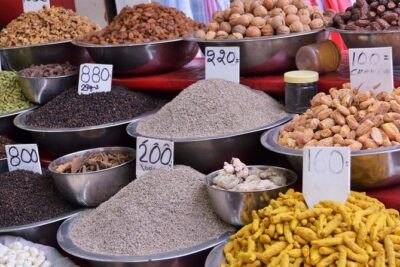
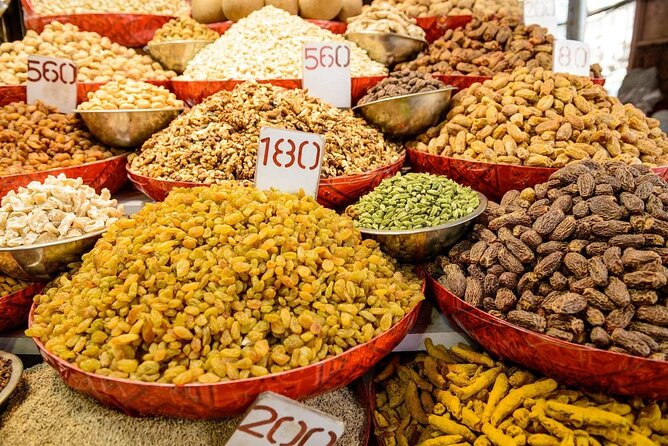
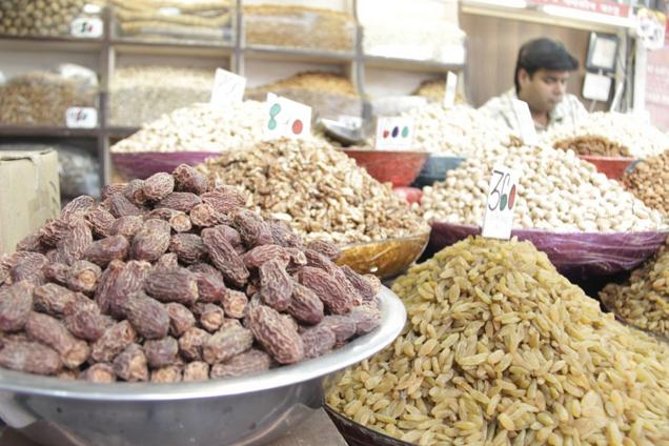
- Khari Baoli: one of Asia’s largest spice markets, packed with spices, nuts, herbs, and chili
- Religious stops with context at Fatehpuri Mosque, Jain and Shiva temples (outside views), and Gurudwara Sis Ganj
- Gurudwara Sis Ganj’s free kitchen: learn how it serves over ten thousand people every day
- Tea or a cold drink stop in the Kinari Bazaar area as a breather from the street scene
- Small group size (max 15) so the guide can keep you moving safely
Old Delhi by motorized rickshaw: how the street layout makes sense

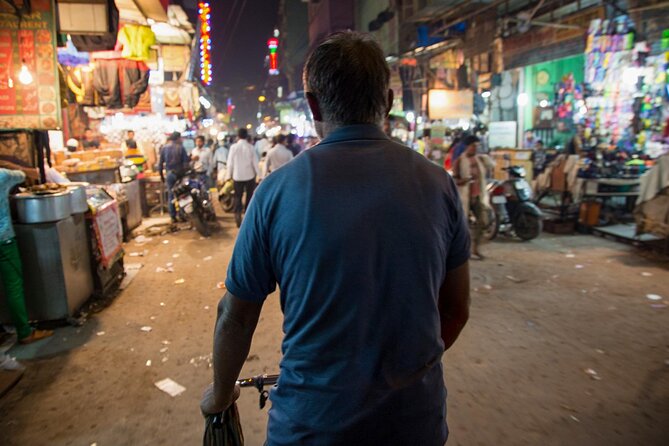
The best part of starting with a motorized rickshaw is that it lets you feel Old Delhi’s geography before you start judging where everything is. Streets here are narrow, lanes twist, and pedestrians spill across the road. From the rickshaw, you see major landmarks referenced around the neighborhood, including Red Fort and Jama Masjid mentioned as key sights in the tour flow.
Your guide keeps the group together while you’re riding, which matters because this area isn’t “tourist calm.” Even if you’re a confident traveler, it helps to have someone who knows how to weave through the flow without turning your day into a stress test. Reviews also highlight the guides’ care and safety, with people naming guides like Sam, Jitu, Shehnaz, Prideep, and Pradeep—so it’s clear the tour often depends on strong, people-first guidance.
You’ll be outside during most of the experience, and Old Delhi is a “watch your step” kind of place. Keep bags secure and stay aware. The good news: once you’re moving with the group, it feels like the city is showing you how it works rather than just overwhelming you.
You can also read our reviews of more shopping tours in New Delhi


Your guide’s rhythm: markets first, monuments second
This tour has a smart order. It doesn’t start with the biggest postcard sites. It starts with the everyday engine room—markets—then connects those streets to famous monuments.
You’ll pass through areas tied to commerce as you travel: a hardware market, a kitchen equipment market, and even a kite market. These aren’t random “stop-and-point” moments. They tell you what Old Delhi’s economy looks like on a normal day, where goods and tools move through the same neighborhoods that host major religious and historical sites.
On the walking portion, the guide acts like your translator. Instead of you guessing what you’re seeing, you get context for why it exists—especially in the spice market and at the gurdwara. That’s where a local English-speaking guide pays off most. With a 3-hour timeline, you want your guide to do the heavy lifting.
Fatehpuri Mosque: a quick look that actually changes your perspective
The tour includes a stop at Fatehpuri Mosque (built by Shahjahan for his royal family in 1650). It’s a short stop—about 5 minutes—and you don’t pay admission.
But here’s why it’s worth that pause. Old Delhi can feel like one long market scene, and it’s easy to forget how layered the neighborhood is. A mosque like this is a reminder that the area’s identity isn’t only commercial. It’s religious, architectural, and political too—so even a brief stop can reframe the next blocks you walk through.
A practical tip: wear something comfortable enough for photos and quick glances. Five minutes evaporates fast when there are crowds.
Khari Baoli spice market: what to notice (and how to enjoy it)

Khari Baoli is the star. The tour gives you about 20 minutes here, and it’s free to enter. This is one of Asia’s largest spice markets, and the sensory load is the point: you walk by bags and displays filled with spices, nuts, herbs, and chili.
If you’re expecting a curated museum experience, you might be disappointed. If you love real commerce—the kind where the goods are the decoration—you’ll enjoy this. Here’s what I’d focus on:
- Look at color and texture first: reds and browns aren’t just “spices,” they’re different forms of dried ingredients.
- Pay attention to packaging: you’ll see how traders organize and move product.
- Don’t treat it like you need to buy: photos and observation are enough if you’re traveling light.
Also, timing matters. One guest mentioned an issue connected to the spice market being closed during a certain start time, so if your day is tight, don’t assume the timing will magically match your plans. Go with the flow and ask your guide what to expect during your slot.
In a short tour, 20 minutes is about right: long enough to feel the market’s energy, not so long that it becomes tiring or repetitive.
Chandni Chowk and Pasar Chandni Chowk: Old Delhi’s old bones
From the spice market, you continue toward Pasar Chandni Chowk, described as the oldest street of Old Delhi. You get around 35 minutes here, also free.
There are two values to this stop:
1) It connects you to the historic axis of the area, the street line that leads you toward bigger landmarks.
2) It shows Old Delhi’s market machine in motion—more than just spices.
The tour also includes a bicycle market after this point, then a walk through smaller alleys. That combination helps you see the “in-between” spaces that tourists often skip. And it’s where you start noticing how dense the neighborhood is: shops, homes, and passageways overlap in ways that feel chaotic until your guide gives you landmarks to anchor your memory.
One practical note from the vibe of this tour: streets can be crowded and traffic is intense. If you’re traveling with a camera bag, keep it zipped and held close.
You can also read our reviews of more tours and experiences in New Delhi




Red Fort from the outside: photos, facts, and a reality check
The tour visits Red Fort only from the outside. You’ll get a 10-minute photo stop and some history facts from your guide. Admission isn’t included for the fort itself.
That can sound like a letdown if you’re a “must enter” kind of traveler. But for a 3-hour tour with markets and walking, this outside stop works well. You get the recognition factor—Red Fort is one of those landmarks you immediately understand visually—and you also get enough context to make the fortress meaningful rather than just a backdrop.
If you’re the type who wants to go inside, treat this tour as the best way to get oriented and decide later. When you see Red Fort outside while navigating Old Delhi streets, you’ll know what you’d want to return for.
Jain and Shiva temples: quiet snapshots amid the noise
Two religious stops keep the tour grounded in more than shopping and sightseeing:
- Sri Digambar Jain Lal Mandir (outside view, 5 minutes, free)
- Gauri Shankar Temple (Hindu temple dedicated to Lord Shiva and his wife, 10 minutes, free)
These aren’t long visits. You’re not there to tour rooms for an hour. You’re there to notice how different faith spaces sit side by side with everyday neighborhood life.
What I’d watch for is the contrast in atmosphere. Market energy is loud and immediate. Temple spaces, even when viewed from outside, tend to feel like they hold a different kind of rhythm—slower, more reflective. In a short tour, that shift is useful. It keeps you from getting numb to the constant motion of crowds.
Also, because these are outside views, you’re less likely to get stuck dealing with waiting times or entry rules mid-tour. Your guide can keep the pacing tight.
Gurudwara Sis Ganj Sahib and the free kitchen: the stop that lingers
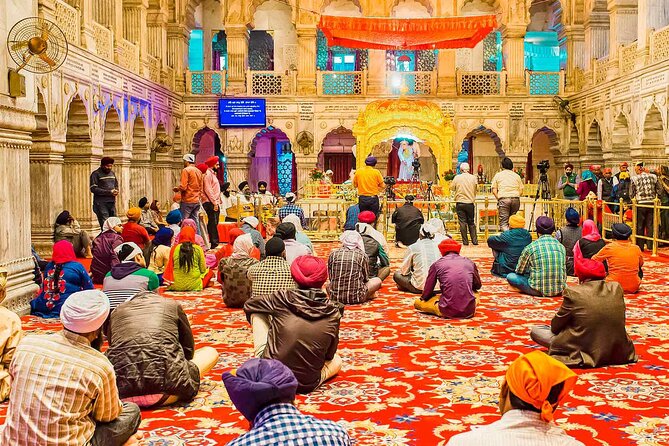
If you want one moment from this tour that’s more than “a photo,” it’s Gurudwara Sis Ganj Sahib. You’ll spend about 30 minutes here, and admission is free.
This is the heart of the experience: you learn about Sikhism and specifically how the gurudwara runs a free community kitchen, serving food to over ten thousand people every day. That detail changes the way you think about what you’re seeing. You’re not just looking at a religious building. You’re hearing how it functions as a service hub.
I like that this stop is longer than the other sights because it gives you time to absorb the meaning, not just pass through. If you’re interested in how communities organize hospitality at scale, this is the most direct “why it matters” moment in the itinerary.
A practical suggestion: be ready for a solemn atmosphere. Even though you’re on a tour schedule, treat this like a place with real purpose. Your guide’s explanation is part of the experience, and it’s one of the reasons people rate this tour so highly.
Tea in Kinari Bazaar: a small pause that keeps the day fun
This tour includes water and a cold drink, and the overview also calls out a stop for tea or a cold beverage in the Kinari Bazaar area.
This isn’t a filler. It’s a smart reset. Old Delhi can wear on you: heat, noise, crowds, and the constant motion of streets. A short break helps you stay present for the rest of the walking and keeps you from rushing through the meaningful parts.
If you have dietary needs or strong preferences, keep it simple: drink water, have the tea if it’s offered, and use this break to check how you’re feeling before the final stretch.
Price and value: is $27.96 worth it for 3 hours?
At $27.96 per person, this isn’t priced like a private tour. For many people, that’s exactly the point: you’re paying for guidance and logistics so you can see a focused set of Old Delhi experiences without getting lost.
Here’s what you’re paying for that feels tangible:
- A local English-speaking guide (this is the main value driver)
- A motorized rickshaw ride
- Water/cold drink
- A route that strings together markets and key landmarks in only 3 hours
Hotel pickup isn’t included, so you’ll need to make your own way to the meeting point at Rajiv Chowk (Inner Cir, Block B, Connaught Place). That’s not a dealbreaker, but it does mean the tour works best if you’re already able to get there easily.
If you’re short on time and want your day to include spice market sights plus a meaningful cultural stop, this price-to-time ratio is hard to beat. If you’re hoping for a long list of ticketed monuments inside, you might want a different style of tour.
Group size and pacing: how to get the best experience
This is a shared group tour with a maximum of 15 travelers. Smaller groups tend to stay more manageable on crowded streets, and with a fixed 3-hour window, your guide can keep everyone together without cutting corners.
Pacing matters here. You’ll be mixing rickshaw riding with walking through market lanes and temple areas. Reviews mention street navigation and safety, and that you should be ready to handle crowds and traffic. That means:
- Wear shoes you trust.
- Keep your phone and bag secure while walking.
- Stay alert during street crossings.
If you like “watch and learn” travel—rather than “check off everything in sight”—you’ll match this tour well.
Who this tour suits best (and who might want another plan)
This tour is a great fit if:
- You want a guided, time-efficient look at Old Delhi’s working areas
- You like street-level travel that includes a mix of markets and faith spaces
- You appreciate safety and context, especially if you’ve never navigated Old Delhi before
You might choose something else if:
- You mainly want interior monument visits (this is mostly outside views, like Red Fort)
- You’re only interested in shopping for souvenirs (the stops are largely wholesale market areas)
- You need a quiet, low-crowd experience
Should you book the Old Delhi & Spice Market Tour?
I’d book it if you want a compact Old Delhi storyline: markets first, major landmarks referenced, and a genuine cultural anchor at Gurudwara Sis Ganj Sahib. The price makes sense for what’s included, and the small group size plus local guidance helps you handle the street chaos without losing your day.
If you’re the type who enjoys real daily life over staged sightseeing, this tour is likely to feel worth every minute. Just go in ready for crowds, keep your expectations centered on learning and observation, and you’ll get a lot more out of it than a quick photo run.
FAQ
FAQ
How long is the Old Delhi & Spice Market Tour?
It’s about 3 hours.
What’s the price per person?
The price is $27.96 per person.
What’s included in the tour?
The tour includes a local English-speaking guide, a rickshaw ride, and water/cold drink.
Is hotel pickup and drop-off included?
No. You’ll need to get to the meeting point on your own.
Where do I meet the tour?
Meet at Rajiv Chowk Inner Cir, Block B, Connaught Place, New Delhi, Delhi 110001.
How big is the group?
The group is shared, with a maximum of 15 travelers.
What are some of the main places you stop at?
You pass by hardware, kitchen equipment, and kite markets; visit Fatehpuri Mosque, Khari Baoli, Pasar Chandni Chowk, Red Fort (outside), Sri Digambar Jain Lal Mandir (outside), Gauri Shankar Temple, and Gurudwara Sis Ganj Sahib. You also stop for tea or a cold beverage in the Kinari Bazaar area.
Do I need to pay entry fees at these stops?
Admission is listed as free for Fatehpuri Mosque, Khari Baoli, Pasar Chandni Chowk, Sri Digambar Jain Lal Mandir, Gauri Shankar Temple, and Gurudwara Sis Ganj Sahib. Red Fort is not included (outside viewing only), and any Red Fort entry fees would not be covered.
Do I get a mobile ticket?
Yes, the tour offers a mobile ticket.