REVIEW · NEW DELHI
Private 2-Day Agra & Delhi Tour by Car–Includes Taj Mahal Sunrise
Book on Viator →Operated by Taj Mirror Tours · Bookable on Viator
Dawn hits hard at the Taj Mahal. This private 2-day Delhi and Agra trip gives you the big sights with less hassle, including an early morning visit when the marble looks its best. I love that you’re not stuck figuring out logistics: a private AC car and a uniformed chauffeur handle the driving, parking, and tolls.
I also love the guide-led pace. You’ll get context at stops like Qutub Minar and Humayun’s Tomb, plus Old Delhi time around Chandni Chowk and Jama Masjid. One consideration: the main monument tickets are not included, and you’ll also need to plan for Taj Mahal closure on Fridays.
In This Review
- Key highlights that make this tour work
- Taj Mahal sunrise: the best reason to do this in two days
- Delhi in a single day: getting your bearings fast (without rushing)
- Qutub Minar: the tall, early history anchor
- Lotus Temple: calm design with zero fuss
- India Gate and the ceremonial axis
- Rashtrapati Bhavan and Parliament House: viewpoints, not interiors
- Old Delhi lunch around Chandni Chowk
- Jama Masjid and the Red Fort area: big scale, big mood
- Humayun’s Tomb: the garden-tomb idea
- Old Delhi on foot: what to expect around mosques and bazaars
- The car to Agra and the overnight structure
- Agra day: Taj Mahal at dawn, then Forts and Baby Taj
- Sunrise at the Taj Mahal: more time, better looking light
- Breakfast in Agra: fuel before the fort
- Agra Fort: Mughal power after the Taj
- Itmad-ud-Daula (Baby Taj): the “bridge” site
- Back to Delhi: private return drop-off
- Guides and chauffeurs: why the service quality matters here
- Tickets, shoe rules, and the Friday closure: plan around the friction
- Monument tickets are separate
- Bring your photo ID
- Shoes off for sacred sites
- Taj Mahal closes on Fridays
- Price and value: what $114 per person really buys
- Who this tour fits best (and who might want something else)
- Should you book this Private 2-Day Agra & Delhi Tour with Taj Mahal Sunrise?
- FAQ
- Is this tour private?
- What’s included in the price?
- Are monument tickets included?
- Does the tour include Taj Mahal sunrise?
- Is the Taj Mahal open every day?
- Will I be able to go inside Rashtrapati Bhavan and Parliament House?
- What should I bring for monument entry?
- Can I customize the tour?
- What’s the cancellation policy?
Key highlights that make this tour work
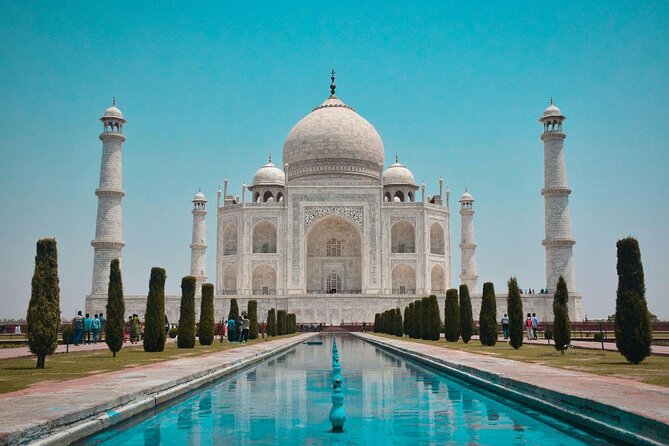
- Taj Mahal sunrise timing, with a long enough window to see the light change at the right hour
- Private AC car + chauffeur, with parking, tolls, fuel, and taxes handled
- Delhi’s top landmarks in one flow, including Qutub Minar, Lotus Temple, and Old Delhi highlights
- Agra Fort and Baby Taj (Itimad-ud-Daula) after breakfast, not just a quick Taj-and-vanish stop
- Multi-language live guiding, with praised guides like Faraz, Hashim Khan, Syed, Dilip, and Chand
- President’s House and Parliament House only from the outside, so expectations stay realistic
Taj Mahal sunrise: the best reason to do this in two days
If you’re going to Agra for one iconic sight, you might as well time it for sunrise. The Taj Mahal looks different at dawn: softer light, cooler air, and generally a calmer feel than later hours. This tour is built around an early start, and the schedule gives you a good chunk of time at the monument—enough to take photos, walk slowly, and actually look at details instead of racing.
Now, the practical part. Taj Mahal monument entry tickets are not included (the tour lists monument tickets at roughly USD 50 per person). Also, the Taj Mahal remains closed on Fridays, so check your travel dates before you commit. You’ll need a valid photo ID at monument check-in, so pack it in an easy-to-reach place.
One small but important note: the tour guide will help you get oriented fast. That matters at the Taj because the grounds are wide and it’s easy to lose time if you’re trying to map things on your own.
You can also read our reviews of more private tours in New Delhi



Delhi in a single day: getting your bearings fast (without rushing)
Delhi can feel like a lot, especially if you’re arriving from the airport and you don’t have a plan. This tour keeps it simple by grouping the major sights by area and moving by car, with a live guide feeding you the story while you travel.
Here’s how the key Delhi stops shape your day:
Qutub Minar: the tall, early history anchor
Qutub Minar is the kind of place you notice from far away. At about 73 meters, it’s famous for Indo-Islamic architecture and for being the tallest brick minaret in the world. The tour’s Qutub Minar stop is generous enough to stand back, take in the structure, and understand why it matters.
Ticket detail: Qutub Minar admission is not included, so budget for it under your monument ticket estimate.
Lotus Temple: calm design with zero fuss
The Lotus Temple (Bahá’í House of Worship) is a quick reset from the traffic and noise. It’s known for its white marble lotus shape, and it’s open to people of all faiths. Even if you don’t care about religious architecture, it’s worth seeing because it’s so cleanly designed and easy to enjoy without feeling like you need to “decode” everything.
This stop is listed as free entry.
India Gate and the ceremonial axis
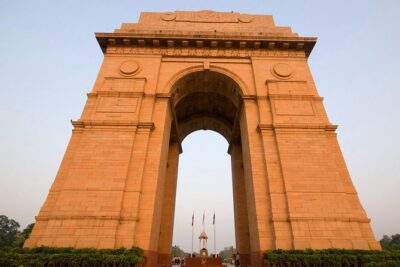
India Gate is a war memorial along Rajpath. It’s a strong visual pause after walking through older quarters. You’ll also get a sense of Delhi’s ceremonial layout as you move toward government buildings.
This stop is free, and it’s mostly about atmosphere and orientation.
You can also read our reviews of more tours and experiences in New Delhi






Rashtrapati Bhavan and Parliament House: viewpoints, not interiors
You’ll see Rashtrapati Bhavan and Parliament House from the outside only. Interior access isn’t permitted, so treat this as a photo-and-street-view moment. It’s still valuable because it frames Delhi as a capital city—its scale, its planning, and how the old imperial and modern government spaces sit together.
Both are listed as exterior-only and free.
Old Delhi lunch around Chandni Chowk
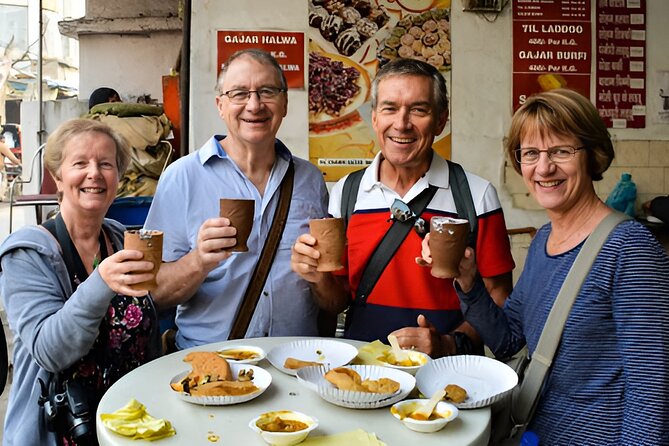
Chandni Chowk is where you get the sensory side of Delhi. The plan includes lunch time in the area (Old Delhi Delights), and you’ll have easy access to classic snacks and sweets like jalebi and other street favorites.
Meal costs aren’t listed under what’s included, so plan to pay for what you choose to eat. The win here is that you’re not wandering blindly; your guide helps you land in the right zone for food and movement.
Jama Masjid and the Red Fort area: big scale, big mood
Jama Masjid is one of the largest mosques in India, commissioned in the 1600s and built from red sandstone and white marble. It can hold over 25,000 people, which gives you a real sense of scale. Jama Masjid ticket entry is not included, so again, budget for that within your monument ticket plan.
The Red Fort is also a major Mughal landmark. Here the tour lists it as exterior viewing, which makes sense for a quick, efficient stop while keeping the day moving. It’s a UNESCO World Heritage Site and it’s hard not to feel the size of the fortress walls when you’re standing near them.
Humayun’s Tomb: the garden-tomb idea
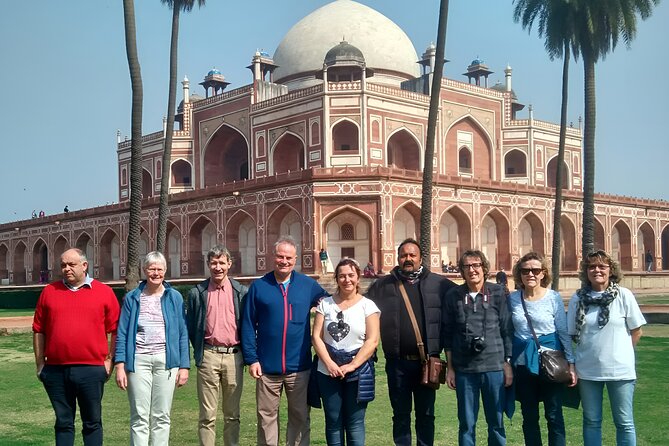
Humayun’s Tomb is another UNESCO site and the first garden tomb in the Indian subcontinent. It matters because it connects to the architectural ideas that later culminate in the Taj Mahal. Entry is not included, but the stop length helps you take it in properly without feeling like a drive-by.
Old Delhi on foot: what to expect around mosques and bazaars
When the tour shifts into Old Delhi, you’ll feel the change immediately. This isn’t a clean museum circuit; it’s active streets, crowds, and real daily life.
A few things you’ll want to keep in mind:
- Shoes: You’ll remove them before entering temple/sacred places. Wear something easy to take off and on.
- Walking time: Even with car transfers, the “good stuff” happens in the walking zones around Chandni Chowk and Jama Masjid.
- Your guide’s job is more than facts: A great guide helps you time your movement so you’re not stuck waiting at chokepoints or unsure where to stand for photos.
If you care about getting the story behind what you see, the live guiding is the difference between seeing buildings and understanding why they’re where they are.
The car to Agra and the overnight structure
After Delhi, you’ll head to Agra. The schedule includes the drive and an overnight in Agra, which is a smart way to do this. Without an overnight, you’d be stuck trying to do too much in one day, and Taj sunrise would likely become a stress fest instead of a highlight.
This is where the private AC car and chauffeur help you most. The point isn’t luxury for its own sake—it’s saving energy so you can actually enjoy the next day.
Agra day: Taj Mahal at dawn, then Forts and Baby Taj
Day two is built like a story arc: the emotional peak (Taj Mahal sunrise), then a steady follow-up with two major heritage stops that people often skip.
Sunrise at the Taj Mahal: more time, better looking light
You’ll rise early for Taj Mahal. The timing is the whole idea: you get the most memorable visual conditions without spending your morning in a queue with everyone else.
Tickets for the Taj are not included, and you’ll need that photo ID again at check-in.
Breakfast in Agra: fuel before the fort
After the Taj, the tour includes breakfast time. The plan mentions a large food chain in Agra city, and it’s positioned as a practical reset before more walking and forts.
Since meals aren’t listed in the included costs, treat breakfast as your own expense.
Agra Fort: Mughal power after the Taj
Agra Fort is a prominent Mughal fort. It’s a different mood from the Taj. If the Taj is about beauty and symbolism, the Fort gives you the sense of control, defense, and everyday imperial life.
Entry tickets are not included, so budget accordingly. The stop length (around two hours) gives you room to explore without feeling rushed.
Itmad-ud-Daula (Baby Taj): the “bridge” site
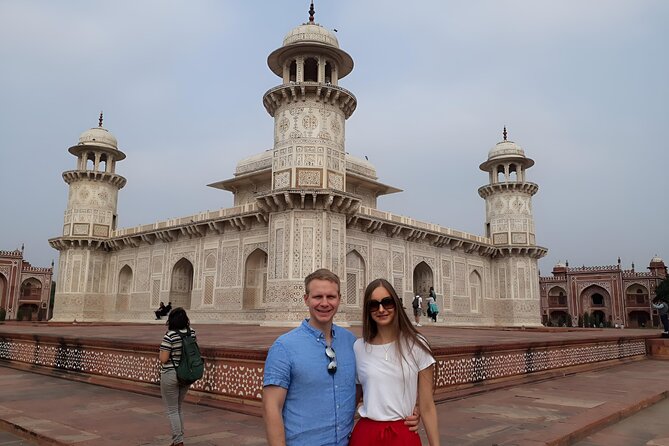
Itmad-ud-Daula is often called the Baby Taj, and the tour frames it well: it’s considered a precursor to the Taj Mahal. This stop is a great choice because it fills a gap between the grand iconic monument and the broader Mughal landscape.
Ticket entry is not included. The stop is around an hour, which works well if you want details but still want the day to feel calm.
Back to Delhi: private return drop-off
At the end of day two, you’ll return to Delhi by private car, with drop-off at your hotel or designated location. The drive time is listed at about 3.5 hours, so plan for a comfortable wrap-up day—no extra excursions tacked on at the end.
Guides and chauffeurs: why the service quality matters here
This trip lives and dies on coordination. Two cities. Sunrise timing. Multiple monuments with separate entry fees. A good guide makes it feel simple.
The tour includes a live guide in various foreign languages, plus a private uniformed chauffeur and a private air-conditioned vehicle. The details that guests tend to praise—like clear explanations and patient guiding—show up repeatedly with guides such as Faraz, Hashim Khan, Syed, and also Dilip and Chand.
In practice, that means:
- You’re not guessing what you’re looking at.
- You get help with where to stand for the best views and photos.
- You can ask questions without derailing the schedule.
If you’re traveling with family or you want someone to handle the flow while you focus on sights, this style usually hits the sweet spot.
Tickets, shoe rules, and the Friday closure: plan around the friction

Let’s talk about what can cause real headaches, because it’s not the monuments themselves—it’s the timing and fees.
Monument tickets are separate
The tour states monuments tickets are approximately USD 50 per person and are not included. On the Delhi side, several stops also say admission ticket not included (for example Qutub Minar, Jama Masjid, and Humayun’s Tomb). On the Agra side, entry for Taj Mahal, Agra Fort, and Itimad-ud-Daula is also not included.
So when you budget, don’t just think about the tour price—think about the full visit cost.
Bring your photo ID
The tour requests a valid photo ID for monument entry checks. This is one of those small things that can ruin a morning if you forget it.
Shoes off for sacred sites
You’ll need to remove shoes at temples/sacred places. Wear comfortable shoes that are easy to slip on and off.
Taj Mahal closes on Fridays
This is the big schedule breaker. If your trip includes a Friday, you’ll need to adjust dates or accept that the Taj sunrise plan won’t work.
Price and value: what $114 per person really buys
At $114 per person, this is a value-focused way to cover Delhi and Agra with private transport. What you’re paying for isn’t just driving—it’s:
- private chauffeured transport with all parking, tolls, fuel, and taxes handled
- a live guide (with foreign-language support)
- a structured two-day experience with the key sites in both cities
- an overnight in Agra as part of the plan
The trade-off is that monument entry tickets are extra (roughly USD 50 per person). So I’d treat the price as the “service and coordination” cost, and the tickets as the “you still pay to enter” cost.
If you’re splitting between two people in a private car, the overall value tends to improve. If you’re solo, it can still be worth it if sunrise and guided time matter more than maximizing budget savings.
Who this tour fits best (and who might want something else)
This tour is a strong match if you:
- want a quick, well-paced hit of Delhi plus Agra without arranging everything yourself
- care about Taj Mahal at sunrise
- prefer private comfort over public transit
- want clear historical context from a live guide
You might look at a different setup if:
- you’re comfortable planning monuments and transport independently
- you’re traveling on a Friday and need the Taj for your exact day
- you want lots of interior access (here, some major government buildings are exterior-only)
Should you book this Private 2-Day Agra & Delhi Tour with Taj Mahal Sunrise?
I’d book it if you want the Taj Mahal sunrise experience and a straightforward two-city plan with private car support. The biggest advantage is that the schedule is organized enough to reduce stress, while the guide support helps you understand what you’re seeing instead of just checking boxes.
One final check before you decide: confirm your dates (Friday closure), budget for monument tickets, and bring your photo ID. If those boxes are easy for you to handle, this tour is a sensible, high-value way to do Delhi and Agra in limited time.
FAQ
Is this tour private?
Yes. It’s listed as a private tour/activity, and only your group participates.
What’s included in the price?
Included items are a private uniformed chauffeur, a live tour guide (various foreign languages), sightseeing in a private air-conditioned car/Tempo Traveller, pickup and drop-off in Delhi areas (including airport/railway station/desired locations), and all parking fees, tolls, taxes, allowances, fuel, and interstate taxes.
Are monument tickets included?
No. Monument tickets are not included, and the tour lists an approximate total of USD 50 per person for tickets.
Does the tour include Taj Mahal sunrise?
Yes, the tour includes sunrise at the Taj Mahal, but the Taj Mahal ticket itself is not included.
Is the Taj Mahal open every day?
No. The tour notes that the Taj Mahal remains closed on Fridays.
Will I be able to go inside Rashtrapati Bhavan and Parliament House?
No. Both are viewed from the outside only, since interior access isn’t permitted.
What should I bring for monument entry?
Bring a valid photo ID. Shoes are also removed before entering temple/sacred places.
Can I customize the tour?
The tour notes that it can be customized to the customer’s requirements.
What’s the cancellation policy?
Free cancellation is available up to 24 hours in advance for a full refund. If you cancel less than 24 hours before the start time, the amount paid is not refunded.