REVIEW · NEW DELHI
Private 4 Days Golden Triangle Tour from New Delhi with Driver
Book on Viator →Operated by Rajasthan Cabs · Bookable on Viator
Four days, three cities, one easy ride. This private Golden Triangle plan strings together Delhi, Agra, and Jaipur with an English-speaking driver so you can focus on the sights instead of logistics. Expect a car that handles inter-city travel, plus a monument-stuffed itinerary that hits both the famous icons and the Mughal-era classics.
What I like most is the human part: the operator pairs you with a trained, English-speaking driver who can explain what you’re seeing, so you do not have to hire another guide. I also like the comfort angle—an air-conditioned Toyota Innova Crysta (kept neat and clean) for long drives between cities.
One thing to watch: several major monuments charge separate entry fees, and the schedule is tight enough that you’ll want good walking shoes. Plus, Lotus Temple is closed every Monday, so that stop may not work on that day.
In This Review
- Key highlights you’ll actually feel
- A private car turns the Golden Triangle from chaos into a plan
- Delhi Day 1: Mughal landmarks, a war memorial, and iconic worship spots
- Red Fort (Lal Qila)
- Humayun’s Tomb
- India Gate
- Lotus Temple (and the Monday catch)
- Qutub Minar
- Gandhi Smriti
- Jama Masjid
- Delhi Day 1 pacing tip: how to avoid monument fatigue
- Agra Day 2: Agra Fort and Mehtab Bagh before the main event
- Agra Fort
- Mehtab Bagh (Moonlight Garden)
- Taj Mahal Day 3: budget the ticket and manage the crowds
- Jaipur Day 4: forts, observatory science, palaces, and Jal Mahal views
- Hawa Mahal (Palace of Breeze)
- Jantar Mantar
- City Palace
- Jal Mahal (Water Palace)
- Why this order works
- The driver experience: what you can ask and how to get better answers
- Price and ticket reality: what $125 really covers
- What to pack and how to handle a monument-heavy schedule
- Who should book this 4-day Golden Triangle with driver
- Should you book this tour?
- FAQ
- What is included in this Golden Triangle tour?
- Are admission fees included for all monuments?
- Which stops are free on the itinerary?
- What happens if my tour day includes Monday at Lotus Temple?
- Will I have a private vehicle and driver for only my group?
- Is the driver English-speaking?
- What is the cancellation policy?
Key highlights you’ll actually feel
- English-speaking driver who acts like an on-the-road guide, not just a chauffeur
- Toyota Innova Crysta with A/C for the Delhi–Agra–Jaipur stretches
- A classic route: Red Fort, Humayun’s Tomb, Taj Mahal, Hawa Mahal, and more
- Mixed ticket strategy: some sites are free, others add fees (you can budget fast)
- Lotus Temple Monday closure means your day needs a Plan B
- Planning support from the start, with past trips mentioning an organizer named Manoj and a driver named Sanjay Kumar
A private car turns the Golden Triangle from chaos into a plan
The Golden Triangle is famous for a reason, but it’s also where timing gets messy fast: you’re moving between cities, changing neighborhoods, and juggling monument hours. This setup simplifies that by handling private transportation end-to-end, with an air-conditioned vehicle and a driver who can guide you in plain, practical terms.
Because it’s private, you’re not stuck waiting for a slow group or rushing a fast one. You can spend your time the way you want—linger at a courtyard, take photos at a viewpoint, then move on when you’re ready. Your day feels like your day, just built around a proven route.
The other small win is that the operator says it organizes inter-state travel documents and keeps the whole process tidy for foreign travelers. That matters on multi-city trips. Less admin stress usually means you’ll enjoy more of what’s in front of you.
You can also read our reviews of more private tours in New Delhi

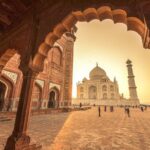

Delhi Day 1: Mughal landmarks, a war memorial, and iconic worship spots
Day 1 packs in Old Delhi and central Delhi in a logical sweep. You start with monuments that set the tone, then you glide into major landmarks spaced out enough for a driver to manage traffic and transitions.
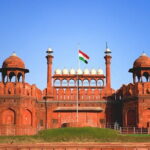
Red Fort (Lal Qila)
This is the opener, and it’s a strong one. The Red Fort is a UNESCO World Heritage Site and one of Delhi’s most recognizable landmarks. You’ll have about 1 hour here, long enough to see the fort’s scale and important architectural details without feeling like you’re trying to sprint.
Ticket note: Red Fort admission is not included (listed at $7). If you like walking through atmospheric spaces and seeing how power was built into stone, this stop is worth budgeting for.
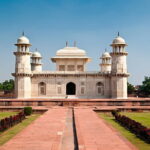
Humayun’s Tomb
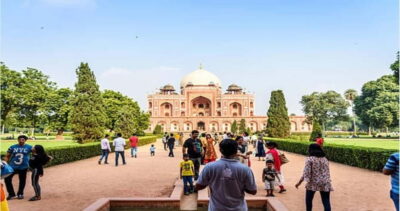
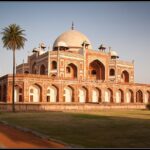
Next comes Humayun’s Tomb, also UNESCO-listed, and widely known for Mughal architecture. You get about 1 hour 30 minutes, which is helpful because gardens and layout are part of what you’re looking at—not just a single facade.
Ticket note: admission is not included (listed at $7). If you’re the type who enjoys symmetry, Persian-influenced design, and the way Mughal builders engineered light and shadow, you’ll probably slow down here in a good way.
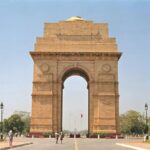
India Gate
Then you shift mood. India Gate is a war memorial and it’s free. You’ll only spend 30 minutes, so use that time for quick photos and a calm pause. It works well after the forts and tombs, like a breathing space right in the city core.
You can also read our reviews of more tours and experiences in New Delhi





Lotus Temple (and the Monday catch)
Lotus Temple is a Bahá’í House of Worship and famous for its lotus-inspired shape. It’s free, and the listed time is 1 hour.
Here’s the practical issue: Lotus Temple is closed every Monday. If your trip starts on a Monday, your driver should adjust the plan, or you may lose that hour. This is the one stop in the itinerary that explicitly has a built-in “if.”
Qutub Minar
Qutub Minar is next, with 1 hour on the clock. It’s an Indo-Islamic icon made primarily of red sandstone and reaching 72.5 meters. The carvings and inscriptions are a big part of the appeal, so you want enough time to look up—not just walk past.
Ticket note: admission is not included (listed at $7).
Gandhi Smriti
Gandhi Smriti is free and scheduled for 30 minutes. This one tends to land well because it’s more focused than the huge monument stops. It’s also a nice shift from architecture into story—what you do with that time depends on how much you want to read versus just reflect.
Jama Masjid
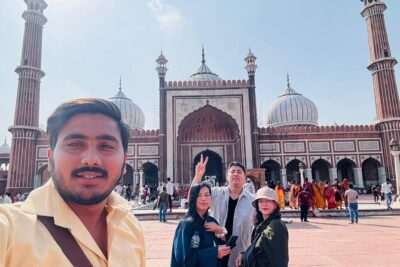
Finally, you close Day 1 at Jama Masjid, one of Delhi’s most iconic Mughal mosques. You get about 30 minutes, which is just enough for the big views and a respectful look around.
Ticket note: admission is not included (listed at $3.50). Even if you do not go deep into documentation, the scale and sense of place are noticeable fast.
Delhi Day 1 pacing tip: how to avoid monument fatigue

This is a lot for one day. The order is good, but your body will still notice: standing, walking, and looking up for details adds up. My practical advice is simple: plan to carry water, and set expectations that you’re collecting highlights, not completing a textbook.
If you want the best payoff, treat each stop like a “chapter.” Spend your first 10–15 minutes scanning, then decide where you want your attention. That keeps you from trying to see everything at once.
Agra Day 2: Agra Fort and Mehtab Bagh before the main event
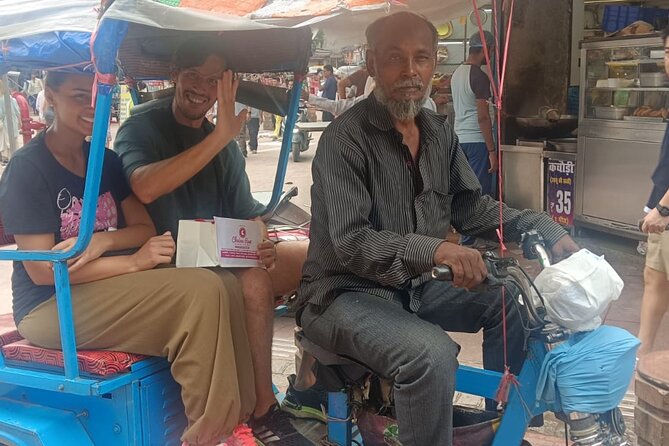
Day 2 is lighter than Day 1, which is smart. Agra is where the trip’s headline attraction waits, so building a calmer day helps you arrive at Taj Mahal feeling ready—not wiped out.
Agra Fort
Agra Fort is a World Heritage Site, described as the Red Fort of Agra. Your time here is 1 hour 30 minutes. This is a good length because forts reward slow attention. Look at the stonework, the way the buildings sit in relation to the rest of the complex, and the overall defensive layout.
Ticket note: admission is not included (listed at $7).
Mehtab Bagh (Moonlight Garden)
Mehtab Bagh is scheduled for 1 hour. It’s on the opposite bank of the Yamuna from the Taj Mahal, often visited for its views and garden setting.
Ticket note: admission is not included (listed at $3.5). Even if you don’t plan your perfect photo spot, this stop helps you “see the Taj in context” before you actually enter it.
Taj Mahal Day 3: budget the ticket and manage the crowds

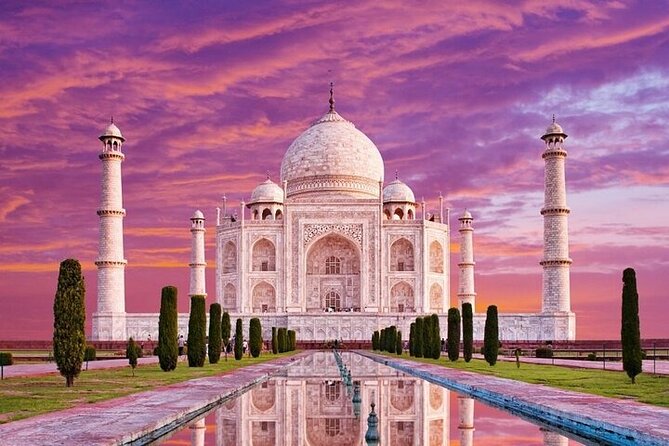
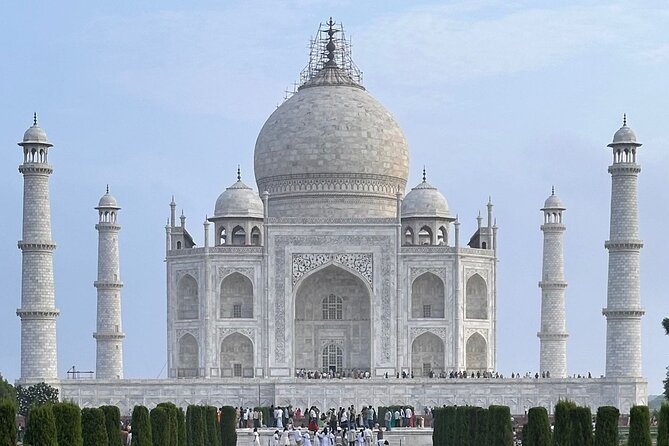
Day 3 centers on the Taj Mahal, with 2 hours planned. The Taj Mahal is the kind of monument that grabs you even if you’re tired. Your job is to keep your expectations honest: you’ll see the iconic view, but you’ll also notice details—design choices, symmetry, and the way the building looks from different angles.
Ticket note: Taj Mahal admission is not included (listed at $15).
A useful way to think about this stop is ticket math plus time. When admission isn’t included, you’re really buying two things: access and the momentum to show up. If you arrive with clarity on what you’ll pay, you’ll waste less time during the trip deciding what’s worth it.
Also, 2 hours is enough for a first, meaningful visit. If you’re the type who wants to linger for every decorative detail, you might want more time in your schedule—but within this plan, you can still get the main experience.
Jaipur Day 4: forts, observatory science, palaces, and Jal Mahal views
Jaipur is where the Golden Triangle shifts from Mughal scale to Rajput swagger. Day 4 has four stops, with a total sightseeing time that feels more manageable than Days 1 and 2.
Hawa Mahal (Palace of Breeze)
You start with Hawa Mahal, free and scheduled for 30 minutes. This is the quick-hit stop that most people recognize instantly. It’s compact enough that you don’t feel stuck, and the facade is built for “look and take photos” time.
Jantar Mantar
Next is Jantar Mantar, a historic astronomical observatory and UNESCO World Heritage Site. You get 1 hour here.
This is one of those places where a driver’s explanation can make the experience click. Even without going heavy on technical terms, you can still appreciate that this is science rendered in stone, built for measuring the sky.
Ticket note: admission is not included (listed at $3.5).
City Palace
City Palace is scheduled for 1 hour and is part of the complex known as Chandra Mahal. This is a bigger stop where you’ll likely spend time moving between viewpoints and rooms.
Ticket note: admission is not included (listed at $8).
Jal Mahal (Water Palace)
You finish at Jal Mahal, free, scheduled for 30 minutes. You’re looking at a palace sitting in Man Sagar Lake. It’s short, but it adds variety—more scenery, less “inside-ticket” time.
Why this order works
The day moves from facade-first (Hawa Mahal) to structured thinking (Jantar Mantar) to grand living spaces (City Palace), then ends with a scenery stop (Jal Mahal). That flow keeps you from repeating the same type of attention across every monument.
The driver experience: what you can ask and how to get better answers

The operator highlights that drivers are trained and English-speaking. In plain terms, that means you can ask questions like:
- What am I looking at here, structurally?
- Is there a best angle for photos?
- Why does this building look the way it does?
Past feedback on this trip route specifically mentions an organizer named Manoj coordinating planning, plus a driver named Sanjay Kumar being ready to meet travelers. That suggests the service often includes real human check-ins, not just a car dropping you off.
You can also use your driver as a “time manager.” If you want to see fewer stops in deeper detail, ask. If you’re trying to fit everything listed, ask what order tends to feel best on the day you travel.
Price and ticket reality: what $125 really covers

The tour price is $125.00 per person for roughly 4 days, with a private air-conditioned vehicle and transportation included. It also lists all fees and taxes, which usually covers the non-admission parts: vehicle, driver service, and the travel administration around the itinerary.
But monument admissions are not included. Based on the listed add-on costs, your paid entry fees should total about:
- Red Fort: $7
- Humayun’s Tomb: $7
- Qutub Minar: $7
- Jama Masjid: $3.50
- Agra Fort: $7
- Mehtab Bagh: $3.50
- Taj Mahal: $15
- Jantar Mantar: $3.50
- City Palace of Jaipur: $8
That’s $61.50 in tickets if you pay all the listed ones. So you’re looking at an all-in estimate near $186.50 per person, depending on what you choose to enter and how those fees are handled day-of.
This is the value angle: you’re not paying separately for a guide at every stop, and you’re not renting a car yourself while handling city traffic across three regions. For many people, that convenience is the main reason to book a package like this.
What to pack and how to handle a monument-heavy schedule
This itinerary is classic, but it moves. For comfort:
- Wear shoes you can walk in for hours across multiple stops.
- Bring water and a light layer; weather in North India can shift through the day.
- Keep a basic cash/card plan for admissions because they’re listed as add-ons.
Also, plan for photo time without letting it swallow the hour you needed for actually looking. A quick rule that works for me is: shoot first, then slow down for the details.
Who should book this 4-day Golden Triangle with driver
This tour fits best if you want:
- A private ride through Delhi, Agra, and Jaipur without coordinating transport yourself
- An itinerary built around big icons and several key UNESCO sites
- A driver who can help you interpret what you’re seeing in English
- A comfortable, A/C vehicle for the inter-city legs
It may be less ideal if you prefer ultra-spacious time at just one city, or if you want everything fully included with zero extra ticket budgeting. Here, you’ll pay for several major entrances.
Should you book this tour?
If your priority is to hit the Golden Triangle highlights with less friction, I think this is a solid choice. The combination of private transportation, an English-speaking driver, and a route that balances Delhi’s major Mughal sites with Agra’s lead-up and Jaipur’s variety is a practical way to cover a lot of ground without feeling like you’re wrestling the trip.
Just go in with two expectations set: admissions are extra, and Day 1 is dense. If you can handle that, this is the kind of plan that keeps the focus where it belongs—on the monuments in front of you.
FAQ
What is included in this Golden Triangle tour?
The price includes an air-conditioned vehicle, private transportation, and all fees and taxes. You’ll also get pickup offered and a mobile ticket.
Are admission fees included for all monuments?
No. Admission fees are not included for several sites, including Red Fort, Humayun’s Tomb, Qutub Minar, Jama Masjid, Agra Fort, Mehtab Bagh, Taj Mahal, Jantar Mantar, and City Palace.
Which stops are free on the itinerary?
India Gate, Lotus Temple, Gandhi Smriti, Hawa Mahal, and Jal Mahal are listed as free.
What happens if my tour day includes Monday at Lotus Temple?
Lotus Temple is closed every Monday, so that stop may not be possible on a Monday.
Will I have a private vehicle and driver for only my group?
Yes. This is a private tour/activity, meaning only your group participates, and it includes private transportation.
Is the driver English-speaking?
The tour information states that drivers are proficient in English and are trained to act as guides during your journey.
What is the cancellation policy?
Free cancellation is available. You can cancel up to 24 hours in advance for a full refund, and changes within 24 hours are not accepted.