REVIEW · NEW DELHI
Private Luxury Delhi, Agra, Jaipur & Varanasi from Delhi – 5 Nights 6 Days Tour
Book on Viator →Operated by Perfect Agra Tours · Bookable on Viator
Sunrise in the Taj changes your brain chemistry. This private Delhi–Agra–Jaipur–Varanasi route strings together the big icons and gives you real time to see them, especially the sunrise Taj Mahal moment. I also like that you travel in comfort with a private, air-conditioned car and guided stops that keep things moving without feeling rushed. One thing to consider: you’ll likely pay extra for monument entrance fees and you’ll have domestic flights to connect cities.
What makes this tour feel practical is the balance of guided must-sees and downtime. In the best cases, guides like Malik (praised for clear explanations and even mobile-photo skills) help turn famous places into stories you can actually picture, and drivers like Gopal are called out for getting people to sights on time. If you’re sensitive to early mornings and travel days, the dawn boat on the Ganges and the airport transfers take planning energy.
In This Review
- Key things that make this tour worth your attention
- How the Delhi–Agra–Jaipur–Varanasi route really works
- Delhi Highlights: Qutub Minar, Humayun’s Tomb, Lotus Temple, and the ceremonial stops
- A small reality check
- Agra at sunrise: Taj Mahal, Agra Fort, and Itmad-ud-Daulah
- The drawback to plan around
- Jaipur without the drag: Jal Mahal photos, City Palace, Jantar Mantar, Hawa Mahal
- Jaipur’s pacing tip
- Varanasi by day and by dawn: Ganges boat, Kashi Vishwanath, and Sarnath
- Early morning on the Ganges
- Temples and learning
- A practical note
- Private guides, private drivers, and how that affects your experience
- One scheduling thing to watch
- Price and logistics: what $560 covers, and what costs extra
- Who should book this Golden Triangle with Varanasi—and who might skip it
- Best-fit traveler
- Should you book this tour?
- FAQ
- FAQ
- How long is the Delhi to Agra, Jaipur, and Varanasi tour?
- Is pickup included?
- Does the price include monument entrance fees?
- Are flights included?
- What happens in Varanasi early in the morning?
- What room style is used for accommodations?
Key things that make this tour worth your attention
- Pre-dawn Taj timing for the famous soft light and reflections.
- A private car plus a local guide so you’re not stuck figuring things out alone.
- Agra Fort + Itmad-ud-Daulah right after the Taj, not days later.
- Jaipur’s mix of photos and real architecture across City Palace, Jantar Mantar, and Hawa Mahal.
- Varanasi before breakfast with a Ganges boat excursion close to dawn.
- Sarnath included so Varanasi isn’t only about the river.
How the Delhi–Agra–Jaipur–Varanasi route really works
This tour is built like a classic Golden Triangle itinerary, then adds Varanasi to make it feel more than a checklist. You get Delhi’s imperial-era monuments, Agra’s Mughal centerpiece, Jaipur’s pink-city landmarks, and then you switch gears to India’s spiritual river life.
The biggest advantage is pacing. You’re not bouncing between cities every few hours. Instead, you arrive, check in, see a focused set of sights, and then use the rest of the day for recovery. That matters because the “big” sights can be intense—crowds, heat, and the constant pull of wanting to take everything in at once.
Also, you’re not doing this without help. You’ll have hotel or airport pickup and drop-off, and you’ll have private local guiding for sightseeing days. That’s a big deal when you’re juggling multiple UNESCO sites and a tight schedule.
One more practical detail: transportation time is approximate and can change with traffic. Plan to stay flexible, especially on Delhi roads and around major junctions leaving the city.
You can also read our reviews of more private tours in New Delhi


Delhi Highlights: Qutub Minar, Humayun’s Tomb, Lotus Temple, and the ceremonial stops
Day 1 is a strong “first taste of Delhi” with four major stops and a couple of ceremonial viewpoints, then you roll onward to Agra.
Qutub Minar is your starting point. It’s a UNESCO World Heritage site and a tall, historic minaret complex (about 73 meters and built in the late 12th century era). Even if you’ve seen photos before, standing near it gives you a sense of how ambitious the early Sultanate builders were. The included guided time is about an hour, which is enough to get oriented and understand why the tower’s style matters.
Next comes Humayun’s Tomb. This Mughal-era mausoleum has a garden-and-dome layout that influences later architecture in North India. It’s one of those stops where the guide’s storytelling helps you connect the details: symmetry, layout, and how power wanted to be remembered.
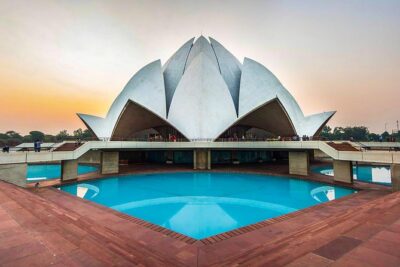
Then you get a breather at Lotus Temple. It’s shaped like a lotus flower, and the design is meant for quiet worship. It’s a good contrast to the older Islamic monuments—different vibe, same city, and a welcome pause from the sensory overload.
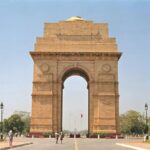
You also pass by India Gate and the Parliament House area, plus Rashtrapati Bhavan viewpoints. These are shorter stops (roughly 15 to 30 minutes each), so treat them like orientation and photo chances rather than deep-dive museum time. If you care about how modern India visually frames its identity, these stops do that in a quick, efficient way.
A small reality check
Delhi can be traffic-chaotic. The day finishes with a drive to Agra (about 3 hours), so by the time you reach the Taj region, your evening is more about checking in and recharging than adding extra sightseeing unless your schedule allows it.
Agra at sunrise: Taj Mahal, Agra Fort, and Itmad-ud-Daulah
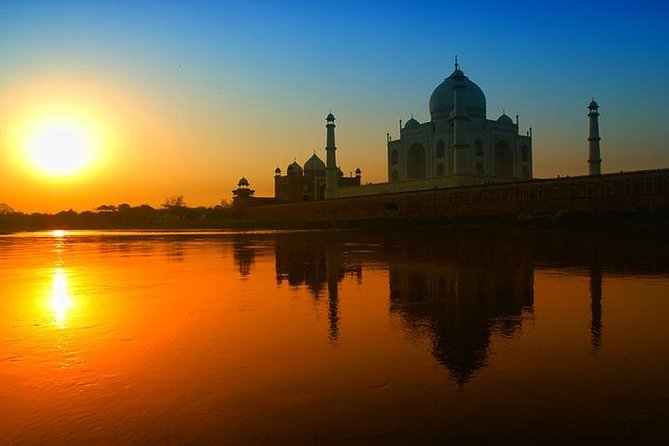
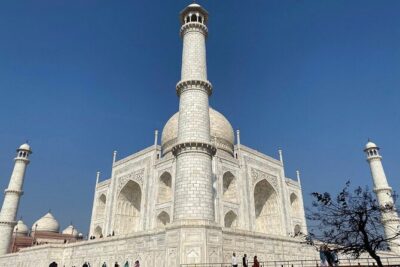
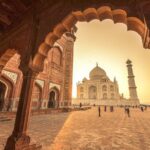
Day 2 is the reason many people pick this itinerary. The plan is a sunrise Taj Mahal visit, which is a totally different experience than seeing it later in the day. Early light softens everything—marble, shadow, and the long reflections that make the Taj look almost unreal.
The included time for the Taj is about two hours, which is practical. You’ll need time to get into position, let your eyes adjust, and actually watch how the colors change. This is where guides earn their keep: you don’t just look, you learn what you’re seeing and why that composition hits so hard.
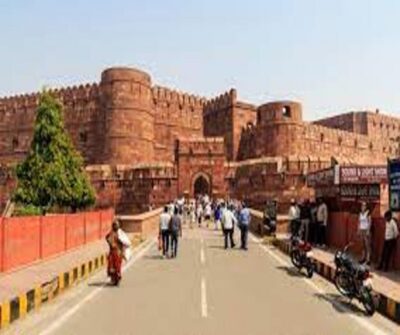
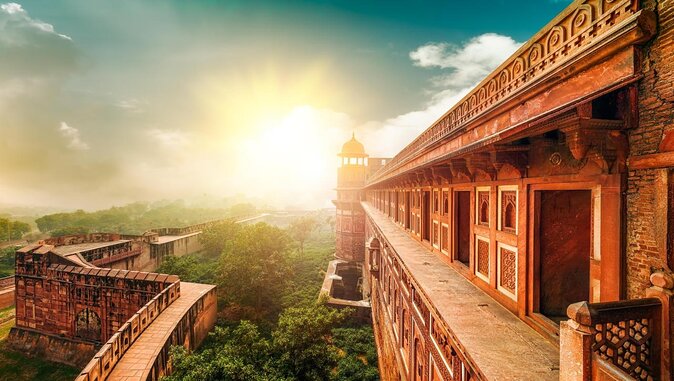
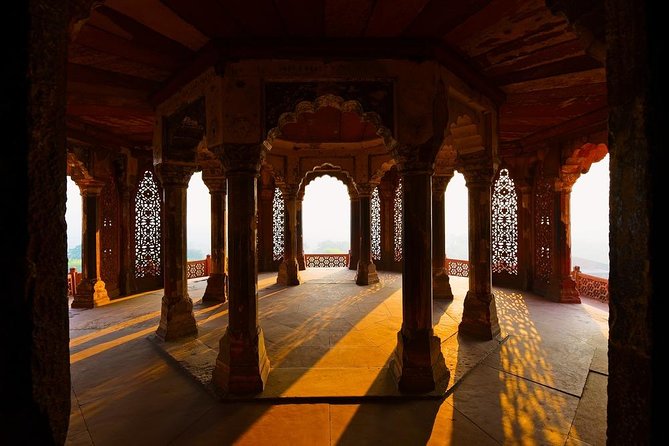
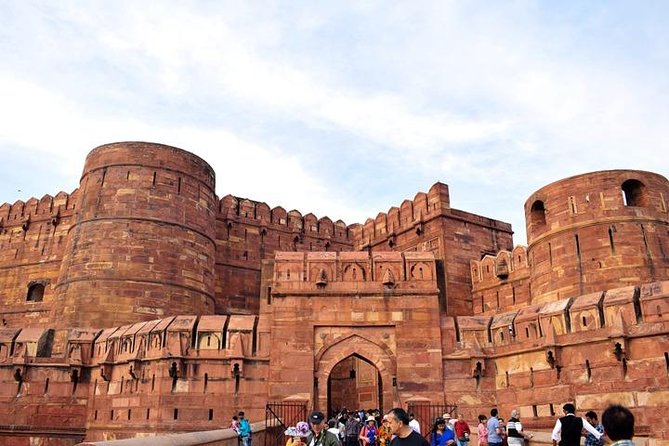
After the Taj, you go to Agra Fort. This UNESCO site is a big Mughal complex with palaces, balconies, and gardens—more fortress than single monument. It helps you understand that the Taj wasn’t the only statement of power. Agra Fort brings in the everyday machinery of Mughal life and administration, with fewer “postcard crowd” vibes than the Taj courtyard.
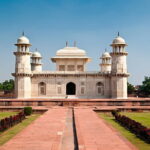
Then comes Itmad-ud-Daula, often called the “jewel box” or sometimes the “Bachcha Taj” nickname. This is a smaller mausoleum, and that’s a plus. You can appreciate details without feeling swallowed by scale. It’s the kind of stop where you’ll notice craftsmanship when your attention slows down.
The drawback to plan around
Even with good organization, sunrise visits and tight scheduling can feel demanding. You’ll want a calm evening later, not another day of big plans, because you’re packing multiple major sites into one day.
You can also read our reviews of more tours and experiences in New Delhi






Jaipur without the drag: Jal Mahal photos, City Palace, Jantar Mantar, Hawa Mahal
Once you’re in Jaipur, the itinerary becomes a mix of architectural depth and “wow, let me get a picture” moments. You’ll also have the benefit of an overnight in Jaipur, which keeps the rhythm sane.
Start with Jal Mahal. This is a palace on Man Sagar Lake. The time is short and focused on a photo opportunity, not a long walk. That works, because Jal Mahal is best enjoyed from vantage points where you can see the palace and water together.
Next, you’ll explore City Palace. This is about an hour, and it’s enough to cover the essential sections and understand it as a former seat of administrative and ceremonial life. When a guide does it well, you stop seeing it as just buildings and start viewing it as a functioning symbol of rule—how authority sat in stone and decor.
Then you hit Jantar Mantar, a UNESCO World Heritage site built with astronomical instruments. It’s a fascinating contrast to fortresses and tombs. Here, you’re looking at how the Rajput court treated measurement, sky knowledge, and engineering. The included time gives you time to grasp what each instrument was used for, without turning it into a lecture marathon.
Finally, you’ll visit Hawa Mahal. This “Palace of Winds” is famous for its façade and its red/pink sandstone look. The included time is short (about 30 minutes), so I’d treat this as a framing stop: get the main views, understand the design intent, and then move on before you burn energy waiting in lines or heat.
Jaipur’s pacing tip
Try to keep your midday energy for your indoor or shaded stops. Hawa Mahal and walking viewpoints can feel exposed in hotter parts of the day. If you’re sensitive to heat, pace yourself and hydrate.
Varanasi by day and by dawn: Ganges boat, Kashi Vishwanath, and Sarnath
The switch from Jaipur to Varanasi happens by domestic flight. After breakfast in Jaipur, you’ll be transferred to the airport, then you’ll land in Varanasi and be dropped at your hotel. The rest of Day 4 is mostly leisure, with a chance to see evening life by the Ganges depending on timing.
This matters because Varanasi doesn’t work like a museum town. You need a bit of time to adjust. The city has a sensory intensity that feels best after you’ve had one slow evening to settle in.
Early morning on the Ganges
Day 5 is the highlight for anyone drawn to Varanasi’s river rituals. About 30 minutes before dawn, you’ll go on a boat excursion on the Ganges. The plan is to see bathing ghats and cremation sites along the river.
This is powerful and not always comfortable. I’d go in with a respectful mindset and a simple goal: observe quietly, don’t treat it like a show. If you’re photographing, be mindful. People are doing life-and-death religious practice, not performing for your camera.
Temples and learning
After the boat, you’ll visit Shri Kashi Vishwanath Temple (listed as the Golden Temple area in the plan). The included time is around 15 minutes and focuses on the main temple area.
Then you drive to Sarnath. The included time is about five hours, which is generous. Sarnath is a key Buddhist site located about 10 km from Varanasi, and it gives you a different lens on the region—religious tradition beyond the Ganges rituals you saw at dawn.
If you want Varanasi to feel grounded, Sarnath does that. It adds context so the trip isn’t only about spectacle.
A practical note
The itinerary requires an early day. Sleep and water matter. Pack a calmer morning routine than you might at home. The experience is worth it, but your body will ask for basics first.
Private guides, private drivers, and how that affects your experience
The tour is private in the sense that it’s your group moving together with your own car and guiding. That brings two big benefits: less waiting around, and more control over pace.
Guides are included for sightseeing, and the company notes that your guide will help you buy entrance fees at monuments so you shouldn’t be stuck in long ticket queues. For major sites like the Taj Mahal, that can save time and reduce stress. Even if entrance lines are manageable, having someone smooth the process helps.
From past feedback, Malik has been praised for explaining the Taj and Agra context clearly, and for being a mobile-photo helper who knows how to get good shots without turning sightseeing into chaos. Deepak is also mentioned as a strong guide for Agra Fort and related sites, with an emphasis on making the history understandable, not just recited.
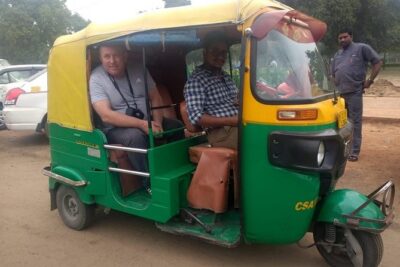
And yes, the car matters. People specifically call out drivers like Gopal for being excellent. In a 5- to 6-day circuit with multiple early starts, that’s not a small thing. It’s the difference between arriving ready to look and arriving already tired.
One scheduling thing to watch
Domestic flights can change routing. One past traveler noted a shift in departure city for the Varanasi connection. You can’t control airline operations, but you can protect your sanity by building a flexible mindset around flights.
Price and logistics: what $560 covers, and what costs extra
At $560 per person, you’re paying for a real package: private transport, guided sightseeing, and (when booked with hotels) five nights of accommodation plus daily breakfast. You also get commercial flight tickets for the Jaipur/Delhi–Varanasi and Varanasi–Delhi legs with listed baggage allowances (15 kg check-in and 7 kg hand baggage).
Where the math gets important: monument entrance fees are not included. The tour estimates entrance fees at about USD 80 per person for all monuments. Lunch and dinner are also on you.
So, a realistic budgeting approach is:
- Base: $560 per person
- Add: ~USD 80 for monument entrance fees
- Plus: lunch/dinner and any personal spending
That’s still fair value for a route that includes a sunrise Taj, multiple UNESCO stops, private guiding, and two domestic flights. But it’s not “all-inclusive.” You’ll want some cash for food and entry fees so you don’t hit a surprise mid-trip.
Room setup is typically twin-sharing. If you’re booking as three people, the default is triple-sharing unless you want to pay for two rooms. If your group is picky about privacy or bed layout, check room configuration before you lock it in.
Who should book this Golden Triangle with Varanasi—and who might skip it
This tour is a great match if you want:
- The sunrise Taj Mahal experience
- A private, guided structure that makes UNESCO stops feel intentional
- A blend of architecture, forts, observatories, and river rituals
- Sarnath added so Varanasi has more than one story
It may be less ideal if you:
- Hate early mornings and long travel days
- Want a fully all-inclusive package where no extra spending happens
- Dislike domestic flight hops inside a short itinerary
Best-fit traveler
You’ll probably love it if you’re the type who likes being out early, enjoys guides who explain more than facts, and wants to see Varanasi in a serious way—especially from the river.
Should you book this tour?
If your dream includes the sunrise Taj Mahal and you also want Varanasi to feel more than a quick stop, I’d say yes—this is one of the more sensible ways to combine those places in a compact timeline. The private car, guided stops, and the fact that key monuments like Agra Fort and Itmad-ud-Daula are bundled right after the Taj make the route feel efficient.
Before you book, do two things: budget for monument entrance fees and be mentally ready for dawn and flights. If you’re okay with those, you’ll come away with images you won’t forget—marble glowing at sunrise, then the Ganges at first light.
FAQ
FAQ
How long is the Delhi to Agra, Jaipur, and Varanasi tour?
It runs for about 6 days (5 nights).
Is pickup included?
Yes. Pickup is offered from the airport, railway station, hotel, or another pickup location in Delhi, Noida, or Gurugram, and you’ll also get drop-off.
Does the price include monument entrance fees?
No. Monument entrance fees are not included and are estimated at about USD 80 per person for all monuments. Lunch and dinner are also not included.
Are flights included?
Yes. Domestic commercial flight tickets are included for the Jaipur/Delhi to Varanasi leg and for Varanasi to Delhi, with baggage allowances of 15 kg check-in and 7 kg hand baggage.
What happens in Varanasi early in the morning?
You’ll take a boat excursion on the Ganges about 30 minutes prior to dawn, with views of bathing ghats and cremation sites.
What room style is used for accommodations?
Rooms are generally twin-sharing. If you book for 3 people, rooms are typically triple-sharing by default unless you pay for 2 rooms.