REVIEW · NEW DELHI
3 Day Golden Triangle Trip -Delhi Taj Mahal and Jaipur From Delhi
Book on Viator →Operated by A Star Tours · Bookable on Viator
Three days can feel like a sprint. Still, this Golden Triangle plan is one of the easiest ways to hit Delhi, Agra, and Jaipur without wrestling logistics. I especially like the skip-the-line access for key sights and the comfort of staying in a deluxe five-star hotel. The main trade-off is the pace: it’s packed, and you’ll have early starts.
If you want a guided ride with pickup, air-conditioned transfers, bottled water, and a pro working the schedule, this tour fits. You’ll also get breakfast included, plus an assortment of paid admissions and tickets where it matters. One thing to remember: meals besides breakfast aren’t included, so you’ll want to plan for food stops on your own.
In This Review
- Key Highlights You’ll Actually Feel
- Why This 3-Day Golden Triangle Works From Delhi
- Day 1 in Delhi: Old Delhi Landmarks to Qutb Minar Views
- Taj Mahal Sunrise: Why the Early Timing Is the Real Upgrade
- Agra Fort and Fatehpur Sikri: Adding Depth Beyond One Monument
- Jaipur on Day 3: Amber Fort, City Palace, and the Surprise of Jal Mahal
- Price and Value at $350 Per Person
- The Guide Factor: Getting More Than Facts
- Pace, Comfort, and What to Expect Day to Day
- Who This Tour Fits Best
- Should You Book This 3-Day Golden Triangle Tour?
- FAQ
- Is this tour a private experience?
- What’s included in the price?
- Are tickets and admissions included?
- Do I get skip-the-line access?
- How long is the trip?
- Which cities are covered?
- Are meals included besides breakfast?
- What’s the main highlight on the Agra day?
- Can I cancel for a full refund?
Key Highlights You’ll Actually Feel
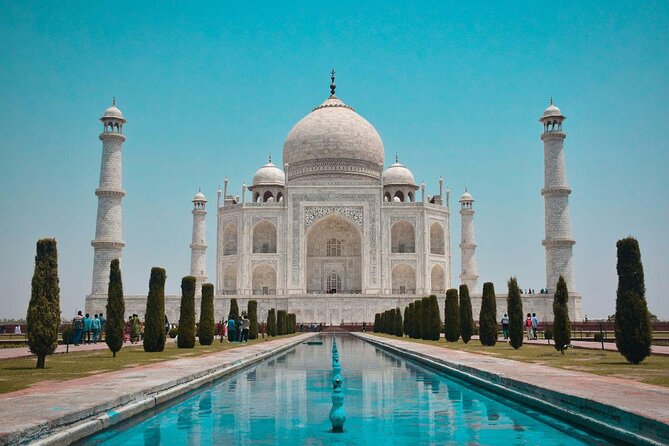
- Sunrise Taj Mahal with guided timing so you can beat the heaviest crowds
- Skip-the-line entry at major stops to reduce time lost in queues
- Delhi’s mix of Mughal-era icons and modern landmarks in one day
- Agra + Fatehpur Sikri for variety beyond just the Taj Mahal photo
- Jaipur’s big hitters: Amber Fort, City Palace, Hawa Mahal area, Jal Mahal, and Jantar Mantar
- A guide who helps with real on-the-ground stuff, not just facts
Why This 3-Day Golden Triangle Works From Delhi
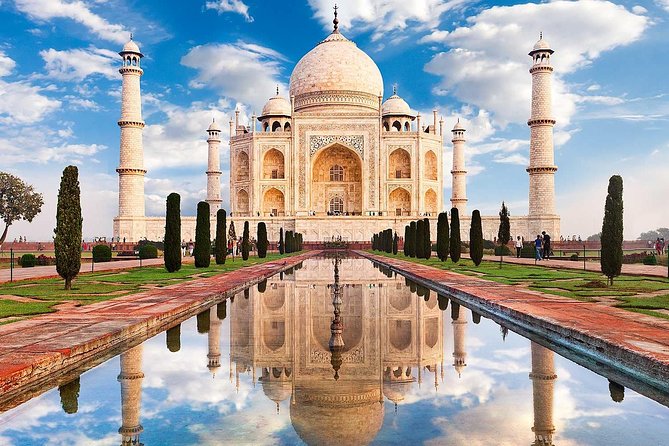
The Golden Triangle is famous for a reason, but doing it solo can turn into a juggling act. You’d need to plan hotel moves, time your long drives, arrange entry tickets, and figure out local transportation—then still find your way once you arrive. This tour simplifies that by wrapping the key cities into a tight, guided flow.
I like that you’re not just “bouncing” between stops. You get a professional guide and hotel/port pickup and drop-off, plus air-conditioned vehicle transfers. That matters because the time you gain is real time: more hours at the monuments, less time in transit confusion.
Value-wise, the headline features are more than marketing. You’re paying for a private setup, guided sightseeing, admission coverage at several major sites, and five-star hotel accommodation. If you’d otherwise pay separately for transport, a driver, a guide, hotel, and several ticketed attractions, this becomes easier to justify.
You can also read our reviews of more tours and experiences in New Delhi



Day 1 in Delhi: Old Delhi Landmarks to Qutb Minar Views
Delhi on this kind of schedule can either feel scattered or brilliantly efficient. Here, you get a clear split between Old Delhi landmarks and the more iconic monuments scattered through the city.
Start with Jama Masjid, one of the best-known Mughal-era mosques in India. It’s built by Shah Jahan between 1650 and 1656 and is known for scale. Going with a guide helps you understand what you’re looking at—where the design cues matter and why this place has endured as a Delhi anchor. Your time is budgeted at about an hour, and admission is included.
From there, you drop into Chandni Chowk, the historic market area of Old Delhi. You’ll have about 30 minutes—enough to see the spice-and-sari world, but not so long that you get stuck in decision fatigue. If you want something small (like spices or simple gifts), this is a practical window.
Next comes the broad “grand city” sweep: Red Fort (Lal Qila), India Gate, and Parliament House (Sansad Bhavan). These stops give you a sense of Delhi’s ceremonial and political axis. Even if you don’t go inside everything, the spacing helps you connect the dots between eras: Mughal power, then the modern nation-state.
You finish the day with a strong set of architectural highlights: Humayun’s Tomb, the Lotus Temple, and Qutub Minar. Humayun’s Tomb gets about an hour, and admission is included—great for understanding how Mughal tomb design influenced later monumental architecture. Lotus Temple is about 45 minutes and admission is free. Qutub Minar runs about an hour with admission included, and it’s the kind of site where even a quick visit gives you a real “scale moment.”
Practical note: Day 1 includes a mix of walking and sightseeing views. Wear shoes you can trust and plan for some stairs or uneven ground around older complexes.
Taj Mahal Sunrise: Why the Early Timing Is the Real Upgrade
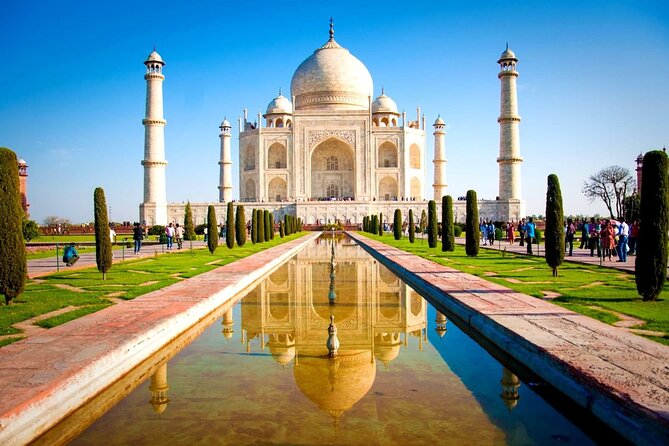
The Taj Mahal is the obvious stop, but the way you approach it changes the whole experience. This tour does it in the morning with a driver pickup from your hotel and a guided sunrise visit. You get about 1.5 hours on-site, and admission is included.
Why does sunrise matter? Because the Taj is best not as a postcard, but as a living space with changing light. When you arrive early, you’re less likely to feel surrounded by chaotic crowds, and you have a better chance of soaking in details—marble tone shifts, reflections, and the overall symmetry.
The “skip-the-line” access is another meaningful piece here. You’re not paying extra for comfort only; you’re paying to protect your time. With a guided visit, you also get help interpreting what you’re seeing, so the stop feels like more than just standing in front of a famous building.
After Taj Mahal, the tour keeps you moving to the next big ticket: Agra Fort. Admission is included and you get about 1.5 hours. Think of the fort as the next chapter—Mughal power in a more militarized, fortress setting compared with the Taj’s romantic scale.
If you’re sensitive to early starts, this is the day to plan carefully. The morning drive is part of the value, but it also means you’ll want an easy dinner the night before.
Agra Fort and Fatehpur Sikri: Adding Depth Beyond One Monument
Agra is often treated like a one-sight city, which is exactly why this portion earns its keep. After the Taj, Agra Fort keeps the Mughal story going in a different tone. You’ll spend about 1.5 hours here, and admission is included.
This is the kind of site where a guide’s context pays off. Forts are big, and without help it can feel like walls and gates. With guidance, you can connect the layout to the way the fort functioned—where power concentrated and why this setting mattered to the emperors who lived here.
Then you head to Fatehpur Sikri. It’s about an hour, and admission is free. This stop is a nice change of pace because the buildings cluster in a compact area and feel distinct from what you see in Agra proper. You get time to walk, look, and reset your eyes after the intensity of the Taj.
The practical win on this day: you’re not just collecting famous names. You’re seeing how the Mughal era expressed itself in different kinds of spaces—imperial tomb, fortification, and a planned city complex. That variety makes the three-day arc feel more complete.
Jaipur on Day 3: Amber Fort, City Palace, and the Surprise of Jal Mahal
Jaipur day is where the tour leans into dramatic architecture and a lot of wow-factor. You begin with Amber Fort (Amer Fort), about 1.5 hours, with admission included. Amber Fort is one of those places where the setting matters as much as the buildings. From the start, it’s visually commanding, and it’s also a good fit for guided explanation because the fort’s layout can be confusing without context.
Next is City Palace, established by Maharaja Sawai Jai Singh II after he moved his court to Jaipur in 1727. You get about 1.5 hours, and admission is included. This stop works well because it connects Jaipur’s royal administration and artistic culture to the physical spaces you’re walking through.
After that, you’ll cover Hawa Mahal, the famed palace facade made of red and pink sandstone. The tour lists it as a stop, though the exact time isn’t specified. Even a short look is worth it here because the design is instantly recognizable.
You then swing toward Jal Mahal, the palace sitting in the middle of Man Sagar Lake. Your time is about 30 minutes, and admission is free. It’s one of the best “pause” moments on the day because it’s visually different from the forts and palaces on land.
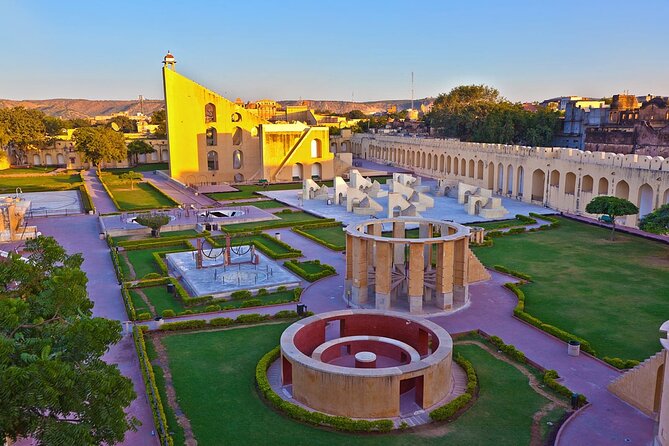
Finally, Jantar Mantar closes the loop. It’s a collection of astronomical instruments built by Sawai Jai Singh II and completed in 1734. You get about an hour here, and admission is included. This is a smart ending because it shifts the focus from royal drama to science—geometry you can actually see and understand once someone points out what the instruments are meant to measure.
If your legs are tired by the afternoon, that’s normal. Jaipur includes a lot of walking over a short time, so pacing yourself with water and breaks is key.






Price and Value at $350 Per Person

At $350 per person, this tour sits in the “pay for convenience” category. What you’re buying isn’t just transport—it’s a bundle: five-star hotel accommodation, private tour setup, hotel pickup and drop-off, air-conditioned transfers, a professional guide, bottled water, breakfast, and admission coverage at multiple major sites.
The best way to judge value is to compare what it would cost you to replicate it:
- A multi-city private driver and guide for several days
- Hotel accommodation for three days in a deluxe five-star category
- Individual museum and monument admissions for big-name attractions
- Time saved by skip-the-line access
Even without knowing the exact hotel name, the structure of what’s included makes the pricing more reasonable than it may look at first glance. If you’re the type of traveler who hates planning, hates lines, and prefers to spend your energy looking instead of negotiating tickets, the package makes sense.
One caution: meals aren’t included beyond breakfast. That’s not a dealbreaker, but you’ll want to budget for lunch and dinner stops.
The Guide Factor: Getting More Than Facts
A big part of the experience comes from how the guide helps you move and understand what you’re seeing. One review I came across highlights Ali in Agra. The praise wasn’t just about knowing facts. Ali helped with navigation around town, pointed out great spots for photos, and also showed artisans in Agra—making the visit feel more personal and less like a checklist.
That kind of help is what you should look for when booking a guided tour. The best guides cut through confusion and help you avoid wasting time. They also make room for small discoveries, like local craft work, that you wouldn’t automatically find if you only focused on the major monuments.
Even if you don’t remember every detail, you’ll feel the difference in how smoothly the day runs.
Pace, Comfort, and What to Expect Day to Day
This is a three-day overview of three major cities, and that has a built-in pace. Expect early starts, scheduled sightseeing windows, and enough walking to make comfortable shoes non-negotiable.
Comfort is handled through air-conditioned vehicle transfers and bottled water included for the duration. That helps a lot on hotter days and long drives. Also, the tour is set up as a private tour/activity, which means you’re not sharing the experience with random strangers in the same group the way many larger bus tours do.
The pace is the main consideration. If you want long, slow museum time or deep, extended walks in every complex, you may feel rushed. For many people, though, this format is exactly what makes the Golden Triangle doable.
A practical tip: keep your expectations aligned with short, guided visits. You’re there to see the big icons and understand them quickly, not to read every inscription like it’s a library assignment.
Who This Tour Fits Best
I’d put this tour at the top of your list if:
- You want Delhi, Agra, and Jaipur together without complex planning
- You value guided context and efficient timing, especially for Taj Mahal sunrise
- You prefer private comfort over crowded group logistics
- You’re okay with a packed schedule and are ready for early mornings
You might think twice if you’re someone who needs hours of free time to wander, or if you get stressed by tight timing. This is built for momentum, not for lingering.
Should You Book This 3-Day Golden Triangle Tour?
If you want maximum certainty, strong pacing, and guided access to the biggest sights, I think this is a smart booking. The mix of skip-the-line entry, a sunrise Taj Mahal approach, and a five-star hotel with pickups and transfers does a lot of the heavy lifting for you. And the fact that the guide support in Agra includes real-world navigation and artisan stops is a strong sign that the experience isn’t only about monuments—it’s also about how you move through the cities.
Book it if the itinerary fit sounds like your style: fast, focused, and guided. If that pace would make you miserable, then look for a slower option. But if you want to check off the Golden Triangle while still feeling guided and comfortable, this one is worth serious consideration.
FAQ
Is this tour a private experience?
Yes. It’s listed as a private tour/activity, so only your group participates.
What’s included in the price?
The tour includes five-star hotel accommodation, hotel pickup and drop-off, a private tour, a professional guide, bottled water, breakfast, and all fees and taxes.
Are tickets and admissions included?
Admissions are included for some stops (like Jama Masjid, Humayun’s Tomb, Qutub Minar, Taj Mahal, Agra Fort, Amber Fort, City Palace, and Jantar Mantar). Other stops listed are marked as free for admission.
Do I get skip-the-line access?
Yes. Skip-the-line access is included for key attractions.
How long is the trip?
It’s listed as approximately 3 days.
Which cities are covered?
You cover three cities: Delhi, Agra, and Jaipur.
Are meals included besides breakfast?
No. Meals are not included in addition to breakfast.
What’s the main highlight on the Agra day?
The tour includes a guided sunrise Taj Mahal visit.
Can I cancel for a full refund?
Yes. Free cancellation is offered, and you can cancel up to 24 hours in advance of the experience start time for a full refund.