REVIEW · NEW DELHI
3-Day Private Golden Triangle Tour to Agra &Jaipur from New Delhi
Book on Viator →Operated by Tour Por la India · Bookable on Viator
Three days through India’s headline monuments. This private tour strings together Delhi, Agra, and Jaipur with a driver who keeps things organized, and it includes Taj Mahal admission along with tickets for other major sites. I love the flexible pickup window (you choose a time between 7 AM and 11 AM), and I also like that monument entry is handled for you.
One catch: this is a fast-moving plan with several key stops back-to-back, and the Taj Mahal dawn visit is weather-dependent. If you’re the type who wants long museum time or slow wandering, you’ll want to pace yourself and be okay with short, focused visits.
In This Review
- Key things that make this Golden Triangle tour work well
- The Golden Triangle, planned so you don’t lose days to logistics
- Pickup across Delhi and a smooth start to a long itinerary
- Day 1 in Delhi: Qutub Minar, Mughal mosques, and Old Delhi markets
- Qutub Minar: the UNESCO “victory tower”
- Lotus Temple: a calm break in the middle of the rush
- India Gate and Parliament area: quick “photo and posture” time
- Raj Ghat and Jama Masjid: two solemn landmarks
- Chandni Chowk: where you actually feel Old Delhi
- Humayun’s Tomb: Mughal-era elegance with UNESCO credentials
- Akshardham before the highway to Agra
- Evening in Agra: check in, then rest
- Day 2 in Agra: the Taj Mahal at dawn, plus forts and Fatehpur Sikri
- Taj Mahal at dawn: when light turns monuments into stories
- Agra Fort: power, control, and Mughal residence
- Itmad-ud-Daula: the “baby Taj” effect
- Fatehpur Sikri: a timed detour that still feels like a whole place
- Jaipur arrival: check in and switch cities
- Day 3 in Jaipur: Hawa Mahal, City Palace, Jantar Mantar, and the quiet water scenes
- Panna Meena ka Kund: a short stop that rewards your curiosity
- Jal Mahal and Hawa Mahal: iconic silhouettes, brief but effective
- City Palace: where Jaipur’s royal past becomes tangible
- Jantar Mantar: astronomy carved into stone
- Heading back to Delhi
- Price and inclusions: where the value really shows up
- What you typically get included
- What’s not included (plan for it)
- The hotel option you choose changes the trip feel
- Practical tips that make this tour smoother
- Who this 3-day private Golden Triangle tour suits best
- Should you book this private Golden Triangle tour?
- FAQ
- What’s the pickup area and pickup time for the tour?
- Are monument tickets included?
- Is hotel accommodation included?
- Is the Taj Mahal sunrise visit guaranteed?
- Are Lotus Temple and Akshardham Temple open every day?
- What’s included on the drive, like WiFi or water?
- Is lunch included in the price?
- Can I cancel for a full refund?
Key things that make this Golden Triangle tour work well
- Private driver + your own group: You’re not rolling with a crowd, and the schedule is built around your ride.
- Flexible pickup across Delhi/NCR: Pick-up is available from Delhi, Noida, Gurugram, Ghaziabad, and Faridabad between 7 AM and 11 AM.
- Monument tickets included (big value saver): Entry is included for multiple UNESCO sights across all three cities.
- Taj Mahal sunrise timing, but with a weather note: Dawn access is subject to conditions, so plan with flexibility.
- Air-conditioned comfort with on-board basics: Bottled water and WiFi are included in the vehicle.
- Two-night hotels only if you choose that option: You’ll get lodging for two nights if booked with hotels; otherwise you arrange your own.
The Golden Triangle, planned so you don’t lose days to logistics
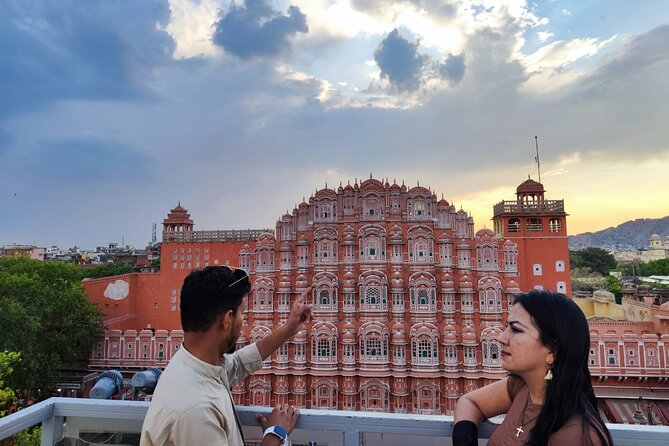
The Golden Triangle is the shortest route to see a lot of India’s most famous sights: Delhi’s UNESCO gems, Agra’s Mughal monuments, and Jaipur’s royal landmarks. The value here is not just that the places are famous. It’s that the transport between cities is handled in a private setup, with an air-conditioned vehicle and a driver who takes the stress out of daily navigation.
At the headline price of $11.50 per person, what really matters is the “what’s included” piece. This tour lists air-conditioned vehicle, government-approved tour guide, bottled water, WiFi on board, all fees and taxes, and monument tickets. If you choose the option that includes hotels, you also get two nights of accommodation.
This is the kind of trip that works best when you want to see the highlights without spending your vacation mapping metro lines, hunt-time for tickets, and timing your own city-to-city transfers.
You can also read our reviews of more private tours in New Delhi



Pickup across Delhi and a smooth start to a long itinerary

Your day begins with a practical option: pickup is offered anywhere in Delhi, Noida, Gurugram, Ghaziabad, or Faridabad. You can choose any pickup time between 7 AM and 11 AM, which is a big deal in Delhi, where traffic and start times can make or break your schedule.
The trip is private, so you’re not waiting for random regrouping points. You’ll also have the basics handled during transfers—mineral water and WiFi on board. That helps on the long city-hopping days, especially when you’re moving from Delhi to Agra and later back toward Delhi on day three.
Quick reality check: because it’s private and packed, it rewards being ready. Have your phone charged, keep your passport accessible, and wear shoes you can walk in for repeated stops.
Day 1 in Delhi: Qutub Minar, Mughal mosques, and Old Delhi markets
Day one is built like a sampler platter, but it’s not random. You’re moving through key eras of Delhi, and the stops are spaced for maximum sighting without too many full-throttle backtracks.
Qutub Minar: the UNESCO “victory tower”
You start with Qutub Minar at about a one-hour stop, with admission included. This minaret is part of the Qutb complex on the site of Delhi’s older fortified city. It’s one of those monuments where even a short visit gives you a sense of scale and early imperial power.
Practical tip: this stop is a good place to set your visual expectations for the trip. You’re about to see a lot of stone craft and symmetrical design, especially in the Mughal-era sites that follow.
Lotus Temple: a calm break in the middle of the rush
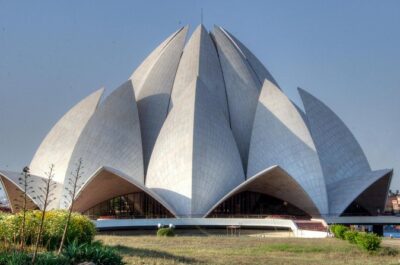
Next comes the Lotus Temple, around 30 minutes. Admission is listed as free. The big advantage here is contrast: you get a quiet, architectural reset before the heavier historical stops.
Note: the tour information flags Monday closures for certain temples (more on that later), but Lotus Temple specifically is mentioned in that context.
You can also read our reviews of more tours and experiences in New Delhi





India Gate and Parliament area: quick “photo and posture” time
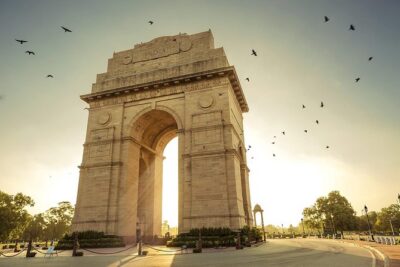
Then it’s India Gate (about 15 minutes) and a pass by the Parliament House (about 10 minutes), both free. These stops aren’t about deep exploration; they’re fast orientation points so you see major symbols of modern India before shifting fully into the older parts of the city.
Raj Ghat and Jama Masjid: two solemn landmarks
You spend about 30 minutes at Raj Ghat, a memorial tied to Mahatma Gandhi, then head to Jama Masjid for about one hour, with admission included.
Jama Masjid is a major Mughal-era mosque built by Shah Jahan between 1650 and 1656. It’s a stop where the architecture and the scale hit you quickly. Even if you keep the pace moving, you’ll understand why it’s one of the most visited religious sites in Delhi.
Chandni Chowk: where you actually feel Old Delhi
After that, you get 30 minutes at Chandni Chowk, a classic Old Delhi market area. Admission is free. This is your “eyes-on-life” stop—busy lanes, dense streets, and the kind of place where you don’t need a guided explanation to get the atmosphere.
Humayun’s Tomb: Mughal-era elegance with UNESCO credentials
Day one closes with Humayun’s Tomb (about one hour, admission included). It’s the tomb of Humayun, commissioned by his wife Empress Bega Begum around 1569–70, designed by Mirak Mirza Ghiyas.
This is one of those sites where a focused hour feels worth it. You get to see the later Mughal design language that will echo—visually and historically—in Agra.
Akshardham before the highway to Agra
You also visit Swaminarayan Akshardham (around one hour, free admission). Then there’s time for lunch at a local restaurant before departing on the highway to Agra, with the ride taking about 3 hours.
Important: lunch isn’t included, so budget for it. The good news is that you’re not making food decisions in transit at random—you get a built-in window.
Evening in Agra: check in, then rest
You arrive in Agra and check in at your hotel. The rest of the day is at your leisure. This is a smart way to handle Agra, because day two starts early.
Day 2 in Agra: the Taj Mahal at dawn, plus forts and Fatehpur Sikri
Day two is the day most people picture when they say Golden Triangle. You start with the Taj Mahal during a dawn visit, then work through Agra and finish by heading to Jaipur.
Taj Mahal at dawn: when light turns monuments into stories
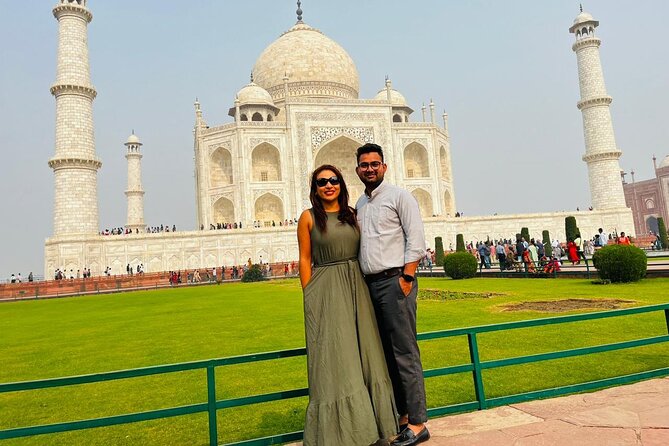
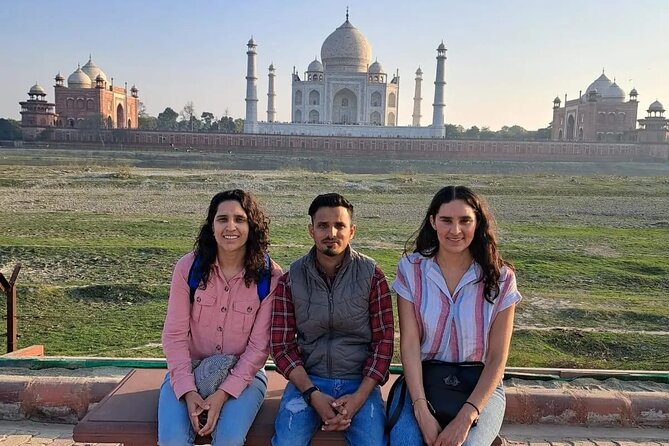
The Taj visit is scheduled for about two hours, with admission included. The tour description notes it’s a dawn visit, built by Shah Jahan in memory of Mumtaz Mahal, who died in 1631.
Two things to know before you go:
- Weather conditions matter. The tour explicitly says the sunrise timing is subject to conditions.
- This schedule works best if you’re calm about timing. The best Taj moments often happen early, and that means being ready to move.
Practical: bring something warm if dawn feels cool to you. Even in warmer months, mornings can be chilly.
Agra Fort: power, control, and Mughal residence
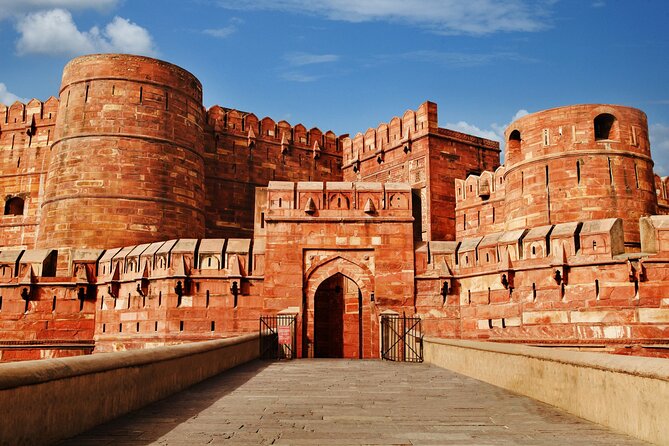
Next is Agra Fort for about one hour with admission included. This fort was the main residence of Mughal emperors until 1638, when the capital moved to Delhi.
This stop adds context. After seeing the Taj’s romantic legend, the fort reminds you this was an empire with daily control—administration, defense, and residence under one roofline.
Itmad-ud-Daula: the “baby Taj” effect
You also visit Itmad-ud-Daula (about 30 minutes, admission included). It’s described as an inspiration behind the Taj Mahal and is nicknamed as a smaller companion to what comes later.
This is a valuable stop if you like design details. Even if the time is short, you’ll notice why it’s used as a reference point for the Taj’s style.
Fatehpur Sikri: a timed detour that still feels like a whole place
Then you go to Fatehpur Sikri for about one hour. Admission is free in the tour details, and it’s about 40 km from Agra (as stated in the description).
You shouldn’t expect a full-day exploration here. But as part of this 3-day format, it works as a “you should know this exists” stop—showing how the region’s power centers shifted beyond the Taj-and-fort pairing.
Jaipur arrival: check in and switch cities
After Fatehpur Sikri, you continue to Jaipur, check in at your hotel, and the transfer window is about 4 hours (as listed in the schedule). That’s enough time to reset.
Also note: the tour mentions a special order option. If you start on Thursday, the itinerary changes to Delhi – Jaipur – Agra – Delhi, because the Taj Mahal remains closed every Friday.
Day 3 in Jaipur: Hawa Mahal, City Palace, Jantar Mantar, and the quiet water scenes
Day three keeps the focus on Jaipur’s big signature landmarks. The sequence mixes quick viewpoints with two longer cultural anchors.
Panna Meena ka Kund: a short stop that rewards your curiosity
You begin with Panna Meena ka Kund (about 15 minutes, free). It’s believed to be around 1,000 years old, built in the Meena dynasty era, and the well’s water is used in Hindu ceremonies.
Even in 15 minutes, it’s memorable because it’s not a “postcard-only” stop. It’s functional, old, and tied to living ritual.
Jal Mahal and Hawa Mahal: iconic silhouettes, brief but effective
Next come quick looks at:
- Jal Mahal (about 15 minutes, free): a palace in the middle of Man Sagar Lake, built in 1699 and later renovated.
- Hawa Mahal (about 15 minutes, free): the Palace of Wind, red and pink sandstone, attached to the edge of the Jaipur City Palace and extending toward women’s chambers.
Both are short stops on purpose. They’re here to give you the “I get it now” shapes—then you move on so you don’t lose time waiting around.
City Palace: where Jaipur’s royal past becomes tangible
The bigger cultural hit is Jaipur City Palace (about one hour, admission included). This is the royal residence and former administrative headquarters of Jaipur’s rulers.
This stop is worth your full attention time because it gives you a framework for what you’re seeing in the rest of Jaipur. Without it, Hawa Mahal can feel like just a pretty facade. With it, you understand why Jaipur’s architecture has a role in power and identity.
Jantar Mantar: astronomy carved into stone
Then you visit Jantar Mantar (about one hour, admission included). It’s a collection of 19 astronomical instruments built by Rajput King Sawai Jai Singh, completed around 1734.
This is a great place to slow down, even if you only have an hour. It turns science into something you can walk around and read with your eyes.
Heading back to Delhi
After sightseeing, you start your return journey to Delhi. The ride time is about 5 hours. The tour information also notes you can choose drop-off at Jaipur Airport instead, if that better fits your plans.
On day three, your finish time is said to land around 9 PM back in Delhi, unless you arrange something different.
Price and inclusions: where the value really shows up
The advertised $11.50 per person is the hook. The value shows up in the details of what you don’t have to pay separately.
What you typically get included
From the tour info, you should expect:
- Air-conditioned vehicle
- Government-approved tour guide (listed as all languages)
- Bottled mineral water
- WiFi on board
- All fees and taxes
- Tickets to monuments
- Two nights of accommodation if you select the hotel-included option
This is the kind of setup that can reduce money leaks. Entrance fees and guided transport in India can add up fast, and this tour bundles many of those costs.
What’s not included (plan for it)
- Lunch is not included.
- Tips/gratuities for the guide and driver are not included.
That’s it. The “not included” list is short, which makes budgeting easier.
The hotel option you choose changes the trip feel
If you book without hotels, you arrange your own accommodation. The info specifies that in that case, night one is in Agra and night two is in Jaipur.
If you want less decision-making, choose the option that includes hotels.
Practical tips that make this tour smoother
A few details from the tour information can save you hassles:
- Bring your passport. A valid passport is required on the day of travel.
- Wear comfortable walking shoes. This is lots of landmarks with repeated walking in cities.
- Expect approximate transfer times. Traffic can shift things, so don’t plan tight connections outside the tour.
- Temple closures matter. Lotus Temple and Akshardham Temple remain closed every Monday. If your dates land on a Monday, you’ll want to confirm how the route adapts.
- Use the pickup flexibility. Choose a time that matches how you actually travel in India mornings—slow start or early energy.
Who this 3-day private Golden Triangle tour suits best
This is a strong fit if you:
- Want the Delhi–Agra–Jaipur highlights without building an itinerary from scratch.
- Prefer a private driver and a guided approach for the big UNESCO sites.
- Like structured sighting days with short, clear time blocks (rather than unplanned wandering).
- Are traveling with a group that wants to stay together.
It might feel less ideal if you:
- Hate early starts and want long, flexible time inside museums.
- Want to skip dawn timing and prefer a slower pace.
- Are booking around Monday temple closures and don’t want any changes.
Should you book this private Golden Triangle tour?
I’d book it if you want a no-drama way to see the headline sites with monument tickets handled, a comfortable ride, and a tight 3-day structure that covers Delhi, Agra, and Jaipur. The big advantage is practical: you spend your time looking at landmarks, not organizing logistics.
I’d think twice if your travel style is slow and you want lots of optional time blocks. Also keep your eye on the two “timing variables” the tour itself flags: Taj Mahal dawn visits depend on weather, and Lotus/Akshardham are closed on Mondays.
If you’re okay with a well-run pace and you like your trip planned in advance, this one is designed for you.
FAQ
What’s the pickup area and pickup time for the tour?
Pickup is available from anywhere in Delhi, Noida, Gurugram, Ghaziabad, and Faridabad. You can choose any pickup time between 7 AM and 11 AM.
Are monument tickets included?
Yes. The tour includes tickets to the monuments, and admission is listed as included for multiple sites such as Qutub Minar, Jama Masjid, Humayun’s Tomb, the Taj Mahal, Agra Fort, Itmad-ud-Daula, City Palace, and Jantar Mantar.
Is hotel accommodation included?
It depends on the option you book. The tour includes two nights of accommodation if you select the package with hotels. If you book without hotels, you can book your own hotels, with the first night in Agra and the second night in Jaipur.
Is the Taj Mahal sunrise visit guaranteed?
The tour notes that the Taj Mahal sunrise tour is subject to weather conditions, so it’s not guaranteed to run exactly as planned if conditions don’t cooperate.
Are Lotus Temple and Akshardham Temple open every day?
No. The tour information says Lotus Temple and Akshardham Temple remain closed every Monday.
What’s included on the drive, like WiFi or water?
The tour includes bottles of mineral water and WiFi on board, and you’ll travel in an air-conditioned vehicle.
Is lunch included in the price?
No. Lunch is not included.
Can I cancel for a full refund?
Yes. The tour offers free cancellation. You must cancel at least 24 hours in advance of the experience’s start time for a full refund.