REVIEW · NEW DELHI
4-Day Delhi, Agra and Jaipur Private Tour
Book on Viator →Operated by Thrive Holiday · Bookable on Viator
Golden Triangle, done with less stress. I love the private air-conditioned car with a pro driver, because it keeps the whole Delhi–Agra–Jaipur route simple and low-fuss. I also like the No Tourist Trap Guarantee, so you can enjoy stops without getting steered toward commission shops.
You’ll also get the kind of timing that matters, like waking up for sunrise at the Taj Mahal and using a battery golf cart to reach the entrance area. My one caution is that this tour moves at an active pace. It’s built to cover a lot, so you’ll want decent energy and patience for crowds at major sights.
Before you go, plan around the practical stuff: a modest dress code (shoulders and knees covered) is required for places like Akshardham, Lotus Temple, and Gurudwara Bangla Sahib. Also, the route can shift if key monuments are closed—Lotus Temple and Red Fort on Mondays, and Taj Mahal on Fridays.
In This Review
- Key highlights you’ll feel on day one
- How this private Golden Triangle tour works (and who it fits)
- Transportation comfort: AC car, driver, and real-world timing
- Your Delhi day: Old Delhi landmarks, then New Delhi icons
- Jama Masjid and the Old Delhi approach
- Spice markets and Mughal power
- Gurudwara Bangla Sahib for calm
- New Delhi classics: India Gate, Parliament, President’s residence, Lotus Temple
- Mughal-era tombs and early Indo-Islamic architecture
- A practical Delhi-Day note: closures
- Agra day: sunrise Taj Mahal, fort walls, and the Baby Taj
- Stepwell detour: Chand Baori in Abhaneri
- The drive to Jaipur
- Jaipur day: forts, palace rooms, big science, and the winds
- Panna Meena ka Kund: geometry and stairs
- Amber Fort: the hilltop “maharaja” moment
- Jal Mahal: quick lake-lens photos
- City Palace: part museum, part living heritage
- Jantar Mantar: giant instruments for ancient science
- Hawa Mahal: short, iconic, and photogenic
- Day 4 Jaipur wrap-up and the drive back to Delhi
- Albert Hall Museum: Indo-Saracenic style
- Patrika Gate: modern color and murals
- Back to Delhi
- Tickets, timing, and dress code: the stuff that can trip you up
- Who will love this tour most (and who might not)
- Should you book 4-Day Delhi, Agra and Jaipur Private Tour?
- FAQ
- Are monument tickets included in the tour price?
- Will the tour include sunrise at the Taj Mahal?
- Is there a closure day for the Taj Mahal?
- What happens if Red Fort and Lotus Temple are closed?
- Do you get help getting to the Taj Mahal entrance?
- Is pickup and drop-off included?
Key highlights you’ll feel on day one

- Private, air-conditioned vehicle with a professional driver: fewer logistics headaches and more time at each place
- Sunrise Taj Mahal plan plus golf cart ride: helps you arrive early and avoid the worst heat and lines
- Old Delhi route that actually makes sense: mosques, markets, a rickshaw ride, plus big landmarks nearby
- Agra and Jaipur pacing with “smart stops”: you mix the big icons with stepwells and observatories
- Strict anti-pressure policy: a stated No Tourist Trap Guarantee to reduce shopping stress
How this private Golden Triangle tour works (and who it fits)
This is a classic Golden Triangle route—Delhi, Agra, and Jaipur—but done in a private, comfort-first way. You travel in your own AC car with a professional local driver, and you get expert local guides in each city.
That matters because the Golden Triangle can become a logistics game if you’re hopping between buses, taxis, and different pickup points. Here, you keep one vehicle and one system for the whole run, then your driver drops you at your self-booked hotel each time you arrive.
This also fits well if you want flexibility. Since it’s private, you’re not stuck with a huge group schedule. Still, it’s not a slow “wander and snack” trip. The plan is active and packed, covering major sights plus a few meaningful extras.
Value check: the listed price is $141.85 per person for a 4-day private experience, but monument tickets are not included. Expect about USD 70 per person for on-site admissions. The tradeoff is that the price covers the big infrastructure pieces: private transportation, guides, pickup/drop-off, and the comfort extras like mineral water.
If you’re a couple, a family group, or a small circle of friends who hate negotiating taxis and want a guided route you can trust, this style usually feels like a good deal. If you prefer a super-slow pace and long breaks with zero movement between stops, you may find the schedule a bit tight.
You can also read our reviews of more private tours in New Delhi


Transportation comfort: AC car, driver, and real-world timing
The biggest practical win is the private AC vehicle throughout the trip. You’re not arranging rides between cities, and you’re not spending your limited vacation time figuring out where to meet a driver.
On transfer days, the route includes long drives. For example, after Delhi’s sightseeing you travel to Agra via the Yamuna Expressway, then you’re dropped at your self-booked hotel. The next morning is the big sunrise moment, so keeping transfers controlled is a plus.
The car size depends on group size, with:
- four-seater sedan (1–3 people)
- six-seater SUV (4–6 people)
- twenty-seater minibus (7–15 people)
Luggage space is limited, so if you’re bringing more than one large suitcase per person, it’s smart to flag that while booking.
Also, you get a mineral water bottle during the journey and battery golf cart assistance at the Taj Mahal entrance area. Small comforts like that reduce the “heat tax” on big sightseeing days.
Your Delhi day: Old Delhi landmarks, then New Delhi icons

Day 1 is split between the older soul of Delhi and the grand, government-era monuments.
Jama Masjid and the Old Delhi approach
You start at Jama Masjid, one of Shah Jahan’s landmark mosque builds. Even if you’ve seen photos before, the scale hits differently in person. There’s also a good chance to look out over Old Delhi from the mosque’s vantage areas—great for getting your bearings fast.
From there you go into Chandni Chowk, where you’ll take a traditional rickshaw ride through the area’s narrow lanes and market streets. This is one of those moments where the guide’s timing helps. Instead of trying to “DIY” your way through traffic and turns, you get a structured route.
Spice markets and Mughal power
Next is Khari Baoli, described here as Asia’s largest wholesale spice market. Even as a short stop, it’s worth it for the sensory overload: colors, smells, and the everyday trading energy.
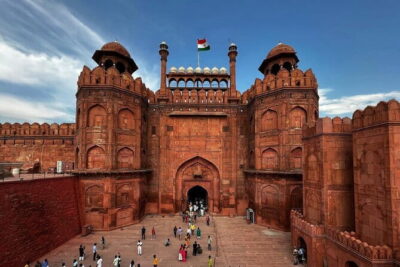
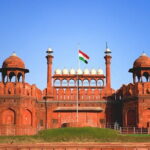
Then you visit the Red Fort. This is Mughal power made stone—large walls, major gates, and a strong sense of what this site represented historically. The key consideration: some major sights can have on-site ticket requirements, so build ticket time into your day even if the guide handles logistics.
You can also read our reviews of more tours and experiences in New Delhi





Gurudwara Bangla Sahib for calm
You then shift to Gurudwara Bangla Sahib, a revered Sikh temple with a peaceful atmosphere and the famous tradition of langar (community service). The contrast with Old Delhi’s market streets is real, and that’s a good thing. It’s a mental reset before you head to more monumental New Delhi stops.
New Delhi classics: India Gate, Parliament, President’s residence, Lotus Temple
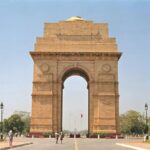
You visit India Gate, plus views around Parliament House and the President of India’s official residence area (described as a mix of Mughal and European architecture set in Mughal Gardens). These stops are mostly “see it and absorb the setting,” not long museum-style visits.
Then you go to the Lotus Temple, a Bahá’í House of Worship. It’s open to people of all faiths and is known for its serene, modern design. Dress code matters here—shoulders and knees covered—so plan your outfits.
Mughal-era tombs and early Indo-Islamic architecture
Two more major Delhi sights close the loop:
- Humayun’s Tomb: Mughal tomb with Persian-style garden layout.
- Qutub Minar: UNESCO World Heritage site and the world’s tallest brick minaret, with intricate carvings.
Day 1 ends with the drive to Agra and a drop at your self-booked hotel. That means you’re not stuck booking transport too late at night—your driver handles the handoff.
A practical Delhi-Day note: closures
There’s an important heads-up: Lotus Temple and Red Fort are closed on Mondays. If your Day 1 lands on Monday, the route will replace them with Agrasen ki Baoli and Lodhi Garden. That can actually be a nice change if you like quieter, less “only-photo” stops, but it does change the day.
Agra day: sunrise Taj Mahal, fort walls, and the Baby Taj
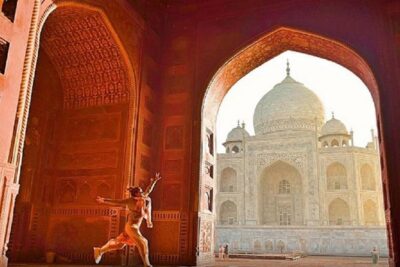
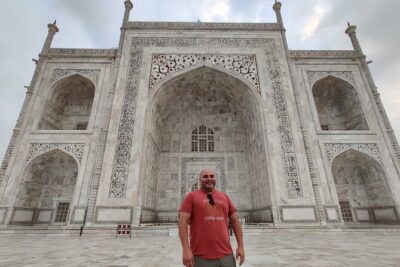
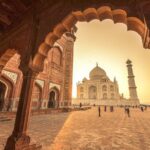
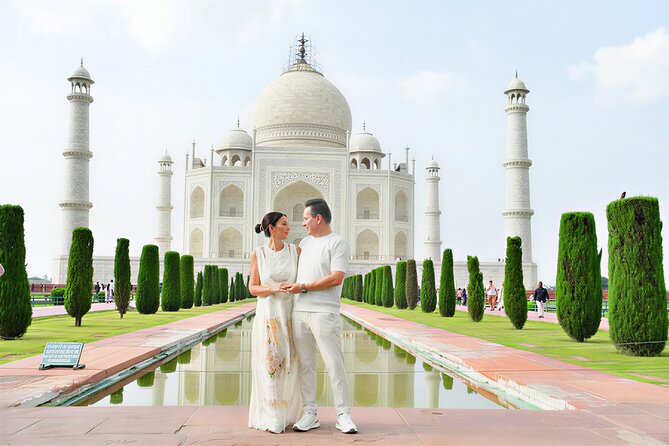
Day 2 is the heart of the Golden Triangle experience. You wake up before dawn for sunrise at the Taj Mahal. Watching the marble shift colors as daylight arrives is the reason many people plan this trip. Here, you’ll also start early enough to beat the worst crowds and heat stress.
You’ll spend about two hours at the Taj Mahal. The experience includes a battery golf cart ride from the parking area to the entrance, which is a useful time-saver and comfort boost.
After breakfast, you head to Agra Fort, described as a walled city of palaces, mosques, and royal halls. This is one of those places where you see how Mughal power worked day-to-day, not just how it looked for ceremonies.
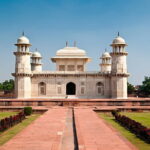
Then you visit Itmad-ud-Daula, sometimes called the Baby Taj. You’ll get a look at a Mughal tomb where white marble plays the starring role and where the design is said to have inspired later Taj Mahal elements.
Stepwell detour: Chand Baori in Abhaneri
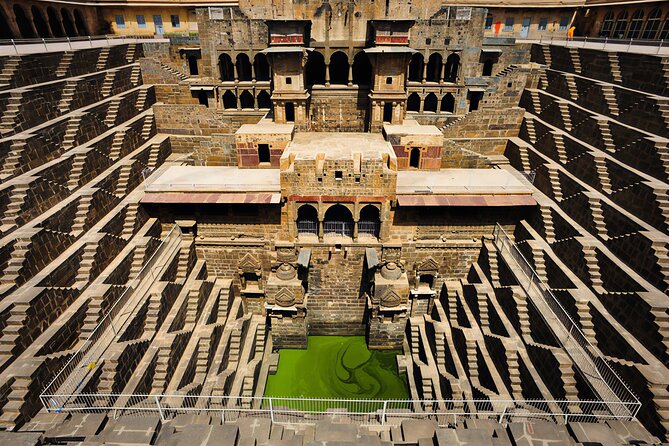
Before arriving in Jaipur, you stop at Chand Baori, a deep stepwell with symmetrical steps. This is a very different kind of sight than the marble mausoleum of Agra, and it’s a smart change of pace. It also gives you something “Rajasthan-specific,” even while you’re still traveling.
The drive to Jaipur
Then you have a final stretch by car to reach Jaipur, and your driver drops you at your self-booked hotel. The tour keeps that handoff clear, so you’re not hunting for where to go after a long day.
Jaipur day: forts, palace rooms, big science, and the winds
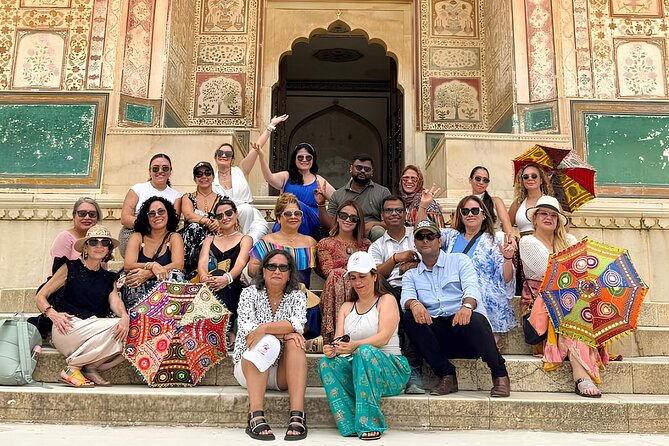
Day 3 is where Jaipur’s identity shows up: fort views, pink-city architecture, and the royal and scientific side of the city.
Panna Meena ka Kund: geometry and stairs
Your day begins with Panna Meena Ka Kund, a 16th-century stepwell with symmetrical staircases. It’s not just a photo stop. The design makes you look down, count, and notice the repeating pattern—great if you like architecture that rewards attention.
Amber Fort: the hilltop “maharaja” moment
Next is Amber Fort, a UNESCO World Heritage site. Expect palace-like spaces inside a fortress complex, plus the feeling of stepping into a royal world. The visit is about two hours.
If you’re thinking about comfort, do plan for walking and steps. This is the kind of site where you’ll want comfortable shoes more than anything.
Jal Mahal: quick lake-lens photos
Then there’s a short stop at Jal Mahal for photos of the palace appearing to float over Man Sagar Lake. The tour notes you cannot go inside, so treat it as a photo and viewpoint moment.
City Palace: part museum, part living heritage
You visit the City Palace of Jaipur, including opulent halls and courtyards. Part of it is still connected to the royal family, so it feels lived-in rather than frozen behind glass. The time here is about 1.5 hours.
Jantar Mantar: giant instruments for ancient science
Next is Jantar Mantar, an 18th-century astronomical observatory and UNESCO site. The big point is that you’re looking at scaled instruments meant to measure time and sky patterns. It can feel surprising, especially if your usual travel mode is “monuments only.”
Hawa Mahal: short, iconic, and photogenic
You finish with Hawa Mahal (Palace of Wind) as a photo stop. It’s recognizable for its honeycomb-like facade and many small windows. The stop is brief—about 15 minutes—so it’s best if you’re ready to take photos quickly and move on.
Day 4 Jaipur wrap-up and the drive back to Delhi

Day 4 is lighter than the earlier days, which is welcome after sunrise and fortress walking.
Albert Hall Museum: Indo-Saracenic style
You start at Albert Hall Museum, described as the oldest museum in Rajasthan with Indo-Saracenic architecture. You’ll spend about 1.5 hours, which is enough for a solid look without feeling like a forced museum marathon.
Patrika Gate: modern color and murals
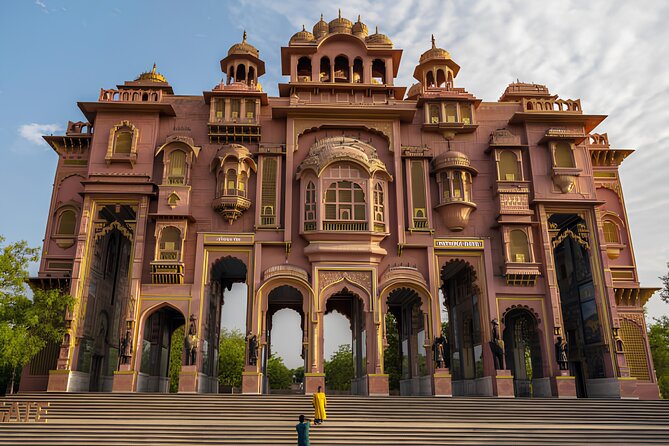
Next is Patrika Gate, known for being easy to photograph with its painted archways. It’s a short stop, about 15 minutes, and it adds a more modern Jaipur visual at the end.
Back to Delhi
Then you leave Jaipur and drive back to Delhi, about 4–5 hours, with drop-off at Delhi Airport (per the provided plan). This is one of those days where you’ll want your energy for travel more than sightseeing.
Tickets, timing, and dress code: the stuff that can trip you up
Here’s the straightforward approach to budgeting and planning:
- Monument tickets are not included. The tour estimates about USD 70 per person for on-site admissions.
- Included comfort items include mineral water during travel and a battery golf cart ride at the Taj Mahal entrance.
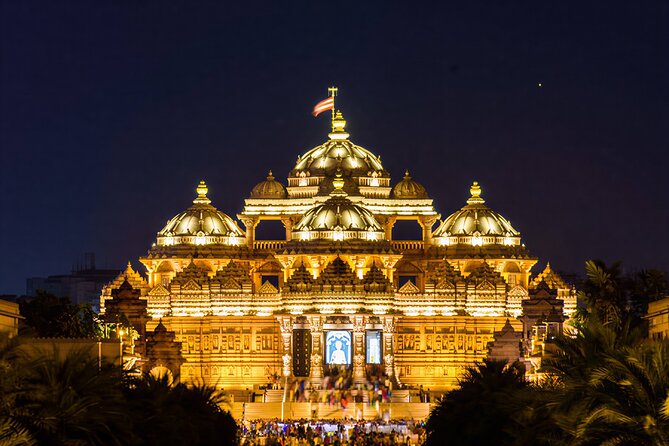
- A modest dress code is required for temples: shoulders and knees covered, for Akshardham, Lotus Temple, and Gurudwara.
Also, if you’re sensitive to schedule changes, note:
- Taj Mahal is closed every Friday. If your Day 2 in Agra would land on Friday, the itinerary is automatically rearranged to Delhi → Jaipur (first) → Agra (last) so you can still visit.
- Lotus Temple and Red Fort are closed on Mondays, replaced with Agrasen ki Baoli and Lodhi Garden.
This is the kind of policy detail that saves your trip from feeling chaotic. It just means you need to be flexible.
Who will love this tour most (and who might not)
This private tour works best if you want:
- Comfort and simplicity: one AC car, one driver, guided highlights
- A sunrise Taj plan: not everyone is willing to wake up before dawn
- A balance of icons and supporting sights: stepwells, observatories, and tombs beyond the headline stops
It may feel less ideal if you:
- hate early mornings
- want lots of free time at each major monument
- want a more relaxed pace with fewer daily transitions
One more “human” note: a short review highlight credited safe, comfortable guidance with named team members, including Mr. Kumar for safety and Mr. D. Singh for bringing Agra’s history to life. That’s exactly the kind of good guide influence you want on a route this packed.
Should you book 4-Day Delhi, Agra and Jaipur Private Tour?
I’d book it if your top goal is a stress-controlled Golden Triangle with private transportation and expert local guiding, especially if sunrise Taj is on your bucket list. The price is reasonable for what’s included—private AC car, guides in each city, pickup/drop-off, water, and the Taj entrance golf cart ride—so long as you’re comfortable paying monument admissions on-site.
Skip it if you want a slow travel rhythm or you don’t want to handle day-to-day logistics like dress code rules and ticket payments. Also, double-check your travel day for Friday (Taj closure) and Monday (Lotus/Red Fort closure), because while the tour adjusts, your ideal order of highlights may change.
If you’re trying to decide fast: this is a solid choice for first-time Golden Triangle travelers who value comfort and a clear, guided plan more than improvising.
FAQ
Are monument tickets included in the tour price?
No. Monument tickets are payable on-site, with an estimate of about USD 70 per person.
Will the tour include sunrise at the Taj Mahal?
Yes. Day 2 includes a sunrise visit to the Taj Mahal.
Is there a closure day for the Taj Mahal?
Yes. The Taj Mahal is closed every Friday. If your Day 2 in Agra would fall on Friday, the itinerary is rearranged to Delhi → Jaipur (first) → Agra (last).
What happens if Red Fort and Lotus Temple are closed?
Lotus Temple and Red Fort are closed on Mondays. They are replaced with Agrasen ki Baoli and Lodhi Garden.
Do you get help getting to the Taj Mahal entrance?
Yes. The plan includes a battery golf cart ride from the parking area to the Taj Mahal entrance.
Is pickup and drop-off included?
Yes. The tour includes hotel/airport pickup and drop-off, and it notes a drop at Delhi Airport at the end of the trip.