REVIEW · NEW DELHI
4-Day Ranthambore Tiger Safari Tour to Agra and Jaipur from Delhi
Book on Viator →Operated by Hire Taxi India · Bookable on Viator
Tigers, forts, and the Taj in four days. What makes this route interesting is how much you squeeze in without feeling like you’re doing everything yourself: private sightseeing with guided stops plus Ranthambore tiger safaris with a naturalist, all tied together by air-conditioned transfers and included tickets. I especially like the early-morning Taj Mahal sunrise plan and the built-in rhythm of two safari outings. One consideration: your success depends on timing, since the park closes from July 1 to Sept 30, and the Taj sunrise can shift with weather.
In day-to-day flow, the experience is designed around drivers and guides who handle India traffic and keep you moving. Names like Mr. Singh, Mr. KK, and Ravi come up for this kind of on-time, organized service, and there’s also a smart tip worth keeping in mind: if you want photos, ask your guide to help you rather than relying on the paid photographers you’ll see near major sights. You’ll also start with pickup from Delhi (and nearby areas like Noida and Gurugram), which cuts out a lot of hassle before the real sightseeing begins.
In This Review
- Key Highlights You’ll Actually Care About
- How This Delhi–Jaipur–Ranthambore–Agra Tour Gets You Moving Fast
- Day 1 in Delhi: Qutub Minar, India Gate, and the Drive Toward Agra
- Day 2 in Agra: Taj Mahal at Sunrise, Agra Fort, and a Controlled Pace
- Ranthambore Tiger Safari: Two Chances in Shared Jeep or Canter
- Day 3 Transfer to Jaipur and the Safari Wrap-Up
- Day 4 Jaipur Sights: Amber Fort, Hawa Mahal View, City Palace, and Jantar Mantar
- What You’re Really Paying For: Value at Around $261
- Who This Tour Fits Best (And Who Might Want a Different Plan)
- Practical Tips to Get More Out of It
- Should You Book This Delhi to Ranthambore Tiger Safari Tour?
- FAQ
- What time does the tour start in Delhi?
- Is pickup available from nearby cities like Noida or Gurugram?
- Do I get to visit the Taj Mahal at sunrise?
- What if I travel during the Ranthambore monsoon closure?
- Are safari and monument entrance fees included?
- What vehicle is used for the tiger safari?
- Can I get vegetarian meals, and what meals are included?
- If I cancel, is a full refund possible?
Key Highlights You’ll Actually Care About
- Sunrise Taj Mahal with early pickup and a golf cart ride
- Two Ranthambore tiger safari departures (morning and afternoon) in shared jeeps/canters
- Private live tour guides for city days, not just a bus drop-off
- Entrance fees and monument tickets included at major stops
- Full transfer support in an air-conditioned private vehicle between cities
- Meals handled with daily breakfast and lunch, plus dinner included
How This Delhi–Jaipur–Ranthambore–Agra Tour Gets You Moving Fast
This is the kind of itinerary that works when you want big-ticket sights without the stress of piecing together transport, tickets, and timing. You get pickup in the Delhi area, then each day is built around specific stops with a guide and a clear travel window between cities.
What I like is that the tour doesn’t just list monuments. It assigns you a daily plan: guided sightseeing time in Delhi, Agra, and Jaipur, then wildlife time in Ranthambore. Add in air-conditioned private transfers and included admission fees, and you avoid the common headache of spending the day hunting for tickets while others stroll in.
The one trade-off is that not every part is fully private. The safaris are in shared jeeps or shared canters, which is standard for Ranthambore but does affect how much personal control you’ll feel once you’re on safari.
You can also read our reviews of more tours and experiences in New Delhi



Day 1 in Delhi: Qutub Minar, India Gate, and the Drive Toward Agra
You start with pickup in Delhi around 8:00am, then your first sightseeing block focuses on a classic UNESCO stop and a few iconic government-and-memorial landmarks.
Qutub Minar is your first big anchor. It’s a UNESCO World Heritage Site, and you’ll learn about its origins in the 11th/12th-century Delhi Sultanate era—specifically how Qutub-ud-din Aibek is tied to the tower’s history. Even if you’ve seen photos, there’s something about standing close to this kind of monument: it helps you understand scale fast.
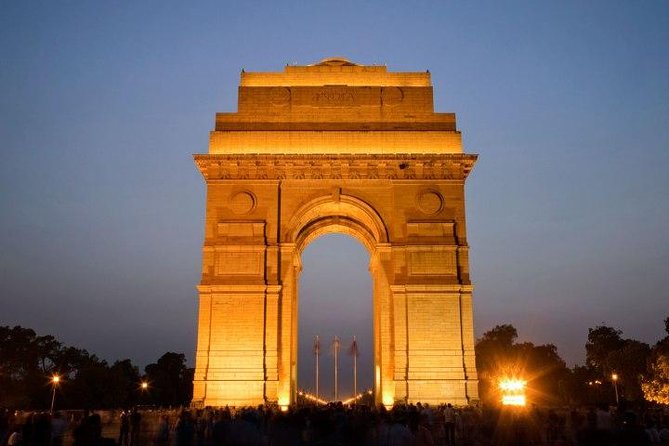
Next comes India Gate, the memorial to around 90,000 Indian army soldiers who died in WWI, plus those connected to the Northwest Frontier operations and the 1919 Anglo-Afghan War. It’s a short stop, but it hits with real weight, and it’s a good reset after the intensity of the Qutub Minar structures.
You’ll also drive past Parliament House and the grand government buildings around it. Since you’re viewing from outside, don’t expect a long walkthrough. Still, it helps you get oriented in Delhi without losing half your day.
Then comes the pivot: after this half-day feel in Delhi, you’ll drive about three hours toward Agra. That transfer matters because it positions you for the early start the next day.
Day 2 in Agra: Taj Mahal at Sunrise, Agra Fort, and a Controlled Pace
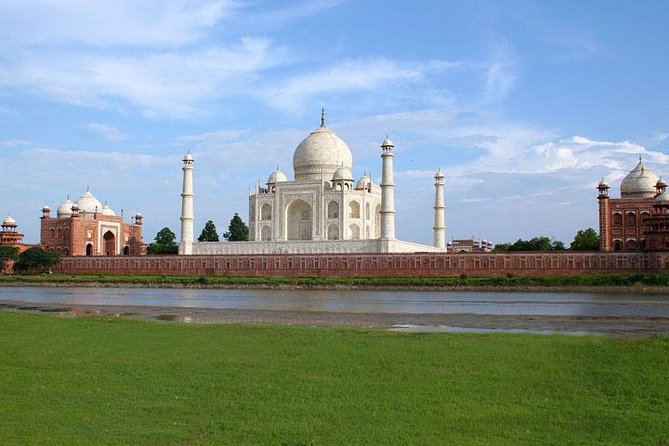
Day 2 starts early—around 6:00am pickup—because Taj Mahal sunrise is the headliner. The key detail you should know is that the Taj is closed on Fridays, and the sunrise timing is also weather-dependent, so your exact experience can shift.
Even when you’ve seen the Taj Mahal in postcards, sunrise adds something practical: softer light and that first moment when the crowds haven’t fully built up yet. You’ll spend about two hours here, and you’ll also get a golf cart ride to and from the Taj area, which helps if you don’t want to spend your morning walking long distances.
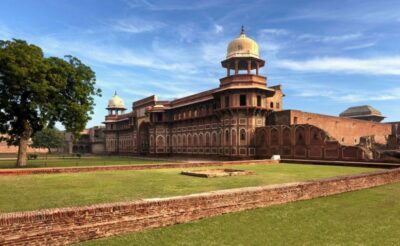
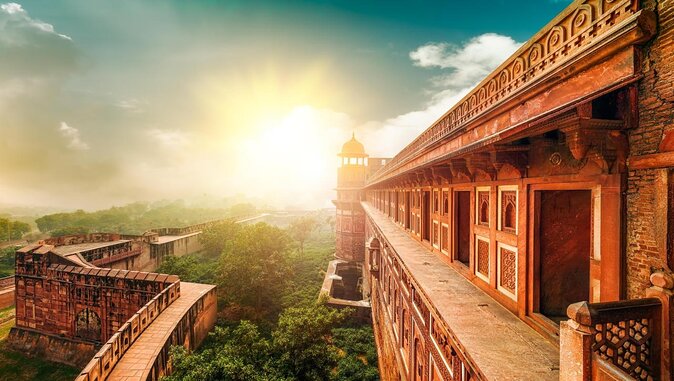
After the Taj, you move to Agra Fort, a powerful Mughal fortress in red sandstone. Inside its enclosure walls are palaces and imperial spaces, including the Jahangir Palace and the Khas Mahal. This stop works well right after the Taj because it gives you variety: instead of one perfect white icon, you’re shifting into a story of defense, rulers, and imperial architecture.
Then there’s some downtime that doubles as flexibility: a stop for shopping at places like Sanskriti’s Imperial Gems, where you can look at marble inlay work, carpets, Zari and embroidery, and leather goods. The stop is optional in the sense that you can browse at your own pace, but plan to spend time here because it’s built into the day.
After Agra, you drive about five hours to Ranthambore. That’s a long road day, but the value is that you’re getting to the safari zone and not waking up and transferring again in the morning.
Ranthambore Tiger Safari: Two Chances in Shared Jeep or Canter
This is where the trip earns its name.
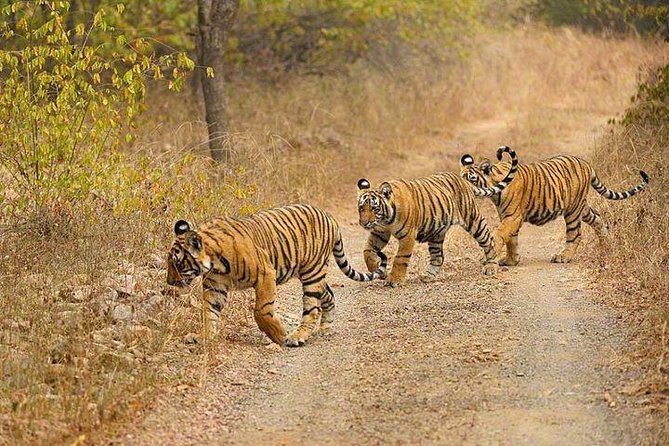
Your safari days are built around two outings: one in the morning and one in the afternoon, each around three hours, with you traveling in a shared jeep or shared canter. You’ll also have a naturalist with you during the safari, which is a big deal because it’s the difference between just scanning trees and actually understanding habitat, tracks, and animal behavior when you spot something.
Two safaris are valuable for a simple reason: wildlife sightings are never guaranteed. A morning drive gives you a different light and activity pattern than the afternoon drive, so you’re increasing your odds just by doing both. You’re not paying for one long uncertain wait; you’re getting a pair of focused search windows.
There’s also the practical note you must plan around: Ranthambore National Park is closed from July 1 to Sept 30 each year. If your travel dates fall in that window, this particular plan won’t run as described.
When you’re on safari, you’ll want to treat it like a quiet listening sport. Give your eyes time to adjust, keep your gear ready, and let the naturalist’s guidance shape where you look. Also: be ready for the shared format. You’ll be together with other groups, and your visibility and seating comfort can vary by vehicle and where you end up.
Day 3 Transfer to Jaipur and the Safari Wrap-Up
Day 3 continues the wildlife theme, starting with your Ranthambore National Park safari in the morning. After the first shared jeep outing, you’ll head out again in the afternoon for the second drive. Together, these two safaris create a full day in the reserve area rather than turning it into a quick cameo.
Once safari time finishes, you shift gears again: you’ll drive about three hours to Jaipur. That’s a manageable transfer compared with the earlier longer road stretches, and it sets you up for a stronger sightseeing day without feeling like the entire schedule is one nonstop bus ride.
Jaipur is a different kind of energy from Ranthambore. In wildlife country, you’re chasing a living moment in the distance; in Jaipur, you’re stepping into layered streets, courtyards, and fort walls that change the pace from moment to moment.
You can also read our reviews of more tours and experiences in New Delhi





Day 4 Jaipur Sights: Amber Fort, Hawa Mahal View, City Palace, and Jantar Mantar
Your final day starts after breakfast, with check-out around 8:00am, and then a focus on Jaipur’s big landmarks.
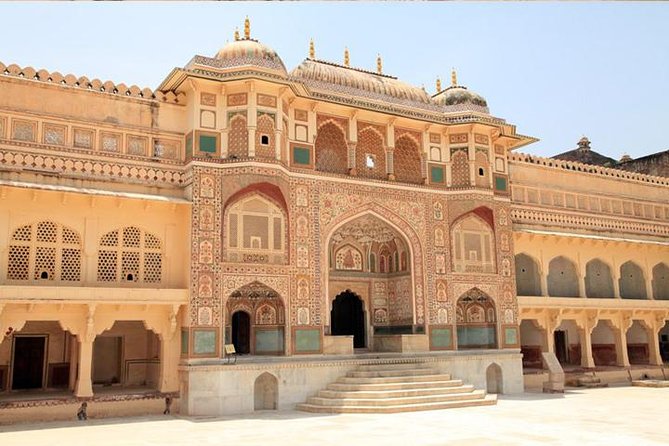
First is Amber Fort, formerly the Kachhwaha clan’s capital until Jaipur became the official capital in 1727. You’ll get about two hours here, which is enough time to see the main fort spaces and feel why it became the political heart of the region. Amber also gives you texture: it’s not just one view. It’s a series of angles—gateways, courtyards, and architectural flourishes—that work well for photos and for understanding Jaipur’s rise.
Then you get a Hawa Mahal stop, the Palace of Wind. It’s often treated as a photo spot, and that’s basically the role it plays here: you’ll view it on the way back, spend about half an hour, and move on. Even as a façade, it’s striking—those window screens and carved balconies are instantly recognizable.
After lunch, you head to City Palace of Jaipur, the residence of the ruling family, now partially turned into a museum. You’ll also see Jantar Mantar, the stone observatory built in the 18th century. This is where Jaipur turns practical in a fun way: it’s architecture with a purpose. It’s not only eye candy; it’s science made visible.
If time allows, you can also stop at a carpet and textile house, where you’ll learn about hand-woven carpets and textiles and how silk carpets are made by hand. This can be interesting if you enjoy crafts and want to connect what you see on the streets with what happens behind the scenes.
After Jaipur, the tour returns you to Delhi for drop-off at your hotel or airport.
What You’re Really Paying For: Value at Around $261
At about $261 for four days, the value comes from how much is bundled rather than from the sticker price alone.
Here’s what you’re not left doing on your own:
- Lodging for three nights on a twin-sharing basis (when booked with the hotel option)
- Air-conditioned private vehicle transfers between Delhi, Agra, Ranthambore, and Jaipur
- Professional private live tour guide for the city sightseeing blocks
- Monument entrance fees for the included sites
- Two Ranthambore safaris plus Ranthambore park entry and a naturalist
- Meals built into the schedule: breakfast (3), lunch (4), and dinner included
- Water bottles throughout and a golf cart ride for the Taj Mahal area in Agra
When you add up how expensive it can be to do even one or two of these items separately—guides, park entry, multi-city transfers—the bundled structure is the reason this often feels like a good deal.
Two notes to keep your expectations aligned: first, safaris are shared vehicles, so you’re not buying a fully private wildlife experience. Second, a sunrise visit means timing matters, and the Taj sunrise is subject to weather conditions.
If you’re the type who likes having the day planned for you but still wants guide-driven context, this setup makes a lot of sense.
Who This Tour Fits Best (And Who Might Want a Different Plan)
This route is a strong choice if you want the best-known highlights—Delhi monuments, Agra landmarks, Jaipur forts and palaces, and Ranthambore tiger safari time—with logistics handled.
It also works well for groups with mixed ages because the schedule is organized around specific blocks and included meals, and you’re not trying to squeeze in last-minute tickets while people are tired. I’ve seen the service work especially well when someone in the group needs less walking or a tighter structure.
You might want to rethink it if:
- Your travel dates fall inside the Ranthambore closure window (July 1 to Sept 30)
- You hate early starts and morning driving
- You’re expecting fully private safari vehicles and exclusivity beyond a shared jeep/canter format
Practical Tips to Get More Out of It
You can’t control tigers, but you can control how prepared you feel.
- Keep your camera and phone charged ahead of safari days. You’ll want to be ready without fumbling.
- Bring a smart-casual outfit plan since there’s a smart casual dress code.
- If you want photos at the Taj, plan to use your guide’s help for shots rather than relying on paid photographers nearby. It keeps control in your hands.
- If vegetarian meals matter, request it in advance. A vegetarian option is available.
Also, the tour includes water bottles throughout. Still, I’d treat safari and long drive days like you’re out for a full workout. Plan to bring extra personal comfort items if you have preferences.
Should You Book This Delhi to Ranthambore Tiger Safari Tour?
I’d book it if you want a fast, structured tour that connects Delhi, Jaipur, Ranthambore, and Agra with guides, tickets, transfers, and meals already handled. The standout strength is the pairing of a high-impact cultural circuit (Qutub Minar, Taj Mahal, Amber Fort) with the wildlife goal of two Ranthambore safari outings.
I would hesitate only if your dates land during Ranthambore’s annual closure or if you strongly prefer fully private safari vehicles. Otherwise, for the price level and the amount packed in, this is a practical way to see India’s biggest “wow” stops without turning your vacation into a logistics project.
FAQ
What time does the tour start in Delhi?
The experience start time is listed as 8:00am in New Delhi, with pickup offered from your hotel or other desired location in Delhi.
Is pickup available from nearby cities like Noida or Gurugram?
Yes. Pickup is offered from the airport or from other desired pickup locations in Delhi, Noida, or Gurugram.
Do I get to visit the Taj Mahal at sunrise?
Yes, the tour includes a sunrise Taj Mahal visit with a pickup around 6:00am. Note that it’s closed on Friday, and the sunrise timing is weather-dependent.
What if I travel during the Ranthambore monsoon closure?
Ranthambore National Park is not open from July 1 to Sept 30 each year. If your dates fall in that window, this safari-based plan won’t run as scheduled.
Are safari and monument entrance fees included?
Yes. The tour includes Ranthambore National Park entry and monument entrance fees for the included sightseeing stops.
What vehicle is used for the tiger safari?
The safari is done in a shared jeep or shared canter, and a naturalist is included during the safari.
Can I get vegetarian meals, and what meals are included?
A vegetarian option is available if you request it at booking. Meals included are breakfast (3), lunch (4), and dinner as specified in the itinerary.
If I cancel, is a full refund possible?
You can cancel for a full refund if you cancel at least 24 hours before the experience starts. If you cancel within 24 hours, the amount is not refunded.