REVIEW · NEW DELHI
7 Day Golden Triangle Tour With Holi Colour Festival 4 March 2026
Book on Viator →Operated by Golden Triangle Tours India · Bookable on Viator
Holi makes the Golden Triangle unforgettable. This 7-day private tour strings together Delhi, Agra, and Jaipur with scheduled monument days plus Holi color festivities on 4 March 2026, starting with pickup in New Delhi. If you like your India with history and a loud, friendly street celebration, this is a strong match.
I especially like two things here. First, you get private local guides and a driver in an air-conditioned vehicle, which means you’re not spending your vacation stuck in logistics. Second, the Agra plan includes both a sunset Taj Mahal view point and a sunrise Taj Mahal day, so you get two different moods of the same masterpiece.
One consideration: the tour notes that monument entrance fees and lunch/dinner are not included. Some stops are marked free or ticket-included in the plan, but you’ll still want to budget for on-the-ground tickets and meals as you go.
In This Review
- Quick hits: what makes this tour feel special
- Why this Golden Triangle + Holi combo makes sense
- Day 1 in Delhi: Gurudwara Bangla Sahib and Agrasen Ki Baoli
- Day 2 in Delhi: Qutub Minar, Lotus Temple, Jama Masjid, and Chandni Chowk
- Day 3 to Agra: Fort, “Baby Taj,” sunset views, and Mehtab Bagh
- Day 4 sunrise Taj plus Fatehpur Sikri and Chand Baori into Jaipur
- Day 5 Holi in Jaipur: bonfire, temple energy, and color play
- Day 6 Jaipur monuments: Panna Meena ka Kund, fort views, Jal Mahal, and Jantar Mantar
- Day 7 Jaipur temples, Monkey Temple, and back to Delhi
- Price and value: is $335.72 a fair deal?
- Practical tips so Holi doesn’t turn into a headache
- Who this tour fits best (and who should consider alternatives)
- Should you book this tour?
- FAQ
- How long is the Golden Triangle tour?
- Where does the tour start?
- Is this a private tour or a shared group?
- Does the price include hotels and breakfasts?
- Are monument entrance fees included?
- What meals are included besides breakfast?
- What dates are tied to Holi?
- What kind of vehicle will you use?
- Is there a cancellation window?
Quick hits: what makes this tour feel special

- Holi in Jaipur built into the calendar on 4 March 2026, with Holika Dahan the night before
- Private guide + private vehicle across Delhi, Agra, and Jaipur
- Two Taj Mahal moments: sunset view and a sunrise visit
- Old Delhi + Mughal Delhi mix: Jama Masjid, Humayun’s Tomb, Chandni Chowk
- Jaipur hits without rushing: Hawa Mahal, City Palace, Jantar Mantar, and more
- Coordination support you can actually feel (Gopal is frequently credited for setting up the Holi day)
Why this Golden Triangle + Holi combo makes sense
A standard Golden Triangle tour can feel like a checklist. This one tries to solve that by threading a major cultural moment into the same route. Holi in Jaipur isn’t just an add-on. It changes the feel of the whole trip—days are monument-heavy, but evenings and your main festival day have that color-and-music energy.
Another win is pacing. You’re not trying to see everything in one day. You get multiple “types” of sights: Sikh religious life in Delhi, Mughal architecture across Delhi and Agra, and then Jaipur’s forts, stepwells, and observatories before you head home.
Finally, it’s set up for comfort. You’re traveling by private car with bottled mineral water during journeys, and breakfasts are included for six days (when the hotel option is booked). That matters on long drives like Delhi to Agra.
You can also read our reviews of more tours and experiences in New Delhi

Day 1 in Delhi: Gurudwara Bangla Sahib and Agrasen Ki Baoli

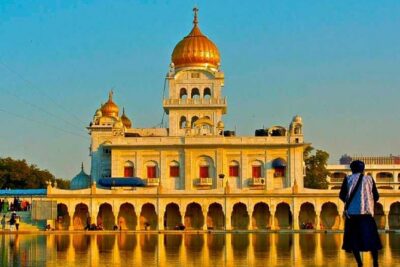
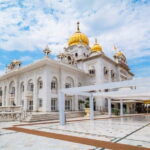
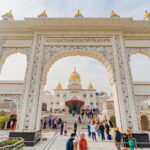
Your first day opens with Gurudwara Bangla Sahib, a Sikh gurdwara centered on a sacred tank. The story shared with the site connects to 1664 and the eighth Sikh Guru’s role in helping during epidemics by distributing water from the tank. It’s the kind of place where you see faith in action—calm, orderly, and welcoming.
Next is Agrasen Ki Baoli, one of Delhi’s famous stepwells. The plan calls it a protected monument and highlights its scale, including a roughly 60-meter length. This is a good palate cleanser after a big travel day: you’ll get a quick dose of unusual architecture, and you can often enjoy it without the same crowd pressure as Delhi’s most iconic monuments.
Practical note: stepwells and gurdwaras are both visual, but they reward a slower pace. If you rush, you miss the details—like how these structures shape light and movement.
Day 2 in Delhi: Qutub Minar, Lotus Temple, Jama Masjid, and Chandni Chowk
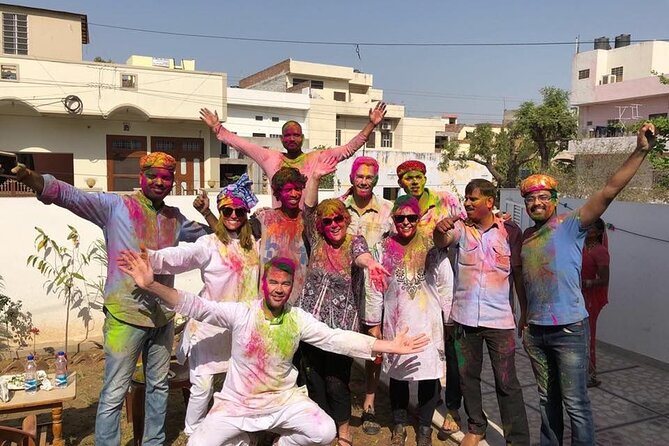
Day 2 is your “Delhi greatest hits” day, and it’s packed in a smart order: start with towering monuments, shift to contemporary faith architecture, then move into Old Delhi.
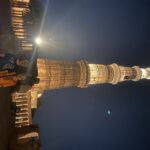
Qutub Minar anchors the morning. The tour plan frames it as a UNESCO World Heritage site and a 73-meter tall, five-storey minaret built around 1193. It’s one of those structures that makes you stand back and think: humans really did this with stone and patience.
Then comes Lotus Temple, known for its flower-like shape and its open-door policy regardless of religion. It’s often a refreshing contrast after older stone monuments, and the short visit length (about 30 minutes) fits well here.
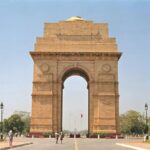
India Gate is brief but useful for orientation. After that, you pass by Parliament House (Sansad Bhavan), noted for a circular design based on the Ashoka Chakra idea.
Old Delhi arrives with Jama Masjid, built by Mughal Emperor Shah Jahan between 1650 and 1656. It’s a huge space, and the visit time is short in the plan, so treat it as a “get your bearings” stop rather than your only mosque in the trip.
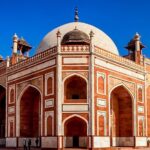
You’ll also visit Humayun’s Tomb, a Mughal tomb associated with 1558 commissioning by Empress Bega Begum. This stop is ideal because the gardens and symmetry help you transition from the chaos of markets to the calm of Mughal design.
Finally, you finish with Chandni Chowk (about an hour). This is your sensory finale: spices, dried fruit, silver jewelry, and narrow lanes. If you like taking photos, it’s one of the best places to do it—just keep your phone secured when the crowds tighten.
Day 3 to Agra: Fort, “Baby Taj,” sunset views, and Mehtab Bagh
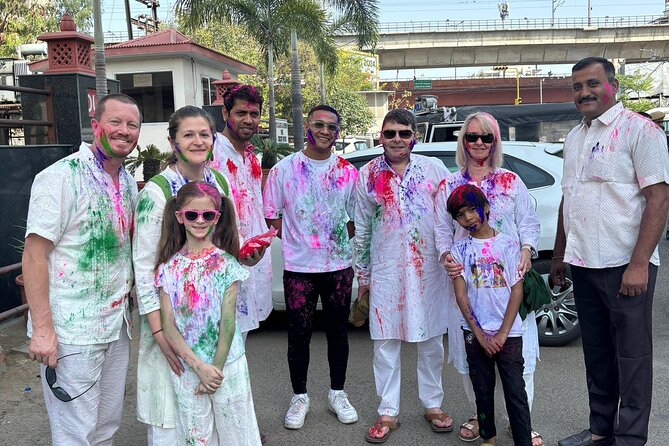
After breakfast, you drive from Delhi to Agra. The plan lists the distance as about 222 km and roughly 4 hours, which is realistic but still tiring if you don’t plan snacks and hydration. Since bottled mineral water is provided during journeys, you’re already ahead of the game.
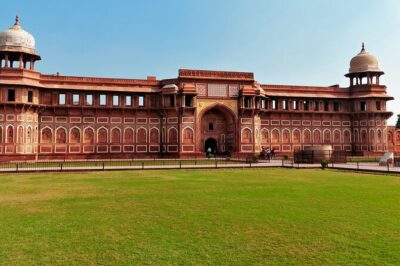
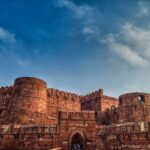
In Agra, you start with Agra Fort, described as the Red Fort of Agra and linked to Mughal emperors including Akbar and Shah Jahan. The included visit time is about 1 hour, which is enough to appreciate the scale and layout without turning it into a full-day archaeology seminar.
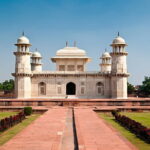
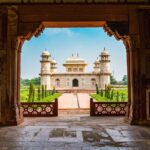
Next is Itmad-ud-Daula, often called the Baby Taj. The plan points to the “jewel box” nickname, which is exactly the vibe: it’s smaller than the Taj, but the details can feel like they’re made for close attention.
Then you get one of the best ideas in the whole route: a Taj Mahal Sunset View Point. The plan specifically notes it as a viewing location across the river away from the crowd, with about a 2-hour slot. That’s a smarter approach than rushing your main Taj moment later. Sunset also gives the marble a warm tone, and photos often come out better because the lighting is forgiving.
You finish with Mehtab Bagh, a garden on the opposite side that acts like an oasis for visitors to the Taj. Even with only 30 minutes, it helps you “close the loop” visually—Taj from afar, garden framing it, and then your hotel night.
Day 4 sunrise Taj plus Fatehpur Sikri and Chand Baori into Jaipur
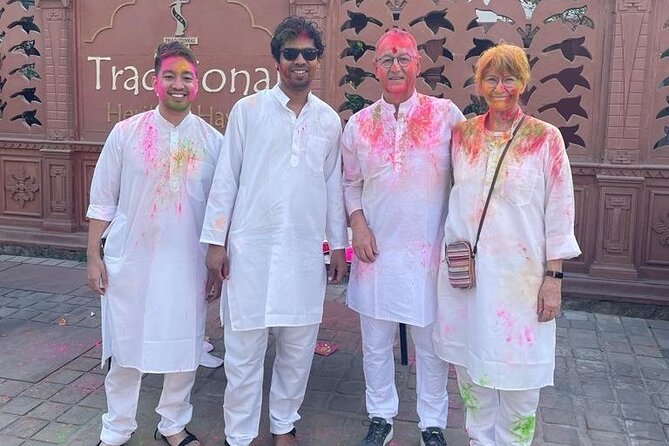
Day 4 is set up as a contrast day: early, famous, and then off the beaten track for at least two stops.
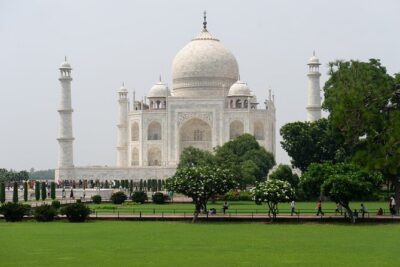
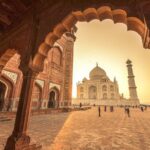
First is the Taj Mahal with sunrise. The plan lists about 2 hours and notes the Taj’s ivory-white marble look on the south bank of the Yamuna. Sunrise is not just about the photo. It’s also about your energy. You’ll start early, but the trade-off is a quieter, more reflective atmosphere than you’ll get at mid-day.
After the Taj, you head to Fatehpur Sikri, called the City of Victory and built by Emperor Akbar in the late 16th century. You’ll spend about 1 hour. It’s a great stop for variety because it feels more like a whole city complex than a single monument—and the name alone is a hint that this was meant to project power.
Next is Chand Baori in Abhaneri, a stepwell that extends roughly 30 meters into the ground and is described as one of the largest and deepest in India. It’s short in the plan (about 30 minutes), but stepwells are one of those things that look different depending on where the light hits.
Then you arrive in Jaipur, check in, and head to the night event: Holika Dahan celebration. This is tied to the legend of Holika’s burning and is specifically noted as Holika Dahanam in Sanskrit. If you’ve never watched Holi traditions before, this is where it starts to feel real—before the color day.


Day 5 Holi in Jaipur: bonfire, temple energy, and color play
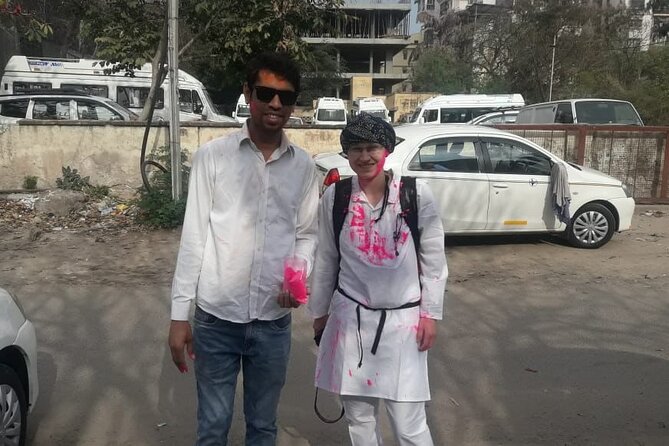
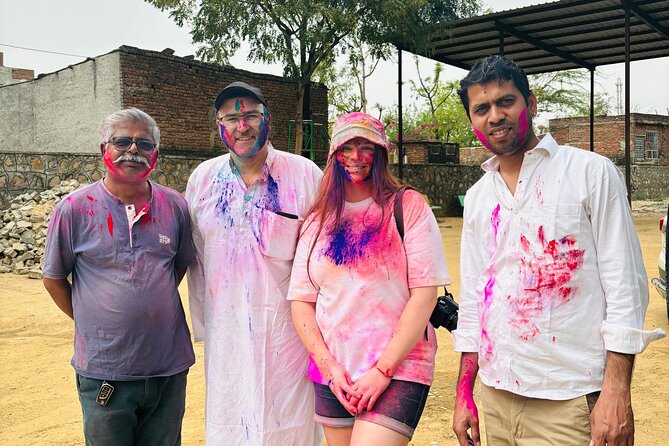
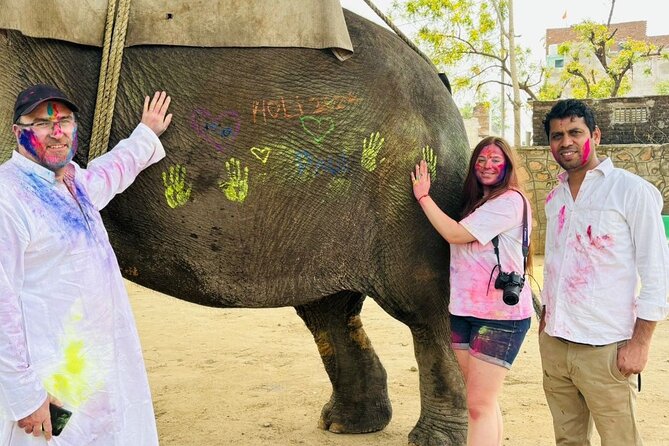
This is the headline day: Hol(i) festival time in the Pink City of Jaipur. The plan says you’ll “calibrate” with local people and that Holi includes a huge bonfire and people gathering. The overview also frames the festival as week-long with temple festivals, cultural events, and lively street parties with color throwing and traditional music.
In plain terms: expect the schedule to feel more like participation than sightseeing. You’re not trying to fit in one more monument. You’re stepping into the rhythm of the celebration.
One theme that shows up in past experiences is a special connection to temple sites during Holi time—some participants specifically mention Govind Dev Ji temple as a highlight of the day. That matches the idea of temple festivals being part of the Holi week, not just the street color.
If you’re worried about getting caught unprepared, plan your behavior like you’re joining a local festival, not watching it from a distance. Wear something you don’t mind getting messy in. Keep your phone in a safe pocket until you know the crowd’s throwing intensity. And don’t be shy about watching first—learning the pace is part of the fun.
Day 6 Jaipur monuments: Panna Meena ka Kund, fort views, Jal Mahal, and Jantar Mantar
Day 6 is classic Jaipur sightseeing, with stops that build from water architecture to royals to science and back to icons.
Start with Panna Meena ka Kund, a stepwell near the palace area. The plan sets it at about 15 minutes, so use it to grab the “wow” moment: geometric stone, and the way the structure drops down into cooler shadows.
Then you move to Jaipur’s most famous fort (the plan describes it as the capital of Rajasthan until 1728). You’ll have about 2 hours with a guided tour of palaces, squares, and monuments. Forts can sometimes feel like a maze, but with a guide you’ll understand what you’re seeing instead of just walking uphill and hoping for the best.
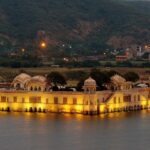
A short photo stop comes next at Jal Mahal, the palace on Man Sagar Lake. The plan frames it as a photo opportunity and places it down the hill. Even if you don’t spend long here, it’s one of those Jaipur images you’ll recognize from postcards.
Then it’s Jantar Mantar, a UNESCO World Heritage site. The plan notes it was built in 1734 and includes nineteen astronomical instruments by Sawai Jai Singh II, founder of Jaipur. The visit is about 1 hour. This is a great reminder that Jaipur wasn’t only about kings and forts; it was also about measurement and planning the sky.
Hawa Mahal follows, about 30 minutes. It’s described as the Palace of Winds, made with red and pink sandstone, five storeys, pyramidal shape. Even with a short visit, it’s the perfect quick “wow” monument because it’s instantly recognizable.
You end with Maharaja’s City Palace, about 1 hour. The plan notes it as the ceremonial seat and also the location of religious functions. This stop helps you connect the day’s big architecture to the idea of rule, ritual, and public life in one place.
Day 7 Jaipur temples, Monkey Temple, and back to Delhi
Your final day keeps Jaipur spiritual and grounded before the long return drive.
Start with Birla Mandir, noted for intricate white marble latticework and dedication to Lord Vishnu. The plan also hints at the temple being special in part because of being there, so treat it as a calm break from major monuments.
Next is Monkey Temple (Galtaji Temple), known as the Abode of Monkeys. The plan says it has three sacred pools of water and describes it as a “buzzing” place. The visit time is short (about 30 minutes), so it’s best for quick exploration and people-watching—just be aware that this site has its own resident population.
Then you head back to New Delhi. The plan notes a drive of about 5 hours and drop-off options at the airport, hotel, or other desired city locations. After a week, that last drive is a simple reality: plan for rest and keep one last snack ready.
Price and value: is $335.72 a fair deal?
At $335.72 per person, the value depends on what you think matters most: guides, timing, and comfort.
Here’s what your money is doing based on the inclusions: private tour, transport by private air-conditioned vehicle with driver, hotel or airport pickup and drop-off, sightseeing with private local guides, and bottles of mineral water during journeys. You also get six nights with breakfast when you book with the hotel option, plus breakfast is listed as included (6).
What’s not included is also clear: monument entrance fees, lunch and dinner, and travel insurance and your flight/train tickets.
So the “value” math usually goes like this for most people:
- If you’d otherwise hire a driver and pay for guides city-to-city, this package can look efficient fast.
- If you’re traveling during Holi season and want a schedule that matches the festival dates (not just hoping you’ll catch it), timing is part of the price you’re paying for.
- If you’re the kind of traveler who wants to eat local street meals every day, you’ll still be fine—you just need to budget for it because lunch/dinner are not covered.
One more value point: this plan is private. That means you can ask questions as you go, and you’re not stuck watching others decide whether to move on.
Practical tips so Holi doesn’t turn into a headache
Holi is fun, but it can be chaotic if you show up like it’s a museum day.
Wear clothes you can handle getting stained. The plan explicitly includes color throwing and music during Holi street celebrations, so plan for that reality. Bring a small change of clothes if you can, and consider face protection for dust and color.
Keep small essentials handy: sunscreen, sunglasses, and something for your hair. Even if you’re not planning to go deep into the crowd, the air can get dusty fast in celebration zones.
Also, think about photo-taking. A sunrise Taj Mahal day requires some attention to lighting and quiet. Then you turn around and go to a color day. For best results, switch your mindset: Taj photos are about calm composition; Holi photos are about movement and timing.
Finally, go with a “watch, then join” approach. If you start by observing the local rhythm—bonfire gathering, temple atmosphere, and how people throw color—you’ll feel less overwhelmed and enjoy it more.
Who this tour fits best (and who should consider alternatives)
This tour fits you if you want:
- a Delhi–Agra–Jaipur route that includes the major monuments without feeling like you’re speed-running them
- Holi in Jaipur on 4 March 2026, including Holika Dahan the night before
- private guides and a driver, especially on longer travel days
It might feel less perfect if you:
- hate early mornings, since the plan includes Taj Mahal at sunrise
- want food and entrance fees fully included, because lunch/dinner and monument entrance fees are not included in the package notes
Should you book this tour?
If Holi in Jaipur is the reason you’re doing the Golden Triangle in March, I think booking this package is a smart call. You’re not just chasing dates—you’re getting a structured route with knowledgeable local guides, comfort during transfers, and two different Taj Mahal experiences.
Before you commit, check one thing: confirm how monument entrance fees are handled for the specific stops you want most. Then plan your meals and budget accordingly. If you’re good with that, this is the kind of trip that leaves you with photos and stories that don’t feel generic.
FAQ
How long is the Golden Triangle tour?
The tour is listed as 7 days (approx.).
Where does the tour start?
It starts at Indira Gandhi Intl Airport in New Delhi, with pickup offered.
Is this a private tour or a shared group?
This is a private tour/activity. Only your group will participate.
Does the price include hotels and breakfasts?
The inclusions say 6-nights accommodations with breakfast are included if you book the option including hotels, and breakfast is listed as included (6).
Are monument entrance fees included?
The package notes that monument entrance fees are not included. Some specific stops are marked free or ticket included in the plan, so it’s worth confirming for each site.
What meals are included besides breakfast?
Lunch and dinner are not included.
What dates are tied to Holi?
The tour is for the Holi Colour Festival on 4 March 2026, and it also includes Holika Dahan on the night of arrival in Jaipur.
What kind of vehicle will you use?
It depends on group size: a 4-seater sedan for groups of 1 or 2, a 6-seater wagon for groups of 3 or 4, and a 10-seater minivan for groups of 5 to 10.
Is there a cancellation window?
Yes, free cancellation is available up to 24 hours in advance for a full refund.