REVIEW · NEW DELHI
Old and New Delhi City Tour Full Day
Book on Viator →Operated by Drishti India Tours · Bookable on Viator
Delhi flips from chaos to calm by midday. This full-day Old and New Delhi tour is built around speed and comfort: you get hotel (or airport/train) pickup, a private AC car, and a guide who keeps the day moving across major sights. You also get the mix that makes Delhi feel real—big monuments and working neighborhoods—without you having to figure out transport on your own.
What I like most is how the day pairs serious landmarks with hands-on street energy. You’ll start at places like Gurudwara Bangla Sahib and Jama Masjid, then head into old-city shopping streets like Khari Baoli for spices, and finish with quieter, iconic stops such as Humayun’s Tomb and the Lotus Temple.
The main drawback is simple: you’re signing up for an 8-hour highlight sprint. That’s great for first-time planning, but it also means meals and breaks are up to you, and you’ll be on your feet at multiple stops.
In This Review
- Key things that make this tour worth your time
- What the day feels like: Old Delhi grit, New Delhi formality
- Getting around: private car comfort plus a tuk-tuk bazaar shortcut
- Gurudwara Bangla Sahib: a free stop with a strong story
- Jama Masjid and the mechanics of a big-city mosque visit
- Old Delhi’s spice lane: Khari Baoli and why you’ll remember the smells
- Red Fort, memorials, and government landmarks: what “New Delhi highlights” really means
- Connaught Place food stop: a useful place to regroup
- Humayun’s Tomb: included entry to a UNESCO World Heritage site
- Agrasen Ki Baoli: the urban tale stop people talk about
- Lotus Temple: free entry, flower-like shape, modern spiritual calm
- Price and value: what $79 gets you and what it doesn’t
- Who this tour fits best (and who should skip it)
- Should you book Old and New Delhi City Tour (full day)?
- FAQ
- How long is the Old and New Delhi full-day tour?
- Where does pickup happen?
- Is this tour private?
- What’s included in the price?
- Are meals included?
- Do I need to pay for all the attraction tickets?
- Is there free cancellation?
Key things that make this tour worth your time
- Private AC car pickup and drop-off from Delhi, Noida, Gurugram, Ghaziabad, or Faridabad
- Old Delhi tuk-tuk ride through the bazaars, guided so you don’t feel lost
- Major monuments across eras, from Mughal-era architecture to New Delhi government landmarks
- Entry fees included for the monuments listed on the route (with several free stops too)
- Guides you can talk to, including names like Naveen, Prashant, Mukesh, and Push (Pushpendra)
What the day feels like: Old Delhi grit, New Delhi formality
This is the kind of Delhi day that helps you build a mental map fast. You start in the older part of the city, where religion, markets, and everyday life sit side by side. Then the route pushes you into New Delhi’s straighter lines, grand government buildings, and wide ceremonial areas.
I like that the itinerary doesn’t treat Old Delhi as just a photo stop. You visit places with real community importance—like Gurudwara Bangla Sahib—and you also spend time where people actually shop and trade, including the spice stalls around Khari Baoli.
Another smart point is the “two-speed” approach. You get a comfortable private car for transfers, then switch to a tuk-tuk ride when the old streets are the most crowded and confusing. That combo helps you avoid wasting time stuck in traffic or wandering for directions.
You can also read our reviews of more city tours in New Delhi


Getting around: private car comfort plus a tuk-tuk bazaar shortcut
Delhi traffic can turn a sightseeing plan into a lesson in patience. This tour solves that by using a private, air-conditioned car for most of the day, with pickup offered from essentially anywhere in the Delhi region you’re staying.
Then comes the useful tradeoff: a tuk-tuk section through Old Delhi’s bazaars. The guide meets you at Sunheri Masjid and rides you through the area while explaining what the bazaars are known for. You still experience the streets, but you’re not walking long distances through the thickest crowds.
For safety and stress level, having your own driver matters. In the accounts I’ve seen, people specifically felt comfortable with the driver and liked the careful pacing.
Gurudwara Bangla Sahib: a free stop with a strong story
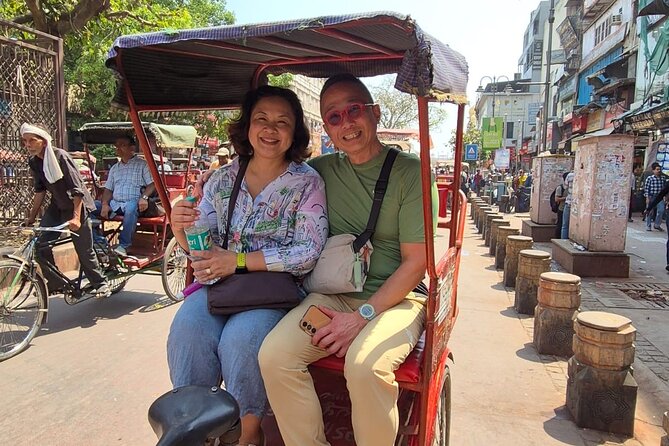
You begin at Gurudwara Bangla Sahib, where entry is free and the visit lasts about 30 minutes. The site is associated with healing during a cholera outbreak in 1664, and the sacred sarovar (pond) is described as having therapeutic qualities.
Even if you’re not religious, this stop is valuable because it changes the tone of the day. It’s calm compared to the street noise you’ll face later, and it helps you understand why Delhi’s communities cluster around faith and public gathering places.
Tip that actually helps: start your day with places like this when your energy is high. It’s easier to appreciate the atmosphere before you’ve spent hours in traffic, shopping streets, and monument lines.
Jama Masjid and the mechanics of a big-city mosque visit
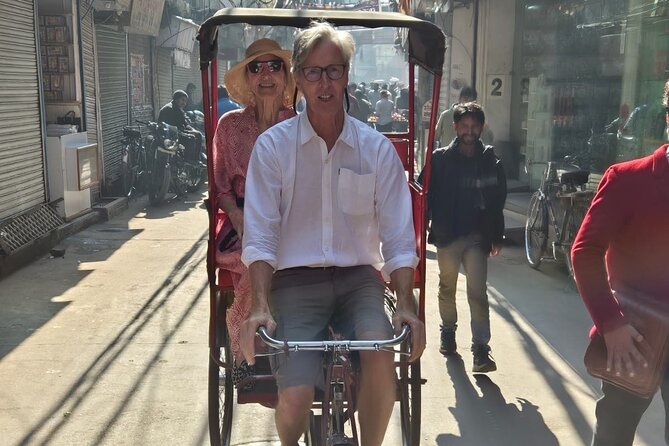
Next is Jama Masjid, described as the biggest mosque in India, with about 1 hour on site. It was constructed in 1656 with the help of 5,000 labourers, and you’ll have time to stroll the red sandstone courtyard.
Admission is included, which is a practical detail I’m always grateful for. You avoid the “figure it out on the spot” feeling, and you can focus on the architecture and scale.
The main consideration here is timing and comfort. Big monuments in active religious settings can mean you’ll move steadily and keep your head up for crowds and local traffic. Wear shoes that handle uneven ground and plan to stand or walk more than you think you will.
Old Delhi’s spice lane: Khari Baoli and why you’ll remember the smells

After Jama Masjid, the day turns toward street life. You’ll see Khari Baoli, famous for spice markets tied to Chandni Chowk. The stop is short—about 30 minutes—but it’s built for your senses, not a long museum-style visit.
The tour includes spice-focused explanations, including how spices are used. It’s a small thing, but it makes a market visit more than shopping. You start noticing the different types of spices, how they’re packed, and why certain ones are used for specific tastes and cooking styles.
Also, the market stop being free is a bonus. You can enjoy it without worrying about paying for another ticket, and you can budget your money for a meal later in the day.
You can also read our reviews of more tours and experiences in New Delhi




Red Fort, memorials, and government landmarks: what “New Delhi highlights” really means

Once Old Delhi wraps up, you move into New Delhi’s big, formal landmarks. You pass through a sequence designed to show different layers of India’s story—Mughal power, modern remembrance, and parliamentary governance.
You’ll see the Red Fort, built between 1639 and 1648, described as using Indo-Islamic and Mughal architectural styles. Even if you’ve seen photos before, it hits differently in person because of its scale and the way it anchors the surrounding city.
From there, the tour includes stops tied to modern history:
- The Tomb of the Unknown Soldier (noted as built in 1921) with names of 13,300 Indian army soldiers who died in World War I.
- Parliament House, home to India’s two chambers: the Lok Sabha and Rajya Sabha.
- President House (Rashtrapati Bhavan), originally constructed as the Viceroy’s House.
Here’s the practical value: you’re not just ticking “famous buildings” off a list. You’re seeing how space and power are represented—older empire fortifications on one end, then civic institutions on the other. That contrast helps you understand the city’s planning and priorities.
One consideration: these government-related sites can feel more “look from outside / short stop” than “wander freely.” If you prefer slow, long explorations, keep expectations realistic for an 8-hour schedule.
Connaught Place food stop: a useful place to regroup

Midway through the New Delhi stretch, the tour reaches Connaught Place, with about 45 minutes. This is where the guide helps with practical meal planning, including suggestions for eateries with foreign and Mughlai-style food, plus vegetarian and dietary-specific options.
I like this inclusion because it solves a common problem. After you’ve spent hours navigating monuments and markets, you need a place where it’s easy to sit down and eat without guessing. If you’re traveling on a tight schedule, having a guide steer you to a good option beats random trial-and-error.
Just remember: meals are not included in the tour price. So treat this time as your main meal window, and decide early if you want a sit-down lunch or a quicker bite.
Humayun’s Tomb: included entry to a UNESCO World Heritage site
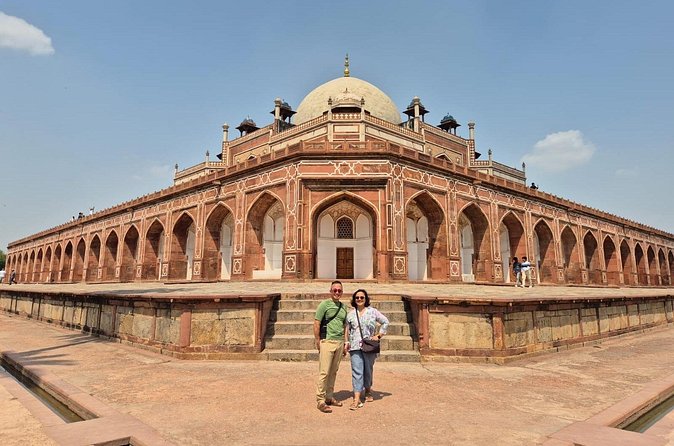
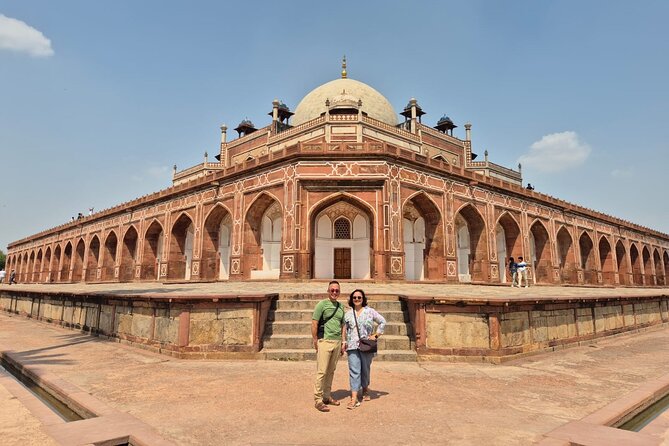
Later, you visit Humayun’s Tomb, noted as India’s first garden tomb and a UNESCO World Heritage Site. The visit is about 1 hour, and admission is listed as included.
This stop matters because it’s a different kind of Delhi monument. It’s not only about grandeur; it’s about layout and symmetry—how the gardens and tomb fit together. You’ll feel the shift from busy city streets into a more structured, contemplative environment.
Also, this is one of the easiest stops to appreciate even if you only have a short window. The “garden tomb” setting gives you space to slow down for a moment during a packed day.
Agrasen Ki Baoli: the urban tale stop people talk about
The itinerary includes Agrasen Ki Baoli, about 30 minutes, described for urban tales and hauntings. It’s framed as a place where paranormal stories and alleged events have circulated.
I’m not going to oversell the spooky angle, but I do like that it adds variety. You’re not stuck with only major ticket monuments and famous sites. You get a quieter, story-driven location that feels local and a little strange in the best way.
If you’re traveling with people who enjoy legends, this kind of stop gives the day personality. If you’d rather keep it factual and avoid ghost stories, you can still treat it as a historic step-in for a different atmosphere.
Lotus Temple: free entry, flower-like shape, modern spiritual calm
You finish with the Lotus Temple, a Bahá’í house of worship consecrated in December 1986. It’s known for its flower-like form, and admission is listed as free.
This is a strong closer for an Old and New Delhi day. By the time you get here, your brain has already absorbed a lot of architecture and history. The Lotus Temple’s calm design makes it easier to reflect instead of just move on to the next photo location.
Practical note: because it’s a religious site and free, expect it to have steady visitor flow. Plan to keep moving at a comfortable pace rather than trying to rush for perfect angles.
Price and value: what $79 gets you and what it doesn’t
The price is $79 per person for a tour that runs about 8 hours. For me, the value equation comes down to three things: transportation, guidance, and entry coverage.
You get:
- Private air-conditioned car plus pickup and drop-off from your location in the Delhi region
- A local tour guide who manages the sequence and explanations
- Entry fees listed as included for monuments on the route
- A tuk-tuk ride through Old Delhi’s bazaars on the Old Delhi/full-day route
- Taxes, fuel charges, tolls, and GST are included
What you don’t get:
- Tips/gratuities
- Meals and personal expenses
So if you’d otherwise pay for a driver or keep hopping between cabs, this price starts to look more reasonable. You’re paying for a coordinated day, not just transport.
One more value point: many guides in these Delhi setups are chosen for how they handle flow—queue reduction, timing, and practical restaurant stops. In accounts connected to this tour, people praised fast access to avoid queues, and that’s often the difference between a good day and a frustrating one.
Who this tour fits best (and who should skip it)
This is a great match if:
- You’re seeing Delhi for the first time and want major highlights in one day
- You’d rather ride in comfort than bargain for transport all day
- You like a mix of religion, markets, and major monuments
- You want a guide you can ask questions to, including experiences like spice-market explanations and restaurant help
Consider another option if:
- You hate tight schedules and would rather spend longer in fewer places
- You don’t want a day that includes multiple “short but important” stops
- You’d rather have meals planned as part of the package (since meals aren’t included)
In short: this is a planning-friendly tour for people who want momentum without chaos.
Should you book Old and New Delhi City Tour (full day)?
Yes, I’d book it if your priority is a structured, guided overview that connects Old Delhi’s community spaces and spice streets with New Delhi’s big monuments and government landmarks. The combination of private AC car plus tuk-tuk bazaar time is exactly the kind of compromise that saves energy and still keeps the day authentic.
Skip it if you want a leisurely pace or a food-included package. With meals not included, you’ll need to handle lunch on your own during the Connaught Place stop and plan small extra spending.
If you like your sightseeing organized, you’ll probably enjoy this one.
FAQ
How long is the Old and New Delhi full-day tour?
It’s about 8 hours.
Where does pickup happen?
Pickup is offered from anywhere in Delhi, Noida, Gurugram, Ghaziabad, or Faridabad.
Is this tour private?
Yes. It’s a private tour/activity, with only your group participating.
What’s included in the price?
The tour includes private air-conditioned car transportation, pickup and drop-off, a local tour guide, entry fees to monuments (as listed), and a tuk-tuk ride through Old Delhi bazaars. Taxes, fuel, tolls, and GST are included too.
Are meals included?
No. Meals and personal expenses are not included.
Do I need to pay for all the attraction tickets?
Entry fees are listed as included for the monuments on the route. Some stops are also marked as free, such as Gurudwara Bangla Sahib and Khari Baoli.
Is there free cancellation?
Yes. You can cancel up to 24 hours in advance for a full refund.