REVIEW · NEW DELHI
From Delhi: 4-Day Private Luxury Golden Triangle Tour India
Book on GetYourGuide →Operated by Golden Triangle Tour Packages · Bookable on GetYourGuide
India hits fast, and this tour helps you steer. I especially love the sunrise Taj Mahal timing and the hands-on way your guide explains what you’re seeing, from marble details to Mughal power. I also like the private driver + hotel flexibility, so you’re not guessing logistics. One thing to consider: the schedule is packed, and closures on Fridays or Mondays can shift what you see.
What makes this feel genuinely useful is the mix of major sights and smart side stops. You get the big-three cities, but you also stop at places like Fatehpur Sikri and the Abhaneri stepwell that most short day trips skip. With a private group and live guides in multiple languages, it’s a smooth way to get your bearings in North India without losing whole hours to ticket lines and confusion.
In This Review
- Key highlights worth your attention
- A Golden Triangle that feels like a plan, not a scramble
- Day 1: Sunrise Taj Mahal, plus Agra Fort and Baby Taj
- Day 2: Fatehpur Sikri and Abhaneri’s Chand Baori on the way to Jaipur
- Day 3: Amber Fort views, City Palace elegance, Hawa Mahal, and Jantar Mantar
- Day 4: Jama Masjid, Chandni Chowk rickshaw option, and New Delhi monuments
- Guides and skip-the-line entry: where the value usually shows up
- Hotels, room setups, and how to plan for comfort
- The $38 price: what’s the real value here
- Practical tips that save time (and keep your trip calmer)
- Should you book this Golden Triangle private tour?
- FAQ
- What cities are included in this 4-day Golden Triangle tour?
- How does pickup work for Delhi Airport arrivals?
- What if I’m traveling on a Friday?
- What if I’m traveling on a Monday?
- Is this tour private?
- What languages are available for the live tour guide?
- Are skip-the-line entrances included?
- What kind of hotel rooms are provided?
- Can I buy tickets with a credit card?
Key highlights worth your attention

- Skip-the-line entry using a separate entrance for key monuments
- Sunrise at the Taj Mahal for softer light and fewer crowds
- Saif as a standout guide for clear, engaging architecture and construction stories
- Agra Fort + Baby Taj together for the full Mughal story, not just one postcard
- Fatehpur Sikri + Chand Baori stopovers that add variety to the drive
- Private transport matched to group size (from sedans to a 10-seater van)
A Golden Triangle that feels like a plan, not a scramble
The Golden Triangle (Delhi, Agra, Jaipur) is famous for a reason. But doing it “on your own” can turn into a scavenger hunt: changing trains, arguing with taxis, and wasting time on lines. This tour keeps it simple. You start with pickup from Delhi Airport or your Delhi-area hotel, then you move city to city with a private driver and a guide guiding the moments that matter.
Private really matters here. In real life, India’s traffic and site bottlenecks can be unpredictable, so having someone scheduled to take you between stops helps you keep momentum. It also helps on the sightseeing days, where you want to spend your energy looking at things, not figuring out which entrance to use.
Your vehicle is chosen by group size (a 3-seater sedan for 1–2 guests, a 6-seater wagon for 3–5, and a 10-seater van for 6–10). That detail is small, but it affects comfort, especially on long drive days like Delhi to Agra and Agra to Jaipur.
You can also read our reviews of more private tours in New Delhi



Day 1: Sunrise Taj Mahal, plus Agra Fort and Baby Taj

Day one is built around the Taj Mahal, and specifically around the best part of the day to see it: early light. You’ll go to the Taj Mahal for sunrise, when the marble can glow and the whole experience feels quieter and more cinematic. This is one of those sights where timing changes everything, and sunrise usually gives you the best mix of atmosphere and visibility.
You’ll also get skip-the-line style entry via a separate entrance. That doesn’t remove the fact that the site is popular, but it can help you avoid wasting the morning holding your place in line while your photos and patience run out.
Then you shift from love-story beauty to Mughal power. Agra Fort is next, a UNESCO World Heritage Site that reads like a fortress version of history. It’s not just walls and arches. It’s the story of how rulers defended, controlled, and lived in one place over time.
To close the day, you visit Baby Taj (Itimad-ud-Daulah). I like pairing it with the Taj because it’s more intimate and detail-heavy. The marble inlay work is the main event, and it feels like a “jewel box” compared with the Taj’s scale.
Practical note: the Taj Mahal is closed on Fridays. If your dates land on a Friday, the route adjusts to go Delhi → Jaipur → Agra → Delhi instead. Same tour idea, different order, so you don’t miss the key sights.
Day 2: Fatehpur Sikri and Abhaneri’s Chand Baori on the way to Jaipur
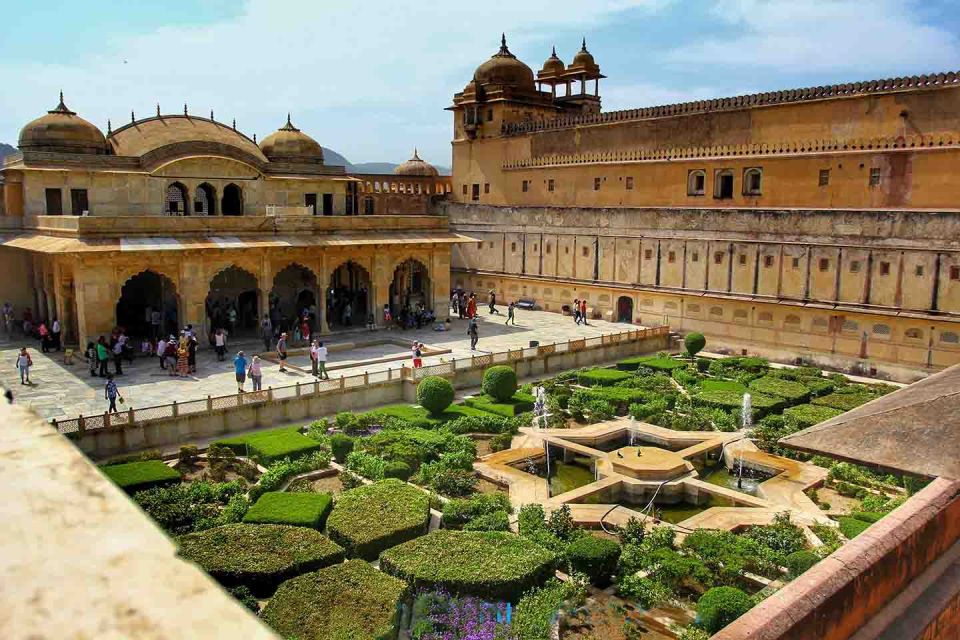
The second day adds depth to the drive between Agra and Jaipur. You won’t just sit in the car and watch the scenery roll by. You’ll stop at two Mughal-era highlights and a stepwell that feels like a geometry problem solved by humans.
First up is Fatehpur Sikri, described as an abandoned Mughal capital. You’ll see red sandstone palaces and the sense of ambition and retreat. The site is easier to appreciate with a guide, because the buildings make more sense when someone explains what each area was for and why the capital didn’t last.
Then you head to Abhaneri for Chand Baori, a stepwell known for its depth and symmetry. Stepwells are practical architecture, but Chand Baori is especially striking because of the scale and the repetitive patterns. It’s one of those places where you can stop, look down, and feel like the site was designed for visitors to marvel.
When you’re done, you reach Jaipur by evening and roll into the night with something like energy left to enjoy the city rather than only chasing temples until dark.
Day 3: Amber Fort views, City Palace elegance, Hawa Mahal, and Jantar Mantar
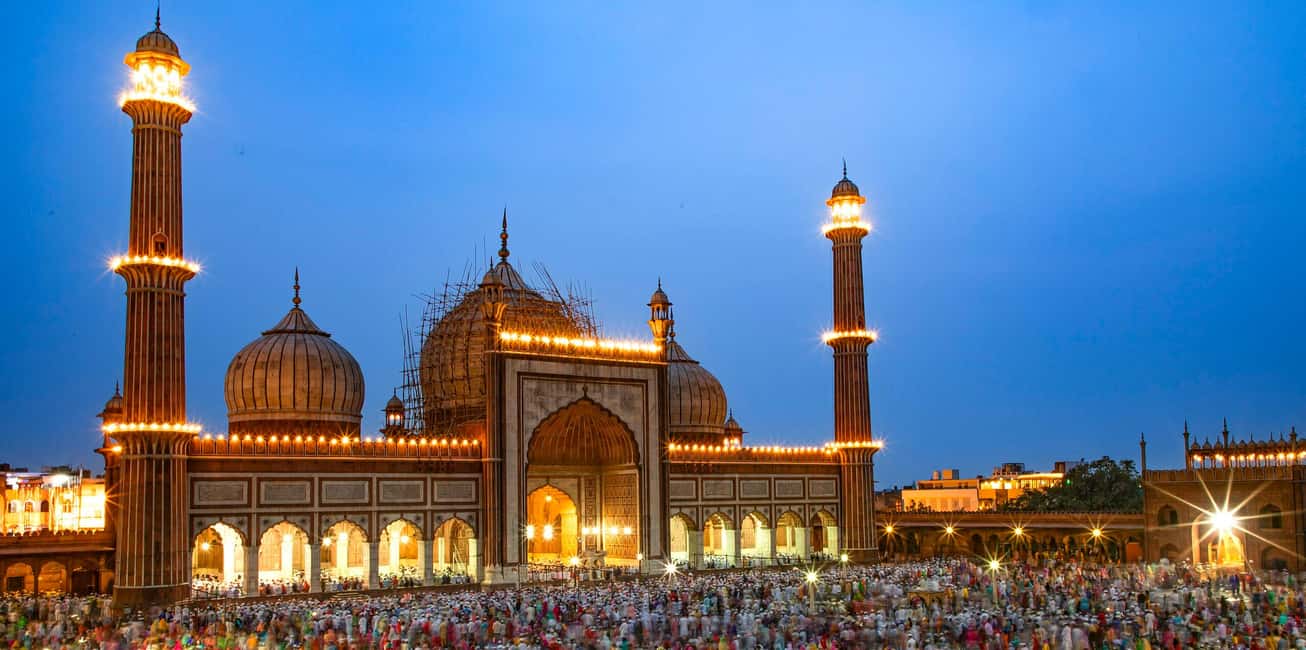
Jaipur is called the Pink City for a reason, and this day does a good job balancing fort, palace, and streets. With a guide, you’re not just walking through famous places; you’re learning what makes each one different.
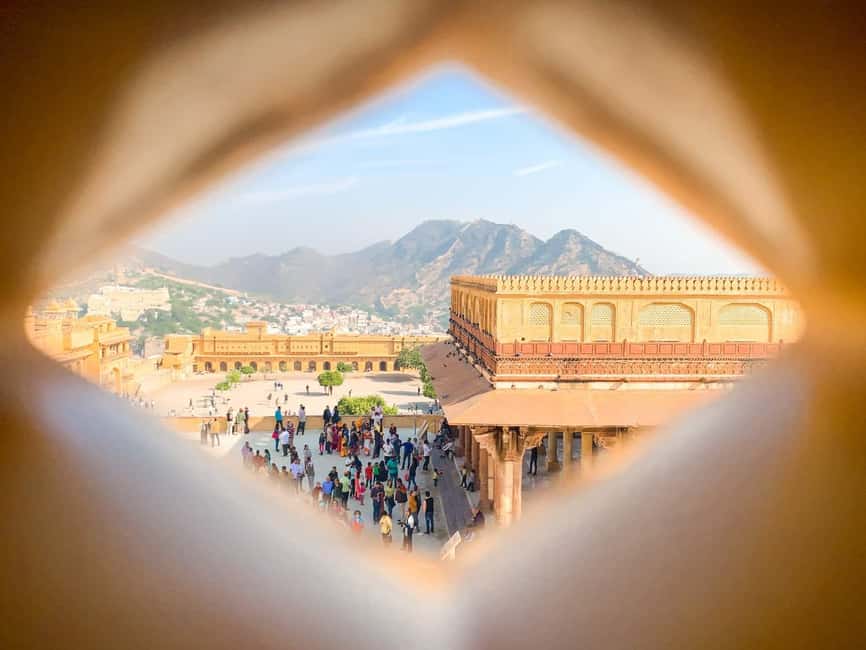
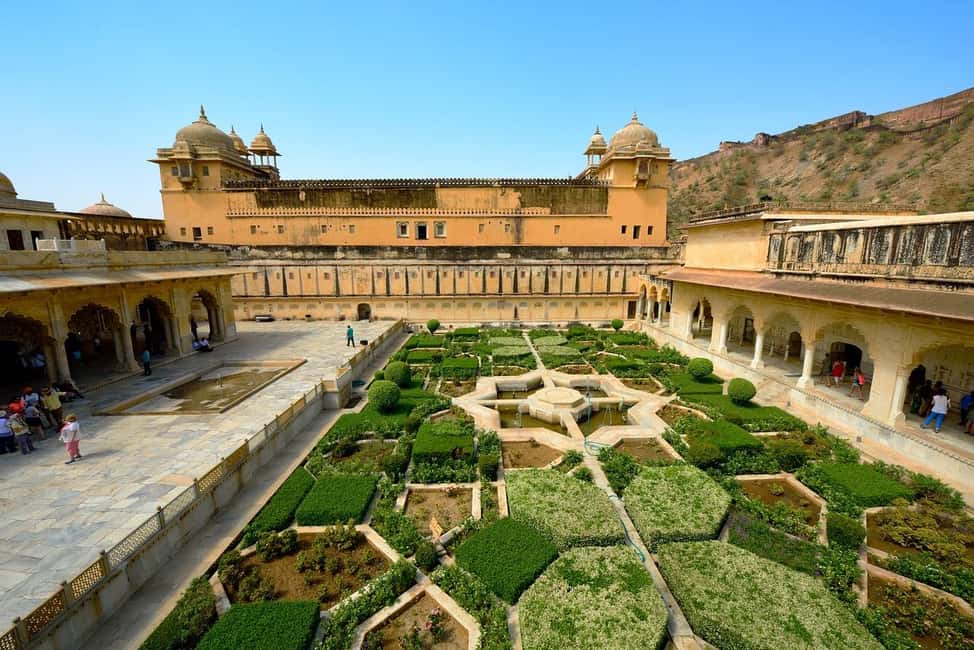
The day starts with Amber Fort, known for its sweeping views and royal halls. I like Amber because it feels theatrical in a way that’s easy to picture from the outside. Once you’re inside, the scale and layout make the fort feel like a lived-in system, not just a photo spot.
Next comes City Palace, which is described as elegant. This is more than one building. It’s a complex that helps you understand how royal life and administrative life mixed in Jaipur.
Then you see Hawa Mahal, the iconic Palace of Winds. People love the facade, but I also find it satisfying when your guide points out why it’s designed the way it is and what it would have meant for ventilation and movement in daily life.
After that, you visit Jantar Mantar Observatory, a scientific site. It can be tempting to treat it like a quick stop, but it’s more interesting when explained as tools for observing time and the sky. It’s a reminder that “royal” doesn’t always mean only battles and ceremonies.
Later, you drive back to Delhi for an overnight stay so your final day stays focused on Delhi sights rather than rushing.
Day 4: Jama Masjid, Chandni Chowk rickshaw option, and New Delhi monuments
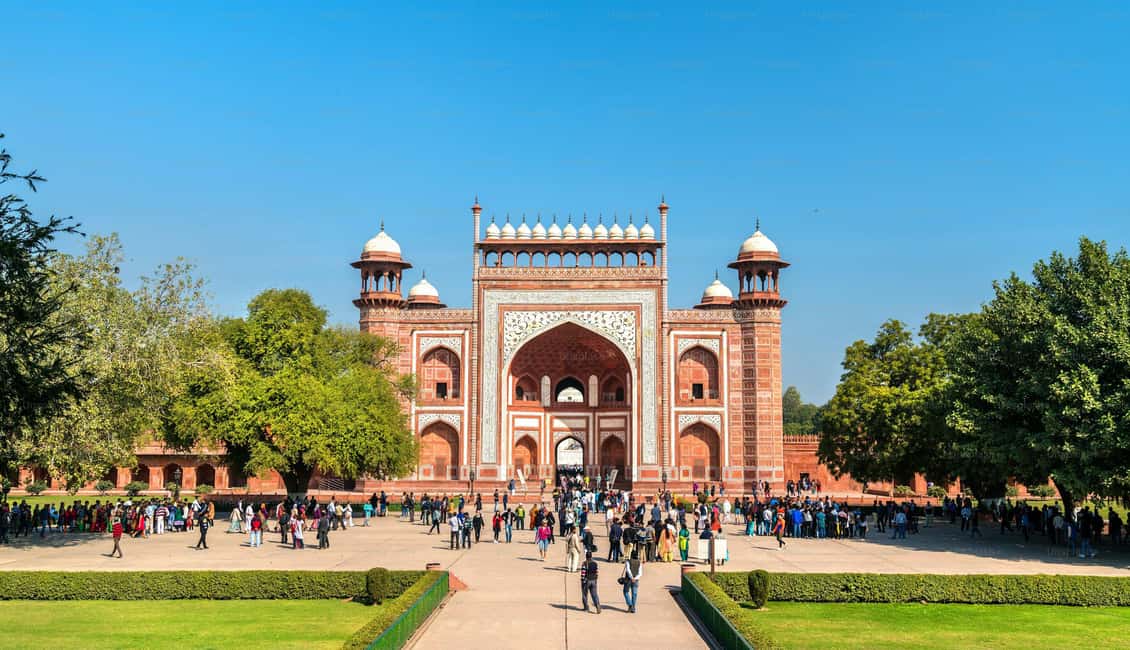
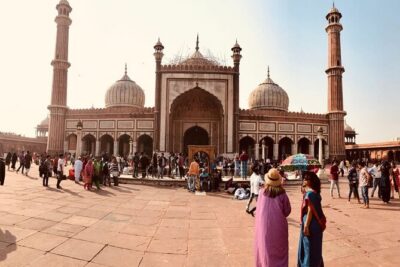
Delhi has two faces, and this tour gives you both. In Old Delhi, you visit Jama Masjid, a major mosque where the scale and atmosphere do some heavy lifting.
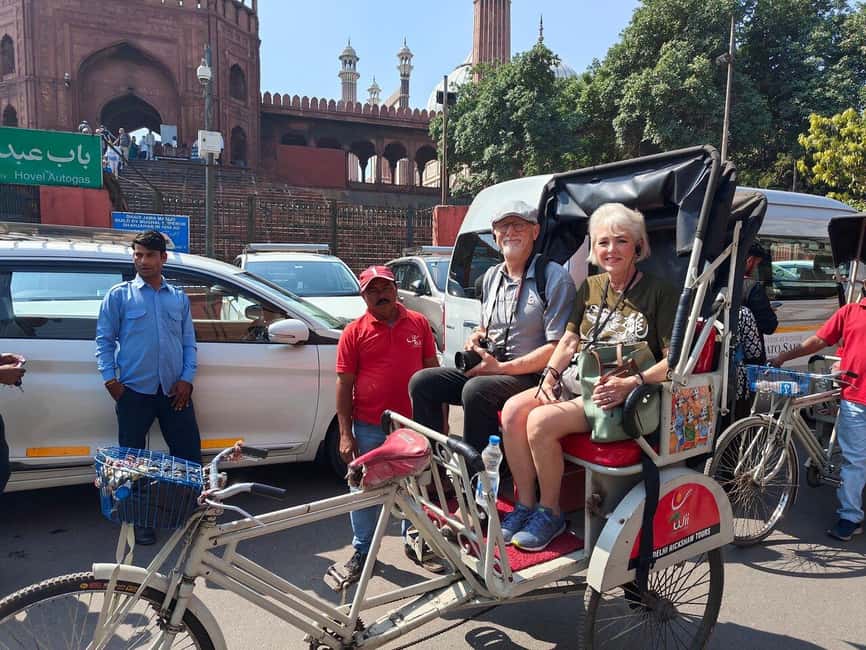
Then there’s Chandni Chowk, and there’s an optional rickshaw ride through the area. I consider this one of those choices you make based on your comfort level. If you’re okay with crowds and slow navigation, it’s a fun way to get a feel for the market layout without turning it into a walking marathon.
You also pass the Red Fort. On Mondays, there’s a catch: Red Fort and Lotus Temple are closed, and the tour instead visits Gurudwara Bangla Sahib. That swap is helpful because it keeps your day from feeling like a dead end. It’s also a reminder that in India, closures are part of planning reality.
In New Delhi, you shift to big government-and-monument architecture: India Gate, Rashtrapati Bhavan, and Lotus Temple. The tour concludes at either Qutub Minar or Humayun’s Tomb, depending on the final routing.
If you’re trying to decide what to prioritize in Delhi as a first-timer, this mix is smart. It covers both the grand and the everyday: religious sites, historic corridors, and modern national landmarks.
You can also read our reviews of more tours and experiences in New Delhi






Guides and skip-the-line entry: where the value usually shows up
This kind of tour succeeds or fails on guidance. The good news: you’re not stuck with a silent driver or a tired explanation. You get a live tour guide, and the languages listed include English, French, Spanish, Russian, German, Italian, Portuguese, Hindi.
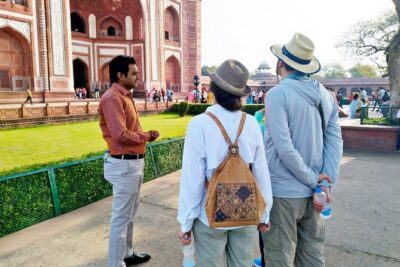
From the experience feedback I saw, Saif stood out as a strong guide—polite, supportive, and notably detailed about the Taj Mahal and Agra Fort, including stories about construction and design. That’s exactly the kind of guidance that turns a monument from a picture into something you can actually interpret.
A driver named Ajay also came up as ready and comfortable to be with, which matters on multi-day tours because you’re spending a lot of time together in the car. When the driving is handled well, you arrive fresher for the walking parts instead of already worn out.
Skip-the-line entry via a separate entrance is another practical win. It doesn’t mean you’ll never wait, but it can cut down on the most annoying delays—those moments when you feel like you’re paying for tickets and still losing hours to logistics.
Hotels, room setups, and how to plan for comfort
The tour includes overnight stays in 4-star or 5-star hotels, with choices that are flexible. For many Golden Triangle tours, hotel quality is the first thing that can feel like a gamble. Here, at least, you’re given a clear range and the structure supports private comfort rather than dorm-style travel.
Room sharing works like this: you can have a single, double, or twin-sharing room by default. If a group includes 3 guests, you get a triple-sharing room (double bed plus an extra bed). If you want separate rooms for 2 or 3 guests, extra charges apply.
That matters if you’re traveling with friends or siblings who want privacy. Before you book, think about how you want your sleep setup to feel after long sightseeing days.
The $38 price: what’s the real value here
Let’s talk money honestly. $38 per person for four days sounds low, and it’s worth asking where the value comes from. The key is that the tour isn’t just a drive between cities. It pairs private transport with live guiding across multiple major sites, plus hotel nights in the 4-star/5-star range.
At this level, you’re buying:
- door-to-door pickup and city-to-city movement
- expert local guides for the big monuments
- a plan that sequences sites efficiently across four days
- skip-the-line entry support for major stops
At the same time, there are a few costs and realities to remember:
- Some monument tickets might not accept cards, so bring cash in INR for ticket purchases. Guides can assist with ATMs.
- A gala dinner surcharge applies on Christmas Eve, New Year’s Eve, and from December 24 to January 4.
- If you want specific room arrangements beyond the default sharing setup, extra charges may apply.
So yes, it can be a strong value if you want the “guided, private, done-for-you” experience without paying the kind of premium that makes you feel like you’re funding someone else’s vacation.
Practical tips that save time (and keep your trip calmer)

A Golden Triangle trip can feel like a nonstop visual buffet. To keep it from becoming exhausting, I’d plan for a few practical things:
Bring your passport and wear comfortable shoes. You’ll do plenty of walking across forts, palaces, mosques, and open historic areas.
If you’re arriving by air, the Delhi Airport pickup is specific: your driver meets you at Terminal 3, Exit Gate 4 with a placard showing your name. You’ll want to provide your flight details when booking so the timing is correct.
Carry cash in INR for any sites that don’t accept cards. The tour notes that card acceptance can vary, so you don’t want to rely on ATMs at the last minute.
Check the day-of-week logic before you fall in love with a single wishlist. The Taj Mahal closure on Fridays and the Monday closures for Red Fort and Lotus Temple can change what you see, even when the rest of the tour remains similar.
One more note: pets aren’t allowed, so if you travel with a companion animal, you’ll need a different plan.
Should you book this Golden Triangle private tour?
I’d book this if you’re:
- doing India for the first time and want a clear, efficient route
- excited about major architecture and guided explanations, not just sightseeing
- okay with a fairly full schedule and early starts for the Taj sunrise
- traveling as a private group that values comfort and predictable logistics
I might hesitate if you:
- want lots of downtime each day (this is more structured than free-roam)
- are traveling specifically on a Friday or Monday and your personal top priority is a site that those days may be closed
- prefer to control every detail yourself, because the value here is that someone else handles the sequencing and guiding
If you want a practical, guided Golden Triangle that leans into big monuments and smart detours like Fatehpur Sikri and Abhaneri, this is a strong fit. And with guides like Saif plus a driver like Ajay, the experience tends to feel less like a checklist and more like you’re being let in on how it all works.
FAQ
What cities are included in this 4-day Golden Triangle tour?
You’ll visit Delhi, Agra, and Jaipur over four days, with sightseeing in each city.
How does pickup work for Delhi Airport arrivals?
For airport pickups, your driver meets you at Delhi Airport Terminal 3 Exit Gate 4 with a placard showing your name.
What if I’m traveling on a Friday?
The Taj Mahal is closed on Fridays. If your tour falls on a Friday, the itinerary adjusts to Delhi → Jaipur → Agra → Delhi.
What if I’m traveling on a Monday?
On Mondays, the Red Fort and Lotus Temple are closed, and the tour visits Gurudwara Bangla Sahib instead.
Is this tour private?
Yes, it’s a private group tour with a private driver and live tour guide.
What languages are available for the live tour guide?
The live guide is available in English, French, Spanish, Russian, German, Italian, Portuguese, Hindi.
Are skip-the-line entrances included?
Yes. The tour includes skip-the-line access using a separate entrance for monuments.
What kind of hotel rooms are provided?
Rooms are provided on a single, double, or twin-sharing basis by default. For groups of 3, a triple-sharing room is assigned (double bed plus an extra bed). Separate rooms for 2 or 3 guests cost extra.
Can I buy tickets with a credit card?
Some monuments may not accept cards, so it’s recommended you carry cash in INR for ticket purchases. The guide can help with ATMs if needed.