REVIEW · NEW DELHI
Golden Triangle 3 days Tour to Delhi Agra and Jaipur
Book on Viator →Operated by Sunshine India Tours · Bookable on Viator
Three cities, one carefully managed trip.
This Golden Triangle tour strings together major sights and the small moments between them, with a private expert guide, comfortable private air-conditioned car, and hotel-based sightseeing flow. I like that it’s set up so you’re not wrestling with tickets or directions when you land in India.
What I really like is the mix of iconic stops and hands-on street-level experiences: Jama Masjid and Chandni Chowk in Old Delhi, then the early Taj Mahal sunrise in Agra. One thing to consider is the pacing: there are long drives between cities (about 3 to 5 hours), plus early mornings, so it’s best if you’re okay with a full, structured schedule.
In This Review
- Key highlights worth planning for
- Private car, 5-star stays, and a guide who manages the pace
- Old Delhi by foot, rickshaw, and spice stops
- New Delhi history markers: Qutub Minar, India Gate, Gandhi Smriti
- Agra at first light: Taj Mahal and Agra Fort
- Jaipur monuments in one day: City Palace to Jaigarh Fort
- Meals and cultural touchpoints that make it feel personal
- Should you book the Golden Triangle 3-day tour?
- FAQ
- Is this a private tour or a shared group?
- Are hotel nights included in the price?
- What’s included for meals?
- Are monument tickets included?
- Is pickup and drop-off included?
- Do I receive a ticket on my phone?
- Can dietary needs be accommodated?
- What’s the cancellation window for a refund?
Key highlights worth planning for
- Ravi’s “safe and smooth” guidance: an experienced guide who knows how to move through busy areas and help you decide what to eat and where to look.
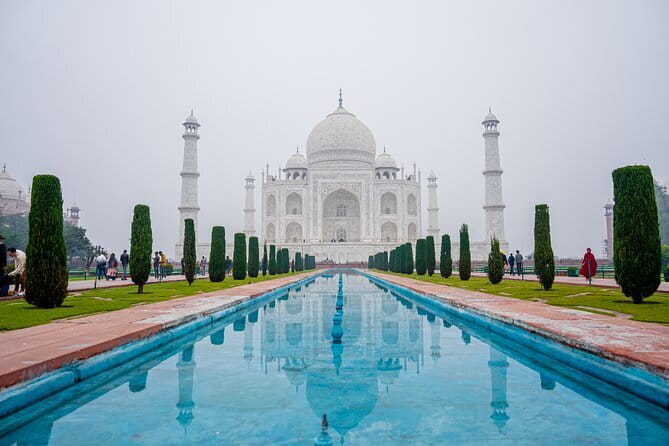
- Sunrise Taj Mahal access: the tour is timed for an early visit, so you see the marble at its calmest.
- Old Delhi street texture: Jama Masjid, Chandni Chowk, a rickshaw ride, and Khari Baoli’s spice market.
- UNESCO stops included: Qutb Minar, Agra Fort, and Jantar Mantar have entry covered in the plan.
- Jaipur in big-picture form: Hawa Mahal, City Palace, Jal Mahal, and Jaigarh Fort in one go.
- A local-family dinner in Jaipur: a cultural meal included, not just restaurant hopping.
Private car, 5-star stays, and a guide who manages the pace
This tour is built around doing less work for you. You get pickup and drop-off from the airport, railway station, hotel, or anywhere you specify, plus a private, comfortable air-conditioned car with a driver for transfers and sightseeing. That matters on the Golden Triangle, where distances add up fast and traffic can turn “short hops” into long ones.
The lodging side is also part of the value story. You get 5-star hotels for 2 nights, which is a big deal in this itinerary because you’re not just doing sightseeing days. You’re also recharging between Delhi, Agra, and Jaipur, and you’ll want that comfort after early starts.
Then there’s the guide factor. The tour is led by a private expert tour leader throughout. In the feedback I saw, the name that kept coming up was Ravi, praised for helping first-timers feel safe and for handling the day’s logistics so you can focus on what you’re seeing. That doesn’t mean you’ll never walk or wait. It means the “how do we do this” part is handled.
Practical note: this is a private tour/activity for your group, and you’ll receive a mobile ticket. If you have dietary needs (vegetarian, vegan, gluten-free, lactose intolerant, and more), you’re asked to specify them when booking, which is smart for a route that includes multiple meals.
You can also read our reviews of more tours and experiences in New Delhi



Old Delhi by foot, rickshaw, and spice stops
Old Delhi is where the trip turns from monuments-on-a-map into real daily life. You start with Old Delhi’s historic core—founded in 1639 as Shahjahanabad—and you’ll feel the Mughal-era atmosphere right away: narrow lanes, market energy, and architecture that makes the present look layered.
The tour’s Old Delhi lineup is also well-chosen for contrast:
- Jama Masjid: This is India’s largest mosque, built in 1656 by 5,000 workers. You’ll have time to walk the red sandstone courtyard and get oriented to the scale of worship and architecture. The admission is included, so you’re not juggling paperwork mid-visit.
- Chandni Chowk: After the mosque, you move into the classic bazaar scene. This stop is focused on the role these markets play in locals’ lives, and there’s even time for a chai moment—exactly the kind of break that makes the walking feel doable.
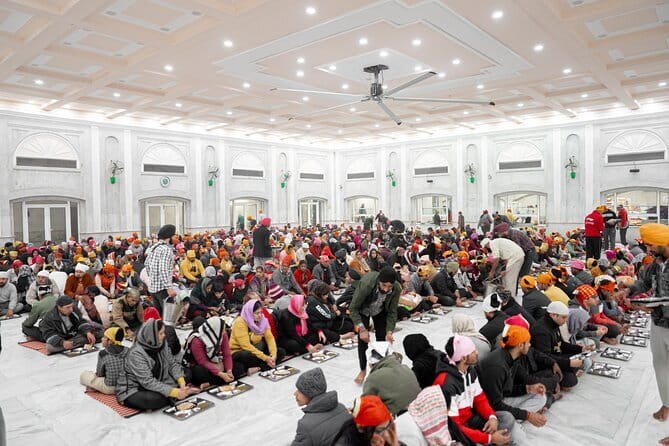
- Gurudwara Sis Ganj Sahib: This adds a different religious lens. You’ll learn about Sikh traditions and values like equality and selfless service, and you’ll be able to observe the setting with guidance so it’s not just “another building.”
- Khari Baoli spice market + rickshaw ride: This is one of the most sensory stops. You’ll ride to Asia’s largest spice market, where the air is heavy with cumin, cardamom, and chili aromas. Even if you’re not buying spices, it’s a great place to understand how flavors connect to everyday cooking in North India.
Two small considerations here. First, you’re in crowded lanes, so wear comfortable shoes and keep your phone secured. Second, Old Delhi can feel like sensory overload if you’re expecting “quiet sightseeing.” The guide helps you pace it, but you should still plan to enjoy it for what it is: busy, layered, and alive.
New Delhi history markers: Qutub Minar, India Gate, Gandhi Smriti
After the Old Delhi intensity, the tour shifts to New Delhi’s planned capital vibe. You pass through the colonial-Mughal blend designed by British architects Lutyens and Baker in 1911, and it gives you that wide-avenue, monument-centered feel.
You’ll stop at a few major landmarks, each with a different kind of meaning:
Qutb Minar (UNESCO) is the architecture anchor. It rises to 73 meters and is tied to Qutb-ud-din Aibak, with Indo-Islamic and Afghan design influences visible in the red sandstone carvings and inscriptions. The included entry here is helpful because this is one of the places where you really want uninterrupted time to look closely.
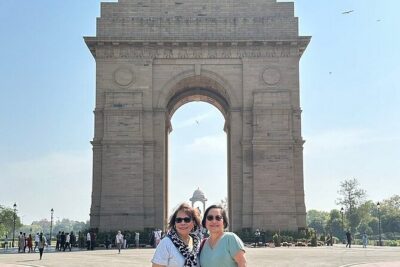
India Gate is the war memorial moment. It’s a 42-meter-high arch built in 1931 to honor Indian soldiers from World War I and the Third Anglo-Afghan War. You’ll see Sir Edwin Lutyens’ design style, and it’s a good chance to slow down and frame the city beyond shopping streets.
Gandhi Smriti is more reflective. It marks the site where Mahatma Gandhi spent his last 144 days and where he was assassinated. There are exhibits on his philosophy and legacy, which makes this stop valuable if you want history to connect to people, not just dates.
Then you’re driving onward to Agra. This is where the tour’s “guided flow” really shows. You’re not scrambling at the end of a sight to figure out transportation. The car and driver are part of the package, so you can move from Delhi landmarks to the Agra leg without losing the rhythm you built up.
Agra at first light: Taj Mahal and Agra Fort
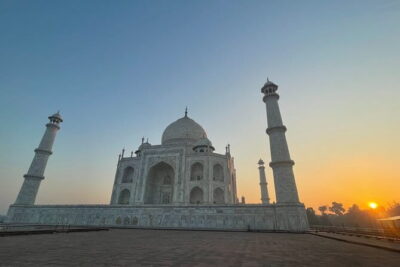
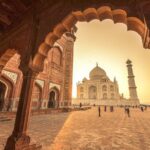
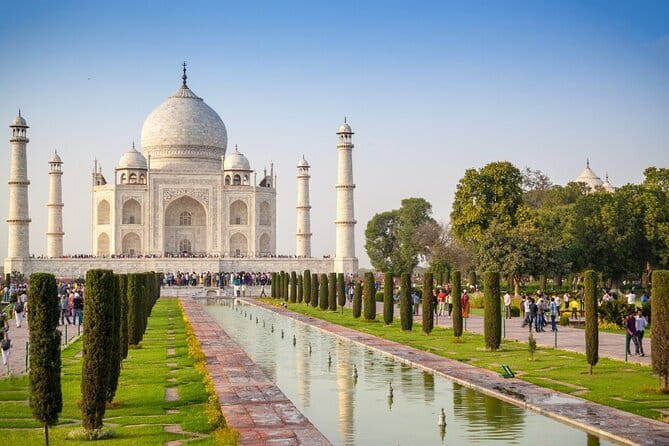
Agra is where the itinerary earns its headline. You start with an early schedule aimed at a sunrise view over the Taj Mahal. The tour’s timing matters because the marble shifts in color as the light changes, and the crowds can feel much more manageable early in the morning. You’ll spend around 2 hours there, which is enough to see it from different angles and get your photos without rushing.
The Taj Mahal is built by Mughal Emperor Shah Jahan in 1632 for Mumtaz Mahal, and it’s one of those rare places where your brain understands the story before you even try to explain it. Still, guidance helps you notice the structure details you’d normally miss—why the symmetry feels so “engineered,” and how the white marble catches light.
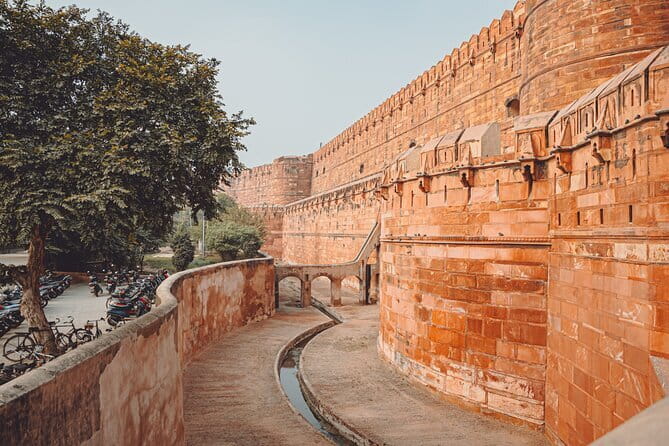
Afterward, you visit Agra Fort (UNESCO), built in the 16th century by Emperor Akbar. It’s a red sandstone fortress that blends Islamic and Hindu architectural elements. The included time here (about 45 minutes) is geared toward seeing major palace areas without turning it into an all-day archaeology project.
A real practical consideration: Agra can be warm, and sunrise starts early. If you run cold easily, bring a light layer for morning, even in warmer seasons. Also, keep water handy; the tour provides complimentary water bottles, which helps.
The best “value move” is that these two sites complement each other. Taj Mahal gives you the iconic emotional impact. Agra Fort gives you the political and architectural context of the Mughal era in a more fortress-like setting.
Jaipur monuments in one day: City Palace to Jaigarh Fort
You head from Agra to Jaipur by car, with a lunch stop on the way. The drive is about 4 hours, and that lunch matters because it keeps the day from turning into a “eat whatever you can find” situation. For a route like this, predictable meals are part of comfort and part of pacing.
Once in Jaipur, the plan focuses on major royal-and-science landmarks with a classic Jaipur range:
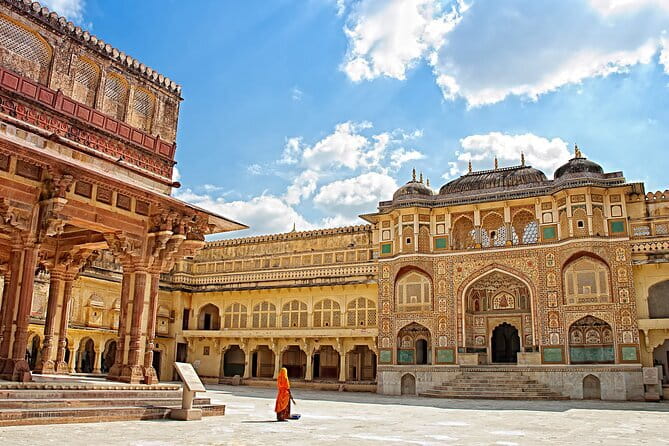
- City Palace: Built in the 18th century by Maharaja Sawai Jai Singh II, it blends Mughal and Rajput architecture. You’ll have time to walk courtyards, see intricate carvings, and understand the royal layout. Entry is included, which again removes friction.
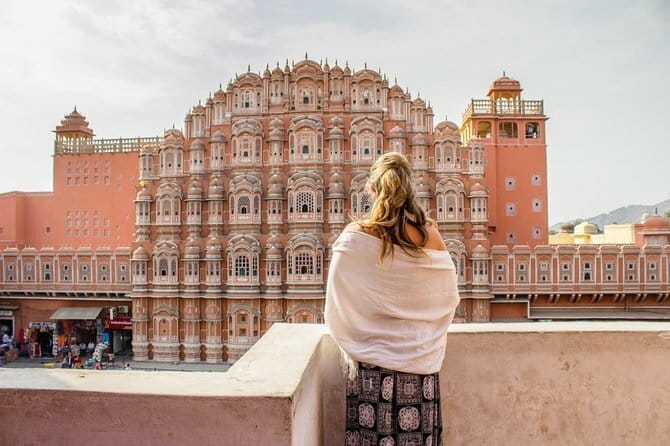
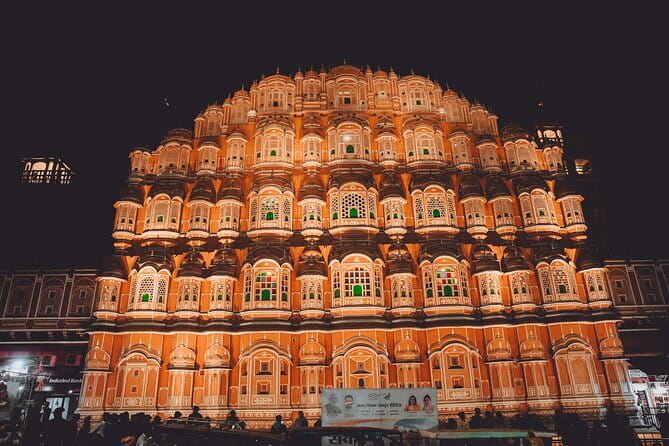
- Hawa Mahal: The Palace of Wind, built in 1799 by Maharaja Sawai Pratap Singh, features a five-story façade with 953 latticed windows. The idea of royal women observing street life is part of what makes this structure feel like a story in stone.
- Jantar Mantar (UNESCO): A set of nineteen astronomical instruments built in 1734 by Sawai Jai Singh II. This is a reminder that Jaipur wasn’t only about palaces. It was also about measurement, math, and how humans tracked the sky.
- Jal Mahal: A palace sitting in Man Sagar Lake, half-submerged so it looks like it floats. It’s mostly a visual pause and photo stop (around 15 minutes), good for breaking up the more structured monument visits.
- Jaigarh Fort: Perched on a hill near Jaipur, with Rajput and Mughal architectural blending. The included time (about 40 minutes) lets you see key areas, including the Sheesh Mahal with mirror-studded details and wide courtyards.
This Jaipur day can feel like a lot of stops in one stretch, but the variety prevents monotony. If you like architecture, this day is a buffet: palace power, wind-catching design, astronomical engineering, and a fort on the hill.
One caution: fort sites involve more standing and walking. If you have mobility issues, take it slowly and keep asking the guide where to pause.





Meals and cultural touchpoints that make it feel personal
The tour’s biggest “soft value” comes from how it handles food and local culture. You get breakfast twice, lunch twice, and dinner twice, plus special experiential lunches and dinners. You also get complimentary water bottles, which is a small thing that helps you stay comfortable all day.
The standout cultural inclusion is dinner with a local family in Jaipur. That’s not just a meal; it’s a structured moment to learn how daily life shapes cooking and hospitality. If you’re the type who remembers trips by what you ate and who you ate with, this is the part that will stick long after the photos fade.
On the Delhi side, you’ll also have a chai stop during the Chandni Chowk segment, which sounds simple but makes a difference when you’re walking through markets and religious spaces back to back. The guide’s role here is practical: they’ll help with pacing and also with what to prioritize when you’re surrounded by options.
If you have dietary requirements, use the booking notes. The tour specifically asks for needs like vegetarian, vegan, pescatarian, gluten-free, or lactose intolerant—so it’s worth being explicit so meals align with you.
Should you book the Golden Triangle 3-day tour?
Book it if you want a private, well-timed route that hits the big icons without turning your trip into logistics. This is a strong fit for first-timers in India, people who prefer comfort (5-star hotels, private AC car), and anyone who likes having a guide like Ravi handle navigation, safety, and decision-making.
Pass or adjust if you hate early mornings or you’d rather slow-travel. The drives and the number of monuments mean you’ll move steadily from place to place.
If you’re aiming for classic Delhi-Agra-Jaipur highlights with included tickets, set meal stops, and a local dinner moment, this is the kind of tour that can make the Golden Triangle feel organized and genuinely memorable.
FAQ
Is this a private tour or a shared group?
It’s a private tour/activity, so only your group participates.
Are hotel nights included in the price?
Yes. It includes 5-star hotels for 2 nights.
What’s included for meals?
You get 2 breakfasts, 2 lunches, and 2 dinners, including special experiential lunches and dinners.
Are monument tickets included?
Yes. Entry/Admission is included for Jama Masjid (Friday Mosque), Qutb Minar, Taj Mahal, Agra Fort, City Palace of Jaipur, Jantar Mantar, and Jaigarh Fort.
Is pickup and drop-off included?
Yes. Pickup and drop-off are offered from the airport, railway station, hotel, or anywhere you specify.
Do I receive a ticket on my phone?
You get a mobile ticket.
Can dietary needs be accommodated?
You can specify dietary requirements during booking (vegetarian, vegan, pescatarian, gluten-free, lactose intolerant, and more).
What’s the cancellation window for a refund?
You can cancel up to 3 days in advance for a full refund, and changes within 3 days aren’t accepted.