REVIEW · NEW DELHI
Half-Day Private Walking Tour of Old Delhi
Book on Viator →Operated by Shivalik Holidays · Bookable on Viator
Old Delhi is best on foot. This private, heritage-style walking route takes you into Shahjahanabad, the old walled city, where narrow lanes feel like a different planet. You’ll see temples and wholesale bazaars packed into a short time, and you’ll get a local guide to help you make sense of what you’re looking at—not just how to get through the crowds.
I especially like two parts: the market-to-monument flow, where the stops connect from food and spices straight into major religious sites, and the practical touch of chai and street snacks included along the way. It keeps the tour from turning into a pure sightseeing sprint. You’ll also be walking with an English/French-speaking, authorized guide, which matters in a place where small details are the whole point.
One thing to plan for: the Jama Masjid entrance fee (INR 300 per person) is not included, and you’ll pay it on the spot if you want to go in. Also, this is still a 3 to 4 hour walking experience in busy lanes, so you’ll want good shoes and realistic expectations.
In This Review
- Key highlights to look forward to
- Why Old Delhi lanes are the point, not the problem
- Meeting at Red Fort Metro Station: keep it simple
- Chandni Chowk’s main shopping street: your orientation happens fast
- Gurudwara Sis Ganj Sahib: a meaningful pause in the middle of commerce
- Khari Baoli: wholesale spice and dry fruits you can actually see
- The cloth-and-saree bazaar, then parathas: where you feel everyday life
- The jewellers street stop: pretty to look at, easy to overspend
- Jama Masjid: the big 17th-century stop at the end
- Chai, street snacks, and bottled water: the small inclusions that matter
- Price and value: why $21 can be a smart deal
- Who should book this Old Delhi walk (and who should skip it)
- Should you book it?
- FAQ
- How long is the Half-Day Private Walking Tour of Old Delhi?
- How much does the tour cost?
- Is the tour private?
- What’s included in the price?
- What’s not included?
- Where does the tour start and end?
Key highlights to look forward to
- A true Old Delhi walking route focused on Shahjahanabad’s lanes instead of long vehicle stops
- Gurudwara Sis Ganj Sahib as a calm, meaningful stop (free admission)
- Khari Baoli for wholesale spice and dry-fruit trading energy (free admission)
- Street food included with chai/tea and local snacks to fuel the walk
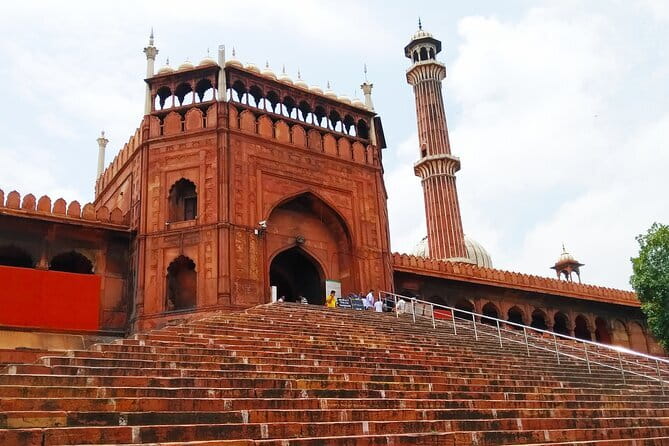
- Jama Masjid option at the end with an INR 300 entrance fee if you want to enter
- Private group experience so your pace is more workable than a big group tour
Why Old Delhi lanes are the point, not the problem
Old Delhi’s charm isn’t in one postcard view. It’s in the connections: who sells what, how people move through the lanes, and how different communities share the same street-level life. Walking is the only way to really feel that. A vehicle can drop you off at sights, but it can’t recreate the rhythm of the bazaars or the way the monuments sit inside the everyday city.
This tour is built around that idea. You’re not just checking boxes—you’re moving through a logical path of places that naturally teach the story of the neighborhood. That matters because old-city streets can look chaotic at first. With a guide, you start to see patterns fast.
You can also read our reviews of more walking tours in New Delhi



Meeting at Red Fort Metro Station: keep it simple
The start and end point is Red Fort Metro Station (Lal Qila), near Chandni Chowk. That’s convenient because it gives you an easy reference point, and it puts you right at the edge of the old city’s main action.
If pickup is offered for your booking, it can reduce hassle. Either way, plan to arrive a few minutes early. In this area, directions can feel fluid, and you’ll enjoy the tour more if you’re not rushing in the first few minutes.
One more practical note: there’s no private transportation included, so expect the tour to be mostly walking during the experience. If you’re the type who needs frequent breaks, it’s worth knowing the whole walk is roughly 3 to 4 hours.
Chandni Chowk’s main shopping street: your orientation happens fast
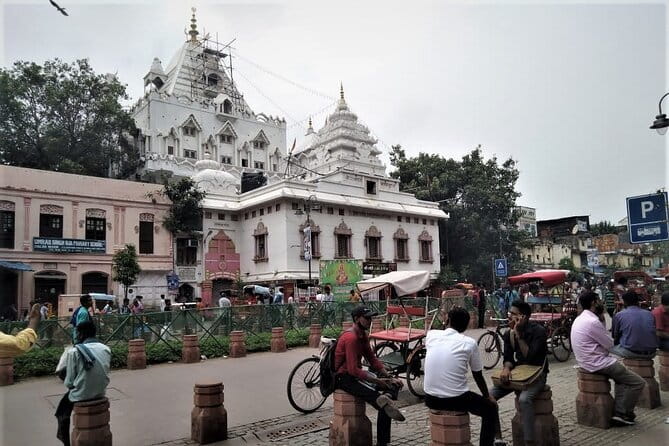
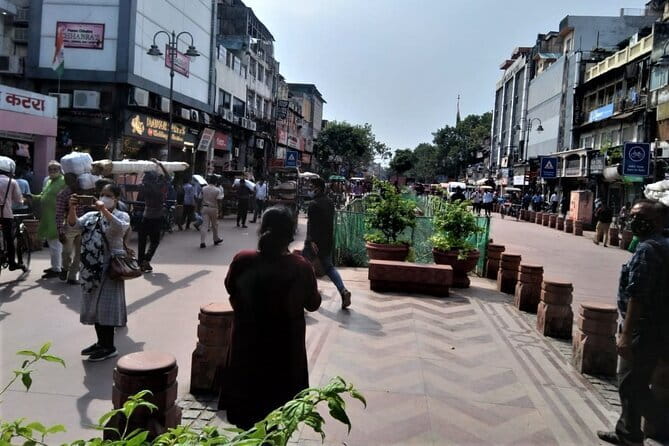
Your route begins on the most famous bazaar street of Old Delhi, a lane that’s been recently revamped. Even if you’re not planning to buy much, this is a smart first stop. It helps you get your bearings quickly—what the lanes are like, how shops cluster, and how goods move from one counter to the next.
You’ll also start noticing the “two sides” of Old Delhi: one side is commerce, the other is culture and faith. That dual vibe sets you up for what comes next, especially once you move from shopping lanes into a major Sikh temple.
If you’re sensitive to sales pressure, keep your eyes on your guide’s explanations and your own “what do I want to taste?” plan. In markets like these, wandering without a purpose can become tiring.
Gurudwara Sis Ganj Sahib: a meaningful pause in the middle of commerce
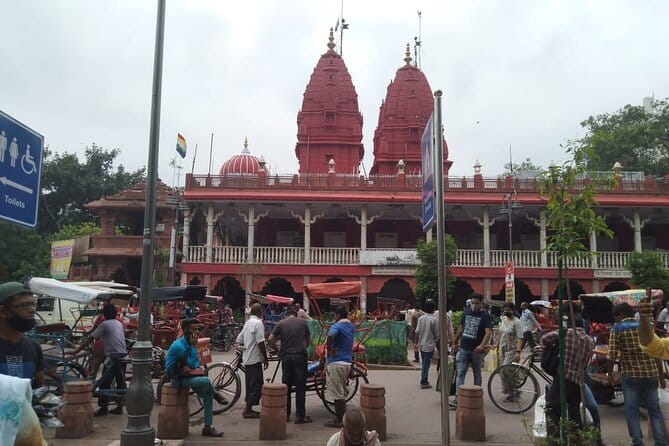
Next is Gurudwara Sis Ganj Sahib, a well-known Sikh temple in the heart of the old city. You’ll spend about 30 minutes, and admission is free.
What I like about this stop is the contrast. You step out of shopping intensity into a space that feels more about community and reverence than sales. It’s also a good moment to slow down. If Old Delhi starts feeling like visual overload, this is where you reset.
Also, it’s a reminder that old-city life isn’t divided into tourist zones and real neighborhoods. Religion is woven into the same lanes where spices, clothes, and electronics are sold. This stop makes that connection click.
Khari Baoli: wholesale spice and dry fruits you can actually see

After that, you hit Khari Baoli, a wholesale market for spices and dry fruits. Plan around 20 minutes here, and again, admission is free.
This is one of those stops where your senses do half the work. You’ll see how products are displayed and sold in bulk, and you’ll start understanding why Old Delhi earned its food reputation in the first place. It’s not just about flavor—it’s about supply chains and daily trading that keep the city fed.
Practical tip: if you’re planning to snack later, you might want to pace yourself here. The smell of spices can make you hungry fast, and the included street snacks later mean you don’t have to chase food at every corner.
You can also read our reviews of more private tours in New Delhi






The cloth-and-saree bazaar, then parathas: where you feel everyday life

Between the markets with clear “destination names,” your walk also passes through a famous wholesale, colorful cloth and saree market. The tour time there is short, but it’s a useful window into how people shop for textiles in this area—lots of small stalls, quick negotiations, and constant foot traffic.
From there, the route shifts again toward food. You’ll admire a famous street and enjoy parantha shops—exactly the kind of everyday eating that helps you understand a city’s palate. Paranthas are simple in concept, but the quality and variety you’ll find in Old Delhi come from a deep local rhythm of ingredients, griddles, and repeat customers.
If you’re worried about being pushed into purchases, focus on watching. This part of the tour is more about observing and tasting than buying. And since chai and some snacks are included, you can keep the experience grounded in food rather than retail.
The jewellers street stop: pretty to look at, easy to overspend

The final market-focused stretch includes a jewellers street in Old Delhi. This is a fascinating stop because it shows another side of the city’s economy. Even if you’re not shopping for jewelry, the street makes clear how visible trade is here.
The trade-off: bazaars can be intense. Jewelry shops often have strong selling energy, and it can get mentally tiring if you’re not in the mood to manage it. The good move is to treat this as a “look, learn, and move on” stop—ask your guide what you’re seeing, enjoy the architecture details if you spot them, and don’t feel like you must decide anything.
This is also where your guide’s timing matters. With a schedule, you can enjoy the street without losing yourself for hours.
Jama Masjid: the big 17th-century stop at the end
Your last major monument stop is Jama Masjid, one of the biggest and world-famous 17th-century mosques built by Shah Jahan. You’ll spend about 30 minutes in this area.
Here’s the key practical point: entrance costs INR 300 per person and is not included. If you want to enter the mosque, you’ll pay that fee directly on the spot. If you’re trying to keep your budget tight, you can still appreciate the setting from outside, but your tour includes the option to go in.
Why this stop feels like a fitting finish: it closes the loop between the city’s daily life and its spiritual anchor. You start with market lanes and end with one of the grand structures that shaped the neighborhood’s identity.
Also, it’s a good place to take a few quieter minutes. Old Delhi can be loud and crowded; Jama Masjid gives you a stronger “still frame” moment before you head back to the metro.
Chai, street snacks, and bottled water: the small inclusions that matter
The tour includes chai/tea, some local street snacks, and bottled water, plus an experienced authorized English/French-speaking guide. That set of inclusions is more valuable than it sounds.
In Old Delhi, food isn’t a side quest—it’s part of the experience. Having some snacks provided helps you avoid decision fatigue and keeps you from spending time hunting for something that matches your taste and comfort level. The water is also a real help when you’re in busy lanes for 3 to 4 hours.
Just remember: any additional eating or shopping is not included. So if you know you’ll want a second round of parathas or want to try extra sweets, budget for it. The tour gives you a taste, not a full meal.
Price and value: why $21 can be a smart deal
At about $21 for a half-day private walking tour (roughly 3 to 4 hours), the value is in the structure.
You’re paying for:
- an authorized English/French guide (not just a map)
- planned stops across old-city anchors
- included snacks/tea and bottled water
- a route that focuses on walking, which is the best way to experience these lanes
The extra cost to keep in mind is the Jama Masjid entrance fee (INR 300 per person) if you enter. That’s not a deal-breaker, but it’s the main “surprise” item. The rest of the named stops you’ll visit—Gurudwara Sis Ganj Sahib and Khari Baoli—are free.
If you’re comparing this to tours that are mostly vehicle rides with short walks, this one tends to feel more like a real day in the neighborhood. You’re not paying extra for comfort you don’t need. You’re paying for access, pacing, and interpretation.
Who should book this Old Delhi walk (and who should skip it)
This works best if you:
- want to see Old Delhi on foot rather than through a car window
- like food moments as part of sightseeing
- prefer a private group so you can move at a workable pace
- enjoy market streets and religious sites, side by side
It may be less ideal if:
- you hate crowds or loud streets (Old Delhi is active)
- you have limited walking stamina, since the whole experience is around 3 to 4 hours of walking
- you’re only interested in monument photography and not in markets and everyday life
The tour notes that most travelers can participate, and pregnant travelers who can walk for about 3 hours can join. If you’re in that situation, plan to move slowly, drink water, and take any offered pause times seriously.
Weather also matters. The experience requires good weather, and if it’s canceled due to poor weather, you’ll be offered a different date or a full refund.
Should you book it?
I’d book this tour if you want the Old Delhi experience that actually makes sense. The mix of Gurudwara Sis Ganj Sahib, Khari Baoli, cloth and food lanes, and then Jama Masjid gives you a rounded snapshot of Shahjahanabad in half a day. And with chai, snacks, and bottled water included, you won’t be stuck improvising your way through the hunger and heat.
Skip it or choose another style of tour if you need low-stress sightseeing, minimal walking, or you’re not comfortable paying the INR 300 entrance fee for the mosque. Otherwise, this is a solid, budget-friendly way to get real texture in Old Delhi without wasting hours figuring out where to go next.
FAQ
How long is the Half-Day Private Walking Tour of Old Delhi?
It runs about 3 to 4 hours.
How much does the tour cost?
The price is $21.
Is the tour private?
Yes. It’s a private tour/activity, and only your group participates.
What’s included in the price?
You get chai/tea, some local street snacks, bottled water, and an experienced authorized English/French-speaking guide.
What’s not included?
Private transportation, lunch, and the Jama Masjid entrance ticket (INR 300 per person) are not included.
Where does the tour start and end?
It starts and ends at Red Fort Metro Station (Lal Qila), Lal Qila, Chandni Chowk, Delhi.