India can feel like a lot at once, so I like this one for its clear flow and guided monument stops. You’ll move through UNESCO sights in Delhi and Agra, then land in Jaipur for the big Pink City icons without having to arrange rides or tickets. Two things I especially like: the private AC car for the full stretch between cities, and the way key entries are handled for you (with several ticket prices listed). One consideration: three full days means a packed schedule—expect long driving hours and limited wandering time at each major site.
Because you’re traveling a classic loop—New Delhi to Agra to Jaipur—you get a tight “greatest hits” overview of Mughal-era architecture and royal Rajasthan, with a professional guide in each city. And from what I see in the service patterns, the experience is built around safe, punctual driving and English-speaking help that cuts through the daily hassles of big Indian cities.
In This Review
- Key highlights you’ll care about before booking
- Price and value: what you’re really paying for
- How the schedule feels in real life (the good and the tight)
- Day 1 in Delhi: Jama Masjid, Red Fort, Humayun’s Tomb, Qutub Minar
- Jama Masjid (30 minutes)
- Red Fort (1 hour)
- Humayun’s Tomb (1 hour)
- Qutub Minar (1 hour)
- Day 2 in Agra: Taj Mahal time, Agra Fort views, and Itimad-ud-Daula
- Taj Mahal (3 hours, entry included)
- Agra Fort (2 hours, entry included)
- Itimad-ud-Daula (1 hour, entry included)
- Day 3 in Jaipur: Jal Mahal, Hawa Mahal, and City Palace
- Jal Mahal (1 hour, entry included)
- Hawa Mahal (1 hour, entry included)
- City Palace (1 hour, entry included)
- Transport and guides: how this tour reduces hassle
- What’s included (and what’s not) so you can budget cleanly
- Small things that can change your day: pace, crowds, and comfort
- Should you book this Golden Triangle tour?
- FAQ
- What cities are included in the Golden Triangle tour?
- How long is the tour?
- Is pickup and drop-off included?
- Do I get a private car with AC?
- Are hotel accommodations included?
- Are monument entry tickets included?
- Does the tour include a professional guide?
- Is cancellation free if I change my mind?
Key highlights you’ll care about before booking
- Private AC car for the whole trip: less stress, more time spent looking at monuments instead of negotiating transport.
- Guides in each city: helpful context at every stop, not just at one main attraction.
- Major entries are included: Taj Mahal, Agra Fort, Humayun’s Tomb, Qutub Minar, Itimad-ud-Daula, and City Palace (with listed ticket prices for several).
- A real monument rhythm: each site has a scheduled time window (from 30 minutes at Jama Masjid to 3 hours at the Taj Mahal).
- 3-star hotel with breakfast: you’re paying for the comfort layer, not only sightseeing.
- Strong focus on safe, punctual driving: multiple drivers tied to this service are described as professional and careful.
Price and value: what you’re really paying for
At $198.44 per person for about 3 days, this tour price looks low on paper—until you look at what’s bundled. You’re not just buying a ticket to see a temple or a fort. You’re paying for three separate “layers” that usually cost money and time:
- Local guidance in each city (so you don’t spend your vacation sorting out what’s worth your hour).
- Private transport via an AC car for the full run between Delhi, Agra, and Jaipur.
- Hotel accommodation with breakfast (3-star, with breakfast included).
- Monument entry tickets handled for several big stops, and mineral water added.
Even the listed entries are meaningful. Several are costed explicitly (for example, Taj Mahal 1100 INR, Agra Fort 650 INR, Humayun’s Tomb 600 INR, Qutub Minar 550 INR, Itimad-ud-Daula 350 INR, and City Palace 700 INR). That’s a sizable chunk of your sightseeing budget already taken care of. The “value” here isn’t only the sticker price—it’s the reduced friction: fewer lines to manage, fewer last-minute payments, and less time wasted figuring out logistics.
You can also read our reviews of more tours and experiences in New Delhi



How the schedule feels in real life (the good and the tight)
This is a monuments-first itinerary. That’s great if your goal is to see the key sights efficiently. It also means you’re not doing long, slow museum-style days.
Each stop comes with a scheduled time, like:
- 30 minutes at Jama Masjid
- 1 hour at Red Fort
- 1 hour at Humayun’s Tomb
- 1 hour at Qutub Minar
Then in Agra:
- 3 hours at the Taj Mahal
- 2 hours at Agra Fort
- 1 hour at Itimad-ud-Daula
And in Jaipur:
- 1 hour at Jal Mahal
- 1 hour at Hawa Mahal
- 1 hour at City Palace
So here’s what you should plan for: you’ll have enough time to appreciate what you’re seeing, but not enough time to disappear for hours. If you like deep, slow wandering, you’ll want to build in extra free time on your own either before or after the tour.
Day 1 in Delhi: Jama Masjid, Red Fort, Humayun’s Tomb, Qutub Minar
Delhi on day one is about contrast: Old Delhi’s grand mosque atmosphere, then Mughal tomb architecture, then the iconic height-and-inscriptions drama of Qutub Minar. And you’ll feel the difference between each area right away.
Jama Masjid (30 minutes)
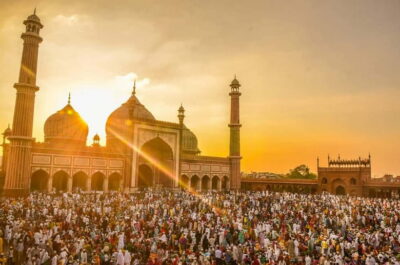
Jama Masjid is one of India’s largest mosques, built under Mughal Emperor Shah Jahan. With only 30 minutes, you’ll need to prioritize: quick overview first, then pick a few details to focus on—carvings, arches, and the scale of the courtyard. This is a stop that helps you get your bearings fast in Old Delhi.
Practical tip: plan to dress appropriately for a mosque visit, and expect security checks. This is the kind of place where your guide’s timing matters.
Red Fort (1 hour)
The Red Fort is a UNESCO World Heritage site and a major Mughal statement—its red sandstone walls and fort layout make it visually loud from every angle. With 1 hour you can still do the essentials: understand the fort’s purpose, walk the main viewpoints, and connect the architecture to the era it represents.
Drawback to note: one hour can feel short if you’re the kind of person who wants to read every inscription and walk every corridor. If you love details, you may wish this had 30 more minutes.






Humayun’s Tomb (1 hour)
Humayun’s Tomb is also UNESCO, and it matters because it influenced later Mughal design. It’s not just a big tomb; it’s also a lesson in how Persian-influenced planning shaped Indian monumental architecture. Expect a calmer feel than the fort area—more space to absorb the garden-and-mausoleum layout.
Qutub Minar (1 hour)
Qutub Minar brings you back to spectacle: Indo-Islamic architecture, height, and inscriptions. In 1 hour, you can usually get the main sightlines and understand why it’s historically important. This stop is a good “wrap” for day one because it pulls together architecture, writing, and symbolism in one place.
Day 2 in Agra: Taj Mahal time, Agra Fort views, and Itimad-ud-Daula
Day two is the big emotional day. The Taj Mahal dominates the schedule, but the tour also protects you from a common mistake: skipping the smaller monuments once you’ve gotten your Taj fix.
Taj Mahal (3 hours, entry included)
You’re scheduled for 3 hours at the Taj Mahal. That length is useful because you’ll likely want time for different angles and a calm walk, not just a rushed photo-and-go session. The tour also handles entry, which matters because you don’t want to spend your Taj time negotiating payments or lining up.
What to do with your time: prioritize the white marble surfaces and the inlay work you can see up close. And if you’re sensitive to crowds, it helps to stick to your guide’s recommended flow instead of trying to outsmart peak moments alone.
Agra Fort (2 hours, entry included)
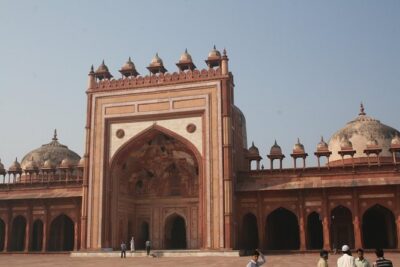
Agra Fort gives you the wider Mughal context. You’ll see red sandstone architecture, fortress design, and—importantly—long views that help you connect the fort to what you already saw across town. With 2 hours, you can cover the main routes without feeling like you’re sprinting.
Itimad-ud-Daula (1 hour, entry included)
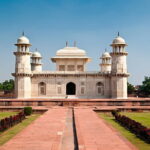
Itimad-ud-Daula is often called the Baby Taj, and for good reason: the style feels related, but the experience is more intimate and detail-focused. With 1 hour, you can focus on the Persian-inspired planning and marble inlay patterns without running out of time.
This stop is a smart choice because it’s a reminder that Agra isn’t only one monument. If you want a more textured memory than a single iconic photo, this is where you earn it.
Day 3 in Jaipur: Jal Mahal, Hawa Mahal, and City Palace
Jaipur day is about royal design and color, and it’s paced to keep you moving between recognizable landmarks. You’re not stuck in one area all day.
Jal Mahal (1 hour, entry included)
Jal Mahal, the Water Palace, sits on Man Sagar Lake. Even when you’re not getting every possible close-up, the setting is the point: it’s a palace silhouette reflected by water. With 1 hour, you should be able to take in the position, the exterior design, and the surrounding lake view.
Practical note: palace-on-water views depend on how you time your visit and where you stand. Your guide can help you choose viewpoints during your time window.
Hawa Mahal (1 hour, entry included)
Hawa Mahal is the Palace of Winds—the pink facade is famous, but the real draw is the grid of windows and the architectural idea behind them. In 1 hour, you can take in the exterior signature, then explore the internal spaces if the schedule allows.
This is also the stop where you’ll want to pay attention to airflow and heat management. Take breaks when offered, and don’t plan to “power through” if you get worn down.
City Palace (1 hour, entry included)
City Palace is where you get the royal residence feel: courtyards, ornate design, and the sense of a working palace complex rather than just a single landmark. Your scheduled time is 1 hour, which is enough to see the highlights and get the overall story of how the palace complex was laid out.
For many people, this is the best “finish line” because it ties together the day’s architecture themes with a more lived-in sense of Jaipur’s royal past.
Transport and guides: how this tour reduces hassle
The included private AC car is one of the biggest quality-of-life upgrades on a Golden Triangle route. Between major sites, you’re often fighting traffic, navigation, and random road changes. When the tour handles pick-up and drop-off and keeps the same car through the active tour days, you spend less energy on logistics and more on the sights.
The guide component matters too. You’ll have a professional guide in each city, which makes a difference when monuments are close together but historically complicated. A guide can explain what you’re looking at now—why a façade looks the way it does, what a tomb layout suggests, or what the structure’s purpose was in its era.
And the service tone from the driver side is something I’d pay attention to: names like KD, Kuldip, Husan, Rashad Kumar, and Shamsher singh Bisht come up in the service pattern. Across those accounts, the consistent themes are punctuality, safe driving, and helpful English. If you’re the kind of traveler who wants to avoid street pressure, a calm guide presence makes a real difference in how comfortable you feel between monuments.
What’s included (and what’s not) so you can budget cleanly
This tour keeps the core costs inside the package:
Included:
- Pickup and drop-off
- Private AC car for the entire tour activity
- Professional tour guide in each city
- 3-star hotel accommodation with breakfast
- Mineral water bottle
- Toll taxes and parking
- Entry tickets for the listed major monuments, including Taj Mahal, Agra Fort, Itimad-ud-Daula, Humayun’s Tomb, Qutub Minar, and City Palace
Not included:
- Any personal expenses
So for budgeting, plan on your usual travel extras: snacks, drinks beyond what’s provided, shopping, tips if you choose to give them, and any additional local transport if you decide to stray from the schedule.
Small things that can change your day: pace, crowds, and comfort
Even a well-planned itinerary can feel exhausting if you don’t manage the basics. Here are the practical things I’d do to make this more enjoyable:
- Wear shoes you can walk in for short, repeat bursts. Monument walking adds up even when each stop is capped at an hour.
- Bring a light layer. Delhi/Agra/Jaipur can swing from warm to cooler late in the day.
- Hydrate. You’ll get bottled water on the tour, but bring your own habit of sipping.
- Keep expectations realistic at each stop. You’re doing big monuments, not slow wandering.
- Use your guide time. If your guide points out a detail, it’s usually the detail you’d miss on your own.
If you do those, the schedule feels like a confident highlights route rather than a hurried checklist.
Should you book this Golden Triangle tour?
I’d recommend this tour if you want a first-timer-friendly Golden Triangle plan with transportation, guides, and key monument entries handled. It’s especially appealing when you value:
- Safe, punctual driving and a driver who keeps you calm in traffic.
- Time at the Taj Mahal that’s long enough to actually see it, not just pass through.
- Hotel with breakfast so you don’t scramble for meals and beds between cities.
I’d think twice if you’re the type who wants long free time at each site, deep museum hours, or lots of “off-script” wandering. This itinerary is built for movement and structure.
If you like your travel to feel organized—so you can focus on what you came for—this one is a solid choice. Just be ready for a full schedule, and you’ll get real value out of the included guidance and monument access.
FAQ
What cities are included in the Golden Triangle tour?
The tour covers New Delhi, Agra, and Jaipur.
How long is the tour?
It runs for approximately 3 days.
Is pickup and drop-off included?
Yes. Pickup and drop-off are included.
Do I get a private car with AC?
Yes. You’ll have a private AC car for the entire tour activity.
Are hotel accommodations included?
Yes. The tour includes 3-star hotel accommodation with breakfast.
Are monument entry tickets included?
Yes. Tickets are included for Taj Mahal, Agra Fort, Itimad-ud-Daula, Humayun’s Tomb, Qutub Minar, and City Palace, and the itinerary lists tickets for Jama Masjid as well.
Does the tour include a professional guide?
Yes. There is a professional tour guide in each city.
Is cancellation free if I change my mind?
Free cancellation is available up to 24 hours in advance for a full refund.