REVIEW · NEW DELHI
Old Delhi Temples and Spice Market Tour
Book on GetYourGuide →Operated by Vijay Kumar · Bookable on GetYourGuide
Old Delhi can feel loud and fast, so this tour gives you a map in motion. You start near Rajiv Chowk and head into the Mughal-era heart of the city, where old landmarks sit right next to everyday markets. I love how the route blends big sights with street-level details, not just photos.
Two stops really stuck with me: the sensory chaos of Khari Baoli (a major wholesale spice market) and the human side of the Sikh Temple, where the community kitchen serves food for people who are hungry. Both are powerful in very different ways.
One thing to plan for: this is a walking-heavy experience through busy areas, and it’s not a good fit if you have back problems, use a wheelchair, get motion sickness, or have very limited mobility.
In This Review
- Key highlights that make this tour worth your time
- From Rajiv Chowk to Old Delhi: how the 2.5-hour flow works
- Khari Baoli and Chawri Bazar spice markets: the smell-and-scale moment
- Fatehpuri Masjid and the Red Fort exterior: seeing power without the ticket hassle
- Shri Digambar Jain Atishay Kshetra Lal Mandir: calm rituals amid old lanes
- Kinari Bazaar: street shopping that feels tied to real life
- Sis Ganj Guru Dwara: learning Sikhism and seeing langar in action
- Price and value: why this $22 tour works on a tight schedule
- Who should book this Old Delhi temples and spice market tour
- Should you book it? My decision guide
- FAQ
- Where do we meet for the tour?
- Is the metro ride included?
- Do I need cash for transport during the tour?
- How long is the tour?
- Is food or drinks included?
- Is there an English guide?
- Who shouldn’t book this tour?
- Do you see any specific landmarks or markets?
Key highlights that make this tour worth your time
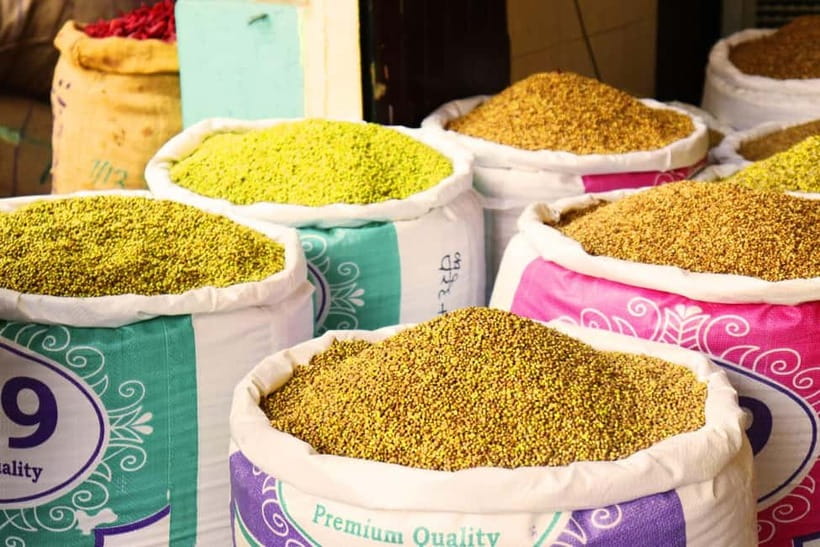
- Khari Baoli spice market shows Delhi’s trade in real time, not behind glass.
- Rooftop views after the spice stop help you get your bearings fast in Old Delhi.
- Fatehpuri Masjid + Red Fort exterior gives you context without needing a full fortress visit.
- Shri Digambar Jain Atishay Kshetra Lal Mandir brings a calmer, religious pace into the crowd.
- Sis Ganj Guru Dwara ends with Sikhism explained alongside what the community kitchen actually does.
From Rajiv Chowk to Old Delhi: how the 2.5-hour flow works
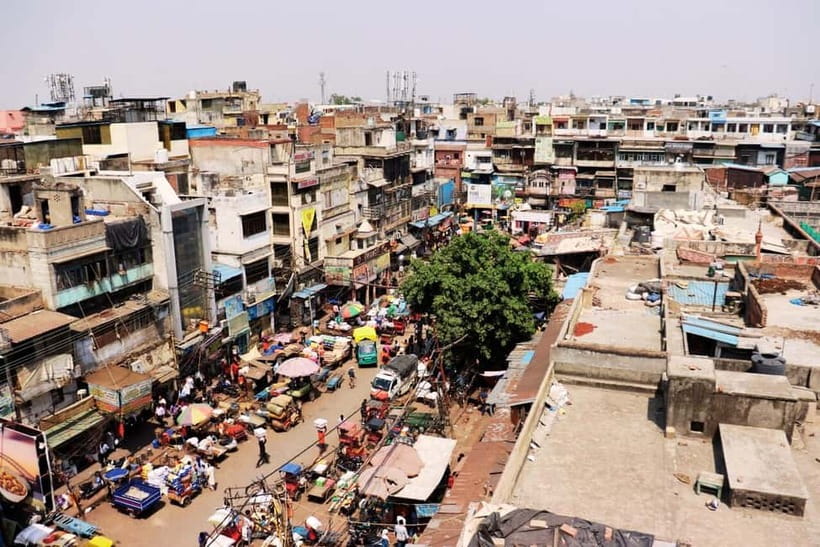
This tour keeps the schedule simple and tight, which is exactly what you want on a first visit. I like that the day is built around short, practical transport moves—starting from Rajiv Chowk Metro Station (Gate 2)—then shifting into walking once you’re in the Old Delhi core. You take the metro (about 25 minutes), then hop by tuk-tuk for part of the way so you’re not spending your energy fighting traffic.
The total time is 2.5 hours, which makes it easy to fit before or after another activity in New Delhi. You also get packaged water, plus your English-speaking local guide, so you’re not stuck doing your own interpretation in a place where signs may not help much. If you’re the type who hates waiting around, this format usually feels respectful of your time.
One practical heads-up: food isn’t included. Old Delhi is full of tempting street snacks, so you’ll want to decide ahead of time whether you’re eating before the tour, after it, or bringing a light bite.
You can also read our reviews of more shopping tours in New Delhi


Khari Baoli and Chawri Bazar spice markets: the smell-and-scale moment
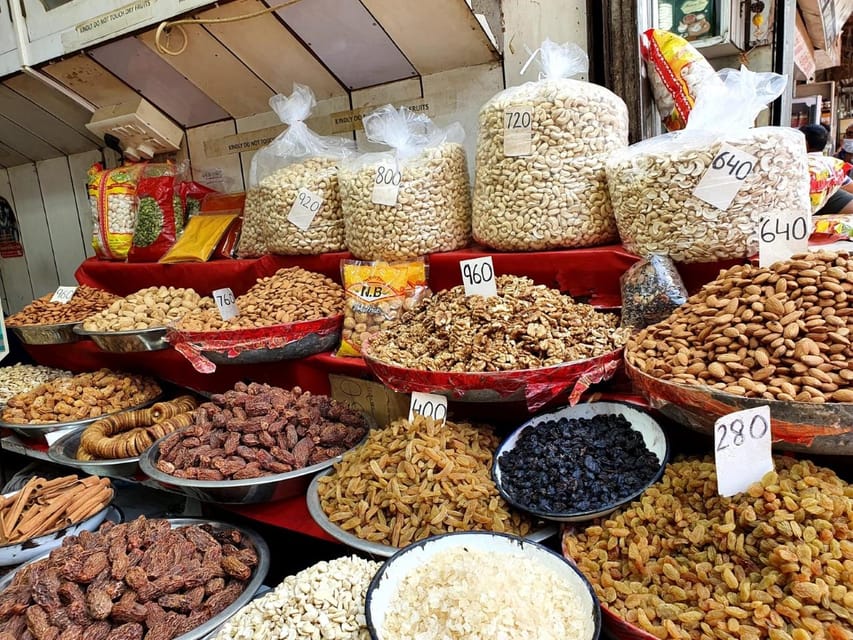
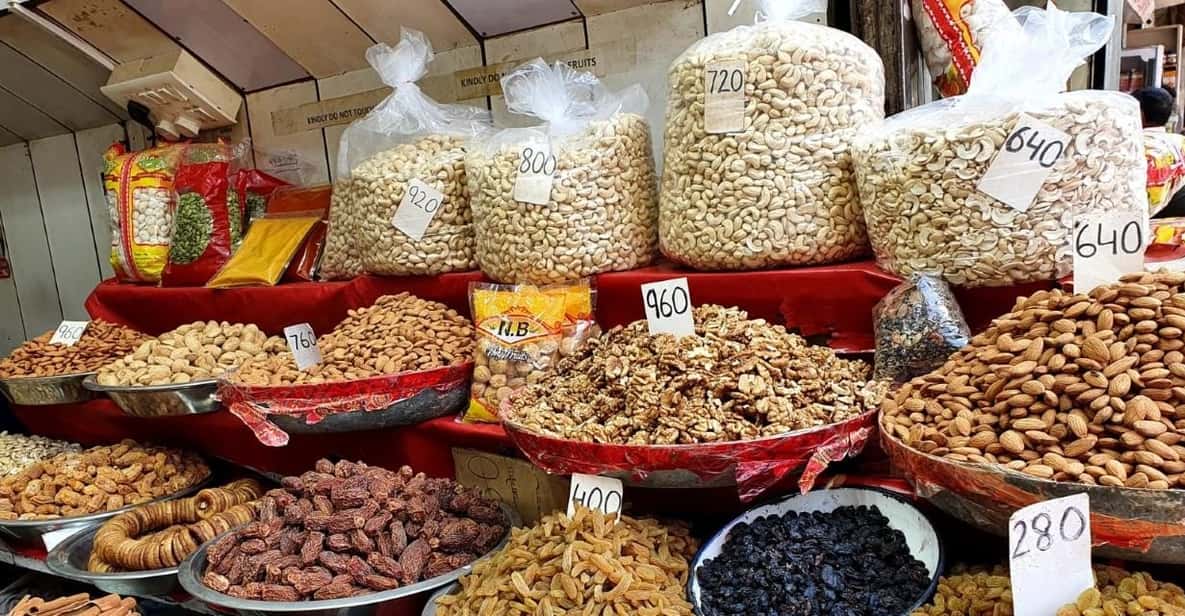
The tour’s market highlight is Chawri Bazar and Khari Baoli, with Khari Baoli described as Asia’s largest wholesale spice market. This is where the city’s commercial energy becomes tangible. You’ll see spices as goods being traded—large-scale, fast-moving, and deeply embedded in daily life. It’s not just a place to look; it’s a place that runs the economy of the street.
What I liked most is that your guide doesn’t treat it like a photo stop only. You’ll get enough explanation to understand what you’re seeing, then you’ll have time for photos and shopping if you want it. Some spices may be easy to recognize, others less so, but the point is learning the role these markets play in Delhi—not turning it into a souvenir mission.
Right after this market time, the tour includes time for a rooftop view of Old Delhi. That pause matters. When you step onto a viewpoint, you can connect what you just walked through to the wider layout—where streets open up, how dense everything feels, and how the old city stretches beyond your feet.
Fatehpuri Masjid and the Red Fort exterior: seeing power without the ticket hassle
After the spice market, you shift gears to historic monuments. The tour includes Fatehpuri Masjid with a photo stop and guided time to learn what it means and why it matters. Even when you only spend about half an hour there, it’s enough time to understand the basics: how religious sites fit into the Mughal-era city fabric and how that legacy still shows up in daily streets.
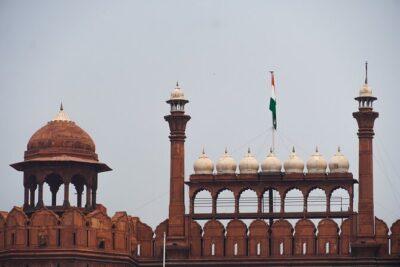
Then comes one of the most recognizable backdrops in Delhi: the Red Fort exterior. You won’t be doing a full ticketed walk inside the fortress on this tour, but you still get the payoff—your guide explains significance and history, and you get a clean view for context. For many visitors, that combo is ideal: you get the meaning without turning the day into a long museum-style day.
There’s also a subtle benefit to this approach. Standing outside big landmarks in crowded areas forces you to observe what’s actually happening around them. You’ll see how the modern city functions alongside the historic one, which is the real lesson most people miss when they only do indoor attractions.
Shri Digambar Jain Atishay Kshetra Lal Mandir: calm rituals amid old lanes
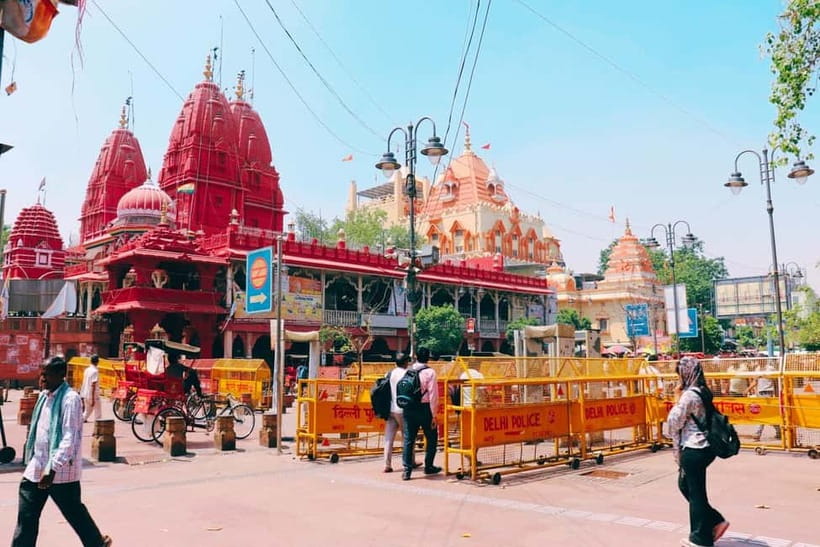
One stop that can surprise people is the Shri Digambar Jain Atishay Kshetra Lal Mandir. The tour includes time for a photo stop and a guided visit, plus a short walk through the surrounding area. This is where the experience gets quieter, at least in tone. You’re leaving the loud market energy for a religious space where the rhythm is different.
I like the way the tour sets this in the middle of the day, not as the opening act. After spices and mosques, the Jain temple becomes a reset. You’re more prepared to notice the details when your senses aren’t overloaded. And the surrounding shops and small connected spaces can feel like a web—exactly the kind of surprise you only get when someone helps you navigate rather than you wandering alone.
Because this is a temple visit, keep an eye on how you dress and behave in religious areas. If you’re unsure, follow your guide’s lead. It’s one of those moments where respect is part of the experience, not just a rule.
Kinari Bazaar: street shopping that feels tied to real life
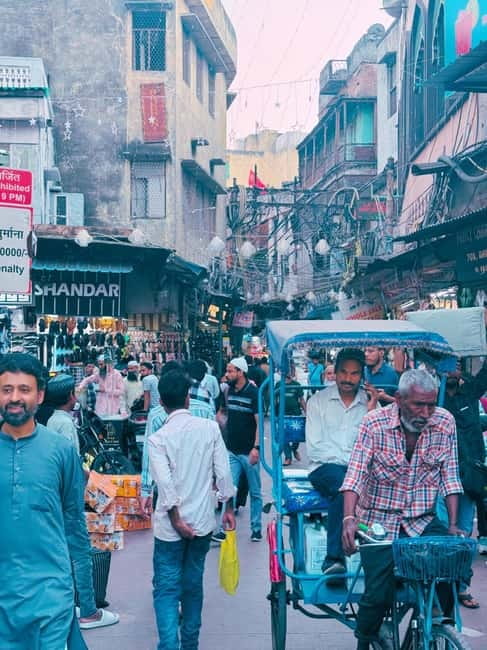
Next up is Kinari Bazaar, guided on foot for about half an hour. This is the kind of market where you don’t just see goods—you see purpose. One of the best parts of this stop is how it broadens the idea of what Old Delhi markets are. It’s not only spices; it’s also the kinds of products people buy for life events and everyday needs.
You might also notice speciality vendors along the way, including things like wedding-related goods and even a surprise street for bicycles. That’s not something you can reliably plan on as a tourist, but it fits the spirit of Old Delhi: different trades and crafts stack close together, one street feeding another.
A good guide matters here. Without one, markets like this can turn into sensory overload. With a guide, you’ll know what you’re looking at and why it’s there, and you’ll get a more satisfying sense of how Delhi keeps moving.
You can also read our reviews of more tours and experiences in New Delhi





Sis Ganj Guru Dwara: learning Sikhism and seeing langar in action
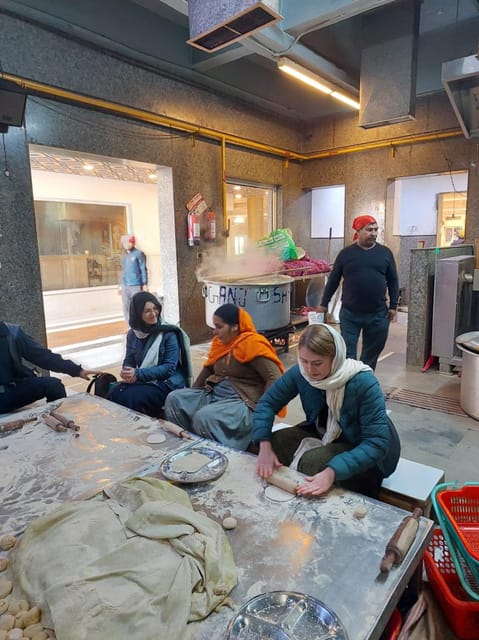
The tour’s emotional anchor is the final stop at Sis Ganj Guru Dwara. You’ll have a photo stop and a guided visit, plus time to walk through the area. This is where the tour turns from sights to meaning, with Sikhism explained and also the difficult chapters connected to Delhi.
What made this standout for me is the inclusion of the community kitchen, where food is provided to many hungry people. That detail changes how you remember the visit. Temples and churches and mosques are often described in terms of architecture, but here you learn how faith shows up as service—something visible in the daily life of the community.
If you care about understanding religion in a human way—not just as monuments—this ending hits hard. It’s also a nice contrast to the earlier market intensity, giving your mind a place to land before you head back toward Metro.
Price and value: why this $22 tour works on a tight schedule
At $22 per person for about 2.5 hours, the value is mostly about what’s included. This price covers metro tickets, tuk-tuk fare, packaged water, and an English-speaking local guide. In a city where public transport is part of the experience, including the metro ticket matters. It removes one small planning headache and keeps the flow moving.
It also means your money goes toward interpretation and navigation—things that can genuinely save time in Old Delhi. Without a guide, you could still walk around and see markets, but you’d likely lose the context that makes stops like Fatehpuri Masjid and the Red Fort exterior feel more than just impressive walls.
The only clear add-on cost is food and drinks, which aren’t included. That’s common on walking tours, but you should plan for it. If you want to taste Old Delhi snacks, do it before or after, so you’re not making choices while you’re already walking.
Who should book this Old Delhi temples and spice market tour
This tour is best for you if you want a focused introduction to Old Delhi in a short time. I think it works especially well for first-time visitors who like markets but also want historic and religious context—spice trade plus major landmarks plus temple visits, all without turning it into an all-day commitment.
It’s also a good fit if you want a guide who can handle timing—when to pause for photos, when to move on, and how to keep the day organized even when the streets get crowded. If you like learning from someone who’s calm and patient (and who knows how to guide through dense areas), this type of guided route is usually a win.
That said, this is not the right choice if you fall into any of the following categories: back problems, wheelchair users, motion sickness, babies under 1 year, or people over 95. The tour is built around walking and short rides, and Old Delhi streets aren’t designed for comfort-first mobility.
Should you book it? My decision guide
Book it if you want structure in Old Delhi: metro access, short tuk-tuk hops, and a guide to connect the dots from Khari Baoli to major landmarks to temple visits. The way the tour ends at Sis Ganj Guru Dwara—with the Sikh community kitchen feeding people—gives the trip meaning beyond shopping and sightseeing.
Skip it if you want a relaxed, slow-paced day or you need long breaks with minimal walking. Also skip if food is a non-negotiable part of your tour style, because food and drinks aren’t included and you’ll need to plan your own meals.
FAQ
Where do we meet for the tour?
You meet at Rajiv Chowk Metro Station (Gate no. 2).
Is the metro ride included?
Yes. Metro ride tickets are included.
Do I need cash for transport during the tour?
No for the planned transport. The tour includes tuk-tuk fare (and it also includes metro tickets).
How long is the tour?
The tour duration is 2.5 hours.
Is food or drinks included?
No. Food and drinks are not included.
Is there an English guide?
Yes. The tour includes an English-speaking local guide.
Who shouldn’t book this tour?
It’s not suitable for people with back problems, wheelchair users, people with motion sickness, babies under 1 year, or people over 95 years.
Do you see any specific landmarks or markets?
Yes. The key stops include Chawri Bazar Spice Market (Khari Baoli), Jain Temple, Red Fort (exterior), Kinari Bazaar, and Sikh Temple (Sis Ganj Guru Dwara).