REVIEW · NEW DELHI
Old Delhi Walking Tour: Food, Culture & Spice Bazaars
Book on Viator →Operated by Unzip Delhi · Bookable on Viator
Old Delhi can feel like a living puzzle. This walk turns that chaos into sense-making with spice bazaars and a grand finish at Jama Masjid.
I love two things most: the spice tasting at Khari Baoli and the way the short tuk-tuk ride keeps you moving through Old Delhi without feeling trapped in traffic on foot. One thing to consider: Jama Masjid admission isn’t included, so plan a bit of extra money if you want to go inside and fully enjoy the stop.
In This Review
- Key highlights you’ll actually feel
- Anas Khan’s Old Delhi approach: history you can walk into
- Chandni Chowk: one 1.5 km street, many faiths
- Khari Baoli: Asia’s biggest spice market, with tasting included
- Old Delhi tuk-tuk ride: fun movement through the lane maze
- Naughara (Row of Nine Houses): a calm Jain temple moment
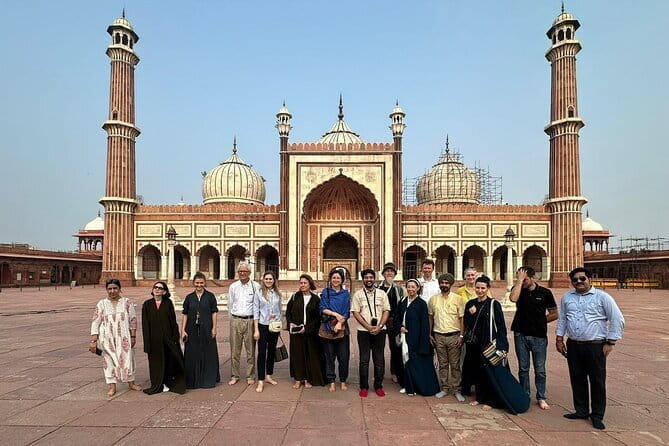
- Jama Masjid: panoramic rooftop views and Mughal-scale architecture
- Price and value: $19.01, and why it’s not just a walk
- Timing and logistics that matter in Old Delhi
- What you should wear, carry, and watch for
- Who this Old Delhi walking experience fits best
- Should you book this Old Delhi walk?
- FAQ
- How long is the Old Delhi walking tour?
- Where does the tour start and where does it end?
- What’s the price per person?
- What’s included in the tour?
- Is Jama Masjid entry included?
- Do I need hotel pick-up or drop-off?
- Is this a private group experience?
- Is a mobile ticket used, and when do I receive confirmation?
- Are service animals allowed?
Key highlights you’ll actually feel
- Anas Khan’s anthropology-style framing: stories that explain how the neighborhood works, not just what you’re looking at
- Khari Baoli spice tasting: one of the best sensory stops you can schedule in Delhi
- Chandni Chowk’s religious mix on one stretch: temples, mosques, churches, and gurudwaras close together
- A tuk-tuk ride through the lane maze: faster than walking and great for photos
- Naughara stop for calm + carvings: a peaceful Jain temple moment before you return to busy streets
Anas Khan’s Old Delhi approach: history you can walk into
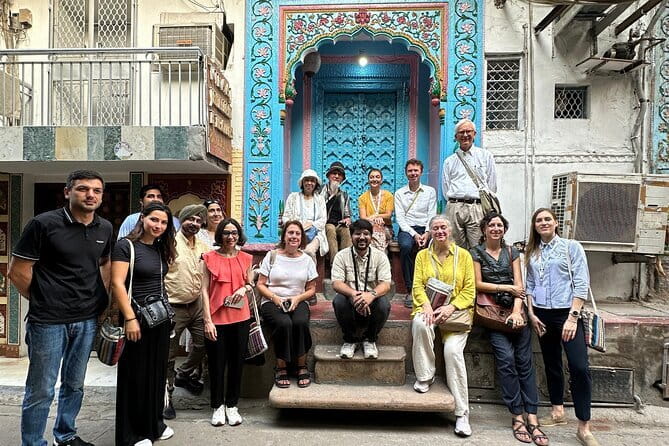
What makes this experience different is the person behind it. Anas Khan is an anthropologist and history writer (plus a TEDx speaker), and the walk is built around seeing Old Delhi as a living neighborhood with layers: faiths, trades, and everyday routines stitched together in the same streets.
That matters because Old Delhi can overwhelm you fast. You might see monuments and markets, but still miss the “why” behind them. Here, you get context as you go—how these lanes shaped the city, how trade moved (especially spices), and how multiple communities have existed side by side for generations.
In practice, the guide you get can make the difference between a long, hot walk and something that feels like it clicks. One name that comes up in feedback is Lareb, praised for making exploration less stressful and for helping solve timing issues when schedules change last-minute. If you’re the type who likes your guide to keep things smooth, that’s a good sign.
You can also read our reviews of more walking tours in New Delhi



Chandni Chowk: one 1.5 km street, many faiths
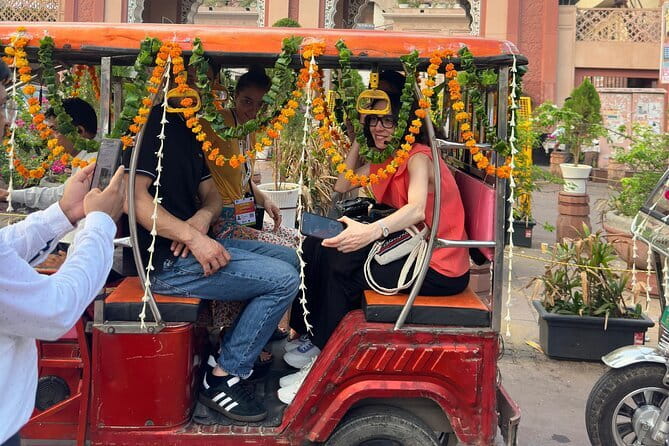
The walk starts near the Red Fort area, then heads into Chandni Chowk. This isn’t just a famous market street—it’s a 1.5 km mix of sacred spaces where Hindu temples, Jain derasars, mosques, churches, and gurudwaras sit within the same walking world.
I like this stop because it trains your eyes. You start noticing how architecture changes from place to place, how people move differently around each religious site, and how the soundscape shifts between prayers and everyday commerce. It’s also a smart way to orient yourself. Once you’ve seen how different communities share the same neighborhood fabric, the rest of Old Delhi makes more sense.
Practical note: this is a walking-and-standing stop. You’ll want comfortable shoes and an attitude that expects people. If you’re sensitive to crowds, take it slow through the busiest segments and use your guide to help you step around groups without losing your bearings.
Khari Baoli: Asia’s biggest spice market, with tasting included
Then comes the smell. Khari Baoli is often called Asia’s largest spice market, and the name is earned. Even before you get to the most intense areas, the air has that layered, earthy heat—color in your face, dust in the light, and aromas that make your brain immediately switch from sightseeing to curiosity.
Here, the experience includes spice tasting, which is the best way to handle a market like this. You’re not just looking; you’re learning what different spices are like and how traders historically moved these goods along older trade routes. That trade-history context matters because it turns the market from random chaos into a system—wholesale lanes that still drive Delhi’s economy.
A couple of tips to make this stop more enjoyable:
- If you have spice sensitivities, keep your expectations realistic. Tasting is usually manageable, but strong aromas and flavors can hit quickly.
- Use the guide’s cues. In markets like this, it’s easy to get pulled into conversation with sellers. Staying with your group helps you keep the “learn + taste” part on track.
Also remember: shopping isn’t part of what’s included. You can browse if you want, but you’re not required to buy anything to get value from the stop.
Old Delhi tuk-tuk ride: fun movement through the lane maze
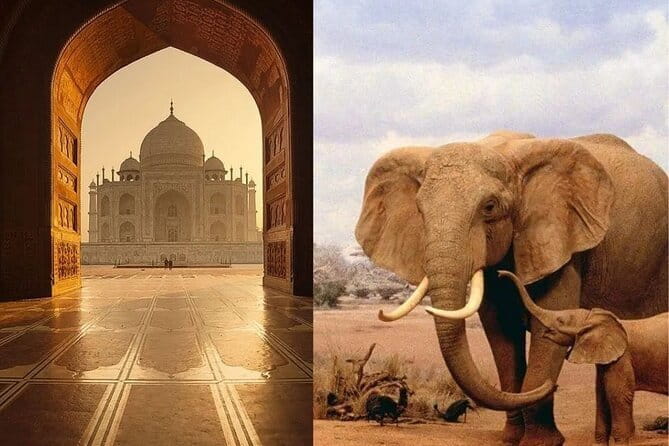
Walking in Old Delhi feels like navigating a living map—unless you’re doing it tired. This is where the tuk-tuk ride becomes genuinely useful, not just a fun add-on.
You hop onto the ride and weave through the beating heart of the older lanes. You’ll catch the sensory collage: frying samosas in the air, temple bells, and the call to prayer. Even if you only enjoy this for the photo opportunities, it helps you cover ground without exhausting your legs in the thick of traffic and pedestrian congestion.
This is also a good reset after spice intensity. The ride gives your nose a moment, your feet a break, and your camera a new angle on streets that can feel identical when you’re walking nonstop.
Quick practical advice: keep your phone secure during the ride and be ready for tight turns. Lanes here weren’t designed for modern comfort—they were designed for movement. Your guide helps you navigate safely, but you’ll still want to stay alert.
Naughara (Row of Nine Houses): a calm Jain temple moment

Between the busy stretches, you get a more peaceful stop at Naughara, often called the Row of Nine Houses. The highlight is a Jain temple area known for its photogenic setting and quieter feel compared with the surrounding chaos.
I like this part because it breaks the pattern. After markets and movement, you get a pause where your eyes can focus on details—intricate carvings, spiritual atmosphere, and architecture that actually rewards slowing down for a few minutes.
This is also one of the better spots for thoughtful photos. When you’re doing this kind of walk, the best images aren’t always the loudest streets. They’re the places where you can frame something still, even for a short moment.
Expect your guide to connect the stop to oral histories and hidden alleys nearby, so you don’t just see stone and decoration. You start understanding why people have respected this kind of space in the middle of a loud neighborhood.
You can also read our reviews of more food & drink experiences in New Delhi




Jama Masjid: panoramic rooftop views and Mughal-scale architecture
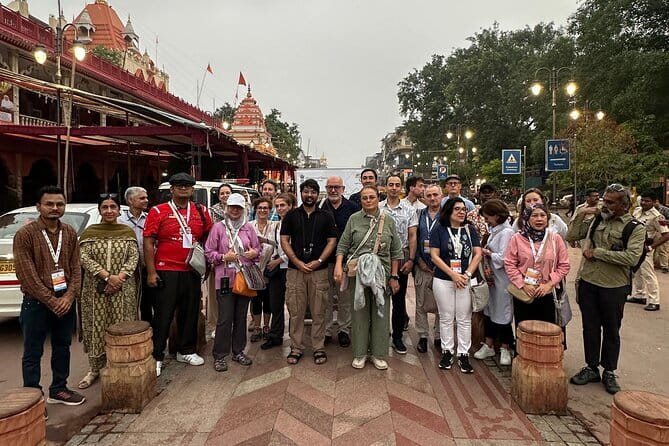
The final stretch ends at Jama Masjid, one of India’s largest mosques. This is the part that feels big. You’ll see the Mughal-era statement made in red sandstone and white marble, and you’ll also feel that it’s not only a monument—this is a living religious landmark for Old Delhi.
One of the promises here is the panoramic rooftop view. That rooftop angle is where the walk starts paying off visually: you can finally take in how the city stacks buildings, streets, and activity, instead of only experiencing Old Delhi block by block.
Important practical heads-up: Jama Masjid admission isn’t included, so if you want to go in fully and plan your time, budget for entry separately. The stop runs about an hour, which is enough time to see the key sights without feeling rushed.
Since you’re entering an active place of worship, plan to dress in a respectful way and keep your phone use considerate. Your guide will help you with timing and where to go next at the end.
Price and value: $19.01, and why it’s not just a walk

At $19.01 per person, this walk is priced like a budget-friendly city experience—but it includes more than you might expect for the money.
Here’s what you’re getting as value:
- A local expert tour guide
- Bottled water
- Coffee and/or tea
- The tuk-tuk ride
- Spice tasting at Khari Baoli, plus admissions included for some early stops
And what you should budget extra for:
- Jama Masjid admission (not included)
- Any purchases you make in markets
- Private transportation like hotel pickup and drop-off (not included)
To me, the best value piece is the guide + context + spice tasting bundled together. Old Delhi is chaotic enough that a structured route reduces wasted time. And when your money includes entry for key stops (except the final mosque), you spend less time figuring things out on the ground.
Also, the tour mentions group discounts and mobile tickets. If you’re traveling with friends, ask about group pricing so you can stretch your budget further.
Timing and logistics that matter in Old Delhi

The walk runs about 2 to 3 hours, with a smooth rhythm of stops that keeps the pace realistic: roughly half-hour segments early on, then a longer wrap-up at Jama Masjid.
Meeting point matters here, because Old Delhi landmarks can be confusing without a clear address. You start at Chandni Chowk View Point, specifically Shop No 24 near Metro Gate 1, opposite Lal Qila. You end at Jama Masjid at gate 3, which is a good exit point if you want to continue your day without backtracking through the densest lanes.
If you’re planning your day, build in a buffer afterward. You’ll likely be coming out onto streets with plenty of options, but it can still take a few minutes to get to your next ride or metro route.
And if you’re sensitive to walking crowds, do yourself a favor: treat this as a focused morning or afternoon activity. Don’t stack it right before a long dinner reservation unless you know your timing.
What you should wear, carry, and watch for
I’d pack for this like you’re walking through a real working neighborhood, not a museum.
Bring:
- Comfortable shoes (non-negotiable)
- Water bottle space, even though water is included
- Something to handle dust and strong smells if you’re sensitive
Wear:
- Clothing that lets you move easily and that you can keep respectful for mosque visits
- Layers if the day temperature swings
Watch for:
- Crowd flow changes at major religious and market intersections
- Rapid shifts from shade to sun and back as you turn corners
- The way spice aromas can linger—your hands and clothes may pick up smells, which is part of the experience if you can roll with it
You’ll also be walking in a place where multiple religions are active, sometimes within sight of each other. That’s one reason the Chandni Chowk segment feels meaningful. Just keep your behavior calm and follow your guide’s direction.
Who this Old Delhi walking experience fits best
This is a strong match if you like:
- History with real-world context: how trade and faith shape the street
- Food and market culture, especially spices
- Photography with variety—markets, religious architecture, and rooftop views
- Solo travelers who want a guided route so they don’t get stuck figuring everything out alone
It might be less ideal if you want a long sit-down food tour with multiple tasting meals. This experience is more about street-level culture and spice learning, with tasting at Khari Baoli and atmosphere everywhere else.
Should you book this Old Delhi walk?
If you want a short, high-impact introduction to Old Delhi that balances religious architecture, spice-market senses, and practical movement, I think this is an easy yes.
Book it if:
- You’re okay with a busy, crowded-feeling neighborhood
- You want spice tasting and structured guidance to avoid time-wasting confusion
- You care about context, not only photos
Consider skipping (or adjusting expectations) if:
- You don’t want to pay extra for mosque admission at the end
- You need a very quiet, low-traffic experience
If you book, go in expecting a neighborhood, not a staged attraction. That mindset is what makes the walk click.
FAQ
How long is the Old Delhi walking tour?
It runs about 2 to 3 hours.
Where does the tour start and where does it end?
It starts at Chandni Chowk View Point (Shop No 24, Metro Gate 1, opposite Lal Qila, Lajpat Rai Market, Chandni Chowk). It ends at Jama Masjid at gate number 3.
What’s the price per person?
The price listed is $19.01 per person.
What’s included in the tour?
Included items are bottled water, coffee and/or tea, a local expert tour guide, and a tuk-tuk ride.
Is Jama Masjid entry included?
No. Admission for Jama Masjid is not included.
Do I need hotel pick-up or drop-off?
No. Private transportation and hotel pick-up and drop-off are not included.
Is this a private group experience?
Yes. It’s a private tour/activity, and only your group will participate.
Is a mobile ticket used, and when do I receive confirmation?
You’ll receive confirmation at the time of booking, and the tour uses a mobile ticket.
Are service animals allowed?
Yes. Service animals are allowed.