REVIEW · NEW DELHI
Private 3-Day Golden Triangle Tour: Delhi, Agra & Jaipur by Car
Book on Viator →Operated by Golden Triangle Tours Of India · Bookable on Viator
Three days in India, and you hit the big icons. This private Golden Triangle tour is interesting because you can tailor how the day flows, from guide-only to hotel stays, while still moving fast and comfortably between Delhi, Agra, and Jaipur. You’ll get licensed local guides, private air-conditioned transport, and a plan that avoids the usual crowd-chaos feeling.
I really like two things about this setup: you tour with licensed local guides instead of vague explanations, and you’re not stuck in rigid group timing. The itinerary also builds in smart “photo + context” stops—like pairing the Taj Mahal morning with other Agra landmarks—so you don’t just tick boxes.
One drawback to consider is that monument entrance fees aren’t included (and some sites don’t take credit cards), so you’ll want to carry cash in INR and budget extra for tickets.
In This Review
- Key highlights at a glance
- How the private Golden Triangle actually feels in real life
- Price, entrance fees, and where your money goes
- Day 1 in Delhi: Qutub Minar, Lotus Temple, Old Delhi lanes, then on to Agra
- Day 2 in Agra: Taj Mahal sunrise logistics and the right pairing of forts
- Day 3 in Jaipur: Jaigarh views, Hawa Mahal windows, City Palace, Jal Mahal, Jantar Mantar
- Guides, drivers, and small comforts that make a difference
- Timing and closures: how this tour stays workable
- What to pack and how to stay comfortable
- Who this private Golden Triangle tour fits best
- Should you book the Private 3-Day Golden Triangle by Car?
- FAQ
- What is included in this private 3-day Golden Triangle tour?
- Are monument entrance fees included?
- Do I need to pay for the Taj Mahal shuttle?
- Is this tour private or shared with other travelers?
- How many nights of hotel stay are included?
- What time is pickup on the first day?
- What happens if my dates fall on a Friday?
- What happens if my dates fall on a Monday?
- Is credit card payment accepted for entrance tickets?
- Is the booking refundable if I cancel?
Key highlights at a glance
- Private car comfort: air-conditioned sedan, SUV, or van based on group size.
- Licensed local guides: history and directions delivered on-site, not through a script.
- Built-in Old Delhi contrast: rickshaw ride plus Chandni Chowk lanes and Jama Masjid.
- Taj Mahal logistics handled: shuttle from the Taj parking area to the monument and back.
- Flexible service level: choose guide-only or add hotel options (4- or 5-star).
- Closure-aware routing: Taj on Friday, and Red Fort/Lotus Temple on Monday adjustments.
How the private Golden Triangle actually feels in real life
The best part of a private Golden Triangle is not just that it’s “private.” It’s that the day can move at a human pace. You’re picked up in Delhi (including areas like Noida, Gurugram, Ghaziabad, and Faridabad) and then you go stop-by-stop with a government-approved guide. That matters because Delhi, Agra, and Jaipur can feel like a blur when you’re left to figure out routes, ticketing, and what to look for.
This tour is also flexible in a very practical way. You can choose a guide-only style, or add a private car plus hotel options (with daily breakfast when the hotel option is selected). In other words: you can keep costs down or level up for more comfort. Either way, you’re not signing up for a fixed “everyone at the same time” group scramble.
And yes, it’s a car tour, which is the right call for this circuit. Even when the sights are close on a map, traffic and lines can waste hours. Here, the transport is part of the value, with bottled water included and parking, tolls, and fuel handled.
You can also read our reviews of more private tours in New Delhi



Price, entrance fees, and where your money goes
The tour price is listed at $56.74 per person for about 3 days. That’s a strong baseline for a private, car-based Golden Triangle plan because you’re paying for driver time, vehicle use, and guided sightseeing across three cities.
Two spending notes matter:
First, entrance fees to monuments are not included, listed at about $70 per person. Second, some sites do not accept credit card payment, so carrying cash in INR helps you avoid stress when you’re standing at ticket counters.
A quick way to think about value: you’re paying for transportation + guides + key included extras (like the Taj Mahal shuttle and the Old Delhi rickshaw ride). Your main additional cost is tickets. If you’re the type who hates surprise expenses mid-trip, plan for that extra ticket budget before you go.
Also, your final total depends on the option you choose. Hotel upgrades (4- or 5-star) change the cost, but the trade is clear: you’re buying comfort and fewer moving parts.
Day 1 in Delhi: Qutub Minar, Lotus Temple, Old Delhi lanes, then on to Agra
Delhi on day one is a smart mix of “grand monuments” and “street city.” You start with pickup between 8 AM and 11 AM, then head to Qutub Minar—a UNESCO site and one of the most recognizable tall monuments in India. The timing here is useful. Going earlier tends to feel calmer, and your guide can place the site in context before the day gets loud.
Next is Lotus Temple. It’s free to enter and worth it if you want a pause from fortress-and-empire vibes. The lotus-inspired design (completed in 1986) gives you a quieter, reflective stop that’s very different from the rest of the Golden Triangle circuit.
From there, you drive past major landmarks like the Red Fort and the 1921 Tomb of the Unknown Soldier, plus the wide-open planning of New Delhi (Lutyens and Baker’s 330-acre architectural vision). You don’t spend hours inside every one of these, but the drive-by time is still valuable: it helps you orient yourself in a city where the layout can feel confusing.
Then comes Old Delhi, and that’s where the tour earns its “authentic” label. You’ll take a short break for local food recommendations, then head to Chandni Chowk—a famous market maze of spices, dry fruits, silver jewelry, saris, and sweets. You get time to wander the narrow streets, and you’ll also take a rickshaw ride through the historic lanes, which is a fun way to experience the scale of the area without fighting the traffic on foot.
You finish with Jama Masjid (India’s largest mosque, built in 1656) and a stop at Khari Baoli, Asia’s largest wholesale spice market. Khari Baoli is one of those places where the sensory experience does the talking. You’ll see stalls overflowing with spices, herbs, and dried fruits—perfect for photos and for understanding how spice trade still shapes daily life.
At the end of day one, you drive to Agra and drop you at your hotel to rest. The transfer is listed as about 3 hours, which is a reasonable pace for a full day of sightseeing.
Possible drawback on day one: it’s packed with variety. If you’re the type who needs long breaks to reset, you might want to keep your “wander” time focused and not go too deep into every lane, especially in the market areas.
Day 2 in Agra: Taj Mahal sunrise logistics and the right pairing of forts
Day two is built around the Taj Mahal with a morning start. The tour is designed for a sunrise visit, and that choice affects the whole feel of the day. The Taj is famous, but the experience is also about light and atmosphere. Sunrise tends to be the most forgiving time for photos and for hearing your guide’s details without the midday crush.
The Taj Mahal stop includes about 2 hours of exploration with a guide, and it’s UNESCO-listed, obviously. What makes this visit more “tour-worthy” than independent sightseeing is the built-in access support: you get a battery-operated shuttle from the Taj parking area to the monument and back. That removes a common hassle when you’re arriving to a major site where walking distances and waiting can cut into your time.
After the Taj, you move to Agra Fort, another UNESCO World Heritage Site with courtyards, palaces, and pavilions. This is where you connect the dots between power and architecture. If Taj Mahal is about love and symbolism, Agra Fort helps explain the broader Mughal world that produced monuments on this scale.
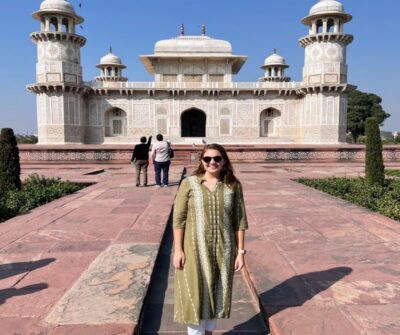
Then comes Itmad-ud-Daulah, often called the “Baby Taj.” The key detail you should pay attention to is the marble and inlay work (including pietra dura). The stop is shorter (about 30 minutes), but it’s a good “scale down” after two heavier monument hits.
You’ll also have a break for Agra food where your guide recommends where to eat. That part is included as flexible local time, and it’s often one of the easiest wins on this circuit—because choosing food near major monuments can be hit-or-miss if you’re on your own.
Day two ends with the drive to Jaipur, about 4 hours, then hotel drop-off for the night.
Day 3 in Jaipur: Jaigarh views, Hawa Mahal windows, City Palace, Jal Mahal, Jantar Mantar
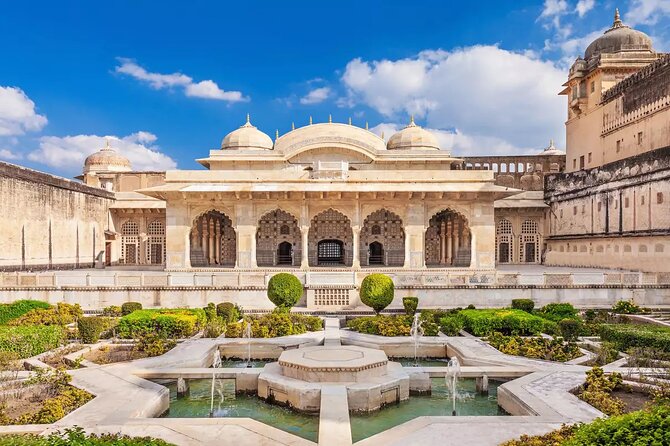
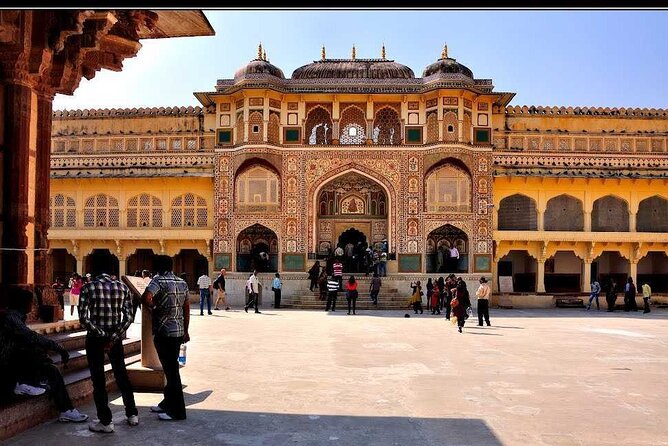
Jaipur day three is where the Golden Triangle shifts from Mughal marble to Rajput color and design. The day starts with Jaigarh Fort (built in 1726). It’s on the Aravalli hills, and the fort’s setting is part of the attraction. Jaigarh is also a good warm-up because it gives you panoramic thinking—how fort placement, walls, and sight lines were designed.
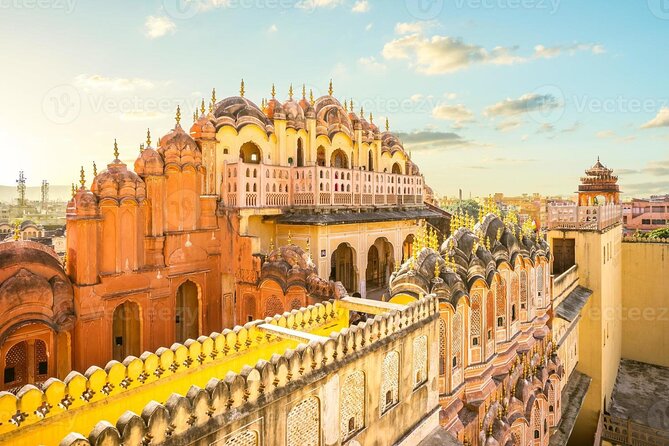
Next is Hawa Mahal, the Palace of Winds. You get around 30 minutes here, which is just enough to admire the 953 jharokhas (intricately carved windows) without letting the stop take over the whole day. The main value is the design story: why these windows existed and how the palace helped royal women observe street life.
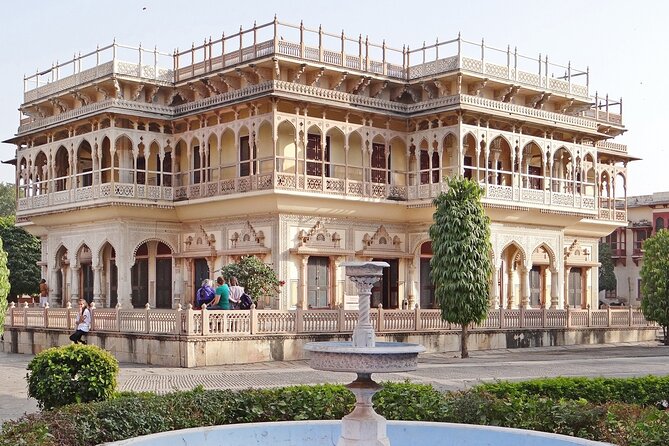
Then you’ll explore the City Palace of Jaipur, with courtyards, gardens, and palace spaces that connect the royal seat to today’s museum sections. It’s about 1 hour, which works well because you’ll get guided context without feeling rushed in a complex site.
From there, you visit Jal Mahal, the palace sitting in the middle of Man Sagar Lake. This is a shorter stop (about 30 minutes) and it’s mostly about views and photos. It’s not the longest “must-see,” but it provides a visual palate-cleanser after forts and palace buildings.
You’ll take another food break, then finish with Jantar Mantar, a UNESCO World Heritage Site and one of the best-preserved ancient observatories in India. It’s about 30 minutes, and it’s a great way to wrap the trip because the science-and-geometry angle refreshes your brain after days of architecture.
Finally, you drive back to Delhi. The transfer is about 4 hours, and you can also request drop-off at Jaipur Airport if it fits your schedule.
Possible drawback on day three: because the stops vary from viewpoint forts to palaces to the observatory, your day depends heavily on timing. If you’re prone to rushing, ask your guide where you can slow down first, since the “best photos” can happen early if you’re ready.
You can also read our reviews of more tours and experiences in New Delhi





Guides, drivers, and small comforts that make a difference
Private tours succeed or fail on service quality. The good news here is that the structure supports a calm, organized experience: you have pickup and drop-off in Delhi, Agra, and Jaipur, a private air-conditioned vehicle, and daily bottled water during the journeys. Parking, tolls, and fuel are handled, so you’re not constantly solving logistics while on vacation.
The guide component seems to be a real strength. The names that come up in positive feedback include Sanjiv, Kamal, Anil, Madhan, and Khan. Across those stories, the common thread is clear communication and smooth handling of sites. One person even noted a sense of humor during the walk-throughs, which is surprisingly useful when you’re listening to lots of dates and names in a short span.
For women traveling solo, safety and professionalism matter. One review singled out the feeling of safety with the driver and guide team, which lines up with what you want from a reputable operator on a private car route—someone focused on your pace and comfort, not just moving the group along.
And for those who dislike language barriers, the “licensed local guide” angle is a big deal. You’ll get direct explanations and site context while you stand in front of what you’re learning, which is usually the fastest way to understand what you’re seeing.
Timing and closures: how this tour stays workable
This tour has built-in guidance for closure days, which you should treat as a quality marker. The key adjustments:
- The Taj Mahal is closed on Fridays. If your dates include a Friday, the route swaps to a Delhi–Jaipur–Agra–Delhi flow.
- The Red Fort and Lotus Temple are closed on Mondays. If your day lands on Monday, the plan adjusts, including a Gurudwara Bangla Sahib visit instead.
These changes are not just random. They protect your ability to still see the big-ticket items without losing the whole day to a closed gate.
One more practical timing tip: some ticket counters and entrances may run on limited payment methods, so carry cash in INR for entrance fees. You’ll thank yourself when you see credit card signs at the last stop you expected.
Finally, expect approximate travel times. Transfers list durations like 3 hours and 4 hours, but Delhi traffic can stretch things. The private car format helps absorb that with comfort and fewer transfer hassles than public transport would.
What to pack and how to stay comfortable
Even with a private car and guides, you’ll still be walking and standing at major sites. Plan for heat and bright light. Bring sunglasses, a hat, and sunscreen. Comfortable shoes matter most on Old Delhi market lanes and forts, where uneven ground is common.
Also bring a small amount of cash in INR for entrance fees, since some monuments don’t accept credit cards. Bottled water is included during journeys, but you might still want your own refillable bottle if you’re the type who likes to stay topped up between stops.
For photos, be ready. Taj Mahal, Hawa Mahal, Jal Mahal, and the fort viewpoints are where your camera roll will explode. Your guide’s job is to get you in the right places, but your job is to be quick and ready when the light hits.
Who this private Golden Triangle tour fits best
This tour is a great match if you want:
- A guided, structured pace without joining a group tour.
- Comfortable door-to-door transfers across three cities.
- The classic Golden Triangle highlights with enough explanation to make the monuments feel connected.
- Flexibility through service options (guide-only or with hotel stays).
It’s also strong for people who value trust in the team: guides are government-approved, and the tour includes pickup, parking, and the small comfort details that stop travel days from turning into chores.
You might want a different option if you’re the kind of traveler who wants long, free-form time in one city. In three days, you’re seeing the big icons and then moving on. That’s the point—but it does mean fewer “slow afternoons” than a longer itinerary.
Should you book the Private 3-Day Golden Triangle by Car?
If you’re aiming for the classic Delhi–Agra–Jaipur route with private comfort and licensed guidance, this is an easy yes. The combination of private transport, Old Delhi street time with a rickshaw ride, sunrise Taj Mahal planning (including the shuttle), and Jaipur’s best-known architecture gives you a full trip without leaving you to manage the mess.
Book it when you want less stress and more clear value—especially if you’ll appreciate a guide helping you understand what you’re looking at. Just budget for entrance fees, bring cash for INR ticketing where needed, and keep your expectations realistic: this is three days of highlights, not weeks of slow exploring.
FAQ
What is included in this private 3-day Golden Triangle tour?
The tour includes hotel or airport pickup and drop-off in Delhi, Agra, and Jaipur, private air-conditioned transportation, two nights of accommodation based on the option chosen, daily breakfast when the hotel option is selected, private government-approved local guides, a rickshaw ride through Old Delhi, a battery-operated shuttle service from the Taj Mahal parking area to the monument and back, complimentary bottled mineral water during journeys, and parking, tolls, fuel, taxes, and service charges.
Are monument entrance fees included?
No. Entrance fees to monuments are not included and are listed as about $70.00 per person.
Do I need to pay for the Taj Mahal shuttle?
No. The tour includes a battery-operated shuttle service from the Taj Mahal parking area to the monument and back.
Is this tour private or shared with other travelers?
It’s private. Only your group will participate.
How many nights of hotel stay are included?
Two nights of accommodation are included based on the option selected.
What time is pickup on the first day?
Pickup in Delhi is offered between 8 AM and 11 AM, depending on your location and schedule.
What happens if my dates fall on a Friday?
The Taj Mahal is closed on Fridays. If your itinerary includes a Friday, the route is adjusted to Delhi – Jaipur – Agra – Delhi.
What happens if my dates fall on a Monday?
Red Fort and Lotus Temple are closed on Mondays. The itinerary adjusts and includes Gurudwara Bangla Sahib instead.
Is credit card payment accepted for entrance tickets?
Some monuments do not accept credit card payments. It’s advised to carry cash in INR for entrance fees, and your guide can help find nearby ATMs if needed.
Is the booking refundable if I cancel?
No. The experience is non-refundable and cannot be changed for any reason. If you cancel or request an amendment, the amount you paid is not refunded.