REVIEW · NEW DELHI
3-Day Private Golden Triangle Tour: Delhi, Agra & Jaipur
Book on Viator →Operated by INDIA TAJ TOURS · Bookable on Viator
Three days, three icons, one easy plan. This private Golden Triangle route strings together Delhi, Agra, and Jaipur with AC chauffeur pickup and live guides so you spend less time planning and more time seeing.
I like that it also builds in practical touches like water bottles and umbrellas, plus a Chandni Chowk rickshaw ride.
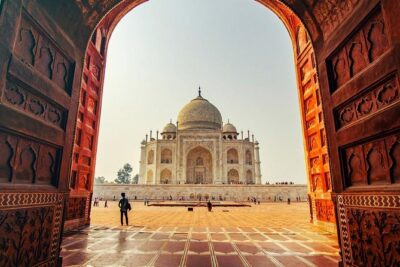
I especially love the 6 AM sunrise Taj Mahal timing, with a guide helping you get to the best photo spots first. I also like the live tour guides at the sites, because each stop comes with enough context to make the monuments feel less like checkmarks.
My one caution: the Delhi portion can feel a bit logistics-heavy, with optional side stops like markets/places to shop or eat, and a couple of major Jaipur sights are camera-from-the-outside only because entrance is prohibited. Plan for a long, full set of days, not a relaxed vacation pace.
In This Review
- Key highlights worth planning around
- Golden Triangle in three days: what this private route feels like
- Day 1 in Delhi: Humayun’s Tomb, Qutub Minar, and the old-city religious mix
- Humayun’s Tomb: Delhi’s garden-tomb origin story
- Qutub Minar: the brick minaret you can’t ignore
- Swaminarayan Akshardham: modern Hindu temple energy, built to feel ancient
- Jama Masjid and Chandni Chowk: where the city breathes
- The Delhi history stops you shouldn’t skip: 1921 Tomb + Lutyens/Baker planning + Gandhi Smriti
- The Tomb of the Unknown Soldiers: names etched in stone
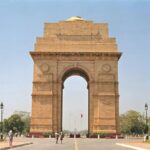
- New Delhi’s planned architecture: Lutyens and Herbert Baker’s influence
- Gandhi Smriti: where Gandhi lived and was assassinated
- Day 2 in Agra: sunrise Taj Mahal plus two Mughal anchors
- Sunrise Taj Mahal at 6 AM: the photo help you’re actually paying for
- Agra Fort: Mughal power before the capital moved
- Fatehpur Sikri: a 4-hour stop on the way to Jaipur
- Day 3 in Jaipur: Amber Fort, Jantar Mantar, and classic photo viewpoints
- Amber Palace (Amer Fort): start strong
- Jal Mahal: palace on the lake, entrance prohibited
- Jantar Mantar: the observatory with 19 architectural instruments
- Hawa Mahal: the Palace of Winds, also photo-only
- The real value: transport, guides, and the small inclusions that save time
- Price and logistics: the $5 per person question you should verify
- Who this tour suits best (and who should pick something else)
- Should you book this 3-day private Golden Triangle tour?
- FAQ
- FAQ
- What cities are included in this Golden Triangle tour?
- How long is the tour?
- Where does pickup happen?
- Is this tour private or shared with other groups?
- What transportation is included?
- Are entrance tickets included?
- Does the tour include a sunrise visit to the Taj Mahal?
- Is there a rickshaw or tuk-tuk ride in Delhi?
- What’s included besides sightseeing and transport?
- Are meals and hotels included?
- Can I cancel for a full refund?
Key highlights worth planning around
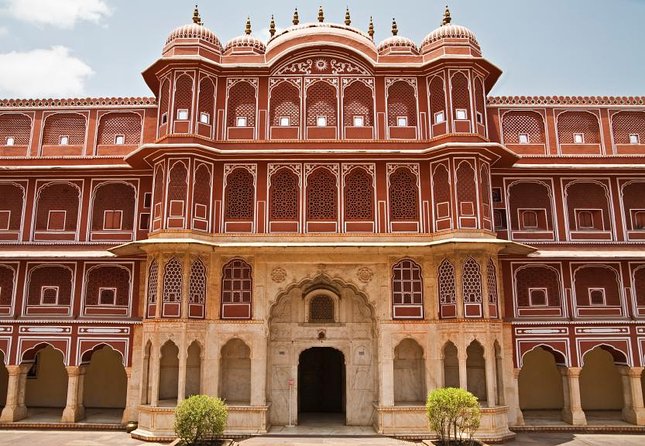
- Sunrise Taj Mahal at 6 AM means you beat the worst of the day’s crowds and heat
- Private AC car with chauffeur keeps the long drives manageable
- Tuk-tuk/rickshaw ride in Chandni Chowk adds a local-feeling moment
- Humayun’s Tomb + Qutub Minar cover two UNESCO sites that set the tone for Delhi
- Amber Fort area first in Jaipur puts you in the right mindset for Rajasthan’s big sights
- Entrance rules at Jal Mahal and Hawa Mahal are photo-only, so set expectations early
Golden Triangle in three days: what this private route feels like
The Golden Triangle is the classic India starter circuit for good reason: it’s packed, it’s diverse, and it’s easy to route. This tour keeps it simple by focusing on three cities and the headline monuments people actually fly in for.
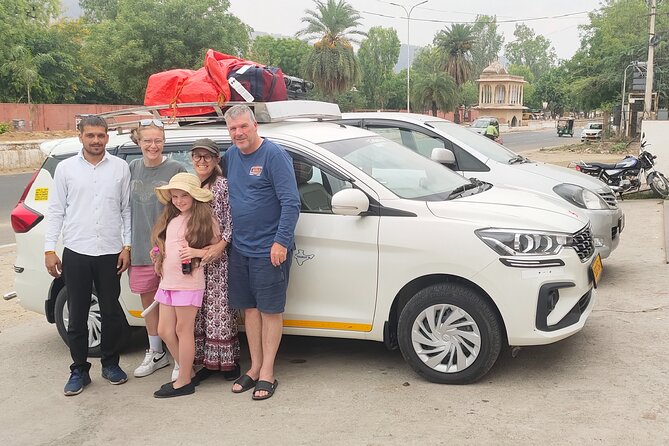
Because it’s private, you’re not stuck in a slow-moving mix-and-match group. Your transport is an air-conditioned car with a chauffeur, and you’re picked up in Delhi-area locations like New Delhi, Noida, Gurgaon, Ghaziabad, and Faridabad. That matters because getting from the airport—or your hotel—to the first major sight can eat up half a day if you’re on your own.
The other thing I like: the tour clearly frames each day around landmarks, with a guide for context. You won’t just walk through stone and sand; you’ll understand what you’re looking at and why it was built.
You can also read our reviews of more private tours in New Delhi

Day 1 in Delhi: Humayun’s Tomb, Qutub Minar, and the old-city religious mix
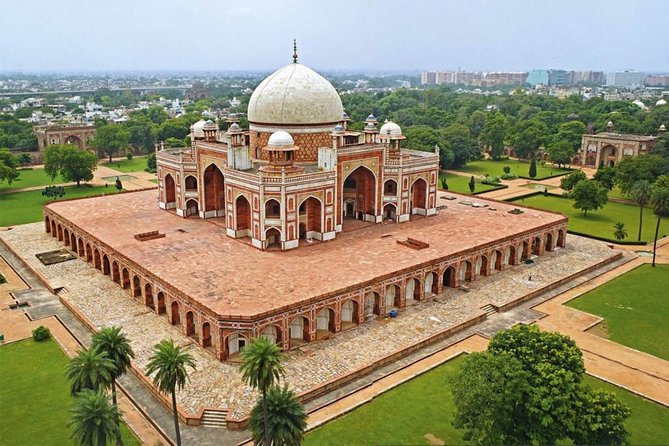
Day 1 is a big sweep across Delhi’s “layers.” You start with Humayun’s Tomb, then move through Qutub Minar, then into a mix of major Hindu and Muslim sites, ending with shopping-market energy in Chandni Chowk.
Humayun’s Tomb: Delhi’s garden-tomb origin story
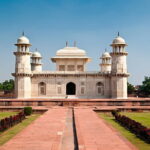
Humayun’s Tomb is a UNESCO World Heritage site and, as the tour describes it, the first garden tomb in India. The guide story usually centers on the reason it was commissioned: after Humayun died, his wife had the tomb built in his memory.
This is the kind of monument where it helps to slow down and notice the layout. The “garden tomb” idea isn’t just a poetic phrase—it affects how the whole space is designed and experienced.
Qutub Minar: the brick minaret you can’t ignore
Next up is Qutub Minar, the UNESCO-listed complex anchor. It’s described as the tallest minaret built in 1192 with bricks. Even if you don’t count architectural details, you can feel why it became a Delhi landmark: it dominates the skyline and sets a historical tone for the rest of your day.
The Qutub complex is also a useful transition. It moves you from the Mughal era mood into the older Delhi sultanate vibe.
Swaminarayan Akshardham: modern Hindu temple energy, built to feel ancient
Then you head to Swaminarayan Akshardham. The tour notes it’s one of the biggest Hindu temples, constructed in 2005, but designed with architecture that makes it feel far older. That contrast is part of the appeal: it’s not a museum copy of the past; it’s a living, modern statement with historical-looking craftsmanship.
This stop is a solid one when you want variety. Delhi isn’t only forts and tombs.
You can also read our reviews of more tours and experiences in New Delhi





Jama Masjid and Chandni Chowk: where the city breathes
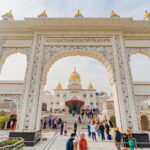
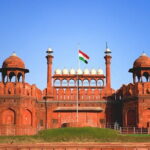
Jama Masjid is next—one of the world’s largest mosques, built in 1656 with the help of 5000 workers, and located in front of the Red Fort area in the Chandni Chowk stretch. It’s a scale stop. Even if you’ve seen big mosques elsewhere, the sheer size and central location make it feel like the city’s heart.
From there, you’ll spend time at Pasar Chandni Chowk. The tour frames it as Asia’s biggest and oldest market from the 17th century. It’s known as Chandni Chowk partly because the street lighting stays on all the time, and there are special flea bazaars on Sunday.
You also get a tuk-tuk/rickshaw ride in Chandni Chowk, which is one of those small things that makes the whole day more than just standing in lines. It’s a quick way to feel the traffic flow and street rhythm without walking every inch.
The Delhi history stops you shouldn’t skip: 1921 Tomb + Lutyens/Baker planning + Gandhi Smriti
After the old-city sequence, the tour shifts into Delhi’s “planned capital” and modern memorial spaces.
The Tomb of the Unknown Soldiers: names etched in stone
You visit the 1921 Tomb of the Unknown Soldiers. The notable detail here is specific: names of 13,300 Indian army servicemen who died during the First World War are carved on the wall.
It’s not a typical tourist-photo stop, but it’s one of the most meaningful moments on the day. If you pay attention even briefly, it hits harder than a generic war memorial because it’s personal and numbered.
New Delhi’s planned architecture: Lutyens and Herbert Baker’s influence
Then the tour includes a stop tied to a large planned architectural project—an impressive 330 acres built in 1929 by Sir Edwin Lutyens and Herbert Baker, who are described as responsible for constructing almost the whole of New Delhi.
This is a good reminder that Delhi isn’t only ancient sites. It has an entire chapter of design and state-building that shaped how the capital looks today.
Gandhi Smriti: where Gandhi lived and was assassinated
Finally, Gandhi Smriti closes out Day 1. The tour describes it as the place marking where Gandhi spent most of his life and where he was assassinated. It also notes the setting: the building was the Birla family’s business-tie home, and later became a remembrance place.
If you’ve never visited before, Gandhi Smriti can feel like a quiet reset after big architecture. It’s less about scale and more about human presence.
Day 2 in Agra: sunrise Taj Mahal plus two Mughal anchors
Day 2 is the “wow” day for most people, and the plan reflects that with an early start.
Sunrise Taj Mahal at 6 AM: the photo help you’re actually paying for
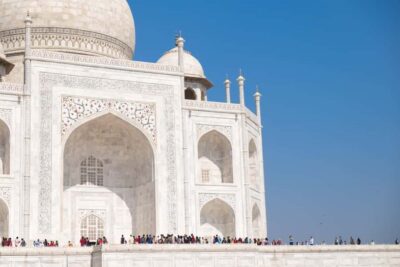
You’re picked up early, and the tour is built around experiencing the Taj Mahal at sunrise—around 6 AM. The guide helps with getting photos clicked at the best possible spots.
This timing matters because sunrise isn’t just about light. It’s also when the sight feels fresh and the crowds are easier to manage. If you’ve only seen the Taj in midday photos, sunrise can change how you judge its proportions and tone.
Agra Fort: Mughal power before the capital moved
After Taj Mahal, the next stop is Agra Fort, another UNESCO site. The tour notes that Agra Fort is the only fort in India where all early Mughal emperors lived until 1638, when the capital shifted back to Delhi.
That detail makes Agra Fort more than a backdrop. You’re standing in a place tied to government and daily rule, not just royal architecture.
Fatehpur Sikri: a 4-hour stop on the way to Jaipur
On the way to Jaipur, you take a 4-hour stop at Fatehpur Sikri. The tour describes it as a small city west of Agra that Akbar founded as Mughal capital in 1571. It also notes red sandstone building features.
This stop is useful because it breaks up the drive into something meaningful. It also adds a different Mughal flavor than Agra Fort, so your day doesn’t feel like repetition.
One practical note: the tour lists Fatehpur Sikri admission as free in the plan. Still, you’ll want to confirm what your specific option covers, since entrance fees are described as dependent on option selection.
Day 3 in Jaipur: Amber Fort, Jantar Mantar, and classic photo viewpoints
Jaipur day is where the tour leans into Rajasthan’s big-name sights with a good flow: Amber first, then observatory, then the photo-famous facades.
Amber Palace (Amer Fort): start strong
You begin Jaipur sightseeing with Amber Palace, starting at Amber Fort. The plan describes Amer as a town about 11 kilometers from Jaipur, and gives you about 2 hours for this stop.
Amber is the kind of fort that rewards your attention. If you go in expecting a quick walk, you’ll miss the details. If you treat it like a layered experience—courtyards, views, and the feel of a royal stronghold—you’ll get more value from the time.
Jal Mahal: palace on the lake, entrance prohibited
Then you stop at Jal Mahal, described as the palace on Man Sagar Lake in Jaipur. Here’s the key expectation-setting point: entrance is prohibited, but you can click great pictures.
So think of Jal Mahal as a viewpoint moment, not a “go inside” stop.
Jantar Mantar: the observatory with 19 architectural instruments
Next is Jantar Mantar, also called an observatory. The tour describes it as a collection of nineteen architectural astronomical instruments built by Rajput king Sawai Jai Singh II.
Even if astronomy isn’t your hobby, this stop works because it’s physical and human-made. You can look at the instruments as tools shaped by the time period—stone used like a science lab.
Hawa Mahal: the Palace of Winds, also photo-only
After Jantar Mantar, there’s a stop at Hawa Mahal, the Palace of Winds. Entrance is prohibited, but the plan notes you can take great pictures of the building. It’s constructed of red and pink sandstone.
Hawa Mahal is one of those structures where the facade is the point. Plan on photos from the outside streets, and don’t build your schedule around going in.
The real value: transport, guides, and the small inclusions that save time
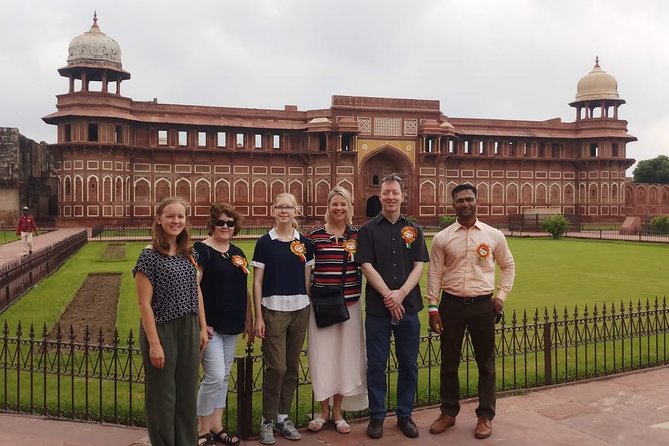
This is a private AC car tour, and that affects everything. In India, road time is real time. Having a chauffeur means you don’t have to negotiate routes, hunt for parking, or coordinate ride shares between cities.
A few included extras are worth calling out:
- Live tour guides at the sites, so you’re not wandering with only a phone app
- Complimentary water bottles and umbrellas, which helps when the weather turns
- Tuk-tuk/rickshaw ride in Chandni Chowk, so you experience the market streets beyond walking
- Mobile ticket, which usually makes entry day simpler
Also, it’s described as a private tour/activity where only your group participates. In practical terms, this helps the guide pace the day to you, instead of waiting for a larger group.
Price and logistics: the $5 per person question you should verify
The price is listed as $5 per person, which sounds dramatically low for a multi-city private tour. I can’t confirm whether it’s a special promotion, a placeholder, or a base rate without add-ons.
What you can do is sanity-check the value using what the package says is included:
- Hotel/airport pickup in Delhi
- AC transport with a chauffeur
- Guides at sites
- Water bottles and umbrellas
- Some entrance fees listed as included, but the fine print says monument entrance fees can depend on the option selected
So the smart move: before you book, confirm exactly which entrances are covered for your chosen option—especially for major sites. The itinerary notes some tickets as included, while it also lists certain admission as free and others as entrance prohibited. That combination can change your real out-of-pocket costs.
Who this tour suits best (and who should pick something else)
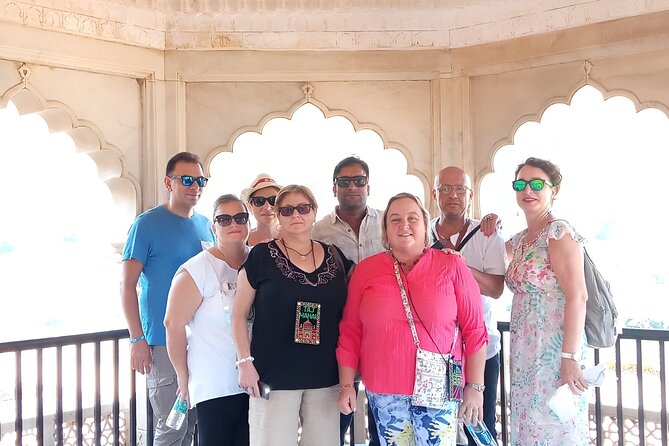
This private Golden Triangle fits best if you want:
- A structured 3-day plan across Delhi, Agra, and Jaipur
- Sunrise Taj Mahal as a priority
- Live guidance to explain what you’re seeing
- Comfort on longer drives (AC chauffeur)
It’s less ideal if you want:
- A slow, flexible schedule with lots of free time
- Only “inside entry” experiences for every stop (Jal Mahal and Hawa Mahal are photo-only due to prohibited entrance)
- A strictly independent trip with zero shopping/extra side stops (Delhi can include market/restaurant-type stops)
Should you book this 3-day private Golden Triangle tour?
Yes—if you want the famous circuit covered efficiently and you like having a guide at the big monuments. The biggest wins are the sunrise Taj Mahal setup, the private AC chauffeur for comfort, and the fact that Day 1 mixes major UNESCO sites with major religious landmarks and a real market moment in Chandni Chowk.
But book with eyes open. Confirm what entrance fees are included under your option, expect early starts, and treat Jal Mahal and Hawa Mahal as photos-from-outside stops. If that fits your style, this is a strong, practical way to experience the Golden Triangle without turning your trip into a navigation project.
FAQ
FAQ
What cities are included in this Golden Triangle tour?
It covers three cities: Delhi, Agra, and Jaipur.
How long is the tour?
The duration is about 3 days.
Where does pickup happen?
Pickup is offered in Delhi-area locations, including New Delhi, Noida, Gurgaon, Ghaziabad, and Faridabad, and you can also use hotel or airport pickup in Delhi.
Is this tour private or shared with other groups?
It’s described as a private tour/activity, so only your group participates.
What transportation is included?
You get air-conditioned transportation with a chauffeur.
Are entrance tickets included?
Monument entrance fees are included depending on the option selected. The plan lists some sites as admission ticket included, some as free, and some as entrance prohibited.
Does the tour include a sunrise visit to the Taj Mahal?
Yes. The Taj Mahal is scheduled for sunrise around 6 AM, with photo help from the guide.
Is there a rickshaw or tuk-tuk ride in Delhi?
Yes. There’s a tuk-tuk or rickshaw ride included at Chandni Chowk.
What’s included besides sightseeing and transport?
Live tour guides at the sites, complimentary water bottles, and umbrellas are included.
Are meals and hotels included?
No. Accommodations and meals are not included, and tips/gratuities are also not included.
Can I cancel for a full refund?
The tour offers free cancellation. You can cancel up to 24 hours in advance for a full refund.