REVIEW · NEW DELHI
5 Nights 6 Days Private Golden Triangle Tour – Delhi Agra Jaipur
Book on Viator →Operated by Private Driver In India · Bookable on Viator
This route feels built for real sightseeing. You get a classic Delhi–Agra–Jaipur sweep with UNESCO stops, private guides, and the freedom to adjust the day without turning it into a sprint. The best part is how the plan mixes big-ticket icons with smart context stops in between.
I love the private local guidance in each city. I also like the comfortable private vehicle for transfers, so you spend less time negotiating, more time looking around.
One thing to consider: monument entry fees and meals cost extra, so your final spend will be higher than the base price. And if you’re picky about hotel quality, confirm the exact property tied to your booking option.
In This Review
- Key Highlights to Look Forward To
- A Private Golden Triangle That Doesn’t Feel Like a Checklist
- Price and Logistics: What You Pay vs. What You’ll Budget Extra
- Day 1 in Delhi: Airport Welcome and a Low-Stress Start
- Day 2 Delhi Highlights: Jama Masjid, Chandni Chowk, and the New Delhi Power Stops
- Jama Masjid and the Old Delhi Opening Act
- Chandni Chowk Drive: Real Street Life Without the Time Sink
- Red Fort, India Gate, and the Monuments You See from Inside Your Head
- Humayun’s Tomb and the Gardens That Inspired Later Designs
- Lotus Temple and Qutb Minar for Contrast
- Raj Ghat: Gandhi’s Memorial Location
- Day 3 Agra: Taj Mahal, Agra Fort, and Itmad-ud-Daula
- Taj Mahal: Your Two-Hour Anchor
- Agra Fort: The Mughal Power Core
- Itmad-ud-Daula: The Baby Taj Moment
- Day 4 Toward Jaipur: Fatehpur Sikri and Chand Baori Stepwell Stops
- Fatehpur Sikri: City of Victory
- Chand Baori: A Stepwell You Can’t Unsee
- Day 5 Jaipur: Amer Fort, Jal Mahal, and the City’s Big Architectural Names
- Amer: Old Fort Power on the Outskirts
- Jal Mahal: The Palace That Sits on Water
- Royal Gaitor Tumbas: Cenotaphs in a Well-Kept Setting
- City Palace and the Blend of Styles
- Jantar Mantar: The Stone Sundial That Still Commands Attention
- Hawa Mahal: The Palace of Breeze Outside the Script
- Albert Hall Museum: A Museum Break If You Need One
- Day 6 Back to Delhi: Smooth Drop-Off and Final Stretch
- Why the Private Vehicle and Local Guides Matter So Much
- Who This Tour Fits Best (and Who Might Want Something Else)
- Should You Book This 6-Day Golden Triangle Tour?
- FAQ
- What cities are covered on this 5 Nights 6 Days private Golden Triangle tour?
- How does monument entry work—are tickets included?
- Are meals included in the price?
- Do I get pickup in Delhi and nearby areas?
- What vehicle will I ride in?
- Can I cancel and get a full refund?
- How long is the drive from Delhi to Agra?
Key Highlights to Look Forward To
- Door-to-door pickup in Delhi, Noida, and Gurugram (airport, station, hotel, or pickup point)
- Private city sightseeing with local guides across all three cities
- Comfortable group-matched vehicle sizes, from a 4-seater sedan to a 12-seater tempo/minivan
- Leisurely pacing: linger on UNESCO sites instead of racing through photo stops
- Entrance fees add up, with specific combined monument tickets for Delhi, Agra, and Jaipur
A Private Golden Triangle That Doesn’t Feel Like a Checklist
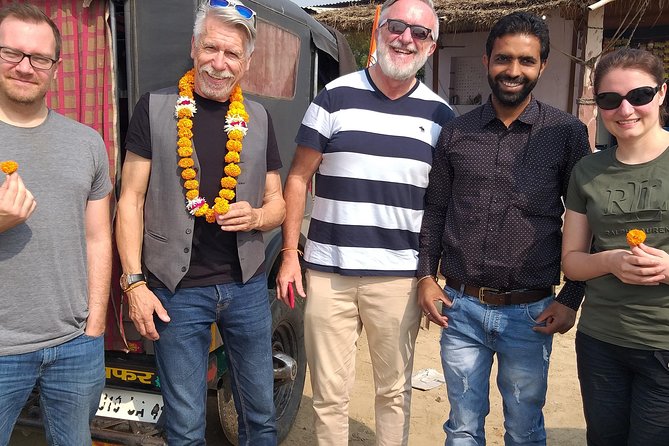
The Golden Triangle usually comes with one big problem: you’re herded. This version aims to fix that with a private tour format, a dedicated driver, and local guides who help the sites make sense instead of just existing as landmarks you tick off.
The route is the famous one—Delhi, Agra, Jaipur—but the pace is what makes it easier to enjoy. You’re not just rushing from one “must-see” to the next. You also get time built in for rest and for choosing how much you want to see per stop, especially in Delhi where you have both Old Delhi and New Delhi contrast.
And because it’s private, you can stay flexible with priorities. Want to linger longer at a tomb garden view? You can. Want more shopping time in the market areas? You can usually shift the balance.
You can also read our reviews of more private tours in New Delhi


Price and Logistics: What You Pay vs. What You’ll Budget Extra
The tour price is $240.00 per person for the 6-day / 5-night program. That’s a solid starting point for a private vehicle, private local guides for sightseeing, and breakfast included on three mornings.
Here’s the part I’d plan for: monument entry fees are not included. The tour lists combined entry fees as:
- Delhi monuments combined entry fee: $30.00 per person
- Jaipur monuments combined entrance fee: $30.00 per person
- Agra monuments entrance fees: $35.00 per person
So, you’re looking at roughly $95 in entrance fees per person on top of the base price, plus whatever you spend on meals, drinks, and souvenirs.
Also note: meals aren’t included (breakfast is included—3 breakfasts total). That matters because you’ll be able to eat where you like, but you won’t have a default plan for lunch and dinner.
Day 1 in Delhi: Airport Welcome and a Low-Stress Start
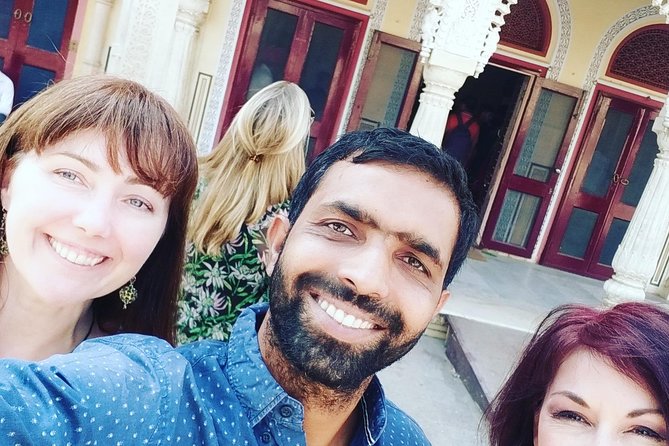
Your trip begins the moment you land. A tour representative meets you at the New Delhi airport and helps you transfer to your hotel. After that, you’re on your own—or you can choose nearby attractions if you want to stretch your legs.
This first day is more than a formality. Delhi can feel intense on arrival: traffic, noise, the sheer scale. Having a calm start helps you hit the next days with energy.
If you’re jet-lagged, I’d treat Day 1 as your reset button. Walk lightly near your hotel, hydrate, and let your senses catch up.
Day 2 Delhi Highlights: Jama Masjid, Chandni Chowk, and the New Delhi Power Stops
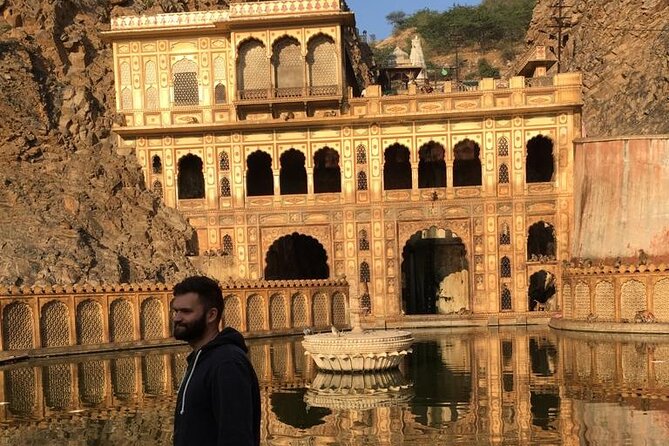
Day 2 is a two-world Delhi day: Mughal-era Old Delhi and the ceremonial New Delhi zones. You start with Old Delhi culture, then you gradually move into the grand government-and-monument area.
Jama Masjid and the Old Delhi Opening Act
You visit Jama Masjid, one of India’s largest mosques. It was commissioned by Shah Jahan and completed in 1644. The tour lists admission as free here, which is a nice win for budgeting.
This stop sets the tone for Old Delhi: big scale, strong geometry, and a place still very much alive as a religious site. Dress respectfully and move with care around worshippers.
You can also read our reviews of more tours and experiences in New Delhi






Chandni Chowk Drive: Real Street Life Without the Time Sink
Next comes the drive through Chandni Chowk. The point isn’t just photos—it’s getting your bearings. You see the market rhythms: the mix of shopfronts, street stalls, and everyday movement.
If you’re curious, I’d use this as a chance to plan what you’d want to return for later, since the rest of Day 2 is already packed.
Red Fort, India Gate, and the Monuments You See from Inside Your Head
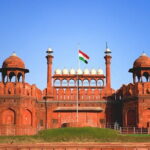
You continue at Red Fort (admission not included). Even without the ticket, the fort’s position at the end of Old Delhi gives you a strong visual anchor.
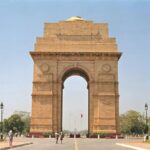
Then you shift toward India Gate, a war memorial with special meaning around Republic Day. India Gate itself is free to enter on this tour.
After that, you drive past major architectural showpieces: Rashtrapati Bhawan and Parliament House. You’re not asked to memorize details like an architecture student, but it’s worth slowing down mentally. This is Delhi showing you how power and design were meant to look.
Humayun’s Tomb and the Gardens That Inspired Later Designs
You visit Humayun’s Tomb (admission not included). The tour notes it was built in 1570 and is considered the first garden-tomb on the Indian subcontinent, inspiring later architecture.
This is the kind of stop where the setting matters as much as the monument. It’s a more reflective pause than the street-and-market sections.
Lotus Temple and Qutb Minar for Contrast
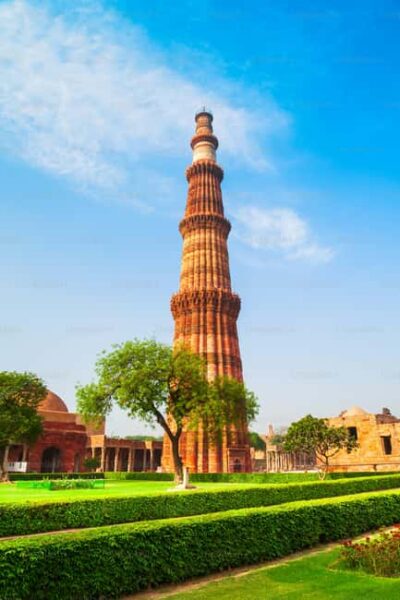
The day continues with Lotus Temple (admission not included), a Bahai temple known for its nine-petal lotus-like design. Then you head to Qutb Minar (admission not included), a monumental minaret and victory tower.
These two stops give you contrast fast: Lotus Temple feels modern and calm in form; Qutb Minar feels ancient and monumental.
Raj Ghat: Gandhi’s Memorial Location
You end at Raj Ghat (admission free), marking where Mahatma Gandhi’s funeral took place, with a simple memorial aligned with his philosophy of simplicity.
It’s a good tonal finish. The first half of the day is about empires and power shapes. This stop grounds the story with a single person’s legacy.
Day 3 Agra: Taj Mahal, Agra Fort, and Itmad-ud-Daula
Day 3 is the transfer day that still gives you real time in Agra. The drive from Delhi to Agra is about 222 km and takes around 4 hours. You’ll check into your hotel after arriving, then start sightseeing.
Agra can feel like “Taj day,” but don’t treat it as only one building. The best value comes when you combine the big icon with the surrounding layers.
Taj Mahal: Your Two-Hour Anchor
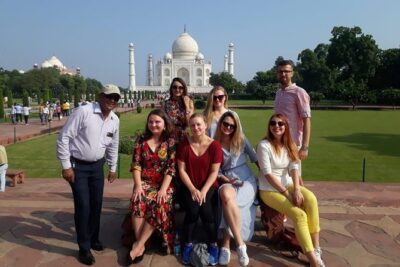
You spend about 2 hours at the Taj Mahal. It’s the ivory-white marble mausoleum built in 1632 by Shah Jahan for Mumtaz Mahal, on the southern bank of the Yamuna River.
Plan to watch more than the facade. In the time you have, you can notice the structure’s balance—symmetry, reflections, and how the building sits like a centerpiece in its gardens.
Agra Fort: The Mughal Power Core
Next is Agra Fort, about 1.5 hours. Admission is not included on this tour. This UNESCO-listed site is tied to Mughal emperors including Akbar, Shah Jahan, and Aurangzeb.
A fort like this makes you understand why rulers needed more than beauty. They needed control, defense, and a visible claim to authority.
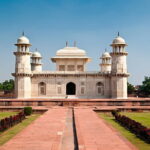
Itmad-ud-Daula: The Baby Taj Moment
You also visit Itmad-ud-Daula, described as a stunning Mughal mausoleum often called the Baby Taj. You get around 1 hour.
This stop is a smart palate cleanser after Taj Mahal. You’re still in the Mughal style universe, but the energy is different—more intimate, and often easier to enjoy without the same crowds pressure you can get at the top icon.
Day 4 Toward Jaipur: Fatehpur Sikri and Chand Baori Stepwell Stops

Today you travel toward Jaipur, but the journey doesn’t feel like dead time. After breakfast, you head to Jaipur and along the way you have two major detours: Fatehpur Sikri and Chand Baori.
The tour frames this day as 6 hours total for the transfer-and-sightseeing stretch, with both stops listed as free admission.
Fatehpur Sikri: City of Victory
Fatehpur Sikri is the City of Victory, built in the late 16th century by Emperor Akbar and serving as the Mughal capital for about a decade. You get around 1 hour here.
This is one of those sites where the scale tells the story. You’ll see how a planned capital complex worked—palace and mosque spaces, courtyards, and the idea of a whole city built for a specific era.
Chand Baori: A Stepwell You Can’t Unsee
Then you head to Chand Baori, a dramatic stepwell in Abhaneri. The tour lists it as about 30 meters deep, with admission free.
Stepwells are practical engineering, but this one is also a visual trick. The repeating steps pull your eyes down, creating a feeling of depth that photos can’t fully capture.
If you’re wearing uncomfortable shoes, this is a time to reconsider. Even with a guide’s pacing, you’ll be on your feet.
Day 5 Jaipur: Amer Fort, Jal Mahal, and the City’s Big Architectural Names
Jaipur is where the Golden Triangle becomes pure visual drama. Day 5 is the full Jaipur sightseeing day with a guided sequence through the major landmarks.
Amer: Old Fort Power on the Outskirts
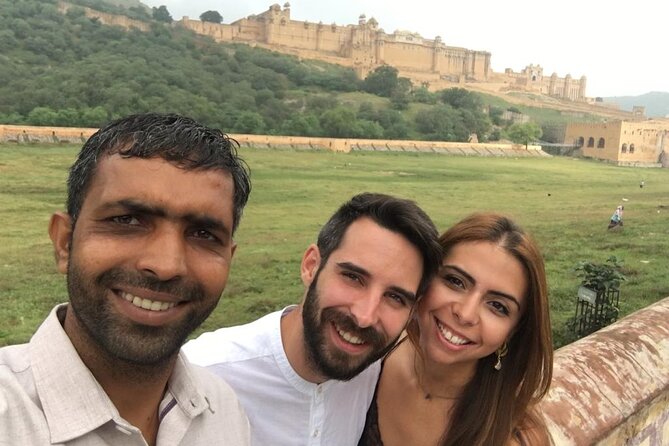
You start at Amer, on the outskirts of Jaipur. Amer was the former capital before Jaipur, and the fort dates to 1592. You get about 2 hours.
Amer Fort is a great start because it helps you understand why Jaipur’s style looks the way it does. Even if you love modern design, you’ll appreciate the planning that created court-life and defense-life in one layout.
Jal Mahal: The Palace That Sits on Water
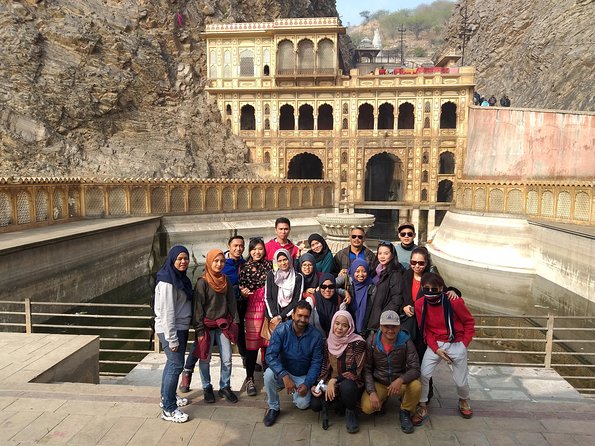
Next is Jal Mahal, a palace surrounded by Man Sagar Lake. You spend around 30 minutes and the tour lists admission free.
This is more of a sight-and-stare stop. If you like photography or just enjoy how buildings reflect in water, you’ll get your money’s worth here.
Royal Gaitor Tumbas: Cenotaphs in a Well-Kept Setting
Then comes Royal Gaitor Tumbas, cenotaphs of the Kacchhawa dynasty. Admission is not included here. You get about 30 minutes.
The key is tone. These tombs feel like Jaipur’s “quiet corners,” less chaotic than the main palace areas.
City Palace and the Blend of Styles
At City Palace (about 2 hours), you’re in the walled-city core. It was built and designed by Maharaja Sawai Jai Singh II, and the tour notes a blend of Mughal and other architectural influences.
This is where you see how Jaipur functioned as a royal center, not just an aesthetic destination. Take your time moving through the rooms and courtyards.
Jantar Mantar: The Stone Sundial That Still Commands Attention
Jantar Mantar gets a very short time slot in the listing (about 1 minute), but it’s still an important stop because it’s one of the oldest astronomical observatories and includes the largest stone sundial ever built.
Even if you only get a quick circuit, this is the kind of place where you look up and suddenly the geometry makes sense.
Hawa Mahal: The Palace of Breeze Outside the Script
Hawa Mahal is a must for many people, and on this route you get about 1 hour. The tour notes it has five storeys and is known for being the tallest building in the world without a foundation, with a curved design leaning at about 87 degrees.
Whether you’re a design nerd or not, the facade is so distinctive you’ll understand why it became famous so fast.
Albert Hall Museum: A Museum Break If You Need One
Finally, you have Albert Hall Museum for about 1 hour. It was established in 1887 and named after Prince of Wales Albert Edward, who visited Jaipur in 1876.
Museums are a smart move when you’ve seen a lot of outdoor monuments. This offers a change of pace.
Day 6 Back to Delhi: Smooth Drop-Off and Final Stretch
Your last morning starts with breakfast, then you check out and drive back to Delhi. You can be dropped at the airport, hotel, or another location in the city.
This end structure matters. Many multi-city tours end with a scramble to catch flights. Here you’re finishing with a planned transfer, which makes it easier to coordinate your departure.
Why the Private Vehicle and Local Guides Matter So Much
This tour’s real value isn’t just the list of sites. It’s how you experience them.
With a private vehicle, you avoid the stop-and-start friction of shared transport. You’re also less dependent on time-consuming navigation. That’s especially useful on days like Day 4, where you’re mixing long drive time with multiple detours.
With private local guides, you get context as you go. The itinerary includes guides in each city for city sightseeing, and the guides often make the difference between seeing a building and understanding why that building exists. It also helps with practical movement, like where to focus, what to notice, and how to keep the day flowing.
In the same spirit, the operation behind this tour seems to prioritize the driver as part of the experience. People have highlighted drivers like Abhi and Amit, plus coordination by Manoj and the on-the-ground guide help by Pintu. When you get that kind of smooth communication, the tour feels calmer and more organized.
Who This Tour Fits Best (and Who Might Want Something Else)
This private Golden Triangle works best if you:
- Want a first-time-friendly route through Delhi, Agra, and Jaipur
- Like UNESCO sites but don’t want to feel rushed
- Prefer comfort and predictable transfers over public-transport logistics
- Travel in a group size that benefits from matching vehicle capacity
You should think twice if you:
- Want everything included with no extra payments (entrance fees and meals aren’t part of the package)
- Have very strict hotel expectations without confirming the specific property in your booking option
- Don’t enjoy walking and standing at forts and tomb complexes (the tour calls for moderate physical fitness)
Should You Book This 6-Day Golden Triangle Tour?
If your goal is to see the highlights of the Golden Triangle with private guidance and a calmer pace, this is an easy yes to consider. The route is built to balance iconic sites with context stops, and the door-to-door pickup plus private vehicle reduces a lot of the usual friction.
My deciding advice is simple:
- If you’re okay budgeting roughly $95 per person in combined entrance fees plus meals, you’ll likely feel the price is fair for the private format.
- If you want to maximize comfort and minimize “logistics brain,” the private vehicle and guide-led sightseeing are the big wins.
Book it if you want a clear plan that still leaves room to breathe.
FAQ
What cities are covered on this 5 Nights 6 Days private Golden Triangle tour?
The tour covers Delhi, Agra, and Jaipur.
How does monument entry work—are tickets included?
Monument entry fees are listed as not included, with combined entry fees mentioned for Delhi, Jaipur, and Agra. Some individual sites on the route are listed as free admissions, but many are not included.
Are meals included in the price?
Meals are not included. Breakfast is included (3 breakfasts).
Do I get pickup in Delhi and nearby areas?
Yes. Pickup is offered from the airport, railway station, hotel, or other pickup location in Delhi, Noida, and Gurugram.
What vehicle will I ride in?
Vehicle size depends on your group size: a 4-seater sedan for 1–3 travelers, a 7-seater SUV for 4–6 travelers, and a 12-seater minivan/tempo traveller for 7–10 travelers.
Can I cancel and get a full refund?
You can cancel up to 24 hours in advance for a full refund.
How long is the drive from Delhi to Agra?
The drive from Delhi to Agra is about 222 km and takes around 4 hours.