REVIEW · NEW DELHI
3 Days Golden Triangle Tour
Book on Viator →Operated by Creative India Holidays · Bookable on Viator
Three days, three UNESCO-level highlights. This Golden Triangle route is interesting because it bundles the big-name sights—Delhi to Agra to Jaipur—into a guided plan with pickup, A/C car transfers, and monument stops that move you through faster than DIY. I especially like the day-by-day guide setup (with named guides like Gaurav Kashyap in Delhi, Abdul Qadir in Agra, and Bipin in Jaipur) and the way the tour is designed to keep you from getting stuck on logistics. The one drawback to think about: Taj Mahal is closed for all visitors on Friday, so your exact travel dates matter.
I also like that the schedule hits both the famous and the meaningful stops—Humayun’s Tomb and Qutub Minar in Delhi, the Taj Mahal and Agra Fort in Agra, then Amer/Jaipur icons like Amber Palace and Hawa Mahal. You get commentary along the way, not just drop-off photos.
One more practical note: lunch and dinner are not included, so you’ll want a little daily cash and an appetite for local food (your guide can help with options, but it’s still on you for meals).
In This Review
- Key things to know before you go
- The Golden Triangle plan: fast, guided, and built to reduce stress
- Price and value: what $181 covers (and where it doesn’t)
- Day 1 in Delhi: Humayun’s Tomb to Chandni Chowk markets
- Humayun’s Tomb (UNESCO stop)
- Qutub Minar (the tall red-and-marble landmark)
- India Gate and the Lutyens landmarks nearby
- Jama Masjid (Old Delhi’s major mosque)
- Chandni Chowk (Pasar Chandni Chowk shopping walk)
- Day 2 in Agra: Taj Mahal, Agra Fort, and a Fatehpur Sikri side trip
- Taj Mahal (a date you must verify)
- Agra Fort (red sandstone and marble additions)
- Fatehpur Sikri (the day trip with a short feel)
- Day 3 in Jaipur: Amer, City Palace, Hawa Mahal, Jal Mahal, and Jantar Mantar
- Amber Palace (Amer Fort)
- City Palace (where power lived)
- Hawa Mahal (Palace of Wind)
- Jal Mahal (a brief scenic pause)
- Jantar Mantar (astronomy instruments in stone)
- Guides, not just destinations: why the commentary changes everything
- Timing, tickets, and what to plan for each day
- Where the tour spends time—and where it doesn’t
- Who this tour is best for (and who should think twice)
- Should you book the 3 Days Golden Triangle tour?
- FAQ
- How long is the 3 Days Golden Triangle tour?
- Which cities are included?
- What time does the tour start?
- Is hotel pickup and drop-off included?
- Is accommodation included?
- Are meals included besides breakfast?
- Are monument entrance fees included?
- Is there a guide?
- What vehicle is used for transfers?
- What happens if my day in Agra is a Friday?
Key things to know before you go
- Private guides each day/city: You’re with a professional guide throughout, and the tour uses different guides for Delhi, Agra, and Jaipur.
- A/C private vehicle with pickup/drop-off: Your day starts around 8:00 am and your transfers are handled door-to-door.
- Two nights with breakfast (hotel option): Accommodation is included if you book with the hotel-included option.
- Skip-the-line monument entry: The tour advertises skip-the-line access; entrance fees are included only if you choose the option that includes them.
- Friday date check for the Taj Mahal: The Taj Mahal is closed for all visitors on Friday.
The Golden Triangle plan: fast, guided, and built to reduce stress
The Golden Triangle (Delhi–Agra–Jaipur) is one of India’s most popular circuits for a reason. You stack three “headline” cities that each tell a different piece of the story—imperial Delhi, Mughal Agra, and royal Rajasthan in Jaipur. The trick is doing it without burning time to navigate, find tickets, and handle transport on your own.
This tour is designed for that. It takes care of your hotel transfers and uses an air-conditioned private vehicle for the sightseeing days. That matters more than it sounds. In this part of India, traffic and distances can turn a good plan into a frustrating day. Here, you’re not hunting for routes or negotiating entry lines. You’re on a fixed schedule with a guide providing commentary at the stops.
Because it’s private to your group, you’re not sharing the day with random strangers. That often makes it easier to keep a steady pace—especially if someone in your group needs frequent breaks. In the reviews that stand out, the guides were praised for being generous and flexible with elderly parents, which is exactly the kind of “real-life” situation this style of tour works well for.
You can also read our reviews of more tours and experiences in New Delhi



Price and value: what $181 covers (and where it doesn’t)
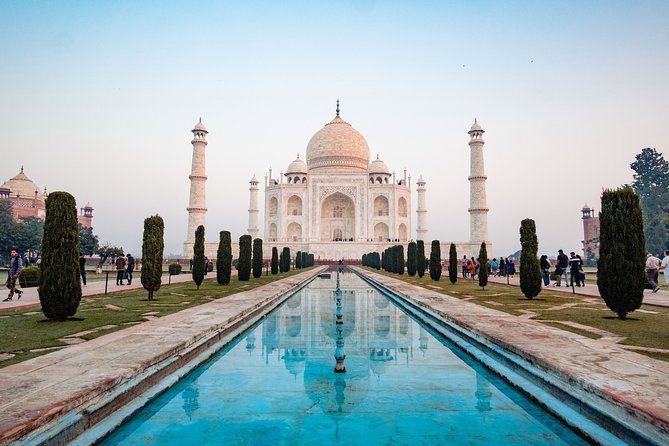
At $181 per person for three days and two nights, this is the kind of price point that’s often hard to beat—if you’re comparing it to DIY with paid entry tickets, a hotel for two nights, and a guide plus private transport.
Here’s what your money is going toward based on the tour details:
- Two nights’ accommodation on twin sharing with breakfast (when you choose the hotel-included option)
- All transfers and sightseeing by air-conditioned private vehicle
- Professional private tour guide
- Hotel pickup and drop-off
- Monument entrance fees (only if you choose the option that includes them)
- All taxes
What’s not covered:
- Lunch and dinner
- Drinks
So the value is strongest if you want a complete “core logistics” package: hotel, transport, guiding, and (optionally) entrance fees. If you plan to skip paid guides and do everything yourself, the tour won’t feel as sharp. But if you’d rather spend your energy on the sights—and let someone else manage the movement—this is a sensible deal.
Day 1 in Delhi: Humayun’s Tomb to Chandni Chowk markets
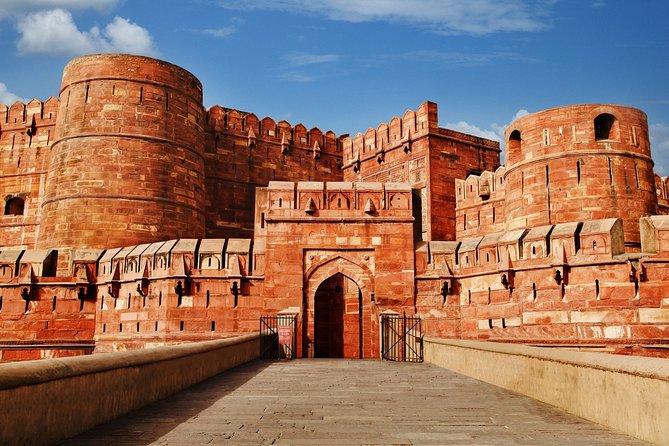
Delhi can feel like sensory overload if you’re trying to plan on the fly. A guided day helps you get your bearings fast and lets you focus on the monuments instead of the schedule.
Humayun’s Tomb (UNESCO stop)
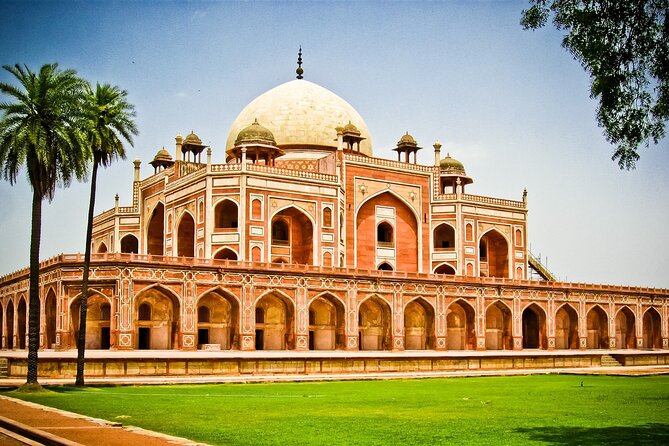
You start with Humayun’s Tomb, a UNESCO Heritage site. It’s widely visited, and it’s easy to see why: the layout and setting help you understand Mughal-era ideas about symmetry, garden design, and monumental architecture. With a guide, you’re not just looking at a tomb—you’re learning how it fits into the wider story of imperial Delhi.
Time on site is about an hour in the tour plan. That’s usually enough for photos, some reading of key details, and a short pause before you move on.
Qutub Minar (the tall red-and-marble landmark)
Next up is Qutub Minar, the iconic tall minaret made with red sandstone and marble. At around 73 meters, it’s not subtle, and it’s also more than a pretty skyline shot. Your guide’s commentary helps connect the monument to the historical period it belongs to, which makes it easier to appreciate instead of treating it as a one-stop photo op.






India Gate and the Lutyens landmarks nearby
India Gate is a quick stop, about 30 minutes. It’s a free admission monument, and it works well early in the day because you can see it clearly without it turning into a long slog. You’ll also pass by or stop near Rashtrapati Bhavan, a major Imperial-era residence design associated with Lutyens and Baker. Even if you can’t go inside, it helps to understand the scale and intent of the architecture in the broader Delhi layout.
Jama Masjid (Old Delhi’s major mosque)
Old Delhi’s Jama Masjid is a bigger visual moment, and the tour gives you about an hour here. It was constructed in the 1650s under Mughal emperor Shah Jahan. With a guide, you’ll likely get useful context on why this mosque became such a key religious and cultural stop.
Chandni Chowk (Pasar Chandni Chowk shopping walk)
Day 1 ends with Chandni Chowk (market area). This is where Delhi shifts from monuments to everyday life: spices, dried fruit, silver jewelry, and vivid saris. The plan gives you about an hour, which is enough time to browse and pick up small snacks or souvenirs without feeling like you’re trapped shopping for hours.
Practical tip: if you’re sensitive to crowds, go at a calm pace and keep your camera accessible. Markets are great, but they move fast.
Day 2 in Agra: Taj Mahal, Agra Fort, and a Fatehpur Sikri side trip
Agra is the “Mughal big three” city for most people, and your day hits the top stops. This is where the timing really matters because the Taj Mahal is the centerpiece, and it comes with that famous date restriction.
Taj Mahal (a date you must verify)
The Taj Mahal is listed as a two-hour stop. Your tour description includes skip-the-line access for monuments, which helps here, since the Taj Mahal is a high-demand site.
But there’s an important constraint: the Taj Mahal remains closed for all visitors on Friday. If your three-day plan includes a Friday, you’ll want to confirm what the tour does in that case before you lock in your dates. Even if everything else is handled, this one closure can change how “complete” your Agra day feels.
Agra Fort (red sandstone and marble additions)
After the Taj, you head to Agra Fort, about an hour in the plan. It’s built of red sandstone and associated with Akbar, with later decorative additions using marble credited to Shah Jahan. Agra Fort works well with a guide because it’s more complicated than a single building—there are layers of ruling periods you can actually spot when you know what to look for.
Also, Agra Fort sits near the Yamuna river. If your guide points out the placement and how rulers used the landscape, the fort stops feel more logical.
Fatehpur Sikri (the day trip with a short feel)
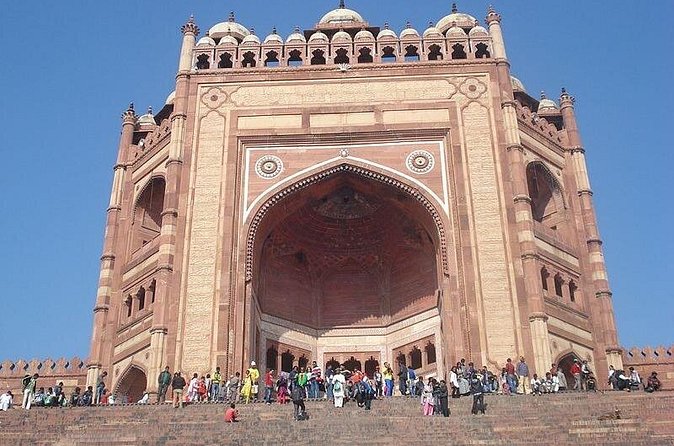
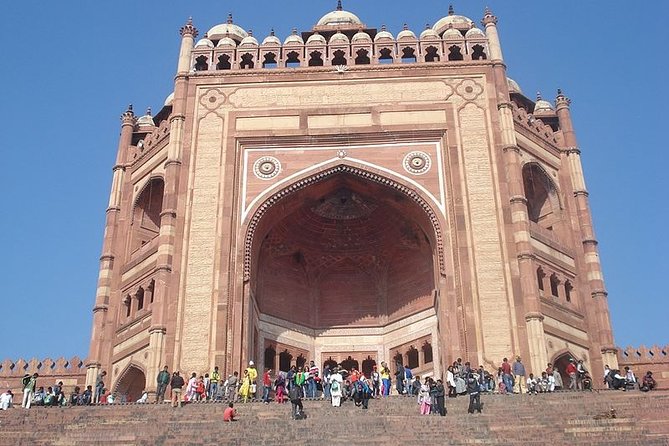
Then you visit Fatehpur Sikri, an ancient fortified city about 40 km west of Agra. In the tour plan it’s listed as about an hour, and the admission is marked as free.
Fatehpur Sikri is a great “stretch” stop. You go from the romance of the Taj to the scale of an empire’s short-lived capital. Even with a limited time window, you can get the main idea: Akbar’s capital experiment lasted about a decade, and the site reflects that ambitious but temporary imperial phase.
What I like here: it prevents Day 2 from being only one monument. You get variety—visuals, story, and architecture.
Day 3 in Jaipur: Amer, City Palace, Hawa Mahal, Jal Mahal, and Jantar Mantar
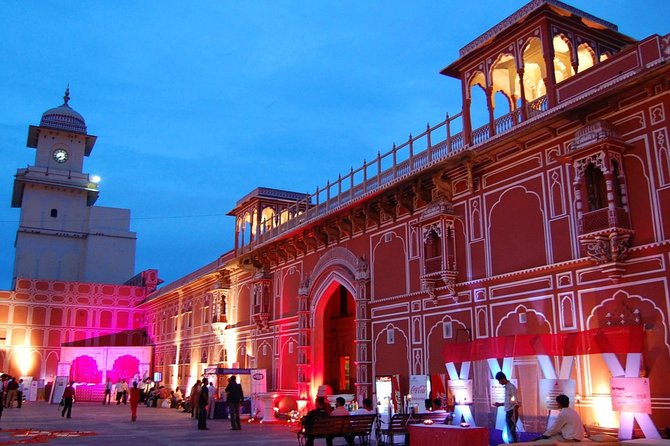
Jaipur earns its nickname Pink City for a reason, but the bigger value of the tour is that it keeps you moving through different kinds of royal spaces: forts, palaces, city planning, and even monumental astronomy.
Amber Palace (Amer Fort)
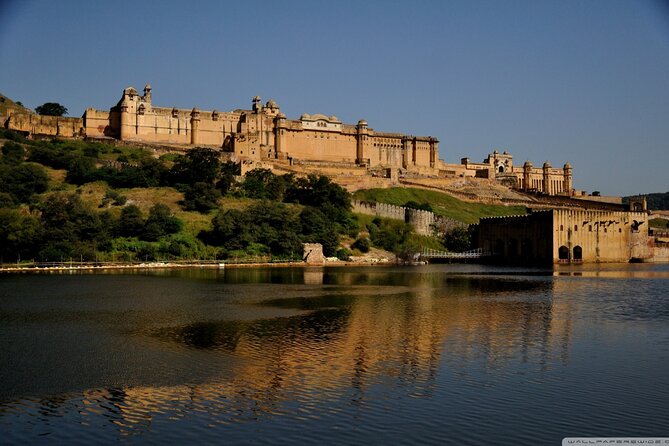
You start with Amber Palace (Amer Fort), about two hours. It’s about 11 km from Jaipur and was built in 1592 by Raja Man Singh. The tour’s time at Amber makes sense because this isn’t a quick look-and-leave stop. It’s large, detailed, and best understood with guidance.
City Palace (where power lived)
City Palace is next, about an hour. It’s located in the heart of Jaipur, where the Maharaja reigned. Your stop includes key palace components like Chandra Mahal and Mubarak Mahal (as part of the overall complex).
If you’re the kind of traveler who likes to compare how rulers lived versus how monuments were built to impress, City Palace usually hits that sweet spot.
Hawa Mahal (Palace of Wind)
Then you get Hawa Mahal, about 30 minutes. The Palace of the Winds is a five-storey façade designed in 1799 by Maharaja Sawai Pratap Singh (not listed, but the tour notes construction in 1799). The key here is that the structure is instantly recognizable, and it’s also an example of how function and design can blend. Your guide’s explanation helps turn the quick photo stop into something you actually remember.
Jal Mahal (a brief scenic pause)
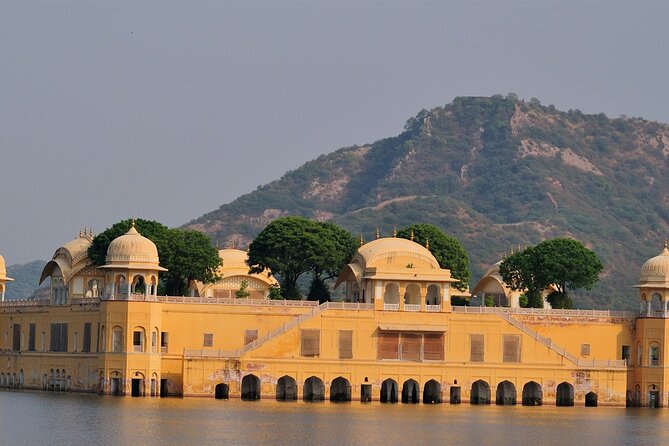
Jal Mahal, on Man Sagar Lake, is about a 20-minute stop and listed as free admission. It’s a lower-commitment visit—good if your group is feeling the day’s pace. Even in short time, you can enjoy the fact that it looks like a palace resting on the water.
Jantar Mantar (astronomy instruments in stone)
Finally, Jantar Mantar in Jaipur gets about an hour. This is an early 18th-century astronomical observation site with a set of monumental fixed instruments (around 20 main ones mentioned in the tour details). Most people think of Jaipur as forts and palaces. Jantar Mantar reminds you Jaipur also treated science as a public, monumental project.
If you’ve got a curious streak, this is a strong way to end the tour. Your last stop isn’t only pretty—it asks you to look differently.
Guides, not just destinations: why the commentary changes everything
This tour stands or falls on the guide experience. And in the feedback highlighted here, guides are repeatedly praised for practical kindness and flexibility.
You also get a useful structure: a different guide for each day/city. That means the Delhi guide can focus on Delhi properly, the Agra guide can handle the Mughal context there, and the Jaipur guide can zero in on local meaning and palace/fort design. Named guides that came up include Gaurav Kashyap for Delhi, Abdul Qadir for Agra, and Bipin for Jaipur.
For you, that can translate into fewer awkward pauses and more “make this make sense” moments. A monument is just a monument unless someone connects it to the why.
It also helps with group needs. One standout theme in the reviews is that guides adjusted smoothly for elderly parents. So if you’re traveling with family, this tour format can be a big comfort—especially compared with a strict, non-negotiable group schedule.
Timing, tickets, and what to plan for each day
A few details you can plan around to make the tour feel smoother:
- Start time is 8:00 am. This helps you beat some of the busiest hours at major sights.
- Pickup and drop-off are included, so you’re not wrestling with “where do we meet” moments.
- Mobile ticket is part of the experience.
- Skip-the-line entry is advertised for monuments, but entrance fees are listed as included only if you pick the option that includes them.
Because the tour includes skip-the-line access, it usually saves time even when you have to pay entrance fees. Still, if you care about fully prepaid convenience, double-check what your booking option includes for monument entrances.
Where the tour spends time—and where it doesn’t
This itinerary is packed in the best way: big sights in each city, and enough time at each stop to learn and photograph without feeling rushed every minute.
But it’s not “sit in a café all day” travel. It’s a “see the key things with a guide” circuit. That’s why it feels like value: you’re using paid transport effectively and stacking the right stops.
Lunch and dinner are on you. That’s common, but it changes your daily rhythm. Build in an easy plan for meals and snacks so you’re not deciding on food while your guide is moving you between sites.
Who this tour is best for (and who should think twice)
This tour is a good fit if:
- You want the Golden Triangle highlights without planning every ticket and route
- You like guided context at major monuments
- You’re traveling as a family or with older relatives who benefit from a flexible guide
You might want to think twice if:
- You’re traveling on a Friday and Taj Mahal is a non-negotiable for your trip
- You prefer totally free-form days and don’t want set sightseeing blocks
- You’re hoping for meals included beyond breakfast
Should you book the 3 Days Golden Triangle tour?
I’d book it if you want a stress-reducing path through Delhi, Agra, and Jaipur, with a private vehicle, door-to-door pickup, and guides who handle the “what am I looking at and why does it matter?” part. The combination of hotel (with breakfast when chosen), transfers, and guided monuments is where the value sits.
If Taj Mahal is on your must-see list, confirm your travel day carefully—because Friday closure is real. And double-check whether your package includes monument entrance fees, since the tour notes entrance coverage as an option.
If those two points line up for you, this is an efficient way to experience the Golden Triangle without spending your vacation running around Delhi traffic trying to get it all together.
FAQ
How long is the 3 Days Golden Triangle tour?
It runs for about 3 days, with 2 nights included in the itinerary.
Which cities are included?
The tour covers New Delhi, Agra, and Jaipur.
What time does the tour start?
The start time is 8:00 am.
Is hotel pickup and drop-off included?
Yes, hotel pickup and drop-off are included.
Is accommodation included?
Accommodation is included as two nights on twin sharing with breakfast if you book with the option that includes hotels.
Are meals included besides breakfast?
No. Lunch and dinner are not included, and drinks are also not included.
Are monument entrance fees included?
Monument entrance fees are included only if you choose the option that includes them. The tour also mentions skip-the-line entry for monuments.
Is there a guide?
Yes. You get a professional private tour guide, and the tour uses a guide for each city.
What vehicle is used for transfers?
All transfers and sightseeing are done by an air-conditioned private vehicle.
What happens if my day in Agra is a Friday?
The Taj Mahal remains closed for all visitors on Friday, so your dates can affect your Agra experience.