REVIEW · NEW DELHI
Golden Triangle Tour: Private Delhi Agra Jaipur 5 Nights 6 Days
Book on Viator →Operated by Chaman Duggal Private Tours · Bookable on Viator
A six-day Golden Triangle plan that actually feels manageable. You get private door-to-door transport plus local guides in each city, so you’re not stuck figuring things out. I like the built-in flexibility since entrance fees are not included, letting you pick what fits your time and budget. One thing to think about: the ticketing bill can add up, and a couple of big sights close on set weekdays.
This is a solid first-time India style of trip: Delhi’s Mughal landmarks, Agra’s grand icons, then Jaipur’s palace-and-fort lineup. It runs on a private car, includes five hotel breakfasts, and keeps the pace relaxed enough to enjoy the places instead of racing between them. If you’re hoping for a fully guided museum-style experience at every stop, you’ll want to plan for some self-paced time at the sites where guide time is lighter and admission tickets are extra.
In This Review
- Key things I’d bank on
- Why this Delhi–Agra–Jaipur private tour feels low-stress
- Price and value reality check (and what extra costs to expect)
- Day 1 in Delhi: airport pickup, hotel check-in, and getting your bearings
- Day 2 in Delhi: Humayun’s Tomb, Jama Masjid, Qutub Minar, and the Lotus Temple closeout
- Humayun’s Tomb: a Mughal garden-tomb that started a style
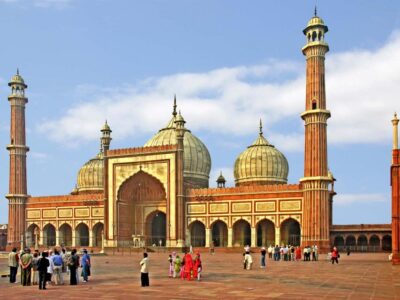
- Jama Masjid: scale matters in one of India’s largest mosques
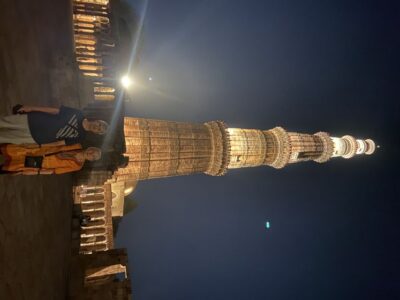
- Qutub Minar: the 73-meter tower and the stone history feel
- Lotus Temple: flower-shaped calm, with a weekday closure caveat
- India Gate and Raj Ghat: short stops that add meaning
- Day 3 in Agra: Taj Mahal (if it’s open) plus Agra Fort
- Taj Mahal: the big-ticket icon, and the one schedule rule to remember
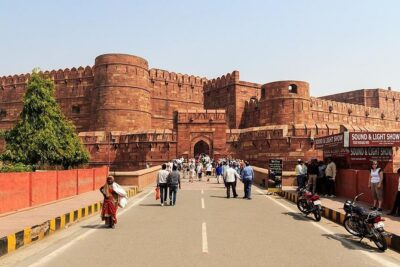
- Agra Fort: UNESCO setting and the Mughal residence story
- Day 4 from Agra to Rajasthan classics: Fatehpur Sikri and Chand Baori
- Panch Mahal at Fatehpur Sikri: palace-like terraces in a designed landscape
- Chand Baori: the stepwell that becomes a photo machine
- Day 5 in Jaipur: Hawa Mahal, City Palace, Jal Mahal, Jantar Mantar, and Amber Fort
- Hawa Mahal: the breeze palace facade stop
- City Palace: Mughal–Rajput fusion and the center of Jaipur power
- Jal Mahal: a palace in the lake, best viewed from the edges
- Jantar Mantar: monumental masonry for time and measurement
- Amber Fort: the hilltop fort that ends the day with weight
- Day 6 back to Delhi: transfer time and the last checklist
- Transportation, guides, and group size details that actually matter
- Hotels and breakfasts: what’s included, what’s on you
- Should you book this Golden Triangle private tour?
- FAQ
- What is the duration of the Golden Triangle tour?
- Is transportation private, and are transfers included?
- Are entrance tickets included in the price?
- Are meals included?
- Which days are major attractions closed?
- How does the tour handle rooming for 3 people?
Key things I’d bank on
- Private pickup and transfers across airport and hotels, no public transport puzzles
- Different English-speaking guides in Delhi, Agra, and Jaipur for a fresh local voice each day
- Entrance fees not included, so you can choose what’s worth paying for
- Comfortable car matched to your group size (sedan, SUV, or mini van) plus water bottles
- A best-of route: Humayun’s Tomb, Taj Mahal, Fatehpur Sikri, Chand Baori, Jaipur palaces, Amber Fort
- Smooth, punctual operation that even a first-timer can handle well, with driver Mantun noted for keeping things running
Why this Delhi–Agra–Jaipur private tour feels low-stress
This is the kind of Golden Triangle itinerary that removes the daily friction. You’re not coordinating taxis, not chasing meeting points, and not trying to translate ticket lines while traffic does its own thing. Each day you get a pickup flow built around your hotel, and you move between sights in a comfortable private vehicle.
The big win for me is the way the tour uses local guides by city. Delhi and Agra do not feel like the same story, and Jaipur certainly isn’t a repeat of Mughal monuments. With a different English-speaking guide in each city for sightseeing day time, you get a better chance of understanding what you’re seeing instead of just collecting photos.
Then there’s the flexibility. Because entrance fees are not included, you can decide on the spot what you want to pay to enter and what you’d rather view from the outside or skip. That matters when you’re traveling with different interests in one group, or when you want to slow down after a long photo-heavy stretch.
You can also read our reviews of more private tours in New Delhi



Price and value reality check (and what extra costs to expect)
The tour price is listed as $40 per person, and it often gets booked about 38 days in advance. That base rate is attractive, but here’s the honest math you should keep in your head.
Entrance tickets are not included, and the estimate given is around $70 per person. That’s typical for a Golden Triangle combo because multiple major sites charge separate fees, especially in Delhi, Agra, and Jaipur. Meals are also not included, and tips are not included.
So, for budgeting, you should think in terms of:
- Tour + hotel breakfast + private transport + city guide time
- Plus entrance tickets (about $70 per person estimate)
- Plus meals, plus tips
One more value point: private transportation and hotel transfers are included, which usually costs more if you try to piece it together yourself. If you’re the type who hates “cheap but complicated,” this setup often wins.
Also note the timing detail: Taj Mahal closes every Friday. If your Agra day lands on a Friday, you’ll need the itinerary to adjust around that, or you’ll end up making peace with a less perfect day-one big moment.
If you like peace of mind, the provider offers free cancellation up to 24 hours in advance for a full refund, which makes it easier to commit without overthinking.
Day 1 in Delhi: airport pickup, hotel check-in, and getting your bearings
Day 1 is straightforward: you get picked up from the airport and transferred to your Delhi hotel. It’s about 40 minutes, and the goal is simple—get you settled without drama.
This is a smart first day design. Delhi can be overwhelming even when you only do one or two sights. By keeping Day 1 light, you avoid the common “we landed, now we fight the city” mistake.
Practical tip: use this time to confirm your hotel address for pickup the next morning, and take five minutes to figure out where you’ll walk versus where you’ll need to grab a rickety auto. It saves energy later.
Day 2 in Delhi: Humayun’s Tomb, Jama Masjid, Qutub Minar, and the Lotus Temple closeout
Delhi day is a mix of Mughal power, religious architecture, and a few major modern landmarks.
Humayun’s Tomb: a Mughal garden-tomb that started a style
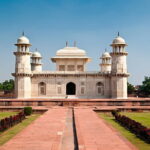
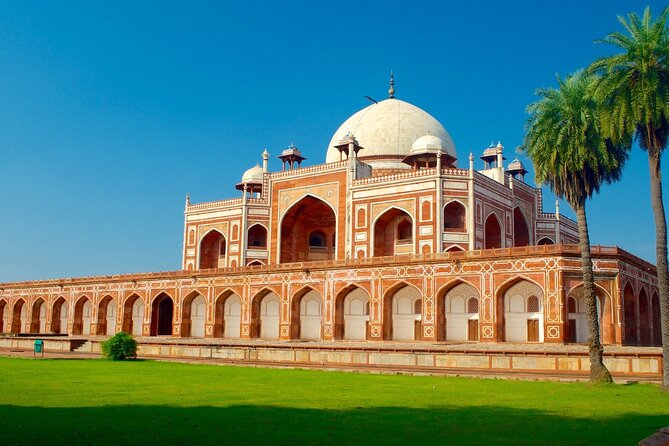
You’ll visit Humayun’s Tomb, described as the first garden-tomb on the Indian subcontinent. It’s set in Nizamuddin East, near Dina-panah Citadel (Old Fort), and it’s tied to Humayun’s reign with a reference point of 1533.
What makes it special is the garden-tomb concept. Instead of a tomb sitting alone, you get a whole designed environment—symmetry, pathways, and a slower pace. Even if you’re not a “tomb person,” this one tends to work because it’s visually clear and emotionally calmer than the larger forts.
Drawback to plan for: entrance tickets are not included, so you’ll want to treat this as a paid-stop decision unless you’re okay moving quickly or viewing from outside.
You can also read our reviews of more tours and experiences in New Delhi






Jama Masjid: scale matters in one of India’s largest mosques
Next is Jama Masjid, one of the largest mosques in India, built by Mughal Emperor Shah Jahan between 1650 and 165-something (the description cuts off, but the key is Shah Jahan and the mid-1600s). It’s the kind of place where your brain registers size before it registers details.
How to enjoy it: go with respectful patience. If you’re sensitive to crowds, choose a calmer time of day if you can, and remember you’re visiting a living religious space.
Also: dress respectfully for mosques and temples. This isn’t just politeness—it affects how comfortable you’ll feel as you move through the complex.
Qutub Minar: the 73-meter tower and the stone history feel
Then comes Qutub Minar, a 73-meter-high tower built in 1193 by Qutub-ud-Din Aibak. It’s famous for its stacked design—five storeys and projecting balconies are mentioned—and it’s the highest tower in India, according to the tour notes.
If you like architecture, this is an easy highlight. It’s also a good place to practice slow looking: notice how the design changes from level to level rather than treating it like one quick “standing tall” photo.
Entrance tickets are not included here either.
Lotus Temple: flower-shaped calm, with a weekday closure caveat
After the big monuments, the day shifts to the Lotus Temple. It’s a Baháʼí House of Worship, dedicated in December 1986, with that flowerlike design that makes it instantly recognizable from a distance.
The tour says admission is free and includes it on Day 2, but there’s a key schedule note: Lotus Temple closes every Monday. If your tour date puts Day 2 on a Monday, you might need a swap or you may find the temple closed.
India Gate and Raj Ghat: short stops that add meaning
The day ends with two quick but meaningful landmarks:
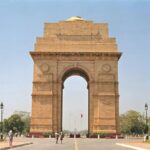
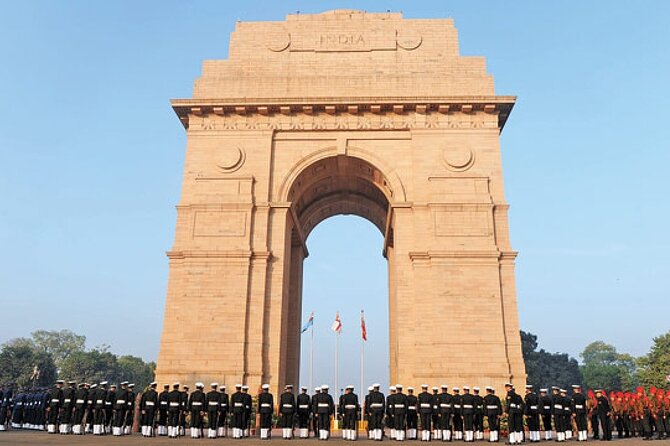
- India Gate, the Delhi war memorial for British India troops who died in wars fought between 1914 and 1919
- Raj Ghat, the marble platform where Mohandas Karamchand Gandhi was cremated on January 31, 1948
These are not long-exploration stops, but they work well because they ground your trip beyond palaces and tombs. You’ll leave with a sense of how modern India narrates its own history.
Day 3 in Agra: Taj Mahal (if it’s open) plus Agra Fort
Day 3 is where the Golden Triangle does what it promises: the Taj Mahal.
Taj Mahal: the big-ticket icon, and the one schedule rule to remember
The plan includes Taj Mahal, an ivory-white marble mausoleum on the south bank of the Yamuna River. It was commissioned in 1632 by Shah Jahan.
You’ll spend about 3 hours, which is a good amount of time if you want to see it without feeling like a speed-run. The tour notes say entrance tickets are not included, and they also warn that the Taj Mahal closes every Friday.
If your day lines up with Friday closure, don’t panic—just be ready to adjust expectations or swap in another Agra highlight.
Timing advice that matches the tone of the tour: if you care about softer light and fewer crowds, go early when possible. Even without promising sunrise, arriving before the day fully heats up usually makes the experience easier.
Agra Fort: UNESCO setting and the Mughal residence story
After the Taj, you’ll visit Agra Fort, listed as a UNESCO World Heritage site. The key idea from the description: it was the main residence of Mughal emperors until 1638, when the capital shifted from Agra to Delhi.
Your time here is about 45 minutes. That’s enough for a focused visit, especially if you pick a handful of viewpoints and don’t try to see every corner. This is a good counterbalance to Taj Mahal: one is a single masterpiece you stare at; the other is a fort complex you move through.
Day 4 from Agra to Rajasthan classics: Fatehpur Sikri and Chand Baori
Day 4 is built around two very different “wow” moments: a Mughal-era complex and a stepwell that looks unreal.
Panch Mahal at Fatehpur Sikri: palace-like terraces in a designed landscape
You’ll head to Fatehpur Sikri, with a stop labeled Panch Mahal – Fatehpur Sikri. Fatehpur Sikri is described as being constructed on slopping levels of the Vindhyan hill outcrops, southeast of an artificial lake.
The included time is about 1 hour, which is enough to get the layout and major structures without rushing. If you like visual geometry—terraces, levels, and how spaces connect—this place usually works.
Entrance tickets are not included, so treat it like a paid choice.
Chand Baori: the stepwell that becomes a photo machine
Next is Chand Baori, the stepwell in Abhaneri village, described as one of the oldest and most popular attractions. It’s said to be built by King Chanda of the Nikumbha Dynasty in the 9th century AD, and it’s noted as one of the largest stepwells.
You’ll spend around 30 minutes. That’s perfect for this kind of site because the big idea is visible fast: the depth, the repetition of steps, and the way light falls into the well.
One practical consideration: stepwells can feel scorching and the stairs can be tiring. Wear comfortable shoes and be ready for sun exposure depending on the time of day.
Day 5 in Jaipur: Hawa Mahal, City Palace, Jal Mahal, Jantar Mantar, and Amber Fort
Jaipur day is a smart loop: facade icons in quick hits, then two bigger payoffs.
Hawa Mahal: the breeze palace facade stop
The tour includes Hawa Mahal – The Palace of Breeze, a five-storey building described as the tallest building built without a foundation, with curved architecture leaning at an 87-degree angle. You’ll have about 15 minutes and admission is listed as free.
In other words: plan for photos and a quick orientation rather than a long inside experience (the tour time supports that approach). This stop is best when you’re okay with a “look and move” rhythm.
City Palace: Mughal–Rajput fusion and the center of Jaipur power
Then you’ll visit the City Palace complex, built by Maharaja Sawai Jai Singh II, described as a fusion of Mughal and Rajput architecture. Time is about 1 hour, and entrance tickets are not included.
This is where the day gains context. Facades are fun, but a palace complex helps you understand how Jaipur’s rulers used architecture to project authority.
If you prefer to move slower, you can use this hour to sit a bit, ask questions, and focus on the design influences rather than collecting every room.
Jal Mahal: a palace in the lake, best viewed from the edges
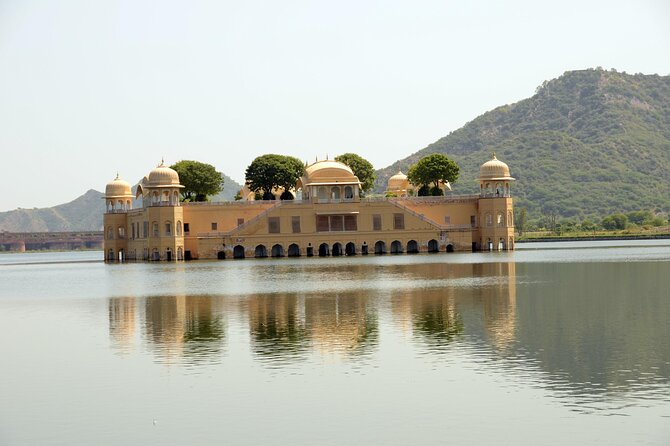
Next is Jal Mahal, the palace located in the middle of Man Sagar Lake. It’s described as constructed in 1699, later renovated and enlarged in the 18th century.
Your time is about 15 minutes, and admission is listed as free. This is more of a visual palate cleanser: you get a quiet, scenic break between big monuments.
Jantar Mantar: monumental masonry for time and measurement
After that comes Jantar Mantar – Jaipur, an astronomical observation site built in the early 18th century. It includes about twenty main fixed instruments, built as monumental masonry examples.
The stop is about 1 hour, and entrance tickets are not included.
If you’re the kind of traveler who enjoys the logic behind designs, this is a highlight. The measurements are the story. Even if you don’t go deep, you’ll leave understanding that this was science expressed in stone.
Amber Fort: the hilltop fort that ends the day with weight
Finally, Amber Fort (Amer Fort), a UNESCO World Heritage site on a hilltop overlooking Maota Lake. It’s commissioned by Raja Man Singh I in the 16th century.
Your time is about 1 hour, and entrance tickets are not included.
This stop can feel more physically demanding than it looks on a map. Give yourself time to walk, climb what you need to climb, and take breaks. If you’re traveling with kids or older family members, this is the place to slow down rather than force it.
Day 6 back to Delhi: transfer time and the last checklist
Day 6 is a transfer from Jaipur to the Delhi airport or hotel drop. It’s listed as about 5 hours.
This is the right time to think about your return logistics: keep your essentials in a day bag, and don’t plan any serious shopping that would leave you short of time. You’ll want your energy for departure.
Since meals are not included, I’d also plan to handle lunch en route with whatever’s easiest for your comfort level, rather than assuming it’s built into the schedule.
Transportation, guides, and group size details that actually matter
This is a private tour, so your group doesn’t get mixed into strangers’ plans. The vehicle changes by group size:
- 1 to 2 people: sedan such as Swift Dezire
- 3 to 4 people: SUV such as Maruti Ertiga or Toyota Innova
- 5 to 10 people: 12-seater mini van such as Tempo Traveller
That matters because it affects comfort and how quickly you can load/unload at busy sites. There’s also fuel, toll plaza costs, and state tax included, plus airport and hotel transfers.
You’ll also have water bottles included, which sounds basic, but it genuinely helps on hot days and long sightseeing stretches.
Guide coverage is described as an English-speaking guide for sightseeing day only, and the guide changes by city. That means you should expect a more structured explanation on sightseeing days, with your driver handling the driving and timing.
One specific human note from past experience: driver Mantun has been singled out for making the trip smoother and more comfortable through punctual driving and good on-the-ground support.
Hotels and breakfasts: what’s included, what’s on you
You get five nights of hotel with breakfast included (if you choose the hotel options). Breakfast is listed as included five times.
Your lodging details like exact property names and star rating aren’t specified here, so you’ll want to treat it as “included and good for recovery,” not as a guarantee of luxury.
Meals aren’t included. That’s not a problem, but it does mean you’ll decide where to eat each day. A good guide setup helps here: you’ll likely receive practical recommendations for food and shopping, which can save time when you’re tired.
For rooms: if you’re booking 1 to 2 people, rooms are generally single/double/twin sharing. If you book for 3 people, the tour notes say you’ll likely get triple sharing in one room (one double bed plus one extra bed). If you want two rooms for three people, that may require an additional charge based on hotel category.
Should you book this Golden Triangle private tour?
I’d book this if you want the Golden Triangle without the planning burden. It’s especially worth it if:
- You’re visiting Delhi, Agra, and Jaipur for the first time and want a route that hits the big names
- You care about a smoother experience with a private car and hotel transfers
- You like the idea of local guides in each city instead of one guide trying to cover everything
- Your group has mixed interests, and you’d use the entrance-fee flexibility to choose what matters most
I wouldn’t book it if your priority is a fully ticket-included, start-to-finish guided day at every site. Since entrance fees are extra and some stops have shorter guide time, you’ll need to accept a bit of self-paced space.
Bottom line: this is a strong value style of Golden Triangle—private transport, city guides, and hotel breakfasts—plus the option to control how much you pay to enter monuments.
FAQ
What is the duration of the Golden Triangle tour?
The tour runs for 6 days and 5 nights.
Is transportation private, and are transfers included?
Yes. You get private transportation, including airport and hotel transfers.
Are entrance tickets included in the price?
No. Entrance tickets are not included, with an estimated total of about USD 70 per person.
Are meals included?
Breakfast is included for 5 days, but meals are not included.
Which days are major attractions closed?
The Taj Mahal closes every Friday. In Delhi, Red Fort, Lotus Temple, and Akshardham temple close every Monday.
How does the tour handle rooming for 3 people?
For 3 people, rooms are generally provided on a triple sharing basis (one double bed plus one extra bed in the same room). If you want two rooms for 3 people, an additional charge may apply depending on hotel category.