REVIEW · NEW DELHI
6-Day Private Tour of Delhi, Agra, Jaipur, and Pushkar from Delhi
Book on Viator →Operated by Limra Holiday · Bookable on Viator
Most trips try to do too much. This one maps out Delhi, Agra, Jaipur, and Pushkar in a smooth loop. You get a ready-made plan with major landmarks like Taj Mahal (sunrise) plus a full day of Pushkar’s ghats and Brahma Temple energy.
What I like most is how the schedule mixes big-ticket sights with real place-feeling markets and temples. I also like that it’s a private tour with pickup from your Delhi hotel, so you’re not guessing how to connect the days on your own.
One thing to consider: this is a packed itinerary, so you’ll want energy for early starts and long drives between cities. If you prefer slow travel and lots of free time, you might feel rushed.
In This Review
- Key things to know before you go
- A 6-Day Private Route Through Delhi, Agra, Jaipur, and Pushkar
- Day 1 in Delhi: India Gate to Old Delhi markets to Akshardham and Humayun’s Tomb
- India Gate (15 minutes)
- Raj Ghat (30 minutes)
- Parliament House (15 minutes)
- Jama Masjid (1 hour)
- Chandni Chowk (30 minutes)
- Swaminarayan Akshardham (1 hour)
- Lotus Temple (30 minutes)
- Qutub Minar (1 hour)
- Humayun’s Tomb (1 hour)
- Day 2 Agra Drive: Hotel check-in plus a Taj Mahal sunset viewpoint
- Taj Mahal Sunset View Point (30 minutes)
- Itmad-ud-Daulah’s Tomb (30 minutes)
- Day 3 Sunrise Taj Mahal, Agra Fort, and Fatehpur Sikri
- Taj Mahal at sunrise (2 hours)
- Agra Fort (1 hour)
- Fatehpur Sikri (1 hour)
- Transfer to Jaipur with a hotel check-in (drive time included)
- Day 4 Jaipur: Panna Meena ka Kund, Jal Mahal, Hawa Mahal, City Palace, and Jantar Mantar
- Panna Meena ka Kund (15 minutes)
- Jal Mahal (15 minutes)
- Hawa Mahal (15 minutes)
- City Palace of Jaipur (1 hour)
- Jantar Mantar (1 hour)
- Day 5 Pushkar: Varaha Temple, Pushkar Lake ghats, Brahma Ghat evening rituals, and Brahma Temple
- Varaha Temple (25 minutes)
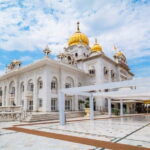
- Gurudwara Sahib (25 minutes)
- Pushkar Lake and Sunset/Raj Ghat area (20 minutes)
- Brahma Ghat with evening fire ceremony and aarti (30 minutes)
- Brahma Temple (30 minutes)
- Rangji Temple near Varaha Ghat (brief stop)
- Pushkar Main Market and Halwai Gali (30 minutes)
- Day 6: Back to Delhi and your return home
- Price and what you get for $570 per person
- Who this private tour suits best
- Should you book this Delhi–Agra–Jaipur–Pushkar private tour?
- FAQ
- What cities are included in this 6-day private tour?
- Is pickup included?
- Are entrance tickets included?
- What does the tour price include besides sightseeing?
- Is lunch or dinner included?
- Is this tour private?
- What ticket and confirmation options are listed?
- Can I cancel for a full refund?
Key things to know before you go
- Private, set itinerary: you get a plan for each city, not a loose suggestion list.
- AC car + pickup: Delhi hotel pickup and drop are built into the experience.
- Taj Mahal timing options: you have a sunset viewpoint in Agra plus a sunrise Taj Mahal visit.
- Delhi is more than monuments: Jama Masjid, Chandni Chowk, and major modern sites are part of Day 1.
- Pushkar has ritual time: evening Brahma Ghat area aarti/fire-ceremony focus is scheduled.
- All the entrance fees are handled: monument tickets are included, with lunch/dinner left for you.
A 6-Day Private Route Through Delhi, Agra, Jaipur, and Pushkar
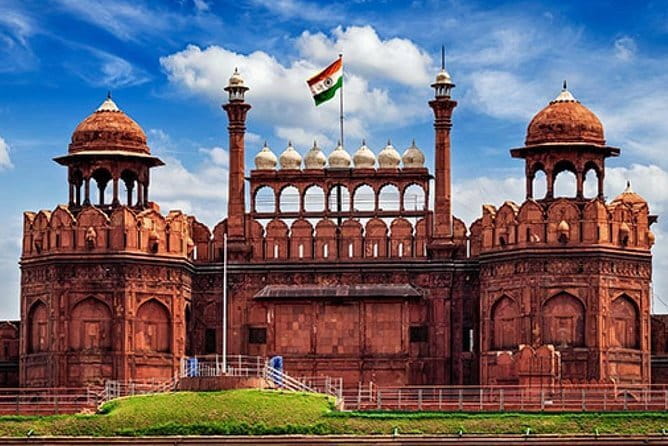
If you like structure—someone else handling the order of stops—this tour works. In 6 days you cover the classic North India circuit plus Pushkar, which is a different vibe than the big imperial cities. Delhi gives you layers: British-era memorials, Mughal-era mosques, and modern spiritual campuses. Then you switch to Agra’s Mughal pulse, Jaipur’s geometric royal design, and finally Pushkar’s lake-and-ghat atmosphere.
The private nature matters here. You’re not stepping over other groups all day long. You also tend to move faster at key points because your guide can help you keep the day moving without stopping to figure out logistics.
That said, the route is built for seeing. You’ll spend time in the car, and many stops are described as short blocks (often 15–60 minutes). That’s not bad—it’s just how the tour is designed. If your travel style is more do-nothing-and-wander, you might want to add extra nights in one city.
You can also read our reviews of more private tours in New Delhi
Day 1 in Delhi: India Gate to Old Delhi markets to Akshardham and Humayun’s Tomb
Delhi can feel like two cities at once. Day 1 leans into that. You start with big ceremonial landmarks, then you shift into Old Delhi’s religious and market world, then you end with a couple of standout spiritual sites and Mughal architecture.
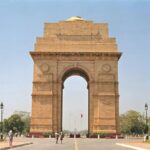
India Gate (15 minutes)
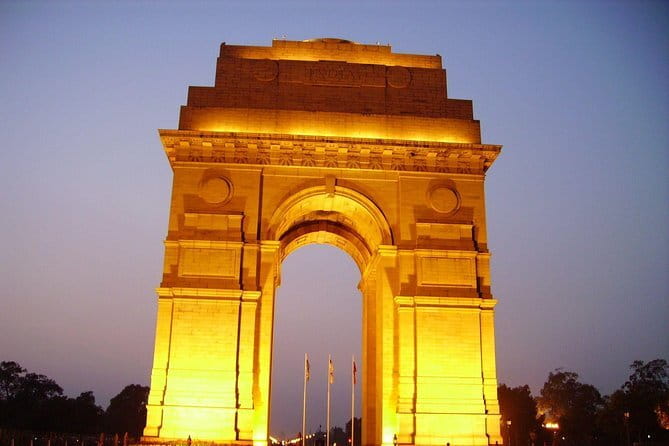
India Gate is your easy orientation stop. It’s a World War I memorial built in honor of Indian soldiers—designed by Edwin Lutyens. Even if you don’t read every inscription, the layout helps you understand why this is a national meeting point and photo spot. You’ll likely get quick context from your guide, which is useful because Delhi has a lot of monuments and not all of them are obvious at first glance.
Raj Ghat (30 minutes)
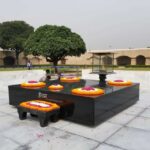
Raj Ghat is a memorial dedicated to Mahatma Gandhi. It’s close to Old Delhi history, and it marks a place that feels quiet even though the city around it is busy. This stop works well because it slows the day down for a bit, and it sets a thoughtful tone before you head into more crowded areas later.
Parliament House (15 minutes)
The Sansad Bhavan (Parliament House) is included as a quick, photo-and-overview stop. It’s one of those Delhi highlights that looks better when you understand its role as India’s seat of national government.
You can also read our reviews of more tours and experiences in New Delhi


Jama Masjid (1 hour)
Jama Masjid is one of Delhi’s largest mosques, built by Mughal emperor Shah Jahan between 1650 and 1656. Your guide’s job here is important, because this place can be intimidating if you don’t know how to behave, where to look, and what the surrounding details mean. You’ll get a longer window here than some stops, which helps you absorb the scale.
Chandni Chowk (30 minutes)
Then you move into Old Delhi’s market heart. Chandni Chowk is known as one of the oldest and busiest market streets, and it’s close to the Old Delhi Railway Station. The trip through the area is short, but it’s enough to experience the energy: narrow lanes, shops stacked tight, and a lot happening fast. If you’re the type who likes to snack and people-watch (politely), this part is fun.
Swaminarayan Akshardham (1 hour)
From chaotic lanes to a carefully designed spiritual campus—Akshardham—Day 1 gives you range. It’s a Hindu temple complex near the Noida border, and it’s the kind of place where you can slow down and just watch how the complex is laid out. You’ll want to dress respectfully, and you’ll likely notice how “campus” is the right word here: it’s not just one building.
Lotus Temple (30 minutes)
The Lotus Temple is a Bahá’í House of Worship with that unmistakable flower-like shape. What I find useful about stopping here on a tight day is that it gives you a different architectural language than the Mughal sites you’ll see later. It’s also a good reset if the Old Delhi market stop feels like sensory overload.
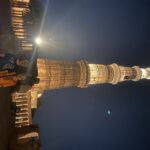
Qutub Minar (1 hour)
Qutub Minar, part of the Qutb complex, is a UNESCO World Heritage site and part of Delhi’s earliest fortified city area. It’s a “look up” stop, and it usually leaves people feeling impressed even if they don’t know the full story. You’ll get the basic context: a victory tower and a key marker of the earlier Delhi landscape.
Humayun’s Tomb (1 hour)
You finish Day 1 with Humayun’s Tomb, the Mughal Emperor Humayun’s tomb, commissioned in 1569–70. This is one of those sites that makes the next days easier to appreciate, because you start seeing Mughal design thinking in stone—layout, symmetry, and gardens.
Day 2 Agra Drive: Hotel check-in plus a Taj Mahal sunset viewpoint
Day 2 is where the pace starts to feel more “journey” than “city sightseeing.” After breakfast you head to Agra via Yamuna Expressway. Once you arrive, you check in at your hotel. Having a hotel stop built in is practical; it means you’re not trying to do major sightseeing and sleep planning at the same time.
Taj Mahal Sunset View Point (30 minutes)
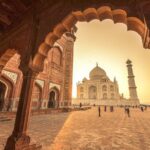
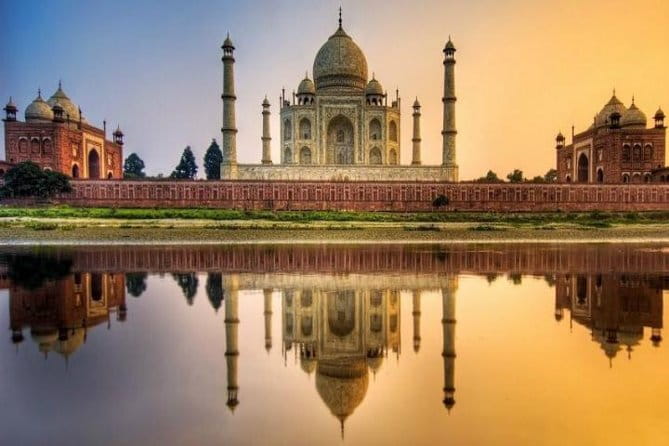
The tour schedules a Taj Mahal sunset viewpoint across the river away from the thickest crowds. The value here is timing. Sunset light changes everything: the marble looks less stark, and the sky reflection gives the Taj a softer glow. Even if you’ve seen photos before, this is one of those moments where the scene feels more calm than crowded-landmark energy.
Itmad-ud-Daulah’s Tomb (30 minutes)
Next is Itmad-ud-Daulah’s Tomb, a Mughal mausoleum often seen as a design stepping stone toward the Taj Mahal. It’s a smaller stop than Taj, but it’s worth it. You’ll notice details—patterns and craftsmanship—that are easier to appreciate when you’re not overwhelmed by the scale of the main monument.
Day 3 Sunrise Taj Mahal, Agra Fort, and Fatehpur Sikri
Day 3 is your big Mughal day. It starts with sunrise Taj Mahal, then you keep going into the Mughal city beyond Agra.
Taj Mahal at sunrise (2 hours)
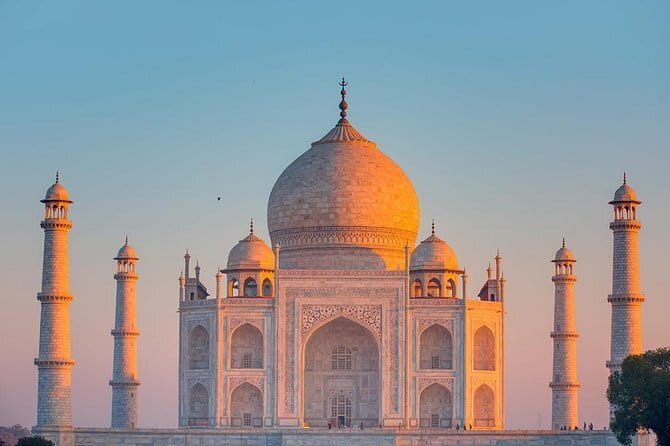
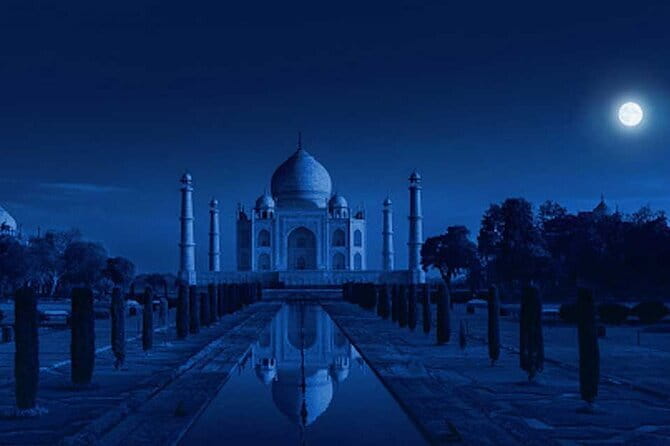
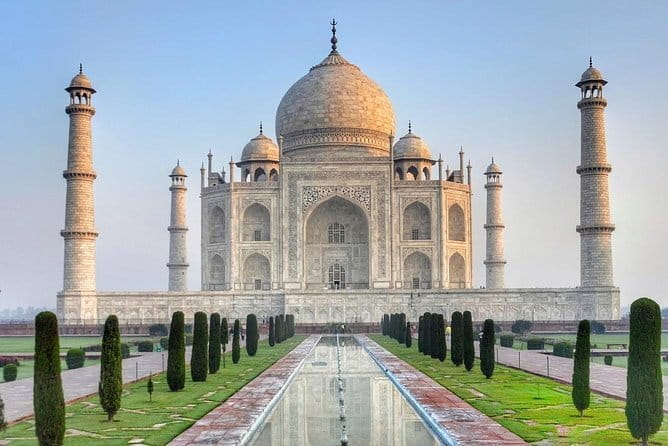
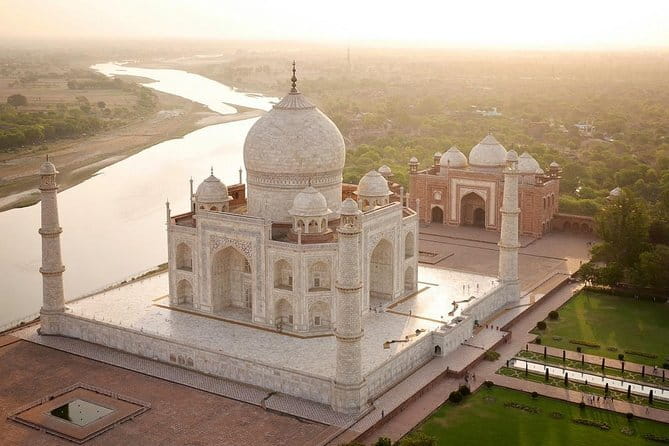
This is the anchor. The tour specifically calls out a sunrise visit. That timing matters because sunrise often brings cooler air and a calmer feel than later in the morning. Taj Mahal was built by Shah Jahan in memory of his wife Mumtaz Mahal, who died in 1631 while giving birth to their 14th child—details like that help the monument land emotionally, not just visually.
You’ll get a two-hour window. That’s long enough to take in the symmetry, work your way around the vantage points your guide suggests, and still have time to slow down rather than sprint from photo spot to photo spot.
Agra Fort (1 hour)
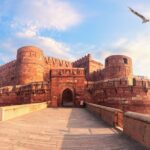
Agra Fort is a historical fort and was the main residence of Mughal emperors until the capital shifted from Agra to Delhi in 1638. The value of this stop is perspective: the Taj Mahal is the romance. Agra Fort is the power.
Fatehpur Sikri (1 hour)
Fatehpur Sikri is about 40 km from Agra and is known for its Mughal arc of monuments. On a tight itinerary, one hour is more of a highlight pass than a full exploration. But it still adds variety: you get the sense of a planned imperial settlement, not just one city’s main landmark.
Transfer to Jaipur with a hotel check-in (drive time included)
After Fatehpur Sikri, you continue to Jaipur—then check in. The tour includes a multi-hour drive buffer, which matters for comfort. You’ll arrive with enough energy to enjoy Day 4 rather than feeling like you got “transported” and then dumped into museums.
Day 4 Jaipur: Panna Meena ka Kund, Jal Mahal, Hawa Mahal, City Palace, and Jantar Mantar
Jaipur is where the visuals get sharp. The pink and red sandstone look show up everywhere, and the forts and palace shapes feel designed for angles and sightlines. Day 4 mixes photo-famous buildings with working interpretive sites.
Panna Meena ka Kund (15 minutes)
This is a step well believed to be around 1000 years old. It’s linked to the Meena Dynasty era and used for Hindu ceremonies. On a sightseeing day, it’s a good palate cleanser because it’s not a palace façade—it’s an everyday-use structure with cultural meaning.
Jal Mahal (15 minutes)
Jal Mahal sits in the middle of Man Sagar Lake. The palace dates to 1699, with later renovations to the building and surrounding lake. Even if you don’t go inside, it’s a satisfying break: you get reflections, calm water views, and a different kind of architectural charm than Hawa Mahal.
Hawa Mahal (15 minutes)
Hawa Mahal, the Palace of Wind, is built from red and pink sandstone and extends to the Zenana women’s chambers area near City Palace. The “why it’s famous” part is the façade—lots of small windows built for airflow and observation. In a short stop, your guide can help you spot what you’re looking at so it doesn’t turn into just another pretty building.
City Palace of Jaipur (1 hour)
City Palace is a royal residence and former administrative headquarters of Jaipur’s rulers. Construction started soon after Jaipur was established. A longer stop here makes sense because City Palace isn’t one photo angle—it’s a complex. You’ll get time to see why it’s central to Jaipur’s identity.
Jantar Mantar (1 hour)
Jantar Mantar is a collection of 19 astronomical instruments built by Rajput king Sawai Jai Singh, completed in 1734. This one often surprises people because it’s science framed as architecture. If you enjoy seeing how old knowledge gets built into physical objects, you’ll enjoy the explanation that turns the stones into a system.
Day 5 Pushkar: Varaha Temple, Pushkar Lake ghats, Brahma Ghat evening rituals, and Brahma Temple
Pushkar is the change of pace. Instead of grand imperial monuments, you get a sacred town built around the Pushkar Lake and ritual spaces. Day 5 has a strong religious focus, and that’s the point.
Varaha Temple (25 minutes)
Varaha Temple is dedicated to Lord Vishnu and is considered one of the eight Swayambhu Kshetra of Vishnu. The tour describes it as dating to the 12th century, built by King Anaji Chouh. Even in a shorter stop, you’ll feel that this place is not just a sightseeing item—it’s part of living devotion.
Gurudwara Sahib (25 minutes)
You’ll also visit a Gurudwara Sahib, with an emphasis on Sikh history and beliefs and why Pushkar is sacred for the Sikh religion too. This is valuable because it shows Pushkar isn’t locked into one community. It’s a multi-faith sacred landscape.
Pushkar Lake and Sunset/Raj Ghat area (20 minutes)
The tour schedules time at Pushkar Lake, also described as a sunset point area known as Raj Ghat. You’ll have time for the atmosphere, and the slot suggests watching the evening build. This is a good moment to slow down and just take in the water-and-ghat rhythm.
Brahma Ghat with evening fire ceremony and aarti (30 minutes)
This is the heart of the day’s scheduled evening ritual. Brahma Ghat is described as a place for breathtaking evening rituals and the aarti experience. Even if you’re not sure what you’re seeing at every step, the timing is right—rituals often look best when you’re there in person as the sun goes down and the area shifts from daytime activity into ceremony mode.
Brahma Temple (30 minutes)
Brahma Temple is the famous stop: it’s described as the only temple dedicated to Lord Brahma. The structure is said to date to the 14th century with later renovation, and the temple is described as built with black and white marble stones.
Rangji Temple near Varaha Ghat (brief stop)
The tour also includes a stop connected to the old Rangji Temple near Varaha Ghat, described as about 200 years old and dedicated to Lord Vishnu.
Pushkar Main Market and Halwai Gali (30 minutes)
After temples, you shift into lanes and shopping energy at the Pushkar Main Market. The tour calls out photography spots along narrow lanes and mentions Halwai Gali, known for malpuas, plus Gandhi Ghat. This is a nice contrast: you finish with the human street-level side of Pushkar.
Day 6: Back to Delhi and your return home
Day 6 is straightforward: around 9:00 AM, your driver comes to your hotel, you check out, then you drive back to Delhi. The tour ends with sweet memories of Delhi, Agra, Jaipur, and Pushkar.
Practically, I treat this kind of day as a travel buffer. Don’t plan anything intense right after you arrive in Delhi. If you have a late-night flight, build in a little margin so you’re not stressing about getting meals or a final stop in.
Price and what you get for $570 per person
At $570 per person for a 6-day private tour, the key value is that it bundles the big cost items and keeps decisions off your plate.
Included:
- Luxury AC car for the route and transfers
- Pickup and drop from your Delhi hotel or airport
- 5 nights accommodation with bed and breakfast, plus taxes
- All entrance/monument ticket fees
- English-speaking approved guide for Delhi, Agra, and Jaipur
- Fuel and state taxes
Not included:
- Tips to driver and guide
- Lunch and dinner
Here’s how I’d think about it: you’re paying for transportation, time-saving organization, and the “don’t-mess-this-up” factor of having tickets and guidance handled. If you were to DIY the Delhi–Agra–Jaipur driving route with entrance fees and a good guide, costs add up quickly, especially if you want a smooth, private flow rather than public transport juggling.
One caution: the itinerary includes many short stops. You’ll get a solid overview, but you won’t have hours to linger at every site. If you’re the type who wants to go slow and do extra museums or shopping time in each city, you’ll need to add your own free time.
Who this private tour suits best
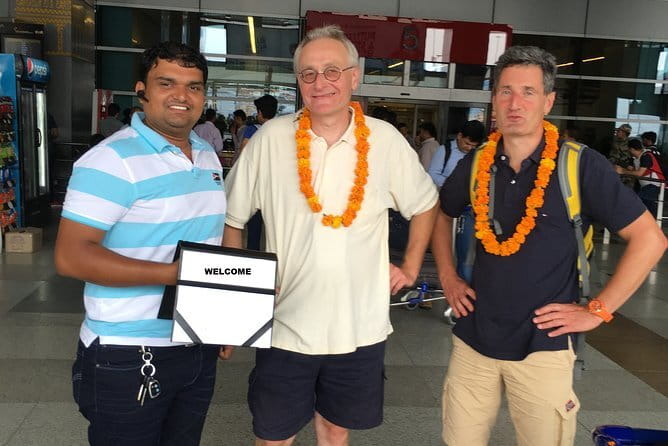
This tour is a good fit if you:
- Want a private route with an AC car and pickup
- Like a guided day plan that hits major highlights without you organizing details
- Want both imperial monuments and a real spiritual town stop in Pushkar
- Prefer having entrance fees handled rather than buying each ticket yourself
It may be less ideal if you:
- Want lots of unplanned wandering or long stays at each site
- Dislike early starts (the sunrise Taj Mahal is a major feature)
- Want more free time for independent shopping and extra meals
Should you book this Delhi–Agra–Jaipur–Pushkar private tour?
Yes, if you want a well-organized private circuit and you’re excited by a mix of monuments and ritual time. The schedule gives you real anchors: Delhi’s major mosque/market/monument contrast, Agra with both sunset viewpoint and sunrise Taj Mahal, Jaipur’s City Palace and Jantar Mantar, then Pushkar’s Brahma Temple and evening ghats experience.
If your top priority is a relaxed pace, or you already know you want to spend extra time in one city, you may get more value by extending your stay in that place and keeping only part of this itinerary. But for most first-timers who want to see the essentials without logistics headaches, this is a strong, straightforward value.
FAQ
What cities are included in this 6-day private tour?
The tour covers New Delhi, Agra, Jaipur, and Pushkar.
Is pickup included?
Yes. The tour includes pickup and drop back to your hotel (and it also mentions pickup/drop from the airport in New Delhi).
Are entrance tickets included?
Yes. All entrance and monument ticket fees are included.
What does the tour price include besides sightseeing?
It includes a luxury AC car, 5 nights accommodation with bed and breakfast, guide services (English speaking approved guide for Delhi, Agra, and Jaipur), and fuel and state taxes.
Is lunch or dinner included?
No. Lunch and dinner are not included.
Is this tour private?
Yes. It is described as a private tour/activity, and only your group participates.
What ticket and confirmation options are listed?
You get a mobile ticket, and confirmation is received at the time of booking.
Can I cancel for a full refund?
Yes. It offers free cancellation, with a full refund if you cancel at least 24 hours in advance of the experience start time. If you cancel within 24 hours, it states the amount is not refunded.