REVIEW · NEW DELHI
6-Day Private Tour of the Golden Triangle
Book on Viator →Operated by Indike Travels · Bookable on Viator
Six days, three cities, one private ride. This Golden Triangle transfer is interesting because it stitches together Delhi, Agra, and Jaipur with a private, air-conditioned car and driver, so you spend less time wrestling transport and more time seeing the big landmarks. It’s also built for first-time visitors to India who want a structured plan without feeling herded.
I like two things right away: you get to take your time exploring North India, and you’re not dependent on slow, crowded public transport. The other big plus is that many of the major stops have admission handled, with all fees and taxes included in the package—so you’re not constantly doing math mid-trip.
One consideration: hotels are not included. You choose where you stay at an extra cost, and a couple stops are listed as not including admission (like the Chandni Chowk market time). That’s not a deal-breaker, but it does mean you’ll want to budget for lodging and a few extras.
In This Review
- Key highlights worth planning around
- Private Golden Triangle transfers: why it feels less stressful
- Day 1 in Delhi: Humayun’s Tomb, Jama Masjid, and Qutub Minar
- Old Delhi on Day 2: Chandni Chowk markets and the Gandhi Museum
- Day 3 to Day 4: Akshardham, the Taj Mahal, and Agra Fort
- Jaipur Day 5: Hawa Mahal, City Palace, and Jantar Mantar
- Day 6 Amer Fort: your final big moment above Jaipur
- Price and logistics: what $400 buys you (and what it doesn’t)
- Tips to get the most out of a private driver schedule
- Should you book this Golden Triangle private transfer?
- FAQ
- Is the tour private?
- What’s included in the price?
- Are hotel stays included?
- What time does the tour start?
- Are admission tickets included?
- Is there free cancellation?
- Does the tour depend on weather?
Key highlights worth planning around
- Private air-conditioned car and driver for door-to-door transfer between cities and sights
- Admission included for several major monuments (and clearly marked when it’s not)
- Taj Mahal gets two scheduled moments across Day 3 and Day 4, so you’re not stuck with one timing only
- Old Delhi + Gandhi stop on Day 2, mixing street life with a focused museum visit
- Jaipur landmarks in a tight loop on Day 5: Hawa Mahal, City Palace, and Jantar Mantar
- Indike Travels works with your pacing and may add extra sights if you have free time
Private Golden Triangle transfers: why it feels less stressful

The Golden Triangle is famous, which also means it can feel chaotic. This version helps by removing one of the hardest parts: getting from place to place efficiently. With a private car and driver, you’re not timing buses, squeezing into packed transit, or constantly checking routes while you’re trying to enjoy what’s in front of you.
You also get a useful kind of freedom. The plan is structured by city and sight stops, but it’s private, so the experience is less about “keeping up” and more about choosing when you want to slow down. That matters a lot on trips where it’s easy to feel like you’re just collecting photos.
You can also read our reviews of more private tours in New Delhi



Day 1 in Delhi: Humayun’s Tomb, Jama Masjid, and Qutub Minar
Delhi day one is a strong mix of Mughal-era architecture and landmark religious sites, with short visits that help you get your bearings fast. You start with Humayun’s Tomb, a major Mughal monument commissioned in 1569–70 by Humayun’s first wife and chief consort, Empress Bega Begum. Even in a 30-minute slot, it’s the kind of place where the layout teaches you how to look: symmetry, gardens, and the sense of scale that the Mughals liked to project.
Next you head to Jama Masjid. The time here is 30 minutes, and admission is listed as free. Jama Masjid is a working place of worship, so it’s less about museum-style viewing and more about respectful observation in an active setting. You’ll likely feel the rhythm of daily life around you more than you do at ticketed sites.
Then comes Qutub Minar, part of the UNESCO-listed Qutb complex in the Mehrauli area. Again, it’s a 30-minute stop, but that’s enough to appreciate why it’s such a famous vertical landmark. If you’ve only seen minarets in photos, seeing the actual height and details in person is a step-up.
Practical note: these are short segments by design. If you like to linger, this is where your private driver becomes useful—you can usually ask for a bit more time where you feel most interested.
Old Delhi on Day 2: Chandni Chowk markets and the Gandhi Museum
Day 2 shifts the mood. You spend about 3 hours in Chandni Chowk, which is one of those areas where the streets are the attraction. Expect a mix of stalls selling spices, dried fruit, silver jewelry, saris, and small shops with items like essential oils, stationery, and other everyday goods. It’s a great place for your first real taste of Delhi’s street commerce.
Admission for Chandni Chowk time is listed as not included, which is exactly how it should be for a market block—you’re paying for the experience by being there, not by buying a ticket. The tradeoff is that it can be crowded, so keep your expectations flexible. This is a “walk and look” day more than a “finish every store” day.
After the market, you switch to a calmer stop: the National Gandhi Museum for about 1 hour, with admission included. This museum is described as holding original relics, books, art pieces, and memorabilia connected closely with Mahatma Gandhi. If you want a break from negotiation and crowds, this is a clean reset. It also adds context to Gandhi beyond famous photos—exactly the kind of grounding that makes a political landmark feel real.
Day 3 to Day 4: Akshardham, the Taj Mahal, and Agra Fort
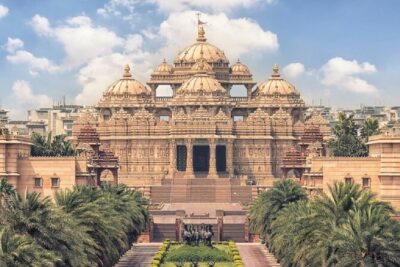
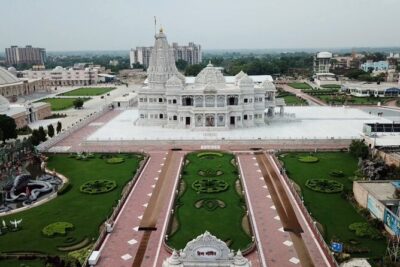
Agra is the centerpiece for most people, and the schedule reflects that. On Day 3, you’ll visit Swaminarayan Akshardham, a Hindu temple and spiritual-cultural campus in Delhi, with admission included for about 1 hour. It’s not a small “one building” stop. Even within a limited time window, it helps you understand how big Indian temple complexes can be—part worship space, part cultural campus.
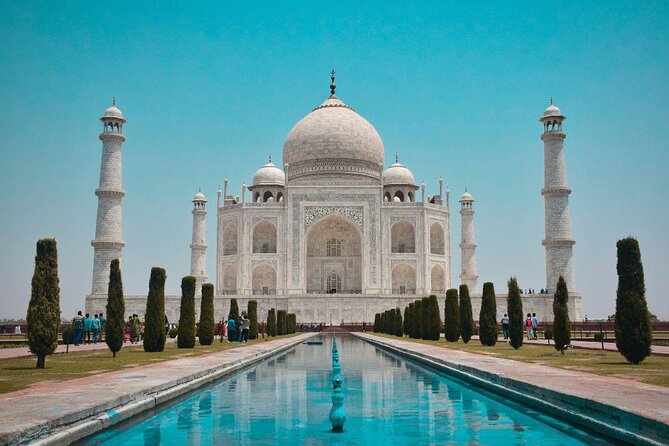
Then you go to the Taj Mahal for about 2 hours, with admission included. The Taj Mahal is an ivory-white marble mausoleum on the south bank of the Yamuna River. It was commissioned in 1632 by the Mughal emperor Shah Jahan to house the tomb of his favorite wife, Mumtaz Mahal. This is the moment where the architecture does the storytelling for you: the symmetry, the placement, and the way the light changes your perception of the marble.
The tour also includes a built-in second chance. On Day 4, you return to the Taj Mahal again for about 1 hour, admission included. That’s a smart way to handle timing. One visit can be affected by crowds, cloud cover, or just how your energy level is running. A second scheduled window gives you more flexibility to enjoy it in your preferred pace rather than treating it like a checklist item.
After that, you head to Agra Fort for about 30 minutes, with admission included. Agra Fort was the main residence of Mughal emperors until 1638, when the capital shifted from Agra to Delhi. It’s a great “history with structure” counterpoint to the Taj: instead of a single iconic monument, you get the fortress logic—defense, power, and how the empire organized life inside its walls.
Jaipur Day 5: Hawa Mahal, City Palace, and Jantar Mantar

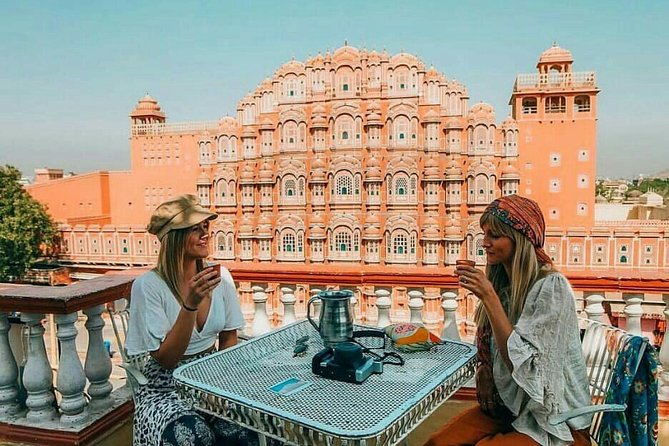
Day 5 is Jaipur’s greatest hits, and it’s paced to keep you moving without turning it into a speed run. You start at Hawa Mahal (Palace of Wind) for about 15 minutes, with admission included. It’s built of red and pink sandstone and sits on the edge of the City Palace, extending to the zenana, or women’s chambers. Hawa Mahal was built in 1799 by Maharaja Sawai Pratap Singh. Even if you only have a short visit, you’ll get the visual idea quickly: windows, color, and a façade designed to create airflow.
Next is City Palace of Jaipur for about 1 hour, admission included. The City Palace was established when Jaipur was founded, by Maharaja Sawai Jai Singh II, after he moved his court from Amber to Jaipur in 1727. This stop helps you connect Hawa Mahal’s look to the larger royal complex it sits beside. It’s also where you shift from “wow, a landmark” to “this is how a city was organized.”
Then you visit Jantar Mantar for about 30 minutes, admission included. Jantar Mantar is a collection of nineteen architectural astronomical instruments built by Sawai Jai Singh II and completed in 1734. It features the world’s largest stone sundial, and it’s UNESCO-listed. If you like the science side of old empires, this is a genuinely satisfying stop. If you don’t, it still works because the structures are so specific and unusual.
You can also read our reviews of more tours and experiences in New Delhi






Day 6 Amer Fort: your final big moment above Jaipur
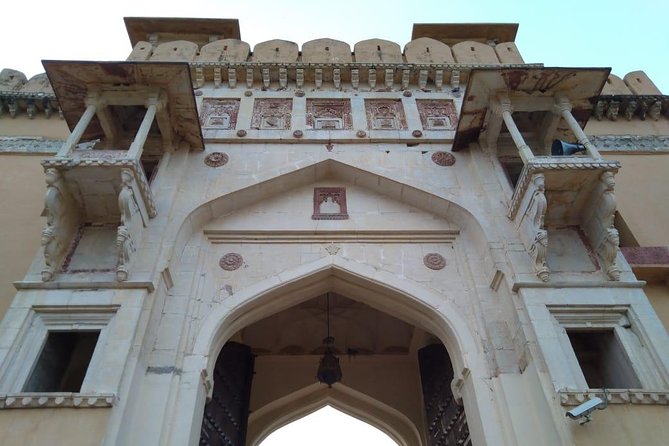
Your last day focuses on Amber Palace / Amer Fort, with about 1 hour on site and admission included. Amer is a town about 11 kilometers from Jaipur, so you get a quick break from city centers and the view changes as you move outward.
Amber Fort is the kind of finale that feels earned. After days of tombs, mosques, markets, and palaces, it brings everything into one place: fortification, royal design, and scale. Even in an hour, you’ll likely feel the difference between “a palace detail” and “a whole complex built to dominate a landscape.”
Price and logistics: what $400 buys you (and what it doesn’t)
At $400 for about 6 days, the value here comes from what’s handled: a private, air-conditioned car plus driver, and all fees and taxes. For many travelers, that’s the biggest savings compared to piecing together cars, guides, and admissions separately across three cities.
What’s not included is just as important. Hotel stay isn’t part of the package, and you choose your lodging at extra cost. Also, admission is explicitly not included for the Chandni Chowk market time, and the tour lists that a restroom on board is not included. Those are small details, but they affect how smooth the days feel.
So the best way to think about this price: you’re paying for transport, a private driver, and access to the major sights where admissions are included. You’re not paying for your sleeping plan or every possible extra along the way.
Tips to get the most out of a private driver schedule
This style of tour works best when you use the “private” part on purpose. Ask your driver what order makes the most sense for comfort and timing. If you notice you’re more interested in one stop than another, it’s reasonable to request extra time there—one of the reasons people like the way Indike Travels communicates and adjusts when there’s free time.
Also, keep your expectations aligned with the time blocks. Many stops are 30 minutes or so. That doesn’t mean they’re small. It means the tour is designed to give you a first, memorable look without turning the day into a half-day crawl.
If you want the most authentic feel, build in a little room for walking around the edges of each place—especially in Old Delhi where the market lanes are part of what you came for.
Should you book this Golden Triangle private transfer?
Book it if you want the classic Golden Triangle route—Delhi, Agra, and Jaipur—without the stress of coordinating transport across cities. This is a good choice for first-time visitors who want private logistics, a clear sequence of major sights, and admissions handled for many of the key stops.
Skip it (or switch approaches) if you already love handling travel logistics yourself and you want deeper, slower museum time at every location. The schedule is structured and many visits are short. You’ll still see the highlights, but it’s not built for marathon wandering.
If you’re the type who values comfort, clarity, and safety-minded planning, this is the kind of tour that tends to fit.
FAQ
Is the tour private?
Yes. It’s a private tour/activity, meaning only your group participates.
What’s included in the price?
The package includes an air-conditioned vehicle, private transportation with a driver, and all fees and taxes.
Are hotel stays included?
No. Hotels are not included, and you choose where to stay at an extra cost.
What time does the tour start?
The start time is listed as 9:00 am.
Are admission tickets included?
Admission is included for several stops (like Humayun’s Tomb, Qutub Minar, the National Gandhi Museum, the Taj Mahal, Agra Fort, Hawa Mahal, City Palace, Jantar Mantar, and Amber Palace). Chandni Chowk is listed as admission ticket not included.
Is there free cancellation?
Yes. You can cancel up to 24 hours in advance for a full refund.
Does the tour depend on weather?
Yes. The experience requires good weather, and if it’s canceled due to poor weather you’ll be offered a different date or a full refund.