REVIEW · NEW DELHI
7 Days Private Tour to New Delhi, Agra, and Jaipur
Book on Viator →Operated by Rajasthan Cab · Bookable on Viator
A Golden Triangle trip that actually feels personal. This 7-day private route strings together the big India highlights—Delhi forts and mosques, Agra’s Taj Mahal, and Jaipur’s palace-and-temple skyline—using private transportation and professional private guides so you’re not stuck guessing what to do next.
What I like most is the balance of classic sights with breathing room: you’ll hit the headline monuments, then you can use the day for local markets and food stops. One thing to consider: it’s a lot of moving between cities, and the schedule includes early starts (like the sunrise Taj visit), so plan for long days and some hassle-proof stamina.
Key points to know before you go
- Private door-to-door transport keeps the trip calm between Delhi–Agra–Jaipur.
- Sunrise Taj Mahal is built in, with a clear wake-up reminder for better photos.
- Old Delhi market time happens at Chandni Chowk, not just from a bus window.
- Jaipur’s mix of viewpoints and craft-era sites covers Jal Mahal, Hawa Mahal, City Palace, Jantar Mantar, and Albert Hall.
- Drivers and local guidance can be customized, based on what you want to prioritize.
In This Review
- A Private Golden Triangle Route That Feels Like a Plan, Not a Checklist
- Day 1: Airport Pickup and Getting Oriented in New Delhi
- Day 2 in Delhi: Red Fort, Jama Masjid, Chandni Chowk, India Gate, Qutub Minar, Humayun’s Tomb
- Red Fort and Jama Masjid in Old Delhi style
- Chandni Chowk: the market that squeezes you into the moment
- India Gate and the calm break
- Qutub Minar and Humayun’s Tomb: Delhi’s two UNESCO-style anchors
- Lotus Temple and Birla Mandir: faith without the pressure
- Day 3 to Agra: The 250 km Road Trip and the Taj Area You’ll Remember
- Agra Fort: power first, glamour second
- Taj Mahal: your big moment, with a guide’s context
- Itmad-ud-Daula: the underappreciated warm-up
- Day 4: Sunrise Taj Mahal, Fatehpur Sikri, Then the Drive to Jaipur
- Sunrise Taj Mahal: early for a reason
- Fatehpur Sikri: Akbar-era city on a day trip
- Drive to Jaipur: about 240 km, around 4 hours
- Day 5 in Jaipur: Jal Mahal, Hawa Mahal, City Palace, Jantar Mantar, Albert Hall
- Jal Mahal: the palace in the lake
- Hawa Mahal: the face with 953 windows
- City Palace: Rajput and Mughal in the same space
- Jantar Mantar: the stone observatory
- Albert Hall Museum: a slow landing
- Day 6: The Assisted Transfer Back to New Delhi (308 km, ~6 hours)
- Day 7: Departure from Indira Gandhi International Airport
- Price and logistics: what you really get for $339.23 per person
- Who this tour suits best (and who should look elsewhere)
- Should You Book This 7-Day Private Delhi–Agra–Jaipur Tour?
- FAQ
- What cities does this 7-day tour cover?
- Where does the tour start and end?
- Is airport pickup included?
- Is this a private tour?
- Does the tour include sunrise at the Taj Mahal?
- What meals are included?
- How is transportation handled?
- Are monument entrance fees included?
- What time does the experience start?
A Private Golden Triangle Route That Feels Like a Plan, Not a Checklist
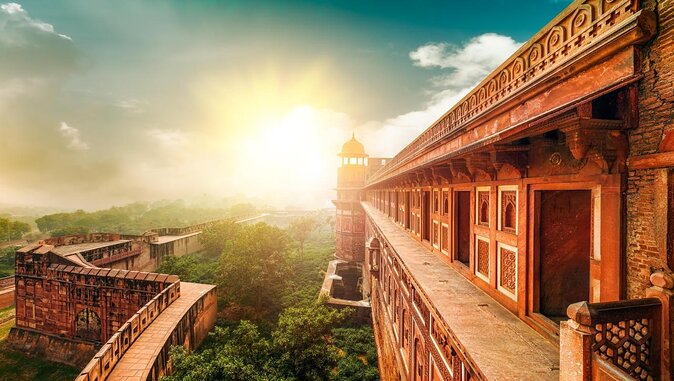
Golden Triangle tours can be either great or exhausting. This one aims for the best middle ground: you get the headline monuments across three cities, but the private format means you’re not herded through each stop as if you’re a delivery package.
At $339.23 per person for roughly 7 days, the value comes from what’s included: pickup help, an air-conditioned vehicle, mineral water, and professional private guides. That matters more than people expect. In India, the cost of wasted time (waiting, confusion, long taxi negotiations) can quietly erase “cheap” savings. A well-run private plan keeps your day moving.
There’s also an honesty point to keep in mind. Some sights are listed with admission notes in the daily schedule, while the package also says monument entrance fees for sights mentioned are included. That mismatch is common in trip listings, so the best approach is simple: confirm which monuments require you to pay on arrival and which are handled by the tour.
Day 1: Airport Pickup and Getting Oriented in New Delhi
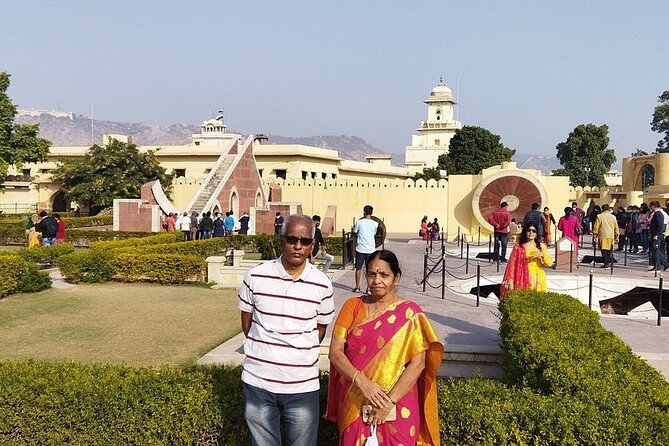
Your first day starts at Indira Gandhi International Airport, where you’re met by a representative and escorted to your pre-booked hotel, then helped with check-in. This is a big deal on arrival day, because the first few hours in Delhi can feel like a blur. Having someone show you the path to your room gets you into vacation mode faster.
Once you’re checked in, the rest of the day is about orientation and resetting. You’ll be in a position to actually enjoy your sightseeing time later rather than spending it “catching up” on sleep and energy.
One small practical note: the tour includes mineral water, which helps on warmer days. Also, if you’re booking the option that includes accommodation with breakfast, you’ll start each day better fueled—breakfast isn’t listed as guaranteed in every configuration, so double-check what you selected.
You can also read our reviews of more private tours in New Delhi


Day 2 in Delhi: Red Fort, Jama Masjid, Chandni Chowk, India Gate, Qutub Minar, Humayun’s Tomb
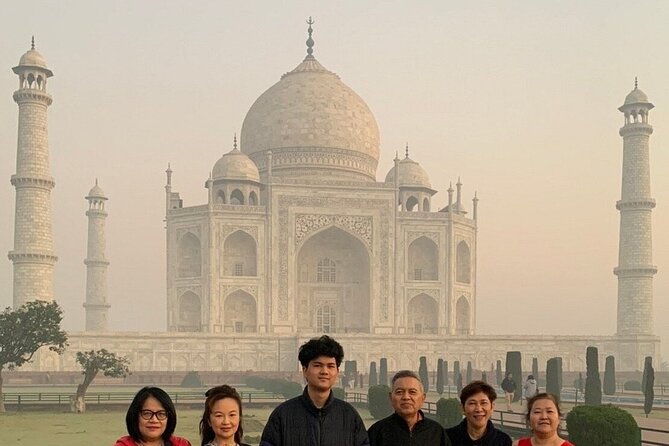
This is a full-throttle Delhi day, but it’s also one of the best ways to get your bearings. You’re moving through the city’s layers—Mughal power, religious architecture, British-era memorial space, and the hyper-human energy of Old Delhi.
Red Fort and Jama Masjid in Old Delhi style
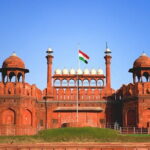
You begin with the Red Fort, described as the Mughal emperor’s epitome in India. It’s the kind of site where the scale and the symmetry make everything feel official—even if you don’t know every historical detail yet.
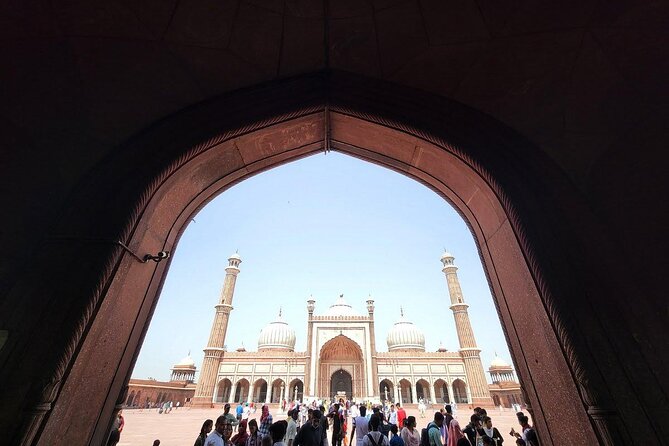
Then comes Jama Masjid, noted as India’s largest mosque and able to host 25,000 devotees. The guide framing here matters: Shah Jahan’s connection gives the architecture a purpose beyond photos. If you’ve ever felt that big monuments are just “pretty buildings,” this combo helps you see them as cultural engines.
Chandni Chowk: the market that squeezes you into the moment
Next is Chandni Chowk, the ancient street market of Old Delhi. The lanes are narrow, the shops compete for space, and it can feel chaotic—on purpose. This is where you can get your hands on everyday India: small buys, snacks, and the kind of browsing you can’t recreate from an air-conditioned mall.
India Gate and the calm break
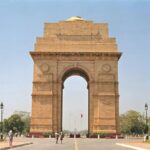
After that intensity, India Gate and its aligned gardens give you a breather. India Gate is a World War I martyrs memorial built in 1931, and the gardens along it are explicitly called out as a must-visit among Delhi sights. It’s a rare moment where the city slows down just enough to let you absorb what you’ve already seen.
You can also read our reviews of more tours and experiences in New Delhi




Qutub Minar and Humayun’s Tomb: Delhi’s two UNESCO-style anchors
The day continues with Qutub Minar, a 73-meter brick minaret with multiple stories and carved details, and then Humayun’s Tomb, a UNESCO World Heritage site built in 1570 by Haji Begum. The connection between Mughal architecture here and later monuments is mentioned in the tour notes, and it helps you understand why Agra’s Taj Mahal feels like part of a bigger design story instead of an isolated miracle.
Lotus Temple and Birla Mandir: faith without the pressure
You finish Delhi with the Lotus Temple and Birla Mandir (Lakshmi Narayan). The Lotus Temple is associated with the Bahai Faith and is presented as symbolizing multiple religions through its design. Birla Mandir is dedicated to Laxminarayan/Vishnu. It’s a good way to end a sightseeing-heavy day: you’ve seen the power sites, and now you get space for spiritual calm.
Day 3 to Agra: The 250 km Road Trip and the Taj Area You’ll Remember
Day 3 is travel plus payoff. The drive from Delhi to Agra is about 250 kilometers, taking roughly 5 hours, so you’re not “popping over”—you’re switching cities the real way. For me, that’s part of why a private tour works: the vehicle and guide handle the timing so you’re not stressing.
Agra Fort: power first, glamour second
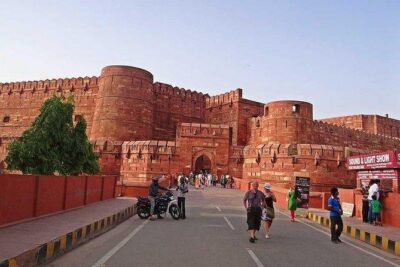
You visit Agra Fort next. Even without getting lost in dates, it’s an important warm-up before the Taj Mahal. Fort architecture tells you what mattered to the empire: control, defense, and command. It makes the later white marble glow feel more earned.
Taj Mahal: your big moment, with a guide’s context
Then it’s Taj Mahal by the Yamuna River. It’s described as the monument of love built by Shah Jahan for Mumtaz Mahal, and it’s positioned as one of the world’s iconic wonders. The practical value here is obvious: you’re not just taking a picture—you’re seeing the monument at the right place in the day and with an explanation tied to its meaning.
Itmad-ud-Daula: the underappreciated warm-up
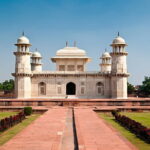
After the Taj, you visit Itmad-ud-Daula. This tomb sits on the Yamuna banks and is described as being built by Queen Noor Jahan for her parents. The notes also call out its yellow marble and marble inlay work. If the Taj can feel like an overwhelming “wow,” Itmad-ud-Daula is where you slow down and notice the craftsmanship.
One practical tip: since some sites are marked as admission not included in the schedule, have a little flexibility in your budget for tickets or small extras.
Day 4: Sunrise Taj Mahal, Fatehpur Sikri, Then the Drive to Jaipur
Day 4 is where this tour earns its keep. It includes a sunrise Taj Mahal visit, and the tour explicitly warns you to wake up early for the best shots. Sunrise visits can sound like a gimmick—until you see the light on white marble and realize why everyone wants this timing.
Sunrise Taj Mahal: early for a reason
You start with the Taj early, and you get about one hour for the visit. The key value isn’t just the photo opportunity—it’s that sunrise changes the experience from crowded sightseeing to something quieter and more architectural. Bring patience for the early wake-up, and you’ll get rewarded.
Fatehpur Sikri: Akbar-era city on a day trip
Then you head to Fatehpur Sikri, about 40 kilometers from Agra. It’s described as a fortified city founded by Akbar in 1571, and the tour gives you that time-bound detail: it had his empire for 15 years. That one fact helps you picture a whole functioning city, not just ruins.
The site opening is listed as 6:00 AM to 6:00 PM, and you’ll spend about one hour there—enough to get a sense of scale and design without turning it into a rushed blur.
Drive to Jaipur: about 240 km, around 4 hours
After Fatehpur Sikri, you travel to Jaipur—about 240 kilometers and about 4 hours. When the itinerary includes these transfer windows, you can actually plan your day rather than guessing how long it’ll take.
Day 5 in Jaipur: Jal Mahal, Hawa Mahal, City Palace, Jantar Mantar, Albert Hall
Jaipur is the kind of city where you can easily waste a day just wandering. This tour gives you a tight route that still covers major “why Jaipur matters” stops.
Jal Mahal: the palace in the lake
You start with Jal Mahal, a five-storied palace sitting in Man Sagar Lake in Rajput style architecture. The tour calls it spectacular, and it’s a nice contrast after the Taj-focused days—Jaipur gives you color, texture, and a different kind of spectacle.
Hawa Mahal: the face with 953 windows
Then comes Hawa Mahal (Palace of Wind), built in 1799 by Maharaja Sawai Pratap Singh. The tour highlights 953 small windows, which is the kind of detail that makes a building feel alive. Even if you’re not a historian, that number gives you a “how was this meant to work?” curiosity.
City Palace: Rajput and Mughal in the same space
Next is City Palace, located centrally and described as a blend of Rajput and Mughal styles. This is a strong stop for understanding Jaipur’s identity: it isn’t just one aesthetic. It’s layers.
Jantar Mantar: the stone observatory
You visit Jantar Mantar, noted as an astronomical observatory and home to the world’s largest sundial made from stone plus nineteen architectural instruments. If you enjoy seeing how old technologies measured the world, this is one of Jaipur’s smartest stops. It’s not just “pretty,” it’s practical science made architectural.
Albert Hall Museum: a slow landing
Finally, you go to Albert Hall Museum, described as the oldest museum in Rajasthan. This is a good closer because it helps you tie the trip together with artifacts and regional context instead of only buildings.
Day 6: The Assisted Transfer Back to New Delhi (308 km, ~6 hours)
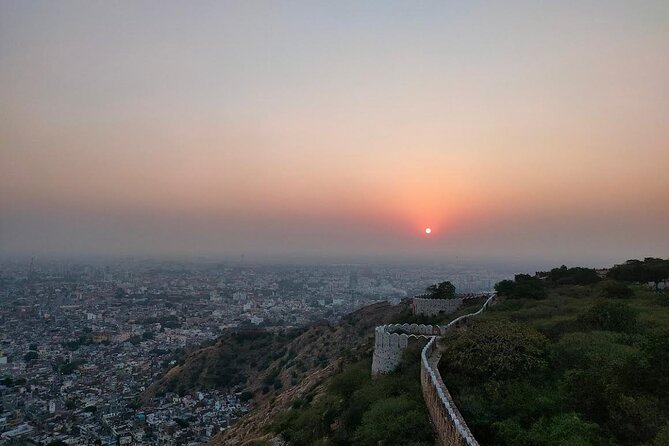
After Jaipur, the tour shifts to a practical day: an assisted transfer back to New Delhi. The drive is about 308 kilometers, taking around 6 hours.
This day is underrated, because it’s where you can either feel trapped in transit or use the private vehicle to keep your time controlled. Since you’ll likely arrive with less “daylight pressure” than your sightseeing days, it can be easier to manage rest, shower time, and meal planning.
Also, since lunch and dinner aren’t included, this is where you’ll want to be confident about finding food near where you’re staying or stopping for quick local options with your guide’s help.
Day 7: Departure from Indira Gandhi International Airport
On your final day, your tour ends at Indira Gandhi International Airport. The activity closes back at the meeting point, and you’re set up for onward travel.
At the end of a Golden Triangle trip, the main question is always the same: did you see the icons, or did you actually understand them? This route leans toward the second answer because it layers forts, tombs, mosques, observatories, and palace design—so the monuments start to talk to each other.
Price and logistics: what you really get for $339.23 per person
Let’s talk value in a way that helps you decide.
You’re paying for a private setup: pickup help at the airport, air-conditioned driving, and professional private tour guides. For many people, that’s the difference between a tiring sightseeing sprint and a readable, paced trip where you can ask questions and adjust timing.
Included items that add up:
- Mineral water during the tour
- Private transportation in an air-conditioned vehicle
- Guided sightseeing through the cities
- Accommodation with breakfast only if you chose the option that matches your booking
What to mentally budget for:
- Lunch and dinner are not included for 6 days
- Some monument access may depend on what’s specifically marked as included versus not included on the day-by-day plan
- If you’re using a camera for paid camera fees, that’s not included per the package notes
One more reality check: Golden Triangle days are heavy. Your schedule includes a sunrise Taj Mahal commitment and multiple road legs (Agra and Jaipur transfers). If you prefer slow travel with long unplanned afternoons, you may find this pace a bit tight.
Who this tour suits best (and who should look elsewhere)
This private tour is a strong match if you want:
- Classic Golden Triangle highlights without the stress of arranging guides city-by-city
- Comfort between destinations, especially for the Delhi–Agra and Agra–Jaipur drives
- A plan that can be customized. Reviews tied to this provider highlight communication, polite drivers, and the ability to adjust what local stops happen around your priorities. Names mentioned in feedback include Mr. Agrawal, Shailu Agrawal, Kedar Singh, and Dheeraj—not guaranteed for your trip, but a hint that attentive driver-guide service is a recurring theme.
You might want to consider something else if:
- You dislike early mornings (sunrise Taj is part of the experience)
- You hate driving days and prefer to stay put in one city longer
Should You Book This 7-Day Private Delhi–Agra–Jaipur Tour?
If you’re aiming for the Golden Triangle with comfort and structure, I think this is a sensible book. The private setup, guided stops, and the built-in sunrise Taj Mahal make it more than a basic highlights pass.
Before you click confirm, do two quick checks:
- Confirm exactly which monument entrance fees are included versus which ones you may pay on arrival.
- Confirm whether you booked the option with accommodation and breakfast, since it’s conditional.
If that’s sorted, you’ll get a guided, city-to-city tour that’s built for clarity, not chaos. And the trip’s reputation for polite, punctual drivers and smooth handling of needs—paired with the flexibility people appreciated—suggests you’ll spend your time seeing India, not managing logistics. Free cancellation is also offered up to a point, which lowers the risk if your plans are still fluid.
FAQ
What cities does this 7-day tour cover?
It covers New Delhi, Agra, and Jaipur as a Golden Triangle route, with sightseeing in each city and transfers between them.
Where does the tour start and end?
It starts at Indira Gandhi International Airport in New Delhi and ends back at the same meeting point location with departure from Delhi International Airport.
Is airport pickup included?
Yes. You’ll be met at Indira Gandhi International Airport by a representative and escorted to your pre-booked hotel on arrival.
Is this a private tour?
Yes. It’s listed as private, meaning only your group participates.
Does the tour include sunrise at the Taj Mahal?
Yes. You get an early morning sunrise Taj Mahal visit on the day when Agra sightseeing is scheduled.
What meals are included?
Lunch and dinner are not included for the 6 days. Breakfast is included only if you booked the option that matches a suitable selection.
How is transportation handled?
You get private transportation in an air-conditioned vehicle, with assisted transfers between Delhi, Agra, Jaipur, and back to Delhi.
Are monument entrance fees included?
The package states monument entrance fees for sights mentioned are included, but the daily schedule also includes some notes where admission is marked not included. Check which specific sites are covered for your booking.
What time does the experience start?
The start time is listed as 9:00 am.