REVIEW · NEW DELHI
From Delhi: 2 Nights 3 Days Golden Triangle Delhi, Agra, Jaipur Tour
Book on Viator →Operated by Hello India Tour · Bookable on Viator
Taj magic starts before the gates. This tight Golden Triangle tour strings together major Delhi sights, a full day in Agra, and the key highlights of Jaipur with an air-conditioned ride and a guide doing the heavy lifting. It’s a practical way to see the big names—without spending half your time figuring out directions.
I especially like the stop-by-stop pacing that keeps you moving while still giving you enough time to actually look, not just pass by. Taj Mahal in particular feels less rushed here than on some hit-and-run day trips.
I also love how the itinerary mixes ticketed landmarks with meaningful free stops: Gurudwara Bangla Sahib (with its free kitchen feeding about 50,000 people daily), plus the spiritual calm of Lotus Temple and the street-energy of Chandni Chowk. And from what I’ve seen in guide performance across different groups, the guiding style is often described as caring and photo-helpful.
One consideration: the drive times are long, and several sights are short by design (like Jal Mahal at about 15 minutes), so if you hate rushing, this schedule can feel intense.
In This Review
- Key highlights to pay attention to
- Golden Triangle, but with a human pace
- Delhi first: Jama Masjid, Humayun’s Tomb, and Qutub Minar
- Why this Delhi grouping works
- The main drawback
- Chandni Chowk, Bangla Sahib, and Lotus Temple: the free stops that change the mood
- A small reality check
- Timing tip for your photos
- India Gate and the long ride to Agra
- What to expect after Day 1
- Taj Mahal: how to enjoy it in two hours (not one)
- A note on guides and confidence
- The main drawback
- Agra Fort and Itmad-ud-Daula: your Mughal bonus round
- Why these stops matter
- Time pressure reality
- Jaipur Day: Amber Fort first, then palaces and viewpoints
- The best part of Jaipur pacing
- A possible drawback
- Jantar Mantar and Hawa Mahal: short stops with sharp details
- Why these two are worth your time
- Practical note
- Price and value: what you’re really paying for at $280.86
- Where the value shines
- Where you might feel limited
- Who should book this Golden Triangle tour (and who should rethink)
- Should you book? My practical take
- FAQ
- How long is the Golden Triangle tour from Delhi?
- What cities are included?
- Do you offer pickup and drop-off in New Delhi?
- Is air-conditioned transportation included?
- Is a hotel stay included?
- Are monument entry tickets included?
- Does the tour include lunch and dinner?
- Are tips included?
- What are the main sightseeing stops in each city?
- How much driving time is scheduled between cities?
- Is free cancellation available?
Key highlights to pay attention to
- A guide-led route with an air-conditioned vehicle that connects Delhi, Agra, and Jaipur in a single smooth plan
- Jama Masjid and Humayun’s Tomb in the same Delhi day so you get Mughal scale and atmosphere without backtracking
- Chandni Chowk + free spiritual stops for a day that balances monument time with real local life
- Taj Mahal plus Agra Fort and Itmad-ud-Daula for more than one “Mughal wow” moment in Agra
- Amber Fort and Jaipur’s major palaces and observatory packed into Day 3
- Private tour for your group with mobile tickets (and language support that has been praised in past groups)
Golden Triangle, but with a human pace
The classic Golden Triangle is famous for a reason. You’ll connect three powerhouses—Delhi, Agra, and Jaipur—each with its own look, smells, and pace, and you’ll do it without the stress of stitching together separate tickets and transport.
What makes this version feel workable is that you’re not just chasing icons. You also get a mix of Mughal architecture, active marketplaces, and religious sites—so the trip feels like a story, not a checklist.
If you’re traveling with limited time, this kind of structure helps you keep momentum. You’ll also benefit from a guide who can explain what you’re seeing while you’re standing right in front of it—when questions actually matter.
You can also read our reviews of more tours and experiences in New Delhi



Delhi first: Jama Masjid, Humayun’s Tomb, and Qutub Minar
Your Delhi day starts strong with Jama Masjid, one of the biggest mosques in India, built by Mughal Emperor Shah Jahan between 1650 and 1656. It’s a huge architectural statement, and even if you’re not the type who reads every plaque, the scale hits you fast. You’ll spend about an hour here, and entry is included.
From there you head into Old Delhi energy with Humayun’s Tomb, the tomb of Mughal Emperor Humayun. It was commissioned by his first wife and chief consort, Empress Bega Begum (also known as Haji Begum), and the site is a great bridge between “palace” and “tomb” in Mughal design. Plan on about an hour.
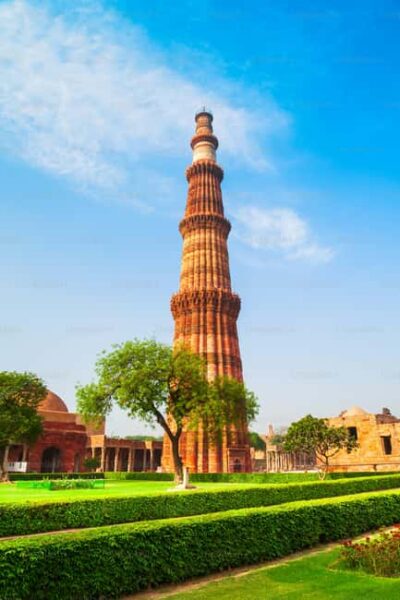
Next up is Qutub Minar, the tall Delhi landmark that’s been around for centuries and is one of the most visited monuments in the city. You’ll get around an hour here as well, and entry is included.
Why this Delhi grouping works
You’re looking at three different layers of Delhi at once: Mughal worship space, Mughal royal commemoration, and one of the city’s oldest landmark structures. That sequence keeps your brain from getting stuck on only one theme.
The main drawback
Delhi traffic and crowding can change how fast you move. Even with a planned route, you’ll want to keep your mindset flexible and your water bottle handy.
Chandni Chowk, Bangla Sahib, and Lotus Temple: the free stops that change the mood
After the big-ticket monuments, the schedule turns more human. You’ll visit Chandni Chowk, also known as Moonlight Square—one of Old Delhi’s oldest and busiest markets, close to the Old Delhi Railway Station. You get about an hour, and it’s admission free.
Next is Gurudwara Bangla Sahib, a Sikh temple where the standout is the free kitchen. The tour information highlights that about 50,000 people eat there daily without paying, which makes this stop feel less like sightseeing and more like witnessing everyday generosity. Expect about an hour, and it’s free to enter.
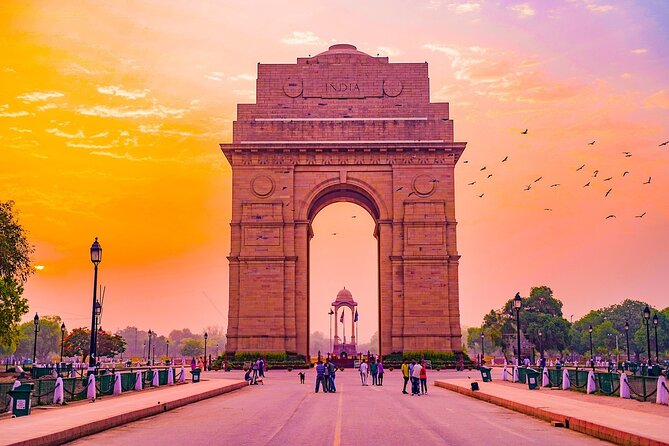
Then you’ll go to Lotus Temple, a Baha’i place of worship known for its flowerlike shape. The building’s design uses 27 marble-clad “pedals” arranged in clusters of three to form nine sides. You’ll spend about an hour and the visit is free.






A small reality check
These free stops can be the most powerful part of the day, but they can also be where you’ll notice crowds and lines. The good news: they’re also the best places to slow down, look around, and stop feeling like you’re always “on the next thing.”
Timing tip for your photos
Markets and temples create very different lighting. If you care about photos, bring a light layer and expect to adjust—Delhi shade and sun can swap fast even within the same hour.
India Gate and the long ride to Agra
You’ll also make time for India Gate, a memorial for 84,000 soldiers of the British Indian Army who lost their lives between 1914 and 1921 in the First World War, connected to fighting in France. The stop is included in the day’s flow and is a good moment to step away from architecture and think about the broader story of the region.
After Delhi sightseeing, you’ll transfer to Agra by car, with about a 4-hour drive. This is where comfort matters, and the tour includes an air-conditioned vehicle, which helps when you’re tired from walking and stairs.
What to expect after Day 1
You’ll spend the first night in Agra, so you’re not trying to “do everything” and sleep wherever you can. That overnight is what makes the Taj Mahal day feel more focused instead of chaotic.
Taj Mahal: how to enjoy it in two hours (not one)
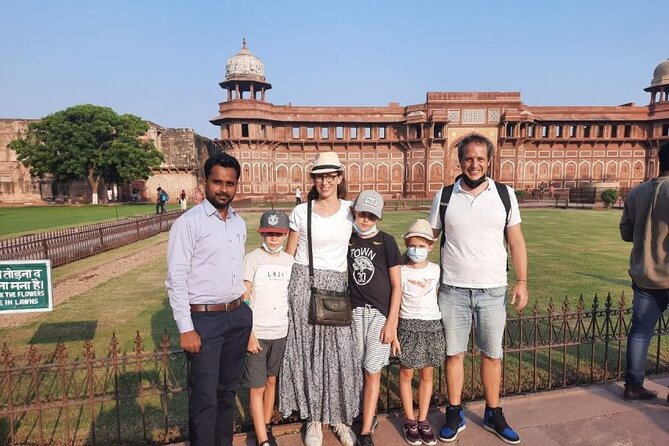
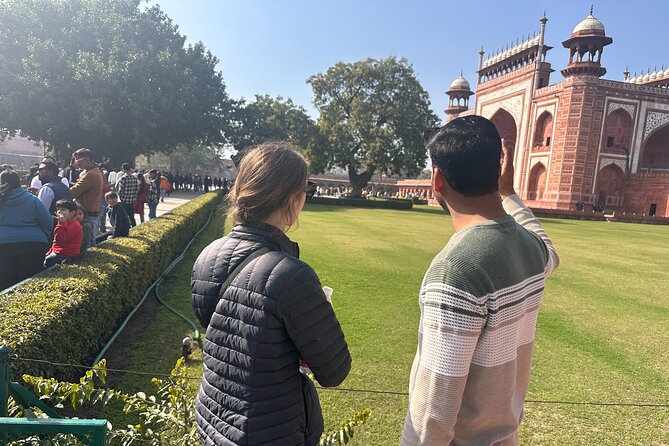
Agra’s big moment is Taj Mahal, an ivory-white marble tomb built under Mughal Emperor Shah Jahan between 1631 and 1653. You’ll have about two hours here, and entry is included.
Two hours sounds short until you’re standing there and realizing you’re looking at multiple layers: the marble surfaces, the surrounding layout, and the way light shifts as you move. If your guide gives you context and points out details, that time stretches.
From experience, the real trick is not trying to see everything perfectly. Enjoy the main sight, then do a second pass where you focus on one thing—like symmetry from different angles—before you head to your next stop. With only two hours, you’ll feel better when you choose priorities.
A note on guides and confidence
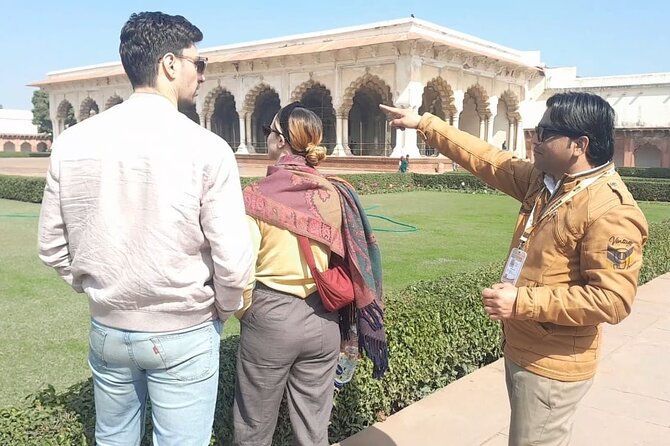
One thing that comes through in guide feedback is that they tend to be attentive and helpful with photos, with names like Javed Khan, Shaan, Kaif, and others showing up in past experiences. Even if your guide isn’t the same person, the emphasis on caring, clear explanations is the right match for this kind of landmark day.
The main drawback
Taj Mahal day can feel crowded and hot, depending on when you arrive. Wear breathable clothes, keep sun protection on you, and don’t let the schedule bully your pace.
Agra Fort and Itmad-ud-Daula: your Mughal bonus round
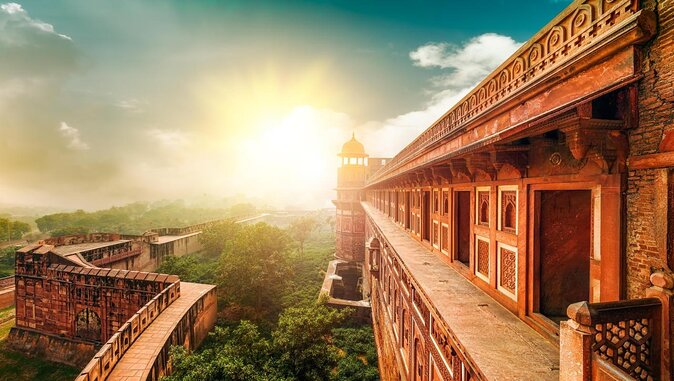
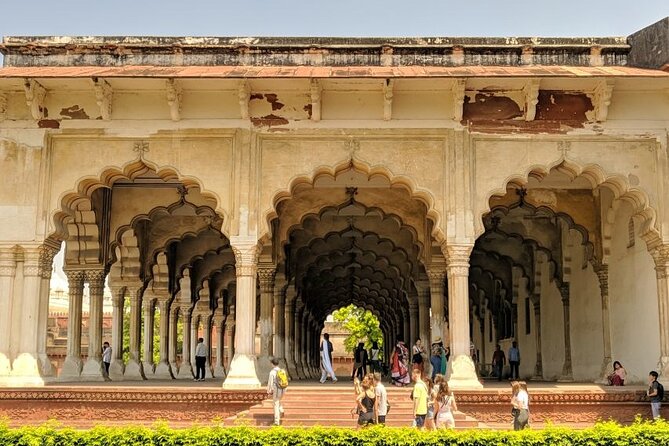
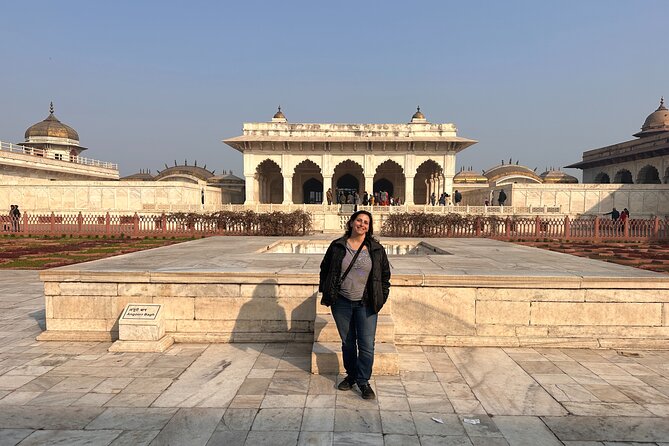
After Taj Mahal, you’ll visit Agra Fort, a historical fort tied to Mughal rule. It served as the main residence of Mughal emperors until 1638, when the capital shifted to Delhi, and it later came under British control. You’ll get about an hour, and entry is included.
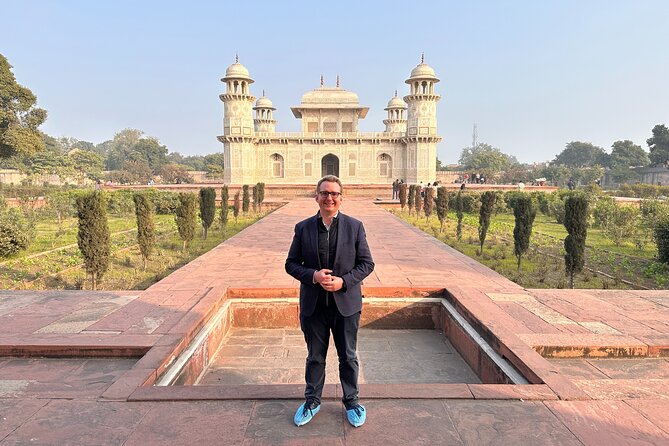
Then there’s Itmad-ud-Daula, often described as the “Baby Taj.” It’s a Mughal mausoleum sometimes called a jewel box, and you’ll spend about 45 minutes with entry included.
Why these stops matter
Taj Mahal is the headline, but Agra Fort and Itmad-ud-Daula are the supporting cast that makes the whole picture clearer. You’ll see how Mughal architecture evolved from grand monuments to more intricate, intimate mausoleums.
Time pressure reality
These two stops are shorter than the Taj Mahal block, so your best move is to stay mentally engaged. If you get sleepy, the detail level drops and the sites stop rewarding your attention.
Jaipur Day: Amber Fort first, then palaces and viewpoints
Jaipur is where the itinerary slows slightly in tone while still staying fast in structure. You’ll start with Amber Fort (Amer Fort), located in Amber, about 11 kilometers from Jaipur. Plan on about two hours, and entry is included.
Amber Fort is one of those places where the walls alone tell you you’re in “royal” territory. With two hours, you’ll have time to move through key areas and not feel like you’re only glimpsing doorways.
Next is Jal Mahal, the palace in the middle of Man Sagar Lake. The palace was originally constructed in 1699 and later renovated. This stop is brief—about 15 minutes—and entry is free.
Then you’ll visit the City Palace of Jaipur, established when the city of Jaipur took shape. Maharaja Sawai Jai Singh II moved his court from Amber to Jaipur in 1727, and that shift is part of why this palace complex feels like it sits at the center of everything. You’ll have about two hours and entry is included.
The best part of Jaipur pacing
You’re not only seeing photo spots. You’re also getting a look at how the royal system shaped the city layout, especially when you connect Amber Fort to City Palace.
A possible drawback
If you’re heat-sensitive, remember that Jaipur can wear you down quickly. Even with guided stops, you may have to wait and walk more than you expect.
Jantar Mantar and Hawa Mahal: short stops with sharp details
In Jaipur, you’ll also visit Jantar Mantar, the astronomical observatory built by Rajput king Sawai Jai Singh. The site includes nineteen architectural astronomical instruments and was completed in 1734. You’ll spend about 45 minutes and entry is included.
Finally, you’ll see Hawa Mahal (Palace of Wind), famous for its beehive-like facade. It was designed to let royal ladies observe street life below. Your time here is about 30 minutes, and entry is free.
Why these two are worth your time
Jantar Mantar helps you understand that Jaipur wasn’t only about palaces. It was also a city of measurement and science, built into stone. Hawa Mahal, on the other hand, is a pure visual lesson in design purpose.
Practical note
These stops can feel “quick,” but if you take them seriously, they’ll add variety. Jantar Mantar rewards calm attention. Hawa Mahal rewards angle and light.
Price and value: what you’re really paying for at $280.86
The price listed is $280.86 per person for a 3-day, 2-night Golden Triangle experience. That cost becomes much easier to judge when you look at what’s included: an air-conditioned vehicle, a tour guide, hotel accommodation with breakfast if you select that option, and all monument entry tickets if you select that option. Parking and fuel surcharges are also included, which prevents a common travel “gotcha.”
What you should budget separately is food and gratuities. Lunch and dinner aren’t included, and tips aren’t included either. The tour also notes that any gala night is not included in the hotel cost ₹6,000 per person, so if a hotel mentions special events, you’ll want to confirm costs upfront.
Where the value shines
You’re paying for organization. In a route like this, the hidden costs are time, transport coordination, and ticket logistics. Having a guide and a pre-built route helps you keep your day from turning into a scavenger hunt.
Where you might feel limited
If you don’t choose the entry-ticket option, you may pay for monument access separately. The itinerary also includes a blend of included and free stops, so double-check what’s covered in your selected package before you land.
Who should book this Golden Triangle tour (and who should rethink)
This tour is a solid fit if you want classic highlights and you value structure. Most travelers can participate, and a private setup means only your group goes—so you’re not squeezed into someone else’s pace.
You’ll also like it if you care about getting explanations while you’re at the sites. Multiple guides tied to past experiences—names like Basudev, Dilip Kumar, Naresh, and others—have been praised for careful explanations and being welcoming, with one group noting that guides spoke Japanese well. That matters when you’re trying to turn monuments into real understanding.
Consider a different style of travel if:
- you want lots of downtime in each city
- you hate long car rides
- you prefer slow, deep museum time rather than short landmark bursts
This is a “see a lot, feel like you went somewhere” trip. It’s not a “live like a local for a week” trip.
Should you book? My practical take
I’d book this Delhi–Agra–Jaipur plan if you’re time-limited and you want iconic sights plus a few meaningful stops that are free. The itinerary keeps you on a logical path: Mughal Delhi, Mughal Agra, royal Jaipur, with guided context and transport handled.
I’d think twice if you’re easily worn out by schedule pressure. The drives and short stop durations are real, especially with Jal Mahal being about 15 minutes and Hawa Mahal about 30.
If you’re comfortable moving at a brisk pace and you want good guidance, this tour is a strong value way to get the Golden Triangle done with less friction.
FAQ
How long is the Golden Triangle tour from Delhi?
It’s approximately 3 days (2 nights / 3 days).
What cities are included?
You’ll visit New Delhi, Agra, and Jaipur.
Do you offer pickup and drop-off in New Delhi?
Yes. Pickup is offered, and you return to New Delhi for drop-off.
Is air-conditioned transportation included?
Yes. The tour includes an air-conditioned vehicle.
Is a hotel stay included?
Hotel accommodation with breakfast is included if you select that option.
Are monument entry tickets included?
All monument entry tickets are included if you select that option. Some stops are listed as free.
Does the tour include lunch and dinner?
No. Lunch and dinner are not included.
Are tips included?
No. Tips and gratuities are not included.
What are the main sightseeing stops in each city?
Delhi includes Jama Masjid, Chandni Chowk, Humayun’s Tomb, Qutub Minar, Gurudwara Bangla Sahib, Lotus Temple, and India Gate. Agra includes Taj Mahal, Agra Fort, and Itmad-ud-Daula. Jaipur includes Amber Fort, Jal Mahal, City Palace, Jantar Mantar, and Hawa Mahal.
How much driving time is scheduled between cities?
The itinerary lists about 4 hours from Delhi to Agra, about 5 hours from Agra to Jaipur, and about 5 hours from Jaipur back to New Delhi.
Is free cancellation available?
Yes. You can cancel up to 24 hours in advance for a full refund.