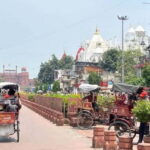
Old Delhi hits fast, and hard. In roughly 3 hours, Rahul guides you past Red Fort exteriors, through faith sites like Gurudwara Sis Ganj Sahib and Sri Digambar Jain Lal Mandir, and into the sensory chaos of Khari Baoli. I like that the stops are free with admission listed as free, so you spend your money on the parts you actually want, like food, not ticket lines. I also like that Rahul tailors the pace, so the tour feels personal instead of cookie-cutter. One consideration: because this is a walking loop in tight lanes, you’ll want comfy shoes and a little patience.
You meet at Lal Quila area near Chandni Chowk and finish back at the same spot, which makes the whole plan easy to plug into your day. The group size is capped at 15, so it stays small enough for questions and course-corrections. If you want an Old Delhi intro that hits sights, sounds, and tastes without turning into a museum sprint, this is a smart way to do it.
In This Review
- Key highlights you’ll actually feel
- A 3-Hour Old Delhi Loop Starting at Lal Quila
- Why Rahul’s Guide Style Matters in Old Delhi
- Red Fort From the Outside: Big Walls, Easy Start
- Gurudwara Sis Ganj Sahib and the Community Kitchen
- Sri Digambar Jain Lal Mandir and the Bird Hospital
- Gali Paranthe Wali: Food Street With Direction
- Naughara: Nine Houses That Hint at 300 Years
- Khari Baoli Spice Market and a 300-Year-Old Mention
- Fatehpuri Mosque Built by Shahjahan’s Wife
- Price, Value, and Who This Tour Fits Best
- Should You Book This Old Delhi Walking Tour?
- FAQ
- Where does the free walking tour in Old Delhi start?
- How long is the Old Delhi walking tour?
- What is the price per person?
- Is the tour all paid admissions, or are there included admissions?
- How many people are in the group?
- What is the cancellation policy?
Key highlights you’ll actually feel
- Small group, max 15: easier questions and smoother pacing through lanes.
- Rahul’s personal approach: he’s noted for strong local knowledge and adapting to what the group needs.
- Faith sites plus food street: holy places sit right next to street life, and you see the connection.
- Red Fort start from outside: a simple warm-up before the more intimate spots.
- Khari Baoli spice market stop: the biggest spice market of Asia vibe, built into the route.
- Bird Hospital inside a Jain temple: a stop that surprises people—in a good way.
A 3-Hour Old Delhi Loop Starting at Lal Quila
This tour is built for people who want Old Delhi in one go, without committing to a full day. It runs about 3 hours and starts at 4:00 pm, so you get that late-day shift where the city feels more human than daytime hectic. You begin near the Lal Quila area (Lal Quila Angoori Bagh Rd, in the general Chandni Chowk orbit) and end back at the meeting point.
The route keeps moving, which is part of the value. Instead of spending half the time waiting at a single site, you bounce between different parts of Old Delhi: imperial-era monuments, Sikh and Jain places of worship, a paratha lane, old residential heritage, and a spice market. It’s a practical format because it gives your brain multiple “handles” for understanding the neighborhood.
Also, the experience is priced at $3.96 per person, which is unusually low for a guided walking tour. The listing shows mobile ticket delivery and a “most travelers can participate” note, so it’s designed to be easy to join. The main trade-off is that you’re on foot for the whole experience—so treat it like an evening walk, not a sit-down sightseeing checklist.
You can also read our reviews of more walking tours in New Delhi



Why Rahul’s Guide Style Matters in Old Delhi
A good guide can turn unfamiliar streets into a story you can follow. The reviews put a spotlight on Rahul for two things: strong knowledge of the area and personalization. That matters in Old Delhi because the city’s layers show up in details—signs, rituals, street corners, and what people are doing right in front of you.
When Rahul personalizes the tour, you benefit in a very real way: you’re more likely to get answers to your specific questions instead of hearing the same script for everyone. In a place where you might not know what you’re looking at (or when you should be quiet), that kind of guidance helps.
And there’s another subtle benefit: your group size is capped at 15. Smaller groups tend to move with less friction, which makes the tour feel like a walk with a local, not a race with strangers. If you like asking questions—or if you prefer your guide to point things out before you notice them—you’ll appreciate the format.
Red Fort From the Outside: Big Walls, Easy Start
The tour begins with Red Fort—but from the outside. That’s an underrated choice for an intro tour. You still get the visual impact and you’re able to orient yourself without getting swallowed by a longer ticket process.
Even looking from outside, Red Fort works as a “first anchor” because it immediately tells you you’re in an imperial zone of Old Delhi. Then, as you keep walking, the rest of the route starts to feel connected rather than random. Monuments like this often set the mental map for how older neighborhoods grew around power centers, marketplaces, and religious sites.
One practical upside: starting with an exterior stop helps you settle into the group rhythm. You meet, gather your bearings, and get the tour’s tone before it turns into narrower lanes and more interactive stops.
If you were hoping for a long inside visit at Red Fort, this stop is not that. But as the opening act, it’s a smart use of time.
Gurudwara Sis Ganj Sahib and the Community Kitchen
Next up is Gurudwara Sis Ganj Sahib, a Sikh temple stop scheduled for about 30 minutes. This is one of the highlights because it’s not only about architecture or photographs. The tour explicitly includes a community kitchen tour, which shifts the focus from sight-seeing to how daily life and hospitality work.
That kitchen element is a big deal. It helps you understand that religious spaces aren’t only for ceremonies—they’re also for service and community support. In practical terms, this kind of stop tends to stick with people because you leave with a concrete picture of how care is organized.
You’ll likely spend most of your time listening to context and watching how people move through the space. Because it’s a place of worship, expect that the environment asks for respectful behavior—calm voice, follow guidance from your host, and don’t treat it like a photo set.
Possible drawback? Community and worship spaces can be busy, and you may have moments where you’re standing closer to other visitors than you’d like. Still, the kitchen tour is exactly what makes this stop feel worthwhile instead of just scenic.
Sri Digambar Jain Lal Mandir and the Bird Hospital
After the Sikh temple, the route goes to Sri Digambar Jain Lal Mandir, focused on Jainism plus a unique bird hospital inside. This is a genuinely distinctive combination, and it’s one reason this tour earns top marks.
The bird hospital piece matters because it reframes what a temple visit can include. Instead of thinking of religion as only worship, you see how beliefs can show up in care for living creatures. Even if you don’t know much Jain terminology, the guided storytelling should help connect the dots so it doesn’t feel random.
The visit is short—about 20 minutes—so you won’t get lost in a long explanation. That’s ideal for a walking tour because the goal is to give you a meaningful snapshot you can remember.
A consideration: as with most religious interiors, you’ll want to follow the lead of your guide on where to stand and how to behave. Don’t plan on rushing through. Let the guide set the pace, especially at the bird hospital area where attention tends to matter.






Gali Paranthe Wali: Food Street With Direction
Then comes Gali Paranthe Wali, scheduled for about 30 minutes and centered on the famous parathas of Old Delhi. This is the part where your senses take over—warm spices in the air, grills going, and people lining up for a simple, satisfying meal.
But here’s the key: a guided stop helps you do it without second-guessing. If you’ve never eaten on an Indian street food lane, the hardest part is figuring out what to order and where to start. A good guide can help you navigate the vibe so you don’t end up standing like a confused tourist at the worst possible moment.
Since the tour is structured as a walking experience, the paratha lane slot works like a tasting-focused break. You’re not meant to treat it like a full restaurant dinner; it’s more like a guided food stop that gives you a true flavor of the neighborhood.
One possible downside: food streets get busy, and queues can form. That’s normal. If you get impatient easily, go in with the mindset that this is part of the experience, not a flaw in the plan.
Naughara: Nine Houses That Hint at 300 Years
The route includes Naughara—the row of nine houses, described as 300 years old—with a 20-minute stop. This isn’t just a photo moment. A heritage housing stop gives you perspective on how Old Delhi wasn’t built only around monuments and markets. It also had residential character, with older household groupings that still leave a mark on the streetscape.
A stop like this works best when your guide tells you what to look for: street-facing layout, how the neighborhood pattern holds up over time, and why groups like this matter historically. Even without deep architectural details, seeing the physical reminder of older living spaces helps you understand why the city feels layered.
Because the stop is short, you won’t overload on facts. Instead, you’ll get a sense of scale—older than most visitors expect—and then move on.
Khari Baoli Spice Market and a 300-Year-Old Mention
Now you hit the neighborhood’s most sensory stop: Khari Baoli, described as the biggest spice market of Asia, plus a reference to a spice mention said to be 300 years old. You get about 20 minutes here, which is the right amount for a guided walking route through active marketplaces.
Spice markets can overwhelm you if you don’t know what you’re looking at. That’s where a guide helps: you’re not just seeing piles of powders, you’re learning how the market functions and what spices mean to daily cooking. You’ll probably notice different packaging styles, trade practices, and how vendors present their products.
I also like that the tour includes a line about age and continuity. The 300-year-old mention gives the market context beyond what’s on the shelves today. You’re walking through a place that has long served as an engine for cooking culture—meaning it’s not only about shopping; it’s about tradition in motion.
Possible drawback: markets can be crowded and loud, and the air can be strong. If you’re sensitive to heavy smells or dust-like powder, keep your expectations realistic. You can still enjoy the stop—just don’t treat it like a museum gallery. Let it be what it is.
Fatehpuri Mosque Built by Shahjahan’s Wife
The final major stop is Fatehpuri Mosque, described as being built by the wife of Shahjahan, with a brief 10-minute visit. This stop is shorter by design, and that makes sense near the end of a walking tour.
Even in a short time, a mosque stop can add balance to the religious mix you’ve already seen. You’ve covered Sikh and Jain sites earlier; adding an Islamic architectural landmark gives you a fuller sense of how Old Delhi became a crossroads of faiths and patronage.
Since your time here is limited, you’ll want to treat it as a wrap-up moment. You’ll likely get your guide’s highlights—what to notice, why the building matters, and how it fits into the route’s overall story.
At 10 minutes, you shouldn’t expect a long sit-down experience. But as a closing point, it helps your mental map snap into focus.
Price, Value, and Who This Tour Fits Best
Let’s talk value, because the price is part of the story. This tour is $3.96 per person for about 3 hours of guided walking with a route that includes multiple listed free-admission stops. Even if you don’t know the area, free or low-cost sightseeing is where a budget-friendly guide can really shine.
You’re paying for:
- a guided route that connects places that might otherwise feel unrelated
- context that helps you interpret what you see (especially at religious and heritage sites)
- a tight set of stops so you’re not wandering in the heat of indecision
The group cap of 15 also improves value. It’s easier for a guide like Rahul to manage questions and pacing when the group isn’t huge.
Who should book? This works especially well if:
- it’s your first time in Old Delhi and you want a guided orientation
- you like a mix of sight + service + street food
- you prefer smaller groups and a guide who adjusts to the group’s needs
If you already know Old Delhi well and want long, ticket-heavy museum-style visits, you might find the pacing fast. But if your goal is a smart evening intro, this format fits.
Should You Book This Old Delhi Walking Tour?
Yes, you should book it if you want an Old Delhi loop that actually teaches you what you’re looking at. The combination of multiple free-admission stops, the standout presence of Rahul as an adaptable, expert guide, and the route’s blend of faith sites with street food and the spice market makes it a strong value for the price.
I’d skip it only if you dislike walking through busy lanes or you expect a long interior visit at every stop. This is a guided walk with short, meaningful segments. If that matches your style, you’ll get a lot out of the 4:00 pm start and the compact 3-hour rhythm.
FAQ
Where does the free walking tour in Old Delhi start?
It starts at Lal Quila Angoori Bagh Rd, in the Chandni Chowk area (Netaji Subash Place, Lajpat Rai Market), New Delhi, and the tour ends back at the meeting point.
How long is the Old Delhi walking tour?
The duration is about 3 hours (approx.).
What is the price per person?
The price is $3.96 per person.
Is the tour all paid admissions, or are there included admissions?
The listed stops show admission tickets as free for the sights on the route.
How many people are in the group?
The tour has a maximum of 15 travelers.
What is the cancellation policy?
Free cancellation is available. You can cancel up to 24 hours in advance for a full refund. If you cancel less than 24 hours before the start time, you won’t get a refund.