REVIEW · NEW DELHI
Gandhi Delhi Private History Adventure Tour
Book on Viator →Operated by Intrepid Urban Adventures - India · Bookable on Viator
Three sites, one unforgettable life in Delhi. This private, small-group afternoon links Gandhi’s final days and enduring ideas to real places in New Delhi, with an English-speaking guide guiding the story city by city. I love the intimate group size (up to 12) because you can ask questions and move at a human pace.
I also like that the key stops come with admission tickets included, so you spend less time on logistics and more time looking closely. The only drawback to plan for is timing and depth: the experience is still a half-day, and if you end up with a guide who sticks to a basic checklist, you may feel the explanation doesn’t match the meaning of the sites.
In This Review
- Key highlights worth planning around
- A half-day Gandhi story that doesn’t feel like a rush
- Private group size (max 12) means you can actually ask questions
- Gandhi Smriti: the preserved setting of Gandhi’s final days
- National Gandhi Museum: when artifacts turn ideas into something you can read
- Raj Ghat and Hey Ram: reflection with a real sense of place
- What the guide adds: story, context, and practical tips for Delhi
- Pickup, transportation, and what to do after the tour
- Price and value: why $40.03 can make sense for the right traveler
- Who this tour suits best, and who should choose differently
- Should you book the Gandhi Delhi Private History Adventure Tour?
- FAQ
- What is the duration of the Gandhi Delhi Private History Adventure Tour?
- What time does the tour start?
- Is the tour private?
- Where does the tour take place?
- Which sites are included?
- Are admission tickets included?
- Do I need cash for food during the tour?
- Is pickup included?
- What should I wear?
- Can I cancel for a full refund?
Key highlights worth planning around
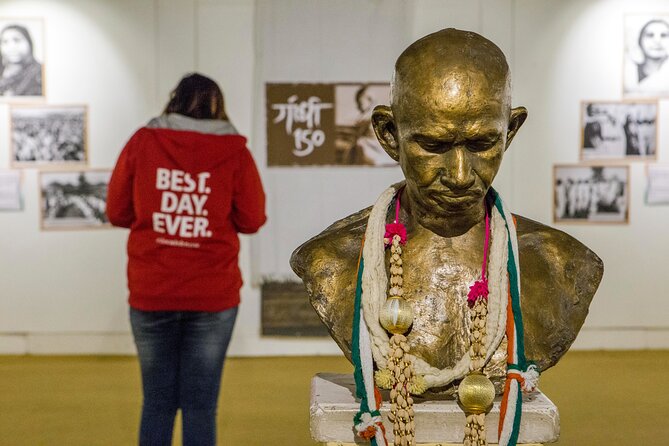
- Small private group (max 12) keeps the pace calm and questions welcome
- Gandhi Smriti includes time in the preserved space and multimedia museum
- National Gandhi Museum focuses on Gandhi materials like books, manuscripts, journals, and photographs
- Raj Ghat lets you see the Hey Ram inscription and the cremation memorial garden
- Private pickup and transportation from a centrally located hotel saves you time
- Carbon neutral tour by a B Corp certified company adds values alongside the history
A half-day Gandhi story that doesn’t feel like a rush
New Delhi can overwhelm you fast. This tour avoids that problem by being short, focused, and guided. You get picked up around 1:00 pm and then spend your afternoon on three Gandhi-linked stops that naturally build on each other: the final chapter, the written legacy, and the memorial place that people visit to reflect.
What makes it work for many first-timers is that each stop has a different “mode” of learning. You’ll move from a lived-in memorial (Gandhi Smriti) to a document-heavy museum (National Gandhi Museum) to a reflective outdoor site (Raj Ghat). That mix helps you understand Gandhi not just as a symbol, but as a person and a thinker who shaped ideas about equality and justice through non-violent protest.
And since this is private, you’re not stuck following a crowd at the pace of the slowest person in line.
You can also read our reviews of more private tours in New Delhi



Private group size (max 12) means you can actually ask questions
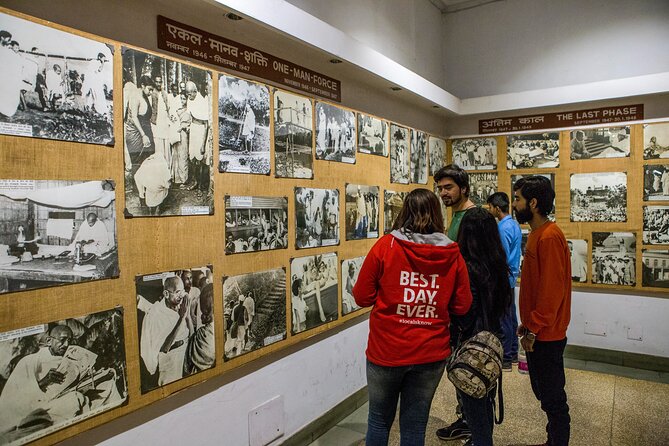
Even when a tour is well run, big groups can turn history into a conveyor belt. Here, the max of 12 people matters. It changes the tone: you can ask a question, pause longer if something catches your eye, or get practical context about what you’re looking at—without your guide constantly checking the clock.
This is also where English-speaking guidance can really pay off. Gandhi’s life gets repeated in schools worldwide, but Delhi puts it into a specific place and time. Having a guide who can connect the sites to the larger story of his courage and influence helps you see why these locations matter to India—and to people beyond India.
From past experiences shared by some visitors, guides have ranged in style. Some stand out for being genuinely engaging and generous with explanations, while the rare downside is when the guidance stays too close to a basic script. My advice: come ready with one or two questions of your own so you can get value even if the pace feels a bit “tour-book” instead of “story.”
Gandhi Smriti: the preserved setting of Gandhi’s final days

Your afternoon starts at Gandhi Smriti, centered on the Birla House memorial. This is where Gandhi spent his last days before his assassination in January 1948. You’ll get a close look at the well-preserved room that Gandhi called home, and then you can walk through the grounds connected to the moment of his killing during his routine evening walk.
One smart feature here is the multimedia museum on-site. Instead of only reading plaques, you get visual and audio elements that help connect dates, ideas, and people. If you’re the type who likes to understand the “why” behind a location, this part tends to land well because it’s about a sequence of events—not just a monument.
Timing-wise, you’ll be there about 40 minutes, and admission is included. That usually feels right for this kind of site: enough time to slow down, absorb, and ask questions, without eating the entire afternoon.
Practical note: dress for conservative settings. Shoulders and knees should be covered, especially outside major hubs and in places with memorial rules. Loose, lightweight clothing is best for Delhi’s heat.
National Gandhi Museum: when artifacts turn ideas into something you can read
After Gandhi Smriti, you head to the National Gandhi Museum, also known locally as the National Gandhi Museum. This is less about a single moment and more about the materials that shaped his public life and influence.
You’ll spend about 20 minutes here, and it’s time well used if you actually look at what’s on display. The museum focuses on a strong collection of items connected to Gandhi’s life and work—books, manuscripts, journals, and photographs owned by and depicting him.
This is the stop I recommend most to readers who want more than symbolism. Gandhi’s legacy can feel like a set of famous quotes, but documents and personal records help you see the work behind the fame. The museum gives you a chance to connect the ideas of non-violent protest and social equality to the way he thought and wrote.
If you’re short on time in Delhi, this museum is a good payoff. You’re not trying to cover every museum in the city—you’re getting something targeted that makes the later outdoor memorial at Raj Ghat feel more meaningful.
Raj Ghat and Hey Ram: reflection with a real sense of place
Next comes Raj Ghat, on the west bank of the Yamuna River. This memorial marks where Gandhi was cremated after his assassination. The memorial is inscribed with his final words, Hey Ram, and the site has been shaped into a green garden that invites slower looking.
You also learn that other Indian leaders were cremated there at different points. That detail matters because it places Gandhi among the broader fabric of India’s twentieth-century political and social change, not as a lone figure floating above the rest.
You’ll have about 20 minutes at Raj Ghat, with admission included. For many people, the outdoor aspect is the most “quiet” part of the tour. Indoors, you absorb facts and media. Outside, you absorb atmosphere—light, open space, and the sense that this is still a living place of remembrance.
If you want photos, you’ll likely have opportunities, but keep it respectful. This isn’t a selfie spot; it’s a memorial. I’d bring your camera mindset down a notch and focus on the inscriptions and layout.
You can also read our reviews of more historical tours in New Delhi





What the guide adds: story, context, and practical tips for Delhi

A good guide turns a list of stops into a timeline you can understand. This tour is built around that idea. Your local English-speaking guide shares stories about Mahatma Gandhi’s life, and the focus is on his non-violent philosophy and the push for equality and justice.
The guides you might encounter can make a real difference. Some past departures highlight guides such as Abhi, Indira, and Audesh C. Mishra for being friendly and informative, with a professional driver experience too (one account mentions a driver named Sonny). When the guide is strong, you walk away with more than facts—you get connections you can carry into the rest of your trip.
And beyond the sites themselves, you receive tips on what else to see, do, and eat during your stay. That’s a small add-on, but it’s practical in Delhi, where “what should I do next?” can eat up time you’d rather spend sightseeing.
The one caution: like any short tour, you only get so much time. If your guide pacing feels too rapid, you can usually fix that by asking for a specific explanation—one question can steer the rest of the stop.
Pickup, transportation, and what to do after the tour
This is set up for convenience. You’ll get pickup with private transportation from a centrally located hotel in Delhi, and you’ll end with options for the rest of your day.
The tour includes a mobile ticket, which is handy if you don’t want to hunt for paper. It’s also near public transportation, so even if pickup is smooth, you’re not stranded if you need to reposition later.
At the end, you can either explore on your own or ask the guide to assist with arranging a taxi to your hotel. That matters because Delhi traffic can be a game of patience. A clean exit from the tour saves you from improvising right when you’re tired.
Plan wise: since the tour is about 4 hours (approx.), I suggest keeping a comfortable buffer after your afternoon. If you have a tight evening plan, you may find the schedule can run earlier or later than expected depending on real-world conditions.
Price and value: why $40.03 can make sense for the right traveler
The price is listed at $40.03 per person. At first glance, that looks “cheap” compared to private tours in some countries, and it can be a decent deal here because several cost factors are bundled.
You’re paying for:
- private transportation and pickup from a centrally located hotel
- a local English-speaking guide
- admission tickets included for the major stops
- time-efficient routing through Gandhi Smriti, the National Gandhi Museum, and Raj Ghat / cremation memorial
You’re also paying for the meaning and context—something you won’t get if you simply show up on your own. If you’re the kind of traveler who likes to understand what you’re looking at, the guide + curated stops often justifies the price.
Where it might not be the best value is if you expect a long, deep lecture or a wide sweep of Delhi’s Gandhi-related sites beyond these three anchors. This tour is focused by design. If you want more breadth, pair it with another Delhi visit day.
Who this tour suits best, and who should choose differently
This works especially well for:
- first-time Delhi visitors who want a meaningful afternoon without complex logistics
- Gandhi admirers who want to connect the man to physical places
- families, since it’s child-friendly and children under 6 can join free of charge (tell the operator when booking)
- travelers who like private guidance and prefer questions over rushing
It may feel less ideal if:
- you want a bigger checklist of sights in one go
- you’re looking for long museum time in a single building
- you’re sensitive to conservative dress expectations; shoulders and knees should be covered
One more thought: the tour is carbon neutral and run by a B Corp certified company committed to using travel as a force for good. If sustainability and ethics matter to you in how you choose tours, that adds weight to the decision.
Should you book the Gandhi Delhi Private History Adventure Tour?
I’d book it if you want a short, well-focused Gandhi experience with private pickup, English guidance, and admission included. The mix of Gandhi Smriti (final days), the National Gandhi Museum (documents and photos), and Raj Ghat (memorial space and Hey Ram) gives you three angles on the same legacy.
I’d think twice if your main goal is a long, highly academic treatment of twentieth-century politics. This is a half-day format, so you’ll get a guided snapshot that’s meant to inspire and orient you—not exhaust the topic.
If you do book, go in with one or two questions (about non-violent protest, equality, or how Gandhi’s ideas played out in his final months). That way, even a short tour feels personal and earned.
FAQ
What is the duration of the Gandhi Delhi Private History Adventure Tour?
It runs for about 4 hours.
What time does the tour start?
The start time is 1:00 pm.
Is the tour private?
Yes. It’s a private tour/activity for you and your party only, with a maximum of 12 people.
Where does the tour take place?
It takes place in New Delhi, India.
Which sites are included?
You visit Gandhi Smriti, the National Gandhi Museum, and Raj Ghat.
Are admission tickets included?
Yes. Admission tickets are included for Gandhi Smriti, the National Gandhi Museum, and Raj Ghat.
Do I need cash for food during the tour?
Food and drinks are not included, so you’ll need to budget separately.
Is pickup included?
Yes. Pickup is offered with private transportation from a centrally located hotel in Delhi.
What should I wear?
Dress standards are conservative. You’re strongly advised to wear modest clothing that covers shoulders and knees.
Can I cancel for a full refund?
Free cancellation is available up to 24 hours before the experience’s start time.