REVIEW · NEW DELHI
Private Luxury Golden Triangle Tour From New Delhi 03 Days
Book on Viator →Operated by Perfect Agra Tours · Bookable on Viator
A 3-day Golden Triangle can feel like a sprint. Still, this private luxury route works because you get a private car with transfers and timed sightseeing blocks across Delhi, Agra, and Jaipur. I like the way the day-by-day plan mixes big-name monuments with quieter stops like the Lotus Temple and Itmad-ud-Daula.
Two things I really like: first, the comfort factor is handled for you with a private, air-conditioned car plus hotel or airport pickup and drop-off. Second, you’re not left guessing at each site thanks to local guides in each city who communicate in clear English. One consideration: you’ll move fast, and the biggest attractions like the Taj Mahal are early, plus the listed monument entrance fees and meals are not included.
If you want the classic highlights of India’s north in a short time, this is a strong match. If you prefer a slow, wandering pace with lots of free time, you’ll feel the schedule pressure.
In This Review
- Key highlights at a glance
- Golden Triangle in 3 Days: how this plan really works
- Delhi start: Qutub Minar and Lotus Temple in the same day
- Delhi landmarks: India Gate, Parliament House, Rashtrapati Bhavan, and Jama Masjid
- The Agra transfer and hotel check-in: where you should slow down
- Sunrise Taj Mahal and Agra Fort: the core reason people do this route
- Itmad-ud-Daula: the smaller mausoleum that changes your tempo
- Driving to Jaipur: the pause between Mughal and Rajput worlds
- Jaipur morning at Amber Fort: start early, see the fort on its ridge
- Jal Mahal for photos: the lake-palace moment built into the tour
- City Palace and Jantar Mantar: Jaipur’s cultural center and its science instruments
- Hawa Mahal: a fast stop that still feels iconic
- Private luxury value: what you actually get for the money
- Guides and driver performance: why the experience feels smooth
- Who this tour fits best (and who should think twice)
- Quick planning tips before you go
- Should you book this Golden Triangle Private Luxury Tour?
- FAQ
- What is included in the tour price?
- Are hotel rooms included?
- Are monument entrance fees included?
- Are meals included?
- Is this a private tour?
- Can I get a refund if I cancel?
Key highlights at a glance
- Private guides in each city to make sense of what you’re seeing, not just point and walk
- Sunrise Taj Mahal timing built into Day 2 for a memorable start
- Lotus Temple and Jama Masjid add spiritual calm to the big-city sightseeing
- Jal Mahal photo stop gives you that lake-and-palace moment in Jaipur without stealing the day
- Driver reliability stands out in feedback, including mention of driver Anil waiting on time
- Hotels with breakfast (if you choose that option) so you’re not planning every night from scratch
Golden Triangle in 3 Days: how this plan really works
This Golden Triangle tour is designed for one main goal: see Delhi, Agra, and Jaipur’s top sites without dealing with trains, buses, or constant switching. The route is standard on purpose, because it’s the fastest way to cover the big monuments in a short span. The private setup matters here. A private driver and car mean you can actually keep to the sightseeing times instead of losing energy to transit chaos.
The pacing is the trade-off. You’ll get a lot of landmark time, but each stop is capped at a set duration (often 15 minutes to a couple hours). That’s great if you like structure and you want value from your limited days. It’s not so great if you tend to linger. Think of this as a guided highlights tour with enough depth to understand the sites, not a slow museum day.
Budget reality also matters. The tour includes transportation, guides, and several entrance fees, but monument entrance fees are not included for key sites like the Taj Mahal and Agra Fort. The data lists monument entrance fees as 60 USD per person. On top of that, lunch and dinner are not included. So the best value comes when you plan a clear food and ticket budget before you go.
You can also read our reviews of more private tours in New Delhi



Delhi start: Qutub Minar and Lotus Temple in the same day
Day 1 begins with Qutub Minar, and it’s a smart opener because it’s iconic but also specific. You’re looking at a 73-metre tall, five-storey tower tied to the Delhi Sultanate era. The information provided even gives you the build year—1193—and names Qutub-ud-din Aibak as the founder behind it. Having that context helps you see the tower not just as a photo object, but as a historical landmark with a clear origin story.
Qutub Minar’s time is about 1 hour, and admission ticket is listed as not included. Translation: you should budget for tickets here, and you’ll want comfortable shoes, because the site is more than flat ground.
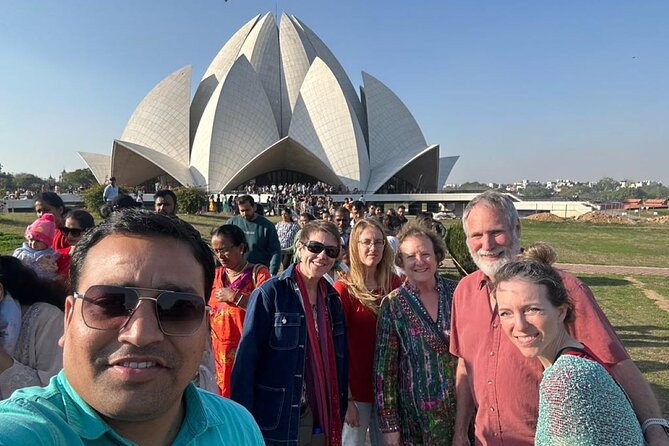
Then the plan pivots to the Lotus Temple for a totally different mood. This stop is 1 hour and lists admission as included. The Lotus Temple is shaped like a lotus flower with 27 white-marble petals, and the big gift of this hour is the change in pace. In the middle of city landmarks, it gives you a pause for quieter appreciation—ideal if you’re the type who appreciates atmosphere as much as architecture.
If you like your first day balanced—big landmark energy followed by calm—this pairing works.
Delhi landmarks: India Gate, Parliament House, Rashtrapati Bhavan, and Jama Masjid
After Lotus Temple, you’ll get a string of major New Delhi sights that are close enough to make sense in a short day. This is where the tour feels efficient because the stops are clustered and the transitions are handled for you.
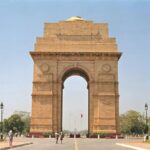
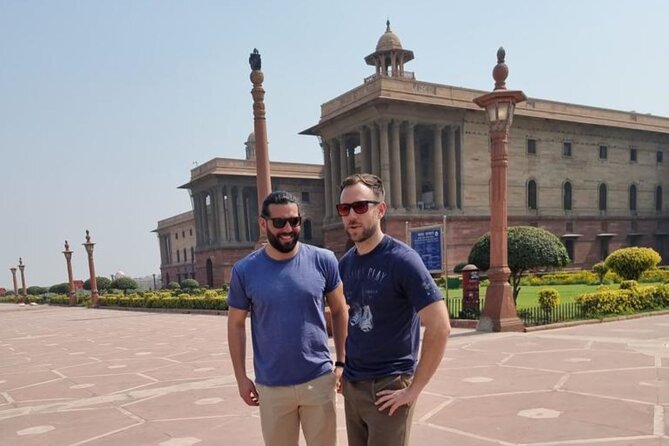
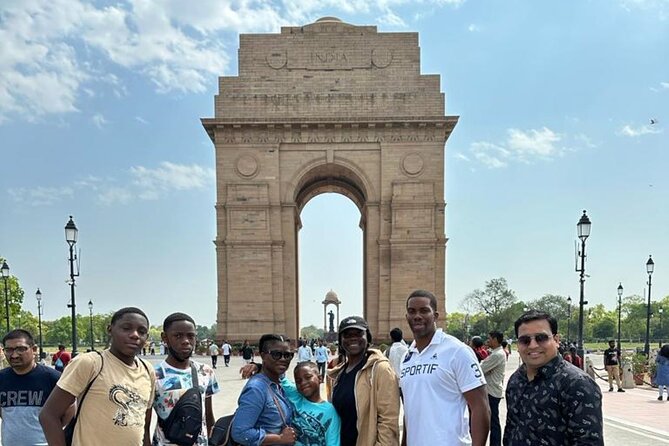
- India Gate (30 minutes, admission included): It’s a war memorial near Rajpath dedicated to soldiers of British India who died in wars. Even if the topic is heavy, the site gives you architectural framing—very “government center” in style—so it’s good for understanding how the city’s ceremonial geometry works.
- Parliament House or Sansad Bhavan (30 minutes, admission included): The building’s shape is based on the Ashoka Chakra (the circular wheel). That’s a helpful fact because it turns the building from background to something you can actually notice and remember.
- Rashtrapati Bhavan (15 minutes, admission included): This is the President of India’s official residence and estate area. The included time is short, so treat it as a glimpse and photo-and-orientation moment, not a deep visit.
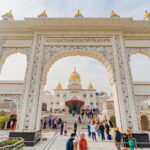
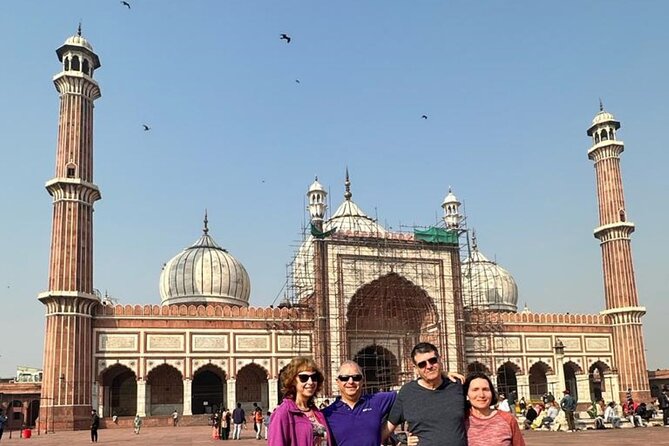
Then you end the Delhi section at Jama Masjid (1 hour, admission included). This is one of the most powerful “feel it” stops on the first day because it’s a large Mughal mosque built by Shah Jahan between 1650 and 1656 and inaugurated by his first son, as noted in the description. The tour gives you time to actually sit with the space, not just walk past.
One drawback to flag: Day 1 can feel like a lot of monumental sightseeing back-to-back. It’s not bad, but it’s intense. If you’re sensitive to heat, crowds, or rapid transitions, plan to hydrate and keep your energy steady.
The Agra transfer and hotel check-in: where you should slow down
After Delhi, you’ll have time for lunch at a local restaurant and then the drive to Agra via expressway. The timeline shows a 3-hour block tied to the Agra arrival and hotel check-in. There’s no listed monument program here beyond getting settled.
That’s actually a good thing. Agra days are built around Taj Mahal and fort-style architecture, and those are concentrated experiences. A proper check-in window helps you recharge so you can enjoy sunrise rather than hate it.
What I’d do on your end: keep your essentials ready in the car for the next morning. Even with a private driver and guide, sunrise days get easier when you’re prepared—water, a light layer, and anything you’ll want for photos. The tour includes bottled mineral water during journeys, which is a nice practical touch.
If you chose a hotel option, you also get breakfast for two nights. That matters because it removes one more planning task from your trip.
Sunrise Taj Mahal and Agra Fort: the core reason people do this route
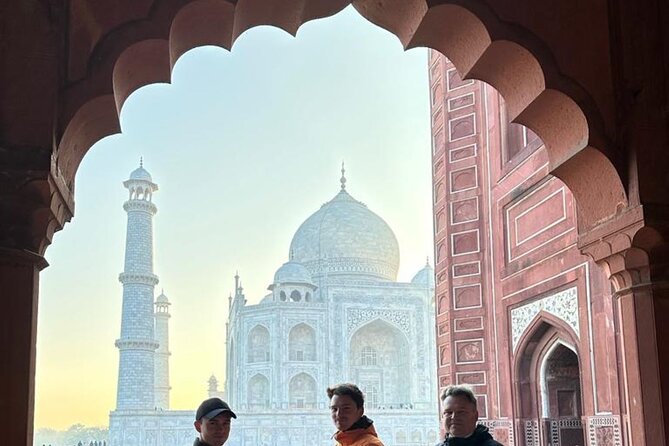
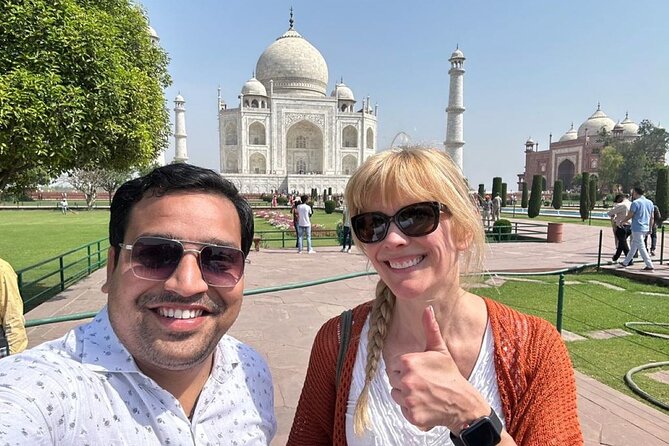
Day 2 is the big one. You’ll go to Taj Mahal at sunrise with a 3-hour time block. Admission for Taj is listed as not included, and that’s important for budgeting. But the real value here is the timing. Sunrise is when Taj Mahal often feels most magical: softer light, fewer distractions, and a calmer start.
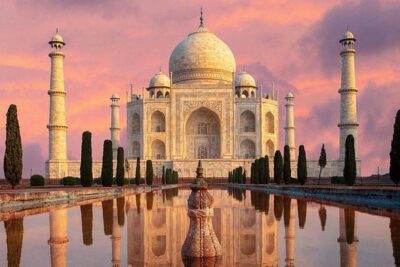
The description also gives you the key story: Taj Mahal is a UNESCO World Heritage site built by Shah Jahan as a memorial for his third wife Mumtaz Mahal, who died giving birth to their child. With that in mind, you’ll likely notice more than a pretty building. You’ll see how the monument is designed around grief, devotion, and symmetry.
Next is Agra Fort for about 2 hours, but admission is also listed as not included. Agra Fort is another UNESCO site and was the main residence of the Mughal emperor (as described). This stop is a good counterbalance to Taj. Taj is pure emotion and ideal form. Agra Fort is political power made stone—balconies, palaces, and fortress structure that feels like it’s built to endure.
Between these two, you’ll get a satisfying “love story monument” plus “power story fortress” pairing, both central to Mughal-era Agra.
You can also read our reviews of more tours and experiences in New Delhi






Itmad-ud-Daula: the smaller mausoleum that changes your tempo
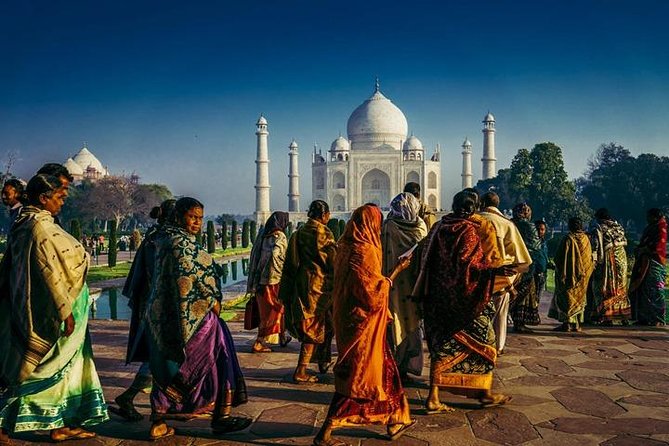
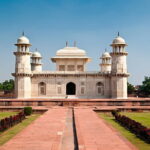
Right after lunch, you visit Itmad-ud-Daula, also known as the tomb of I’timād-ud-Daulah. Your time here is about 1 hour, and admission is listed as included.
This is the kind of stop that helps your brain between the biggest names. The description calls it a Mughal mausoleum and gives you two nicknames: described as a jewel box, and sometimes called Bachcha Taj. That’s a useful cue. It’s not trying to compete with the Taj at grand scale. Instead, it rewards you with detail and craftsmanship.
If you like architecture that feels close-up and human-scale, this stop can end up being your quiet favorite of the day.
Driving to Jaipur: the pause between Mughal and Rajput worlds
After Itmad-ud-Daula, the plan moves toward Jaipur. The data shows a structure of arriving in Jaipur, checking into your hotel, and overnight stay. The exact drive time isn’t stated, so you should assume it’s one of those “get through the miles, then reset” legs of the journey.
This part of the itinerary is valuable because it gives your trip a mental border. You’ll go from Mughal monuments to Rajput-era Jaipur symbolism. Changing scenery is not just pleasant; it helps you keep the styles straight. Taj and Fort can blend together in your mind if you move too quickly without a mental reset. This transfer acts like a reset button.
Jaipur morning at Amber Fort: start early, see the fort on its ridge
Day 3 starts around 8am with meeting your guide at your Jaipur hotel. Your first stop is Amber Palace / Amber Fort for about 2 hours. Admission is listed as not included.
The description explains Amber Fort’s setting: it sits on a ridge just outside Jaipur City and is reflected in a lake below. That detail matters because the fort’s position is part of the experience. It’s not flat and convenient; it’s dramatic in how it sits in the landscape and views.
Plan to be a bit flexible with walking stamina here. You’ll want good footwear, and you’ll likely move through different levels as you explore.
Jal Mahal for photos: the lake-palace moment built into the tour
Next comes Jal Mahal, a 30-minute stop with admission listed as included. This is a “photo and postcard” stop: the palace appears floating on Man Sagar Lake, and the tour description calls it a palace located in the middle of the lake.
In a packed day, Jal Mahal works because it gives you a visual break. It also creates a memorable contrast after the fort’s stone-and-history feel. Don’t rush it. Even if your time is short, try to pause for a couple angles so you get that lake reflection look.
City Palace and Jantar Mantar: Jaipur’s cultural center and its science instruments
After Amber and Jal Mahal, you’ll visit City Palace of Jaipur for about 2 hours. Admission is listed as not included. The description is clear that it served as the administrative and ceremonial seat of the Maharaja and was constructed in 1721.
City Palace is the kind of stop where context helps. You’re not just looking at walls—you’re seeing how power and ceremony were organized. If you’re curious about how Jaipur functioned as a kingdom, this is where you’ll start to get the “how it worked” feeling.
Then there’s Jantar Mantar for about 1 hour, listed as UNESCO and built in 1734. The plan notes it contains nineteen astronomical instruments, created by Sawai Jai Singh II, who is described as the founder of Jaipur. This stop is fascinating because it shows Jaipur doing science with public-facing monuments. It’s not hidden in a lab. It’s written in stone.
Hawa Mahal: a fast stop that still feels iconic
Finally comes Hawa Mahal or Palace of Wind, about 15 minutes with admission listed as included. The name fits the architecture: it’s made of red and pink sandstone, and the description emphasizes how it stands out from its surroundings. Even with a short time block, this is one of those sights you can recognize instantly once you’re there.
Because your time is brief, I suggest using those 15 minutes well. Look for the façade patterns first, then grab a wider photo so you capture the building shape in context.
Private luxury value: what you actually get for the money
Let’s talk value in plain terms. The listed price is 40 USD per person, and the tour is described as private luxury with pickup, an air-conditioned car, and private local guides for sightseeing. There are also two nights accommodation with breakfast if you book the option that includes hotels.
That matters because for many short Golden Triangle plans, the expensive part is logistics. Someone has to arrange drivers, guides, and hotel timing. Here, those basics are handled.
That said, you still have two costs you must plan for:
- Monument entrance fees: listed as 60 USD per person.
- Meals: lunch and dinner are not included.
Also, the tour notes rooms are generally twin-sharing or double basis, and if there are 3 guests, rooms default to triple-sharing unless you pay an additional charge for 2 rooms. If you’re a small group and you care about room comfort, this is worth checking early.
One more practical value point: the tour includes bottles of mineral water during journeys. It’s a small thing, but on a three-day drive-intensive schedule, small comforts matter.
Guides and driver performance: why the experience feels smooth
The feedback provided in the data highlights two names and a common theme: smooth timing and helpful communication.
Ashish is specifically mentioned for answering questions before the trip started, and that kind of pre-trip clarity can lower stress before you even land in India. You also see mentions of a driver named Anil being friendly, helpful, and always waiting on time. In these kinds of trips, that reliability is a huge part of what makes the day feel easy.
So when you book, you’re not just buying tickets and a car. You’re buying coordination. That’s what lets you hit Taj at sunrise and still make Jaipur’s key stops without feeling lost.
Who this tour fits best (and who should think twice)
This plan is best for you if:
- You want the Golden Triangle highlights in 3 days / 2 nights
- You prefer a private guide and car rather than DIY travel
- You like structured sightseeing blocks with a guide explaining what you’re seeing
- You want hotel stays with breakfast included (if you choose the hotel option)
Think twice if:
- You hate early starts. Sunrise Taj Mahal is built into the schedule.
- You want long, unhurried time at each site. Many stops are 15 to 60 minutes.
- You don’t want to handle extra costs for entrances and meals. Tickets and lunch/dinner are separate.
If you’re traveling solo, the data includes a solo traveler perspective and the tour being private for your group only. That can be comforting if you worry about joining a larger, slower group.
Quick planning tips before you go
These are the practical moves that help this tour go smoothly:
- Budget for entrance fees and meals. Monument entrance fees are listed as 60 USD per person, and lunch/dinner aren’t included.
- Use the short stops well. Hawa Mahal is only 15 minutes. Decide in advance what photo angle you want.
- Pack for sunrise. The Taj Mahal visit is early by design, so keep a light layer and water handy.
- Choose hotel option if you want the simplest flow. Breakfast and two nights of accommodation make the schedule easier to follow.
Also note: the description says both the private tour driver and private tour guides are fully vaccinated. If that’s an important factor for your planning, it’s good to know it’s addressed.
Should you book this Golden Triangle Private Luxury Tour?
Here’s my honest checklist. Book it if you want a private, guided, car-based way to cover Delhi, Agra, and Jaipur fast, with hotel stays and the big monuments done efficiently. The structure works well for short trips because it locks in sunrise Taj Mahal, pairs major Delhi landmarks, and gives you key Jaipur stops like Amber Fort, Jal Mahal, City Palace, Jantar Mantar, and Hawa Mahal.
Skip it or adjust your expectations if you want lots of free time or deeply slow visits. This itinerary is packed, and the extra costs for entrance fees and meals are real.
If you’re the type who likes clarity and a smooth schedule, this tour can be a satisfying way to get the Golden Triangle done right.
FAQ
What is included in the tour price?
The tour includes private air-conditioned transportation, hotel or airport pickup and drop-off, sightseeing with a private local guide, all applicable taxes and service charges, and bottled mineral water during journeys. If you book the option that includes hotels, breakfast for two days and two nights accommodation with breakfast are included.
Are hotel rooms included?
Yes, two nights accommodation with breakfast is included if you choose the hotel-inclusive option. Rooms are generally provided on a twin-sharing or double basis, and if there are 3 people, rooms are usually triple-sharing by default unless an extra charge is paid for 2 rooms.
Are monument entrance fees included?
No. Monument entrance fees are not included. The tour information lists monument entrance fees as 60 USD per person.
Are meals included?
Lunch and dinner are not included. The tour includes breakfast for two mornings if you select the option including hotels.
Is this a private tour?
Yes. It is a private tour/activity, and only your group will participate.
Can I get a refund if I cancel?
Yes, free cancellation is available. You can cancel up to 24 hours in advance for a full refund. If you cancel less than 24 hours before the experience’s start time, the amount paid is not refunded.