REVIEW · NEW DELHI
3-Hour Mehrauli Archaeological Park Ruins Walking Tour Delhi
Book on Viator →Operated by Discover Activities · Bookable on Viator
Mehrauli ruins feel like a history puzzle. In a tight 2 to 3 hours, I like how this walk strings together Delhi’s layered past and makes it readable on foot, not just in books. I also love the tone: you get real site context, then the guide adds the spooky Delhi side too, including stories tied to places people associate with nighttime eeriness.
The only drawback to plan for is that it’s a short walking tour, so you won’t get long, slow time at every monument. If you want to linger for photos and sketching, you’ll need to add extra time on your own after the final stop.
In This Review
- Key highlights to look for
- Why Mehrauli Archaeological Park works so well on foot
- Price and value: $28.47 for a guided ruins loop near Qutub Minar
- Meeting point and flow: a 2–3 hour walk that starts at Qutub Minar
- Stop 1: Jamali Kamali Tomb and Mosque at the start of the Mehrauli story
- Stop 2: Tomb of Balban, plus Charles Metcalfe’s 1850s canopy folly
- Stop 3: Rajon Ki Baoli, water architecture and haunted legends
- Birdlife, shade, and the small moments you can plan for
- The guide makes the difference: asking better questions about what you see
- Who should book this Mehrauli ruins walking tour
- Should you book it?
- FAQ
- Where does the tour start and end?
- How long is the Mehrauli Archaeological Park ruins walking tour?
- What is included in the ticket price?
- Are the monument entry tickets included?
- Is there a group limit?
- Will I receive a ticket on my phone?
- What is the cancellation policy?
Key highlights to look for
- A small group pace (up to 15 people) that keeps questions easy to ask
- Free entry at the main stops for tickets shown as free during the tour
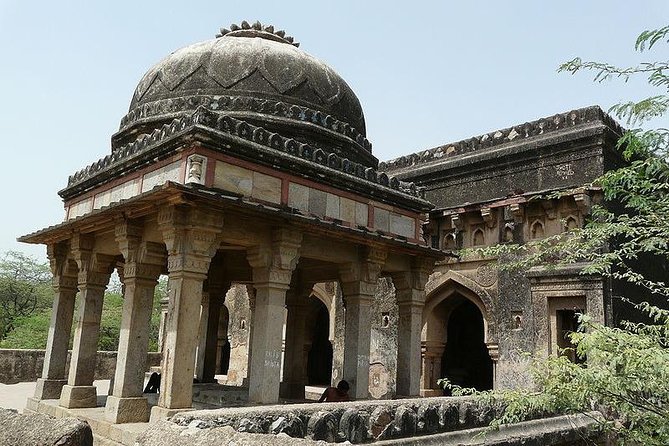
- Charles Metcalfe’s 1850s canopy at the Balban area, described as a folly for special viewing
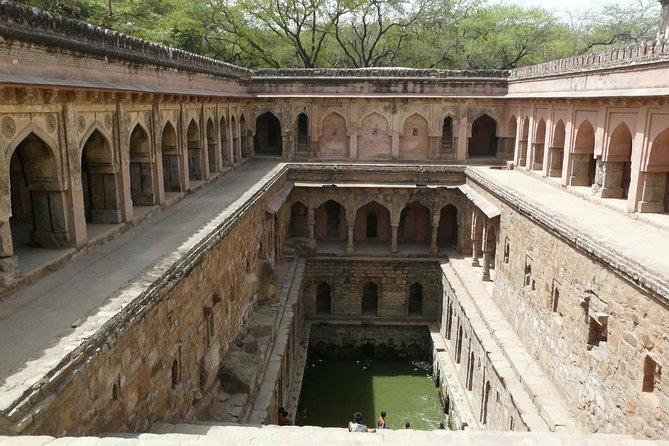
- Rajon Ki Baoli’s water architecture with a vertical shaft and hollow passageways
- Haunted legends framed as part of the local storytelling, especially around Rajon Ki Baoli
- Birdwatching potential as the area mixes ruins with greenery
Why Mehrauli Archaeological Park works so well on foot
Mehrauli is one of those places where Delhi’s history overlaps in layers. Instead of seeing one monument and calling it a day, you walk through an area where ruins and heritage structures sit close enough that the changes across time feel tangible. That’s what makes this kind of walk click: you can connect geography to stories without needing a separate museum visit.
This tour also leans into the way locals experience the past here. Along the route, you’ll hear the official historical framing and the popular folklore that comes with it. It’s a fun contrast, as long as you keep it in perspective: legends are part of the cultural map, even when the stonework is the main evidence.
You can also read our reviews of more walking tours in New Delhi



Price and value: $28.47 for a guided ruins loop near Qutub Minar
At $28.47 per person for roughly 2 to 3 hours, the best value here is that you’re paying for the guide’s ability to translate the site. You’re not buying a ticket to enter a single museum hall. You’re getting a local expert to help you interpret what you’re looking at across multiple ruins.
You should also know what reduces your total cost on the ground. The tour shows admission tickets as free for the stops, so you’re not paying for entry at each location you visit. What you still need to handle yourself is the usual stuff: meals and transport aren’t included.
Two more practical points that affect value:
- The tour uses a mobile ticket, so you’re not stuck hunting for paper.
- A maximum of 15 travelers keeps the experience from feeling like a rushed cattle line. You can actually ask a question and get an answer that helps you see the next site better.
Meeting point and flow: a 2–3 hour walk that starts at Qutub Minar
You start at Qutub Minar, Aam Bagh, Ladha Sarai Village, Mehrauli, New Delhi. Ending is simple too: it finishes back at the meeting point. That makes it easier to plan the rest of your day, especially if you want to pair the walk with other sights around the Qutub Minar area.
The tour is structured as a short sequence of focused stops, with about 20 minutes at each location. That timing is a gift and a limitation. It’s a gift because it forces clarity: you’ll see what matters and learn enough to remember it later. It’s a limitation because you won’t tour every corner at a slow pace.
If you’re sensitive to walking time, this is still manageable for many people since the tour notes that most travelers can participate and it stays within a typical short-visit range for sightseeing.
Stop 1: Jamali Kamali Tomb and Mosque at the start of the Mehrauli story
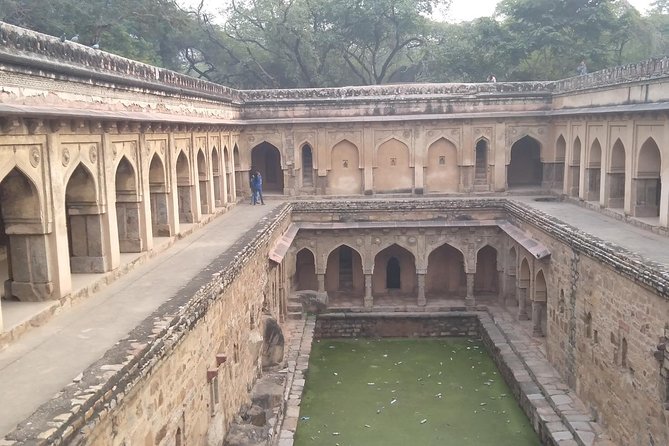
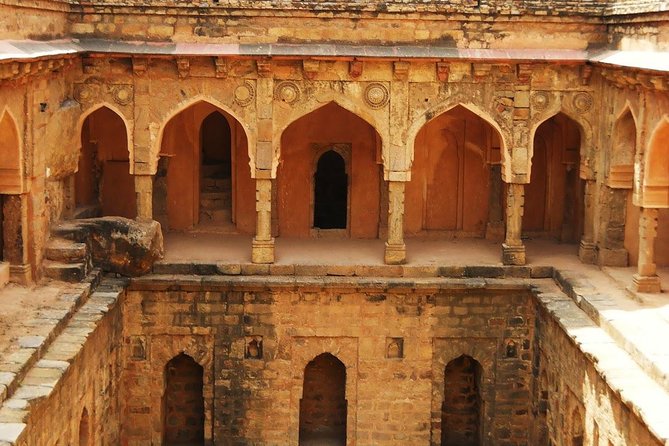
Jamali Kamali Tomb and Mosque is your first “anchor” stop. You’ll spend about 20 minutes here, and the goal is to set your bearings in Mehrauli. The guide helps connect the history and geography of the heritage area, so the rest of the walk makes more sense when you’re moving from one ruin to the next.
What I like about starting here is that it gives you a baseline. A tomb-and-mosque setting tends to teach you how religious and funerary architecture worked together in the broader Delhi context. Even if you’re not a deep architecture person, you can still learn to recognize the key visual cues the guide points out.
A consideration: since it’s the first stop, you should arrive mentally ready to listen. If you show up scattered, you might miss the “map-building” part that makes the rest of Mehrauli click.
Stop 2: Tomb of Balban, plus Charles Metcalfe’s 1850s canopy folly
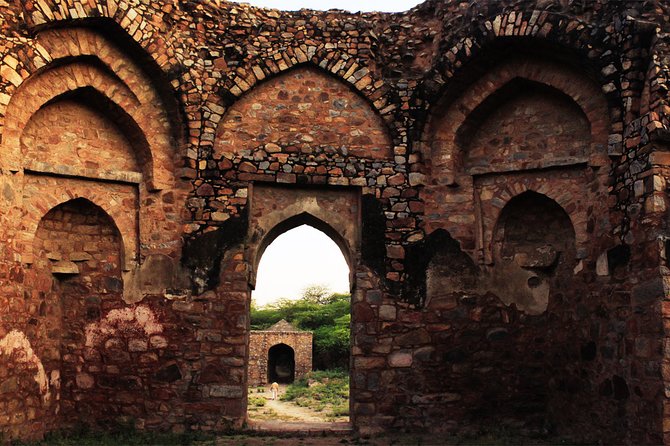
Next comes the Tomb of Balban area. Again, plan for about 20 minutes before moving on. This is where the tour adds a very specific kind of Delhi detail: Charles Metcalfe’s canopy built in the 1850s.
The standout piece is that the canopy is described as a folly perched on the peak of a mound. A folly is basically a structure made to look old or styled like an old relic, often for decorative or viewing purposes. Here, it’s also about how you experience the site visually. You’ll get the sense that at some point in history, people wanted a particular look and a particular vantage.
Why this stop is worth your attention:
- It shows Delhi isn’t frozen. Later generations reshaped how the past was framed.
- It gives you something concrete and name-based to remember: Charles Metcalfe.
The trade-off is time. Because the canopy and tomb area are both part of the story, you’ll want to pay attention early so you don’t feel like you’re “catching up” while the group is already moving.
You can also read our reviews of more tours and experiences in New Delhi





Stop 3: Rajon Ki Baoli, water architecture and haunted legends
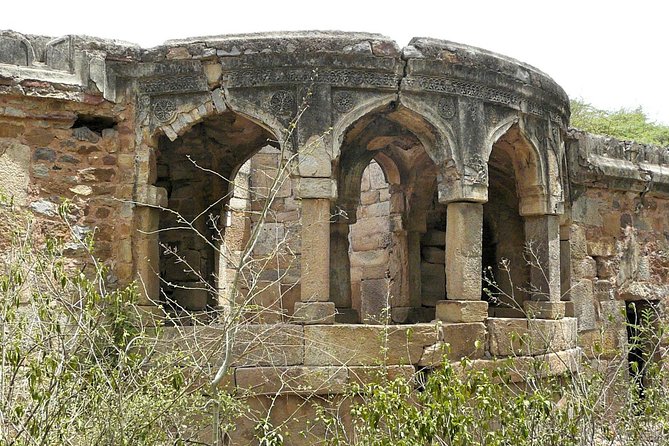
Rajon Ki Baoli is the emotional finale. You’ll spend about 20 minutes here, and the tour leans into a mix of structure and folklore.
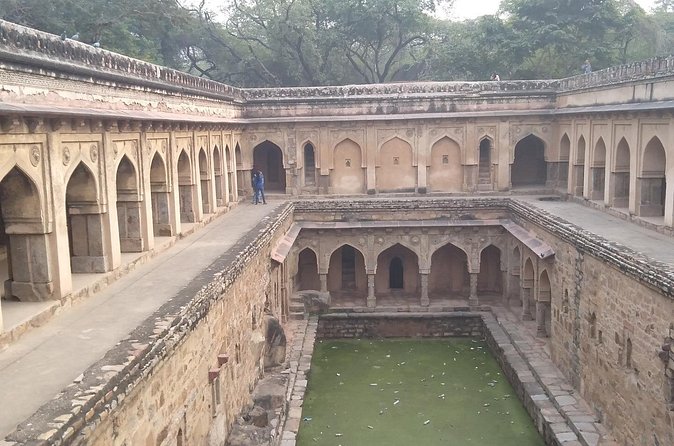
First, the practical architecture: Rajon Ki Baoli is named after masons who lived in chambers connected to the baoli complex. The baoli itself features a vertical shaft used for drawing water, plus hollow passageways. If you like understanding how people engineered daily life, this stop delivers. Even at a glance, you can start imagining how water, bodies, and movement would work in a space like this.
Second, the cultural layer: it’s considered one of the more haunted places tied to Delhi legends. The tour presents this as part of the experience—stories of nighttime fear and secrecy—rather than as a supernatural fact. That’s the right approach, because it helps you treat the legend as folklore while still admiring the stonework as real history.
A consideration before you go: baoli areas can feel atmospheric, which is great for mood. It can also mean lighting and echoing sound conditions that feel dramatic. If you’re easily spooked, just remember the tour frames this as a local story tradition, not a promise of anything supernatural happening.
Birdlife, shade, and the small moments you can plan for
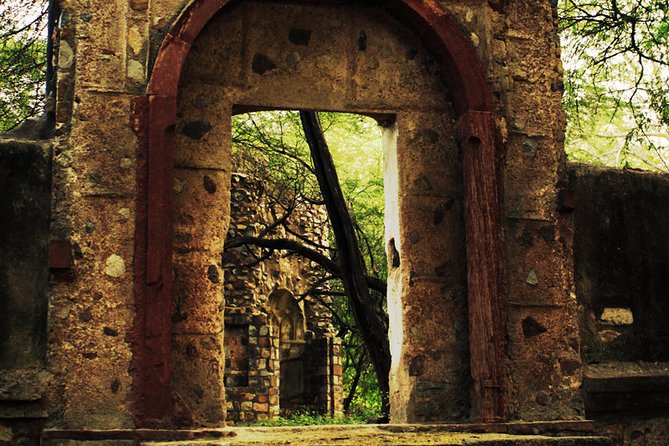
One detail that genuinely upgrades the tour experience is the reminder that you’re not just walking between buildings. The Mehrauli ruins area includes greenery and forest-like pockets, and the tour specifically highlights the chance to spot different species of birds.
That means you can time your attention. When the guide is explaining a structure, focus on the stone cues. When there’s a pause or the group is moving slowly, look for movement overhead or along the trees. It’s a simple way to feel like you’re in a living heritage space, not an open-air scrapbook.
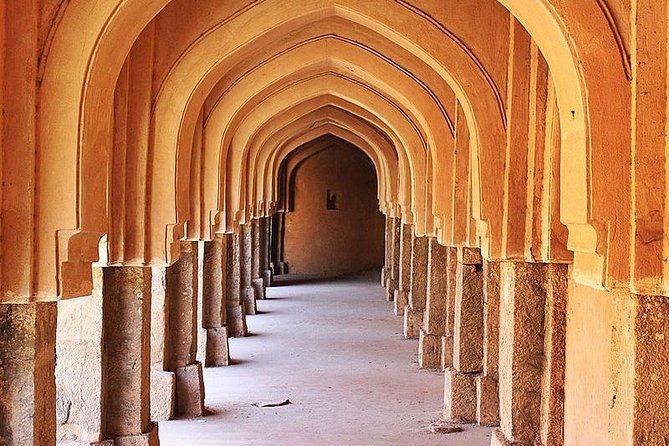
Also, because you’re outdoors, treat the tour like any other Delhi morning or early afternoon walk: dress for sun and prepare for changing light as you move between open mounds and shadowed passageways.
The guide makes the difference: asking better questions about what you see
A recurring theme in the experience is how much the guide’s interpretation matters. The name Jai Singh shows up in connection with strong performance: thorough historical details and an ability to engage with narratives, even to the point of productive debate.
That matters for you because it changes how you remember the walk afterward. A good guide doesn’t just explain dates and names. They help you notice patterns: what’s functional, what’s symbolic, what looks original versus what was added later, and why legends attach to certain spots.
If you want a tour that turns monuments into understandable stories, this guide style is a big reason people rate the experience highly.
Who should book this Mehrauli ruins walking tour
I’d point this tour toward you if:
- You want a short, high-impact way to understand Mehrauli’s historical layers
- You prefer guided interpretation over random wandering
- You enjoy a blend of architecture and local storytelling, especially the “haunted” folklore angle
- You’re near Qutub Minar and want an easy add-on that doesn’t swallow your whole day
It may not be your best fit if you want long stays, extensive museum-style depth, or lots of free time. The design is about moving through key sites efficiently, which is perfect for many visitors and frustrating for a few.
Should you book it?
Yes, this is worth booking if you want a guided, structured walk that gives you something to hold onto. The price makes sense because the stops show as free admission, and your money goes toward explanation and connection across multiple sites. With a group limit of 15, you should also get a more personal feel than many quick city walks.
If you’re the kind of person who enjoys hearing both the official story and the local legends tied to a place, Rajon Ki Baoli alone makes the trip memorable. Just go in expecting a short, focused route, not a slow, all-day archaeology study.
FAQ
Where does the tour start and end?
The tour starts at Qutub Minar, Aam Bagh, Ladha Sarai Village, Mehrauli, New Delhi and ends back at the same meeting point.
How long is the Mehrauli Archaeological Park ruins walking tour?
It runs for about 2 to 3 hours.
What is included in the ticket price?
The tour includes a local knowledgeable expert guide. Meals and transport are not included.
Are the monument entry tickets included?
The admission tickets shown for the stops are listed as free during the tour.
Is there a group limit?
Yes. The tour has a maximum of 15 travelers.
Will I receive a ticket on my phone?
Yes. The tour offers a mobile ticket and you receive confirmation at the time of booking.
What is the cancellation policy?
You can cancel up to 24 hours in advance for a full refund. If you cancel less than 24 hours before the start time, the amount paid is not refunded.