REVIEW · NEW DELHI
5 Nights 6 Days Private Golden Triangle Tour – Delhi Agra Jaipur
Book on Viator →Operated by Golden Triangle Tours India · Bookable on Viator
Golden Triangle, neatly stitched into six days.
This private tour is interesting because you move fast but still get real guides at each stop, from Gurudwara Bangla Sahib’s famous tank story to the stepwells linking Delhi and Jaipur. I especially like the Taj Mahal timing (sunset view point one night and sunrise the next), and I like that the setup stays organized end-to-end, with smooth communication from Mr. Gopal and careful driving from people like Mahaveer and Jugal. The main drawback to plan for: monument entry fees, lunch, and dinner are not included, so your real total depends on what you pay on the ground.
I also appreciate the practical extras baked in: pickup/drop-off, private air-conditioned vehicle, bottled water during journeys, and hotel nights with breakfast when you choose that option. Since it’s a private tour, only your group rides together, and vehicle size changes with group size (4-seater sedan, 6-seater wagon, or 10-seater minivan).
In This Review
- Key things to know before you go
- The Golden Triangle route: how six days actually feel
- Delhi day 1: Gurudwara Bangla Sahib and Agrasen Ki Baoli
- Delhi day 2: Qutub Minar, Lotus Temple, India Gate, Jama Masjid, Humayun’s Tomb, Chandni Chowk
- Agra day 1: Agra Fort, Itmad-ud-Daula, Taj sunset view, and Mehtab Bagh
- Taj Mahal sunrise day: Fatehpur Sikri and Chand Baori on the same swing
- Jaipur day 1: fort time, Jal Mahal photos, City Palace, Jantar Mantar, Hawa Mahal
- Jaipur day 2: Birla Mandir and the ride back to Delhi
- Guides, drivers, and the real value of private timing
- Price and logistics: what $250.72 really buys you
- Room sharing and group comfort: the practical bits
- Who should book this Golden Triangle tour?
- Should you book this 5 Nights 6 Days private Golden Triangle tour?
- FAQ
- What is included in the tour price?
- Are monument entry tickets included?
- Where does the tour start and what are the drop-off options?
- How are rooms handled for different group sizes?
- What vehicle will you ride in?
- Is there free cancellation?
Key things to know before you go
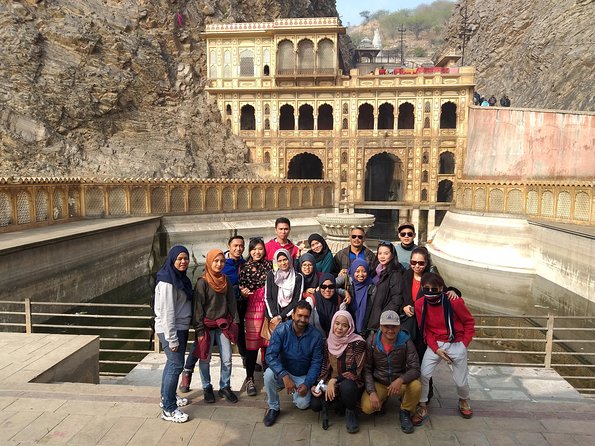
- Taj Mahal twice: a sunset-view point session and a sunrise session so the light and feel are different
- Private local guides each day for the meaning behind what you’re seeing
- Old Delhi + Mughal landmarks in one strong day, ending with Chandni Chowk’s shopping chaos
- Stepwells across the route: Agrasen Ki Baoli, Chand Baori, and Panna Meena ka Kund
- Organization with real names: Mr. Gopal manages communication, and drivers like Mahaveer/Jugal keep timing tight
- Private transport sized for your group so you’re not squeezed into the wrong van
The Golden Triangle route: how six days actually feel
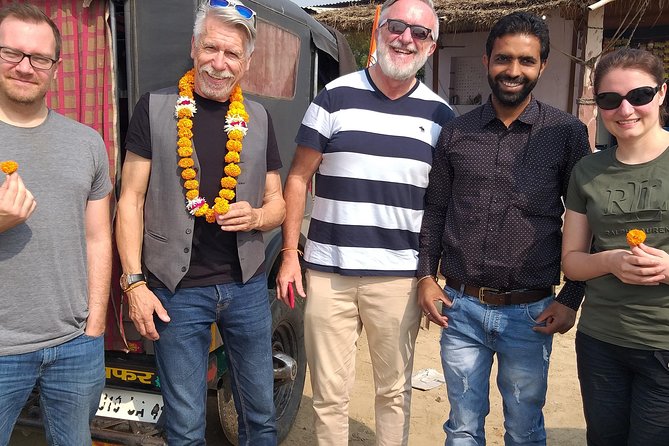
This is the classic Delhi–Agra–Jaipur triangle, but the value is in how it’s handled: private transport, guided sightseeing, and stays that give you 5 nights to break up the long distances. Delhi to Agra is listed as about 222 km and roughly 4 hours, and the rest of the travel is built into the day-by-day pacing.
You’ll also notice the tour leans into efficient sightseeing blocks—often 30 to 60 minutes per stop—so you’re not waiting around in transit all day. That’s good if you want to cover a lot. If you hate early starts or packed mornings, you’ll want to mentally budget for that sunrise Taj day.
Finally, one important detail for your planning math: the tour includes a private local guide experience and transport, but monument entry isn’t included in the package cost. Some stops are marked free, and one is marked as ticket included, but you should still expect extra spending at various sites.
You can also read our reviews of more private tours in New Delhi


Delhi day 1: Gurudwara Bangla Sahib and Agrasen Ki Baoli
Your Delhi mornings start with two very different—but connected—places: spiritual calm and historic water engineering.
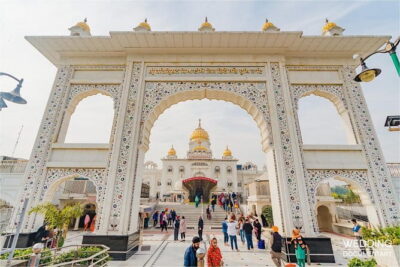
Gurudwara Bangla Sahib is where the tour highlights a famous origin story tied to the Sikh Guru coming in 1664 and helping people during smallpox and cholera epidemics by distributing water from the tank. You’ll spend about 30 minutes here, and since admission is free, you can treat it like a peaceful reset before the busier city days.
Next comes Agrasen Ki Baoli, a stepwell that’s protected as a monument. The stop is described as about 60 meters long, and it’s one of those sights that feels like it belongs to another era. You’ll also get roughly 30 minutes—just enough to walk the area and take in the scale.
A practical note: places like these often have their own rules about footwear and dress. The itinerary doesn’t spell them out, so don’t assume. Plan for simple, respectful clothing and be ready to follow whatever signs or staff ask.
Delhi day 2: Qutub Minar, Lotus Temple, India Gate, Jama Masjid, Humayun’s Tomb, Chandni Chowk
Day 2 is where Delhi starts showing off. It’s not one theme day—it’s a mix of eras and styles, and that’s the point.
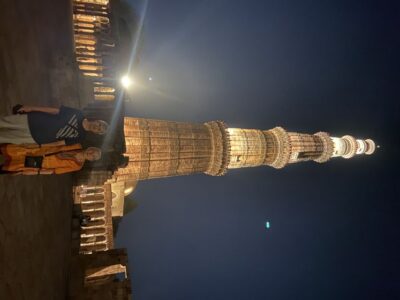
Start at Qutub Minar, a UNESCO site and a 73-meter tower built in 1193, linked to Qutub-ud-din Aibak. The tour lists the visit as about 1 hour with admission ticket included. If you’re the kind of person who likes the origin behind the landmark, this is the stop that helps everything else click.
Then it shifts to modern spirituality with Lotus Temple, built in 1986 and open to everyone regardless of religion. You’ll get about 30 minutes, and because it’s free, it’s easy to keep it relaxed instead of rushing.
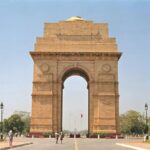
Next is a quick classic view stop at India Gate, a war memorial near Rajpath that also functions as a picnic spot. The tour gives you only about 15 minutes—think photos, a short stroll, and move on.
You’ll also pass Parliament House (Sansad Bhavan), described as being shaped with reference to the Ashoka Chakra. The time allocation isn’t clear, but it’s listed as a stop, so expect a quick look from outside rather than a deep visit.
For the Mughal heavy hitter, you have Jama Masjid, built by Shah Jahan between 1650 and 1656 and described as one of the largest mosques in Delhi. Admission is listed as free, and you’ll have around 30 minutes.
Then Humayun’s Tomb enters the picture: commissioned in 1558 for the Mughal emperor. Another 30 minutes keeps you moving, but it’s long enough to absorb the form and location.
Finally, you end at Chandni Chowk in Old Delhi, about 1 hour. This is the market day. The description alone tells you what to expect: spices, dried fruit, jewelry, saris, and narrow streets with small shops and constant movement. If you want the Delhi feeling—noise, color, bargaining energy—this is where it happens.
Agra day 1: Agra Fort, Itmad-ud-Daula, Taj sunset view, and Mehtab Bagh
Agra arrives after a drive. The itinerary sets it up as a solid day: check in at your hotel, then get history and atmosphere before you ever face the main spectacle head-on.
You start with Agra Fort, also UNESCO, tied to Mughal emperors like Akbar and Shah Jahan. It’s listed as about 1 hour and free. This is a smart warm-up. You’re not jumping straight to the biggest postcard image; you’re seeing how power and architecture actually worked here.
Next is Itmad-ud-Daula, often called the Baby Taj because of its “jewel box” style. It’s about 1 hour and free in the plan. Even if you’ve seen photos before, seeing the real structure helps you notice design choices that show up again later at the Taj Mahal.
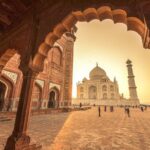
Then comes the first Taj moment: Taj Mahal Sunset View Point. The tour frames it as a good location to view Taj Mahal across the river, away from the crowd, during sunset, with about 2 hours. Sunset is a different experience than sunrise, mostly because the light turns the marble more dramatic and the pace feels calmer in many cities. You can use those 2 hours to take photos, but also to just watch the changing tones.
To wrap the day, there’s Mehtab Bagh, a restored garden associated with Babur. It’s listed as about 30 minutes and free. Even if you’re not a garden person, it helps you understand the broader Taj landscape plan rather than thinking of the Taj as a standalone object.
Taj Mahal sunrise day: Fatehpur Sikri and Chand Baori on the same swing
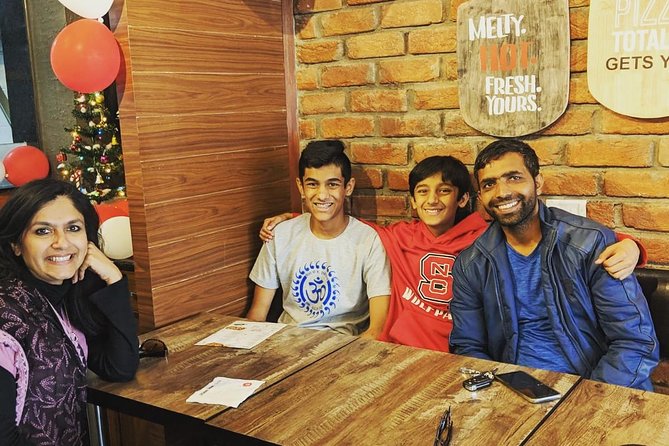
The big day continues with the classic “see it at dawn” approach, because the itinerary explicitly includes the Taj Mahal with sunrise session for about 2 hours.
Sunrise Taj is not just a photo stunt. It’s cooler, the marble looks different, and the mood tends to feel more “start of day” than “tour rush.” The only caution I’ll give you is simple: plan to be on schedule. This tour is built around timing, and Taj day is usually where schedules matter most.
After Taj, you shift to another UNESCO-style detour: Fatehpur Sikri, described as the City of Victory built by Akbar in the late 16th century and the Mughal capital for about a decade. You’ll have about 1 hour and free entry in the plan. With a time box like this, focus on the parts your guide points out rather than trying to sprint everywhere.
Then you get a very cool left turn for your photo stop and brain reset: Chand Baori, the stepwell in Abhaneri. It’s described as extending about 30 meters into the ground, and as one of the largest and deepest stepwells in India. You’ll have about 30 minutes. If you liked the stepwell feel in Delhi, this one will click because it’s bigger and more geometric.
The day ends with arriving in Jaipur and checking into your hotel.
You can also read our reviews of more tours and experiences in New Delhi






Jaipur day 1: fort time, Jal Mahal photos, City Palace, Jantar Mantar, Hawa Mahal
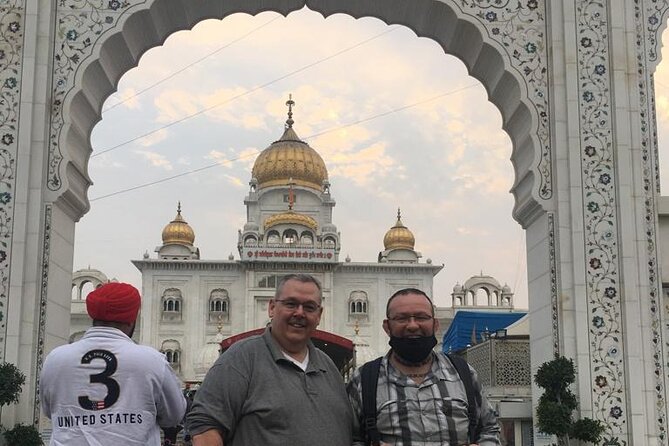
Jaipur day is where the route becomes “palaces, symbols, and streets.” You’ll move through multiple iconic stops, and the point is to see how the city’s power and science show up in built form.
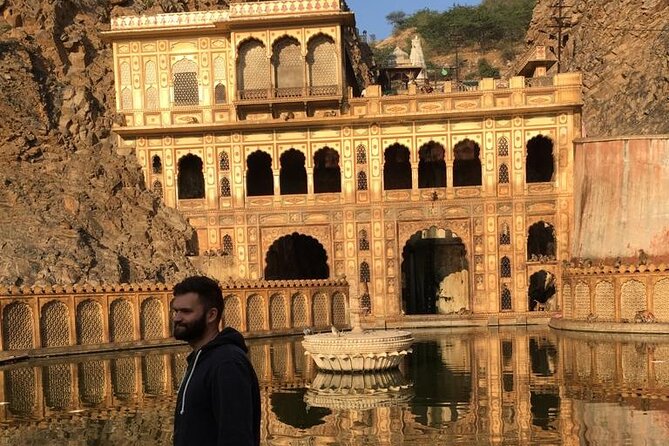
You start with Panna Meena ka Kund, a stepwell near the palace area. It’s about 30 minutes and free. It also continues the theme from Delhi and connects the story of how water mattered in these cities.
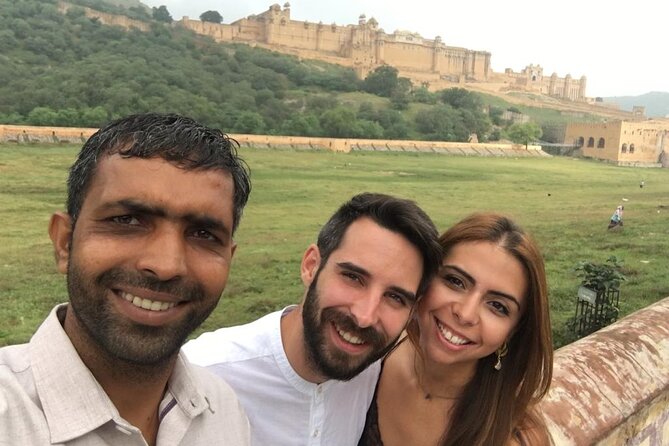
Then the itinerary goes to Jaipur’s main fort complex, described as being the capital of Rajasthan until 1728, with a guided tour of palaces, squares, and monuments for about 2 hours. This is the place where you’ll see the “statement” side of Jaipur’s rulers—courtyards, viewpoints, and the planned layout.
Next is Jal Mahal, a palace on Man Sagar Lake, with a 15-minute photo opportunity. It’s brief by design, and honestly, that’s perfect. You get the postcard view without losing half the day.
After that, Maharaja’s City Palace gets about 1 hour. It’s described as the administrative and ceremonial seat of the Maharajas, constructed in 1721. You’ll also get to explore it as your guide directs.
Then you hit the science-and-symbol stop: Jantar Mantar, a UNESCO World Heritage site built in 1734. It’s described as 19 astronomical instruments built by Sawai Jai Singh II. You’ll have about 1 hour here, and if you enjoy explanations, this is the kind of place where a good guide turns “cool stones” into a story about time, sky, and measurement.
Finally, Hawa Mahal—the Palace of Breeze. The description notes the red and pink sandstone and the five-storey pyramidal shape. You’ll spend around 30 minutes. It’s built for how the breeze moves and for how the facade looks. In practice, it’s a stop that rewards a slow look, even if the clock says 30 minutes.
Jaipur day 2: Birla Mandir and the ride back to Delhi
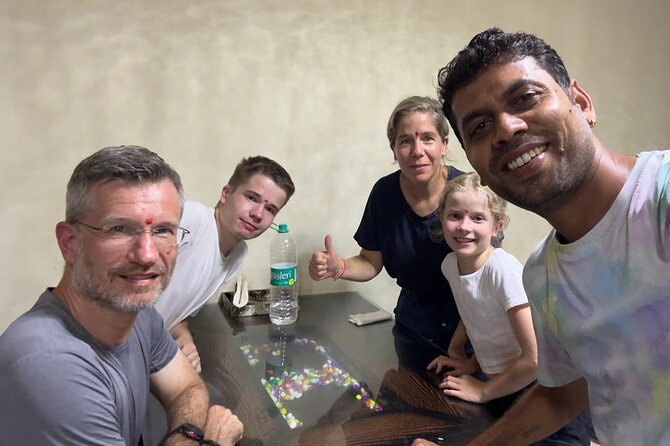
On the last morning, the itinerary stays calmer with Birla Mandir. It’s described as a white marble temple with intricate latticework and dedicated to Lord Vishnu. You’ll get about 30 minutes and free admission.
Then it’s back on the road: the tour drives you back to Delhi and drops you off at the airport, hotel, or another desired location in the city.
This is a good final setup if you want the trip to end without a rushed last-minute scramble through another big market. It also means your driver is still with you through the closing travel—not something you always get on short India circuits.
Guides, drivers, and the real value of private timing
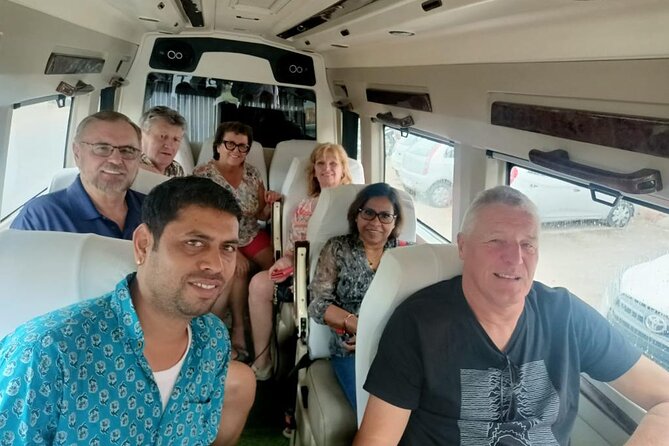
What makes this tour feel “worth it” isn’t just that it’s private. It’s how the private portion works with the human side.
In the feedback you shared, Mr. Gopal shows up as the key communicator—efficient, organized, and easy to reach. One example also mentions flexibility: because it’s private, your group has room to adjust within the day’s structure, instead of being dragged along by a fixed group pace.
The driving seems to be another strong point. Names like Mahaveer and Jugal come up with themes like arriving on time, driving safely, and respecting requests. That matters a lot in India, where schedules can wobble for traffic reasons. When the driver is on it, your day feels smoother.
One extra detail that could be a bonus, depending on your trip: at least one booking mentions dinner at Mr. Gopal’s home and a cookery glass/session with his family. That’s not something you should count on blindly, but it’s a nice reminder that this company can add personal touches beyond the monument list.
Price and logistics: what $250.72 really buys you
At $250.72 per person, the headline promise is simple: you’re paying for a structured, private Golden Triangle with transport and guided sightseeing.
Here’s what’s included:
- Private tour setup
- Transport in an air-conditioned vehicle with driver
- Hotel or airport pickup and drop-off
- Sightseeing with private local guides
- 5 nights accommodation with breakfast when you book with the hotel option
- Bottled mineral water during journeys
- Breakfast included (5 breakfasts)
- Personal care and attention
- Mobile ticket
What’s not included (and where your budget can change fast):
- Monument entry fees, and any still camera/video charges
- Lunch and dinner
- Travel insurance
- Flight and train tickets
- Driver and guide tips
- Laundry and other personal expenses
- Anything not mentioned above
So how do you judge value? I think it lands well if you want convenience and don’t want to play “organize the taxi and hunt for guides” for every day. If you already have your own hotel plan and you like self-guided sightseeing, you might find other options cheaper. But if you want a mostly guided, private flow—this price makes sense.
Room sharing and group comfort: the practical bits
This is private, but the lodging approach matters.
Rooms are generally twin-sharing. If you book for 3 people, it defaults to triple-sharing unless you pay extra to get 2 rooms instead. If you’re traveling as a couple, that’s usually fine. If you’re sensitive to space or prefer separate beds/rooms, confirm the room setup early.
Also, vehicle size depends on group size: a 4-seater sedan for groups of 1–2, a 6-seater wagon for groups of 3–4, and a 10-seater minivan for groups of 5–10. It’s one of those small details that affects comfort every day.
Who should book this Golden Triangle tour?
I’d point you toward this tour if you:
- want a private structure with a driver and local guides
- like seeing top sights across Delhi, Agra, and Jaipur without planning every transfer
- can handle a full schedule, including an early sunrise Taj session
- appreciate stepwell stops and not only the “big marble landmark” focus
You may want to adjust expectations if you:
- prefer long, slow afternoons with no timed transitions
- don’t like paying extra at monument entry points
- expect lunch and dinner to be included (they are not)
Should you book this 5 Nights 6 Days private Golden Triangle tour?
If you want a clean, guided intro to India’s three most famous cities—with both Taj sunrise and sunset viewpoints—this tour is a strong pick. The private transport, guided sightseeing, and hotel/breakfast option remove a lot of friction.
My simple checklist before you book:
- Confirm the hotel option includes the exact breakfast plan you want
- Budget for monument entry fees and meals since lunch/dinner aren’t included
- If you want quieter Taj time, remember sunrise and sunset are built into the schedule
- Ask your organizer how flexible the day can be for your pace (the company has a reputation for adapting when possible)
If all that fits your style, you’ll probably feel the trip is tightly managed and good value for your time.
FAQ
What is included in the tour price?
The tour includes a private tour setup, air-conditioned private transport with a driver, hotel or airport pickup and drop-off, private local guides for sightseeing, 5 nights accommodation with breakfast when you choose the hotel option, bottled mineral water during journeys, and a mobile ticket.
Are monument entry tickets included?
No. Monument entry fees, and any still camera, still video, or other charges are not included. The sightseeing list includes some stops marked as free, and one stop shows ticket included, but you should still plan for possible extra costs at monuments.
Where does the tour start and what are the drop-off options?
The meeting point/start is Indira Gandhi Intl Airport in New Delhi. At the end of the tour, you’ll be driven back to Delhi with drop-off at the airport, your hotel, or another desired location in the city.
How are rooms handled for different group sizes?
Rooms are generally twin-sharing. If your booking includes 3 people, the default is triple-sharing unless you pay an additional charge to get 2 rooms.
What vehicle will you ride in?
Transportation is in a 4-seater sedan for groups of 1–2 people, a 6-seater wagon for groups of 3–4 people, and a 10-seater minivan for groups of 5–10 people.
Is there free cancellation?
Yes. Free cancellation is available up to 24 hours in advance for a full refund. If you cancel less than 24 hours before the experience starts, the amount paid is not refunded.