REVIEW · NEW DELHI
6 Days Golden Triangle with Ranthambore & Varanasi Tour
Book on Viator →Operated by Indian Golden Triangle Tour · Bookable on Viator
This trip hits four icons in six days. You’ll move from Delhi’s old-world lanes to Jaipur’s royal sights, then trade traffic for a Ranthambore wildlife safari, and finally end in Varanasi for sunrise on the Ganges and the evening Ganga Aarti. It’s a classic Golden Triangle loop plus serious nature and spiritual India.
I especially like the way the schedule builds in early-morning access. The Taj Mahal is done at sunrise, and the Ganges boat ride is also timed for sunrise views—two moments that feel way more special than a mid-day stop. I also like the high-touch coordination: in one of the standout reports, Arun was described as being in constant communication from day one, and drivers such as Ali helped keep the driving and transfers smooth.
The only real consideration is pace. You’ll be up early more than once, and days combine major sights with long drives and at least one overnight rail transfer—great when you’re ready for an active week, less so if you want slow travel and late starts.
In This Review
- Key things you’ll notice on this tour
- Golden Triangle plus tiger safari plus Varanasi, all without guessing
- Day 1 in Delhi: Old Delhi rickshaws, New Delhi icons, then Qutub Minar
- Day 2 in Jaipur: Amber Palace, the walled city, and photo stops at Hawa Mahal
- Day 3 in Ranthambore: one safari with a naturalist focus
- Day 4 in Agra: Taj Mahal at 6 AM, Agra Fort, then an overnight train to Varanasi
- Day 5 in Varanasi: sunrise Ganges boat ride and Ganga Aarti at Dashashwamedh Ghat
- Day 6 in Varanasi: Sarnath, Vishwanath/Birla Mandir, Tulsi Manas, and Monkey Temple
- Price and value: what $629.10 buys you (and what it doesn’t)
- Logistics that matter: early starts, long travel days, and comfort planning
- Should you book this 6-day Golden Triangle with Ranthambore and Varanasi?
- FAQ
- How many days is this Golden Triangle with Ranthambore and Varanasi tour?
- Where does the tour start, and is pickup included?
- What kind of hotels are included?
- Is there a tiger safari in Ranthambore?
- Do you include a boat ride on the Ganges and Ganga Aarti?
- What time is the Taj Mahal visit, and is it ever closed?
- How do you travel between Agra and Varanasi?
- How do you get back to Delhi from Varanasi?
- Are monument entrance fees included?
Key things you’ll notice on this tour
- Delhi, Jaipur, and Agra are packed with the big names plus a few extra stops like Rajghat and Fatehpur Sikri (en route).
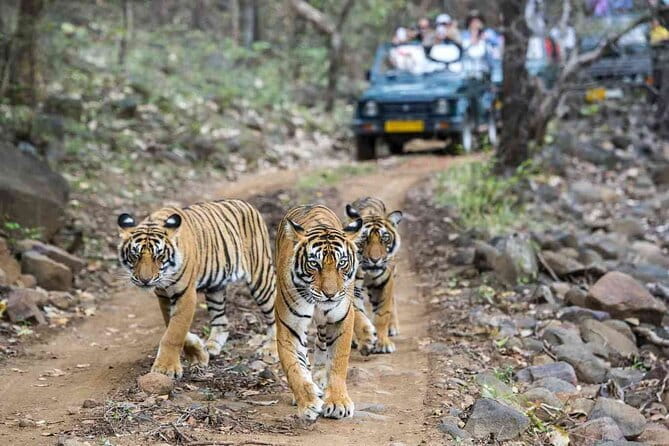
- Ranthambore tiger safari is scheduled as one main wildlife outing, focused on seeing native animals in their natural setting.
- Taj Mahal sunrise is guided and timed from a 6 AM pickup.
- Varanasi by water and by ceremony: one early boat ride plus the Ganga Aarti at Dashashwamedh Ghat.
- Transportation mix: air-conditioned vehicle for most days, an overnight train from Agra to Varanasi, and a flight back to Delhi.
- Private format for your group, with hotel stays and transfers handled for you.
Golden Triangle plus tiger safari plus Varanasi, all without guessing
This is the kind of India itinerary that’s perfect when you want variety without spending your vacation planning. You start in the Delhi area, work through the Delhi–Agra–Jaipur triangle, then head straight into Ranthambore National Park for wildlife, and finish in Varanasi, where the Ganges becomes the main stage.
What makes this combination work is contrast. Delhi and Jaipur bring architecture and city energy. Agra gives you the big iconic monument moment. Ranthambore adds real-world nature—leopards, jackals, gazelle, boars, and the focus animal: tigers. And Varanasi is different again: spiritual rhythms, early light, boat rides, and temple-heavy walking days.
You’ll also notice the tour is set up to reduce decision fatigue. Pickup/drop-off is included around the Delhi region, transfers are done by an air-conditioned vehicle, and the big cross-city moves are handled by train and flight. That’s a lot of “moving pieces” covered by the tour—usually what costs time and energy when you plan on your own.
You can also read our reviews of more tours and experiences in New Delhi



Day 1 in Delhi: Old Delhi rickshaws, New Delhi icons, then Qutub Minar
Your day starts with pickup around 9 am (or another set time) from Delhi Airport, your hotel, or the railway station, with pick-up also mentioned for Delhi/Noida/Gurgaon. The route then swings into Old Delhi first.
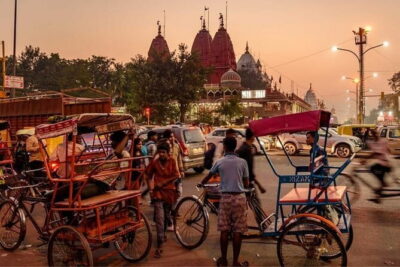
You’ll cover the classic names: Jama Masjid, Chandni Chowk, and the Red Fort area, plus a rickshaw ride and Rajghat. This is where Delhi feels like Delhi—compact lanes, loud color, and constant motion. If you’ve ever wondered what makes Chandni Chowk so famous, you’ll get it fast.
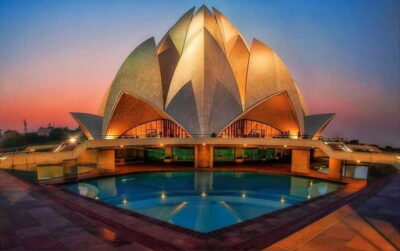
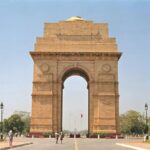
Then you shift to New Delhi style monuments: Humayun Tomb and the Lotus Temple, with a drive past India Gate, Rashtrapati Bhavan, and Parliament House for the formal capital vibe. The day ends at Qutub Minar, described as an Indo-Islamic Afghan architecture masterpiece built in 1192 AD. It’s a striking way to end because it gives you a single vertical landmark after all the street-level complexity.
After Qutub Minar, you drive to Jaipur and check in for the night. It’s a long first day, but it’s also efficient—like stacking three different moods of Delhi into one rotation.
Day 2 in Jaipur: Amber Palace, the walled city, and photo stops at Hawa Mahal
After breakfast, Jaipur day is guided and focused on the historical core. You’ll hit Amber Palace, then move into Jaipur’s old walled city area.
Key stops include City Palace (with mention of little-known private rooms), and Jantar Mantar—the observatory. You also get photo stops at Hawa Mahal, the Palace of Winds, and Jal Mahal, the Water Palace. Even if you don’t go deep into the details of every façade, the visuals are easy to read: Jaipur’s identity is written right on the walls.
A practical note: this is a day where you’ll want comfortable shoes. Palaces and observatory sites come with walking, stairs, and time spent standing in sun. The tour is structured, though—local expert guide, and the driving happens between clusters.
By the end of the day, you drive to Ranthambore and check into your hotel for the night. That transition matters because it sets you up for the next morning’s wildlife-focused start.
Day 3 in Ranthambore: one safari with a naturalist focus
Ranthambore is where the trip changes gears. You’ll do an early-morning safari in Ranthambore National Park. The tour description frames it as a jeep/canter style safari with a naturalist, and the wildlife list is specific: leopards, jackals, gazelle, boars, and—of course—tigers.
The details that help you set expectations are the wildlife-focused notes, including a reference that the 2014 census counted about 62 tigers in the area. The tour also calls out animals moving around freely around a lake in the park. That matters because it suggests the safari isn’t just about hoping for one sighting—it’s also about watching wildlife in natural patterns.
Important realism: a tiger is never guaranteed. But a safari day in Ranthambore is still valuable even when you’re not staring at a tiger for hours. You’re looking for movement, track-like behavior, and the chance to see several species across the morning.
After the safari, you return for breakfast and then drive to Agra, with Fatehpur Sikri mentioned as a stop en route. Then you check in to your Agra hotel for the night.
Day 4 in Agra: Taj Mahal at 6 AM, Agra Fort, then an overnight train to Varanasi
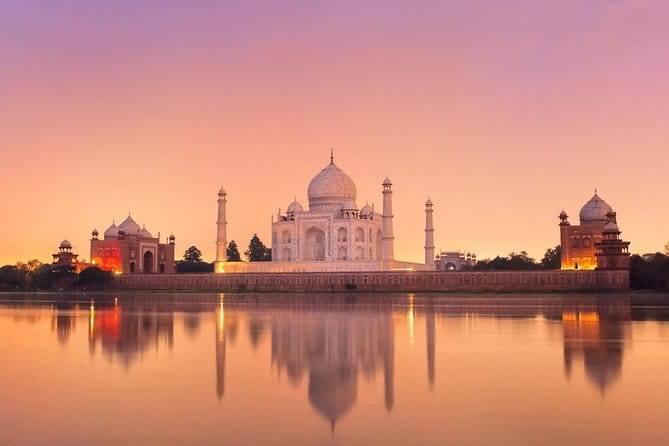
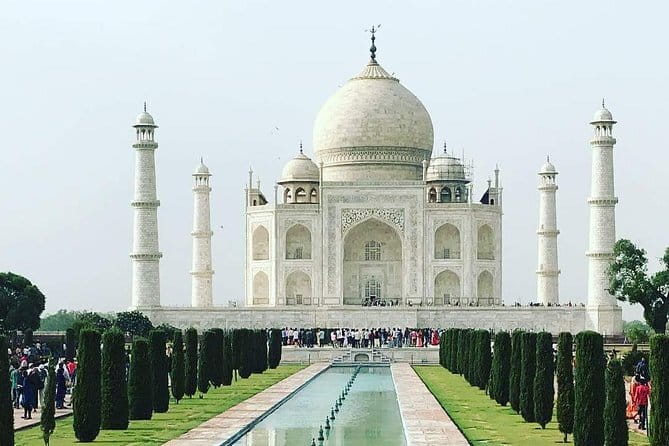
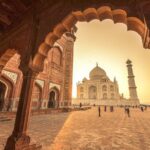
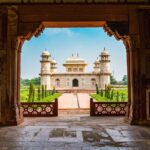
Agra day is built around the most famous monument—and it’s timed the right way. You’re picked up at 6 AM for a sunrise Taj Mahal visit with guided support. The tour notes it’s a UNESCO World Heritage Site, and also flags closure on Fridays. If your dates fall on a Friday, check directly with the operator so you understand how they handle that.
After the sunrise visit, you come back for breakfast. Then you continue with the Taj Mahal (world-famous, yes) and the Agra Fort, also listed as UNESCO. You’ll also get free time for shopping in Agra.
Then you transition from monuments to motion. You’ll be transferred to the railway station for a train to Varanasi, with an overnight train noted, and you’ll arrive in Varanasi for the next day’s activities.
If you’re thinking this sounds like a lot—sunrise, forts, shopping, then overnight rail—you’re right. The tradeoff is that you gain an experience density that’s hard to replicate if you try to do it independently with your own bookings and timing.




Day 5 in Varanasi: sunrise Ganges boat ride and Ganga Aarti at Dashashwamedh Ghat
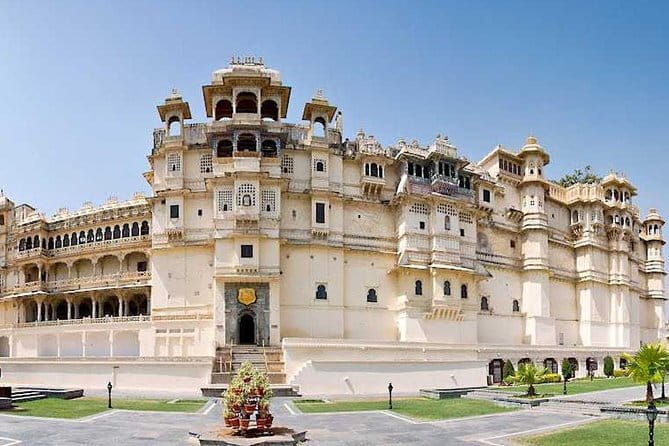
Varanasi is where the trip becomes unforgettable in a different way. After arrival, a company representative meets you and transfers you to the hotel.
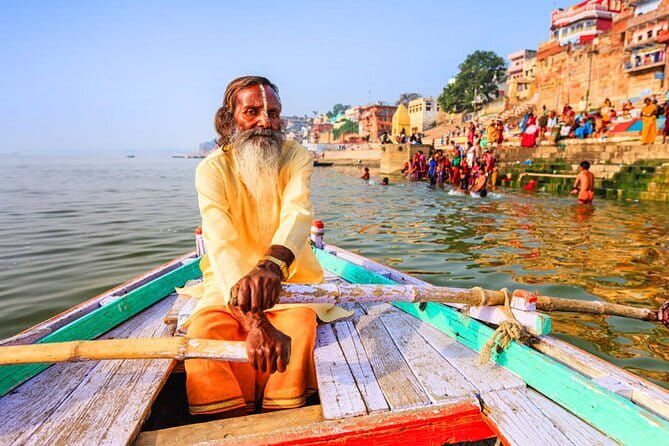
Sightseeing begins with an early morning boat ride on the River Ganges, specifically positioned for sunrise views. This is the kind of detail that changes the whole tone of the city. In softer morning light, you notice the river edges, the flow, and how people move through the day’s first moments.
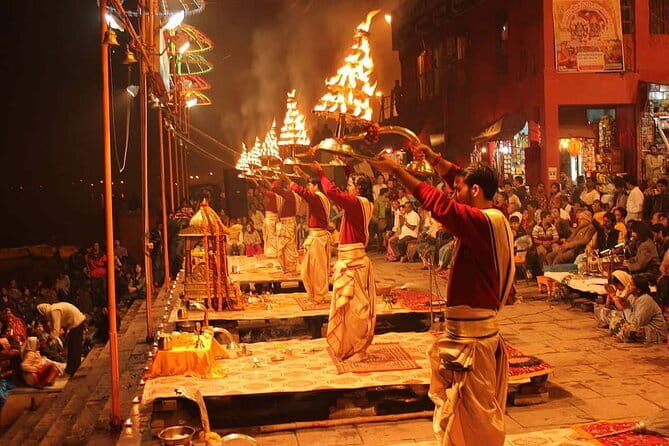
Later, you get free time for leisure. And in the evening, you’ll see Ganga Aarti at Dashashwamedh Ghat. The tour describes it as a daily evening ceremony practiced for thousands of years along the Ganges banks. Even if you don’t know the religious background, the rhythm and scale are what hit you—lights, chanting, and the sense that this is not a performance built for tourists.
Overnight is at a Varanasi hotel. That rest matters, because the next day shifts again into temples and pilgrimage spots.
Day 6 in Varanasi: Sarnath, Vishwanath/Birla Mandir, Tulsi Manas, and Monkey Temple

Your final morning is another full temple-and-pilgrimage route. After breakfast, you head to Sarnath, described as a place dotted with Buddhist pilgrimage sites. Then you visit the New Vishwanath Temple, also known as Birla Mandir, located within Banaras Hindu University.
The tour notes it took around 35 years to build. That’s a detail that adds credibility when you stand in front of the structure and realize this wasn’t a quick construction.
Next is Tulsi Manas Temple, built by the royal family of Banaras in 1964, and tied in the tour description to the belief that Tulsidas wrote the epic Ramcharitramanas there. Nearby is the Durga Temple, also called the Monkey Temple.
In the evening, you drive to Varanasi Airport for your flight to Delhi. On arrival in Delhi, you’re set up for a connecting flight home, and the tour services end.
It’s a clean finish: one last run of sacred sites, then back to air travel so you aren’t stuck on long road transfers at the end of the trip.
Price and value: what $629.10 buys you (and what it doesn’t)
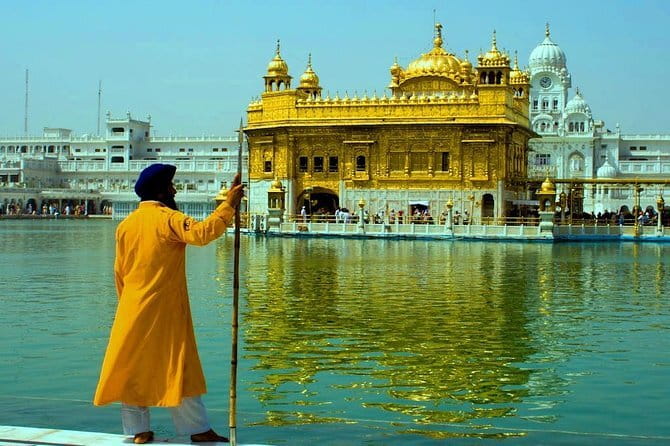
At $629.10 per person, this is priced for a fairly busy route that includes major transport, guides, and several timed experience elements. The big value point is that a lot of the hard-to-coordinate pieces are handled for you: pickup/drop-off in the Delhi region, air-conditioned vehicle transfers, a professional tour guide, one Ranthambore safari, and then the key cross-city links of train Agra to Varanasi and flight Varanasi to Delhi.
You also get 5 nights in hotels listed as 3, 4, or 5 star, twin sharing. Dinner is listed in the inclusions, and bottled mineral water during the journeys is included too. Still, there’s a small red flag worth checking: the exclusions list also mentions dinner. When you book, confirm whether dinner is included every night or only on certain nights, so you don’t get a surprise.
Entrance fees are clearly called out as not included for monuments. That means you should budget extra for places like Qutub Minar and Taj Mahal-related entry charges. The tour does include guided Taj Mahal sunrise and guided sightseeing, but the tickets themselves aren’t included.
So is it good value? For first-time visitors who want the Golden Triangle plus Ranthambore and Varanasi without building the plan themselves, yes. For slow-travelers who hate early starts and long movement days, the cost can feel steep because the schedule demands energy.
Logistics that matter: early starts, long travel days, and comfort planning
This tour runs on morning power. Day 4’s sunrise Taj Mahal is timed with a 6 AM pickup. Day 5 starts with an early sunrise Ganges boat ride. Day 3 also has an early Ranthambore safari. If you’re the type who needs a late breakfast to function, you’ll want to mentally prepare for that.
Transport is mostly comfortable, though. The itinerary specifies an air-conditioned vehicle for transfers and sightseeing. Plus, the tour is described as a private tour/activity with only your group participating, and it also notes pickup is offered and that mobile tickets are used.
Then there’s the overnight train from Agra to Varanasi. That’s not a complaint, just a fact of the plan. It’s chosen because it saves you a full extra day of transportation time, but it does mean your comfort level on the train matters.
Finally, a quick note on communication: one of the glowing points from a past booking was constant coordination from Arun from day one, and friendly, helpful drivers and guides (including Ali). That kind of hands-on support can make a big difference when you’re hopping between cities quickly.
Should you book this 6-day Golden Triangle with Ranthambore and Varanasi?
Book this tour if you want a smart first-timer route that hits the major India highlights without you wrestling the logistics. I’d especially recommend it for:
- You want sunrise experiences (Taj Mahal and the Ganges) rather than standard daytime sightseeing
- You’re excited about one serious tiger safari day in Ranthambore
- You want a guided plan that includes Varanasi ceremony time at Dashashwamedh Ghat
- You prefer private pacing with pickup, transfers, and key transports handled
I’d think twice if you hate early mornings, or if you’re hoping for a relaxed pace with lots of downtime. This trip is active, and the best moments come from early starts and moving efficiently.
One more practical point: the tour is listed as non-refundable and cannot be changed for any reason. If your dates might shift, wait until you’re confident you can go.
FAQ
How many days is this Golden Triangle with Ranthambore and Varanasi tour?
It’s listed as 6 days (approx.).
Where does the tour start, and is pickup included?
Pickup is offered from the Delhi Airport, your hotel, or the railway station, with pickup also mentioned for Delhi/Noida/Gurgaon.
What kind of hotels are included?
You get 5 nights of accommodation in 3, 4, or 5 star hotels on a twin-sharing basis.
Is there a tiger safari in Ranthambore?
Yes. The package includes 1 safari at Ranthambore National Park, with wildlife viewing in their natural environment.
Do you include a boat ride on the Ganges and Ganga Aarti?
Yes. You get 1 early morning boat ride on the River Ganges, and you also attend the Ganga Aarti at Dashashwamedh Ghat in the evening.
What time is the Taj Mahal visit, and is it ever closed?
You visit the Taj Mahal at sunrise with a guided tour, with pickup at 6 AM. The Taj Mahal is noted as closed Fridays.
How do you travel between Agra and Varanasi?
The tour includes a train ticket from Agra to Varanasi, and you stay overnight in the train.
How do you get back to Delhi from Varanasi?
On the final day, you drive to Varanasi Airport and take a flight to Delhi.
Are monument entrance fees included?
Monument entrance fees are listed as not included, along with lunch and dinner in the exclusions section.