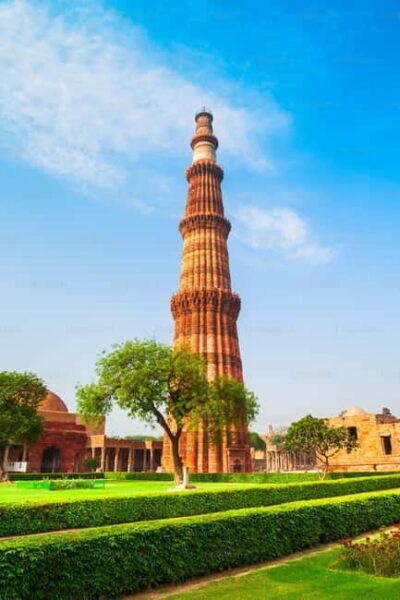
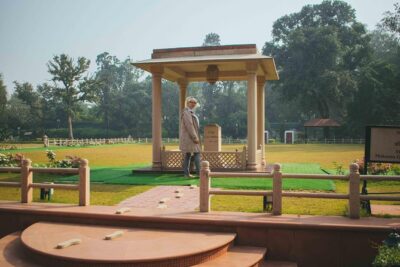
Three Delhi neighborhoods, one great walking-and-driving rhythm. This South Delhi tour mixes archaeology, street art, and Mughal-era gardens, all in about 5 hours with an English-speaking guide. You’ll move from a 12th-century monument park to public murals and end with a calmer green break that feels far from traffic.
I especially like the contrast: the Mehrauli Archaeological Park area with its 100+ historic monuments, followed by the outdoor art scene of Lodhi Art District. I also like that you get a real coffee break in a sustainability-minded café, not just another rushed stop. One thing to consider: you’ll be walking on uneven paths and spending time outdoors, so comfortable shoes (and a modest outfit) matter a lot.
In This Review
- Key highlights worth your attention
- South Delhi is the smart playground for this kind of tour
- Pickup, car rides, and the pace (the part that makes or breaks 5 hours)
- Mehrauli Archaeological Park: a 12th-century site you can actually understand
- The tucked-away art alley and the sustainability-minded coffee break
- Lodhi Art District: public murals that reward slow walking
- Sunder Nursery: Mughal gardens for when you need your second wind
- Price and value: why $36 can feel fair in Delhi
- Who should book (and who might want a different plan)
- Should you book this Delhi streets-and-gardens tour?
- FAQ
- How long is the Delhi art, history and heritage parks tour?
- What places will we visit?
- Is pickup included, and where do I meet the group?
- What should I wear or bring?
- How big is the group?
- Is the tour wheelchair accessible?
Key highlights worth your attention
- Mehrauli Archaeological Park: guided time in Delhi’s oldest archaeological park, with 100+ monuments dating back to the 12th century
- Lodhi Art District murals: an open-air public art space where street-level artwork turns the walk into the attraction
- Sunder Nursery reset: Mughal-era monuments plus garden time to cool off mentally and physically
- Coffee and culture alley: a tucked-away lane with cafés and art energy, plus a sustainability-focused café break
- Small group (max 12): easier questions, less waiting, and a pace that stays manageable in a city full of surprises
South Delhi is the smart playground for this kind of tour

This is a tour for people who don’t want to choose between old Delhi and modern Delhi. You get both—plus an in-between stop where art, food, and everyday street life overlap. That matters in Delhi, because seeing only monuments can feel like a checklist, and seeing only street scenes can feel like you never learned the context.
Here, the geography does the work for you. Mehrauli gives you the oldest layer. Lodhi Art District adds the contemporary street-art layer. Sunder Nursery gives you a slower, greener third act. The result is a day that feels like it has chapters, not a single long scramble.
You’ll also like the tour’s general vibe: curious, practical, and community-minded. The stops are chosen to help you understand how Delhi’s heritage shows up not just in stone, but also in creative public spaces and eco-friendly café culture.
You can also read our reviews of more historical tours in New Delhi



Pickup, car rides, and the pace (the part that makes or breaks 5 hours)
You’re picked up from a centrally located hotel in New Delhi, with about 5 minutes of lobby waiting time built in. The transport is an air-conditioned car, which is a big deal if your timing lands during heat or heavy road congestion.
The group is limited to up to 12 people. That size keeps things conversational. You’re not stuck waiting behind a long line while everyone tries to photograph the same wall. It also tends to make bathroom breaks and route questions less stressful.
Two practical notes before you go:
- You’ll want comfortable shoes for walking on park paths and around outdoor art areas.
- The tour asks for modest dress. You don’t need formal clothes, but do plan to cover appropriately.
One more plus I like: this is described as carbon neutral and operated by a B Corp–certified company aiming to use travel as a force for good. That’s the kind of mission statement I take seriously only when it shows up in real choices—here it’s reflected in the sustainability-focused café stop and an emphasis on local creative culture.
Mehrauli Archaeological Park: a 12th-century site you can actually understand
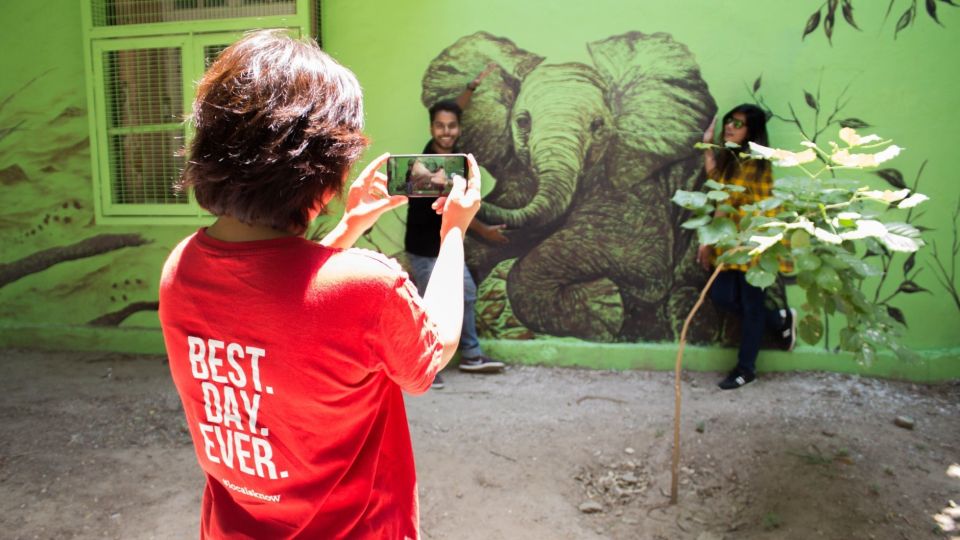
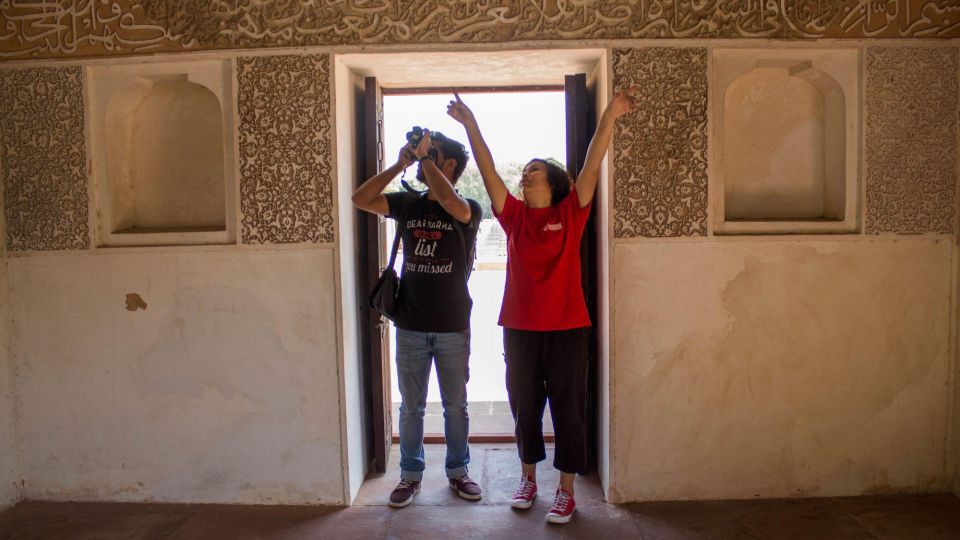
Mehrauli Archaeological Park is the anchor stop for anyone who likes real places, not staged history. You’ll spend guided time here in Delhi’s oldest archaeological park, with 100+ historic monuments and dating back to the 12th century.
What makes this stop work is that it’s not presented like a single “must-see” landmark. It’s treated like a landscape of meaning—structures, ruins, and remnants that help explain how old Delhi grew and changed over time. A good guide helps you connect the dots so you’re not just taking photos of random stone bits.
What I’d watch for while you’re there
- Look for the way the monuments are distributed across the park, not just clustered in one spot.
- Notice how different structures relate to one another in scale and style.
- Use the guide to understand what you’re looking at before your eyes start skipping ahead.
Potential drawback: archaeological parks often mean uneven walking and long stretches with little shade. So even if you feel energetic at the start, you’ll want to pace yourself. Bring water if you’re the kind of person who gets thirsty quickly, even though the tour includes a coffee break later.
The tucked-away art alley and the sustainability-minded coffee break
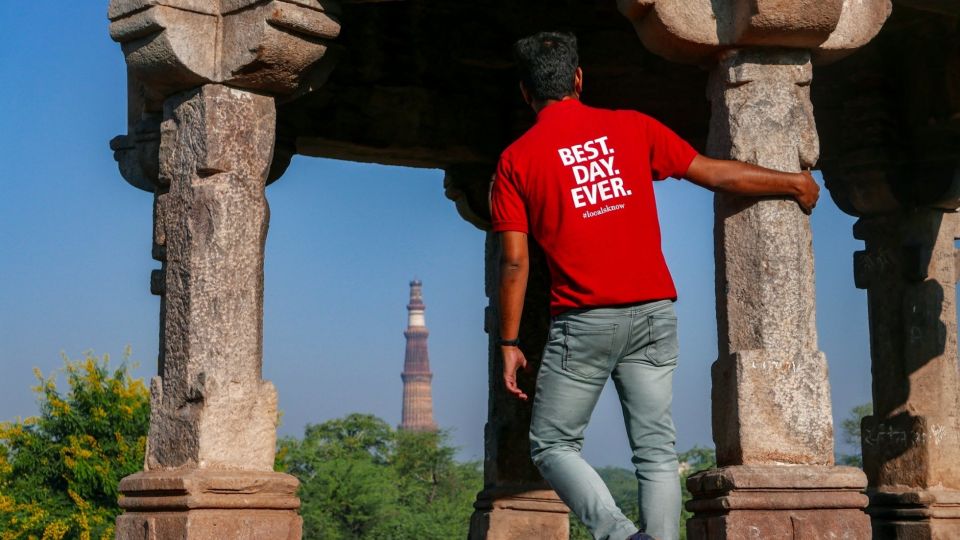
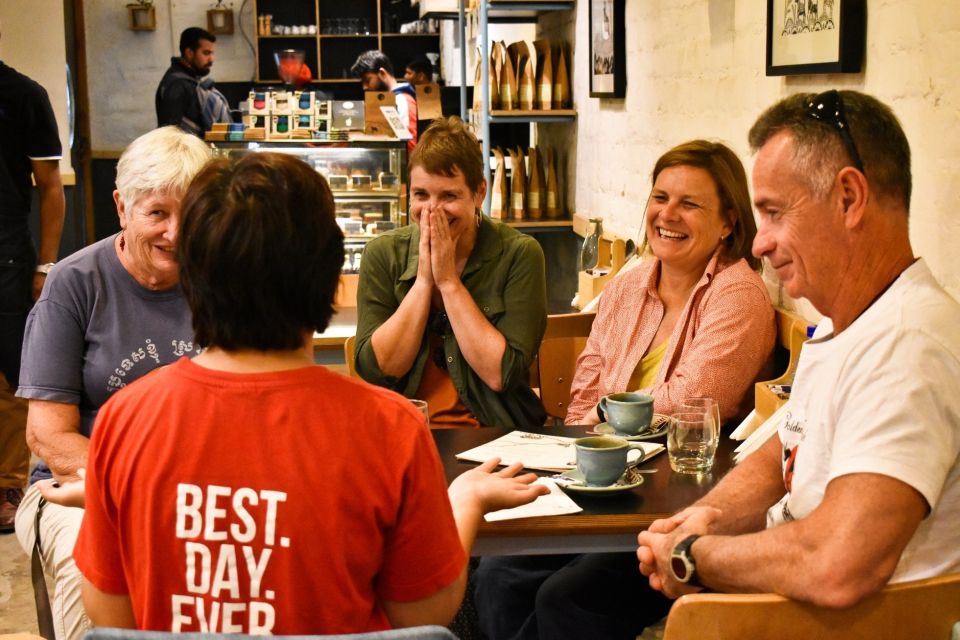
Between the monument park and the next art stop, you’ll shift into a more modern Delhi mood. The tour includes time in a tucked-away alley where street art blends with cafés and everyday culture. This is a smart change of gears. You go from stone and structure to color and street life, so your brain doesn’t feel overloaded.
You’ll also take a coffee break at a sustainability-focused café. That’s not just a perk. It’s a small cultural lesson: the idea that eco-minded choices can show up in regular social spaces, not only in policy meetings.
One practical heads-up: in at least one recent version of the experience, a stop described as connected to recycled products wasn’t included because the charity partnership had ended after the Corona period. That doesn’t mean the whole tour changes every time, but it does mean you should treat any “optional” third-party stop as something that might come and go. What doesn’t change is the core structure: park → art alley/coffee → mural district → gardens.
Why this coffee stop is worth it
It gives you time to catch your breath and refuel without turning the tour into a full lunch marathon. If you’ve done Delhi tours before, you know how easy it is to get stuck in “transport, look, go” mode. This pause helps you actually enjoy what you just saw.
Lodhi Art District: public murals that reward slow walking
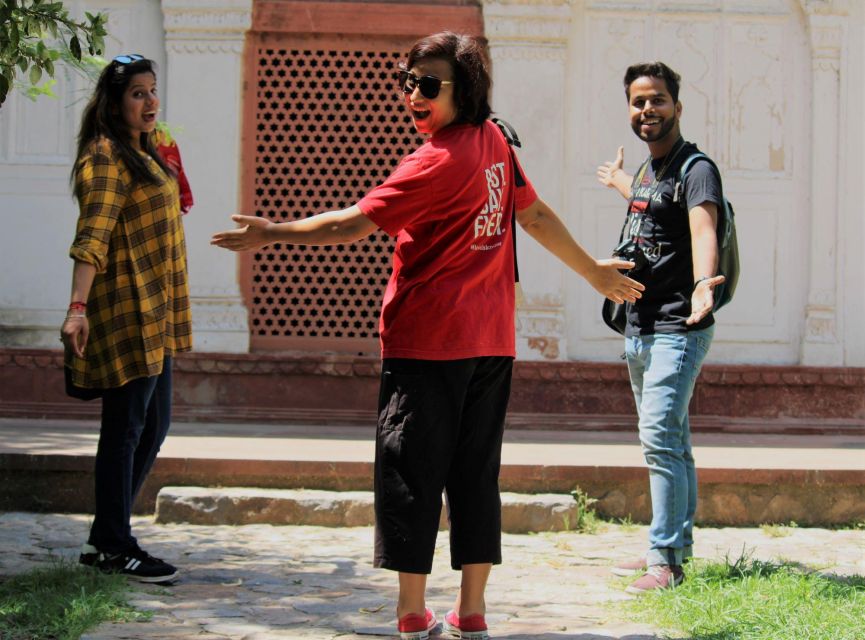
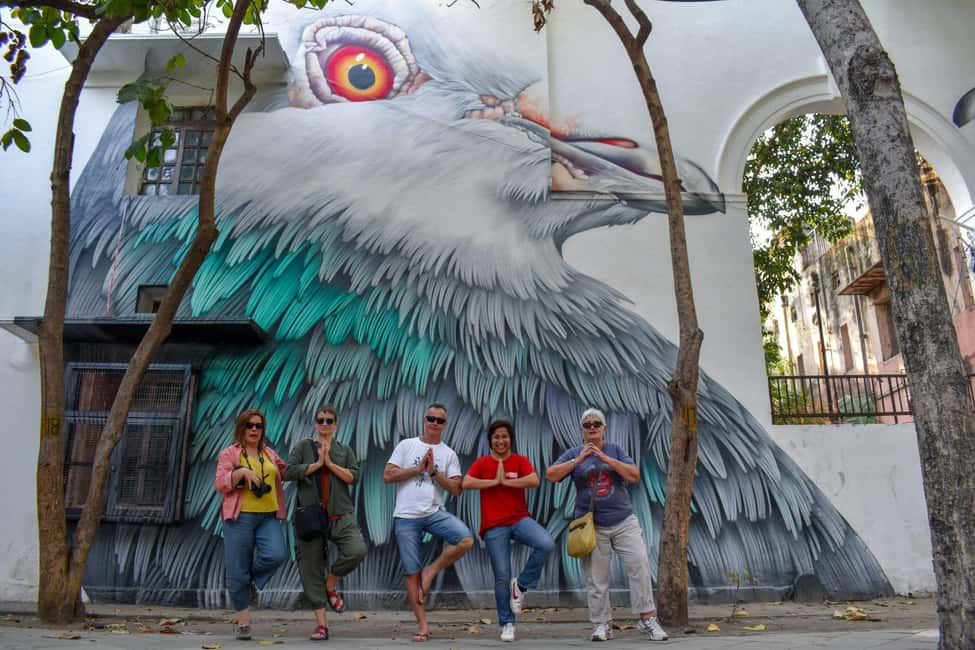
Lodhi Art District is described as India’s first open-air public art space, and you’ll walk through streets lined with murals. This is where the tour becomes more about observation than museum-style facts.
Street art is often misunderstood as random decoration. With a guide, it becomes a way to read the city. You’ll start noticing:
- how murals sit on building facades and how that affects the viewer’s perspective
- the balance between artwork and architectural lines
- why the neighborhood feels like a gallery you can move through at your own speed
In practice, this portion also tends to feel calmer than you’d expect from a big city. You’re still in Delhi, but the walk through the mural streets feels like a specific corridor of creativity rather than a road you’re just passing through.
Potential drawback: you’ll want to keep your phone charged. Outdoor murals are photo-friendly, and you’ll likely want more than one shot per wall. Just don’t get so locked into pictures that you miss what the guide is pointing out.






Sunder Nursery: Mughal gardens for when you need your second wind
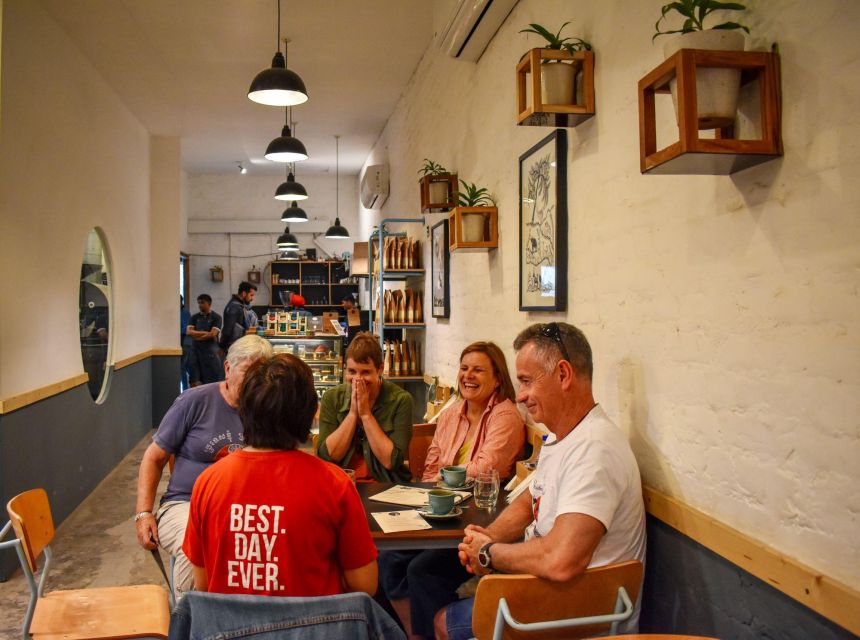
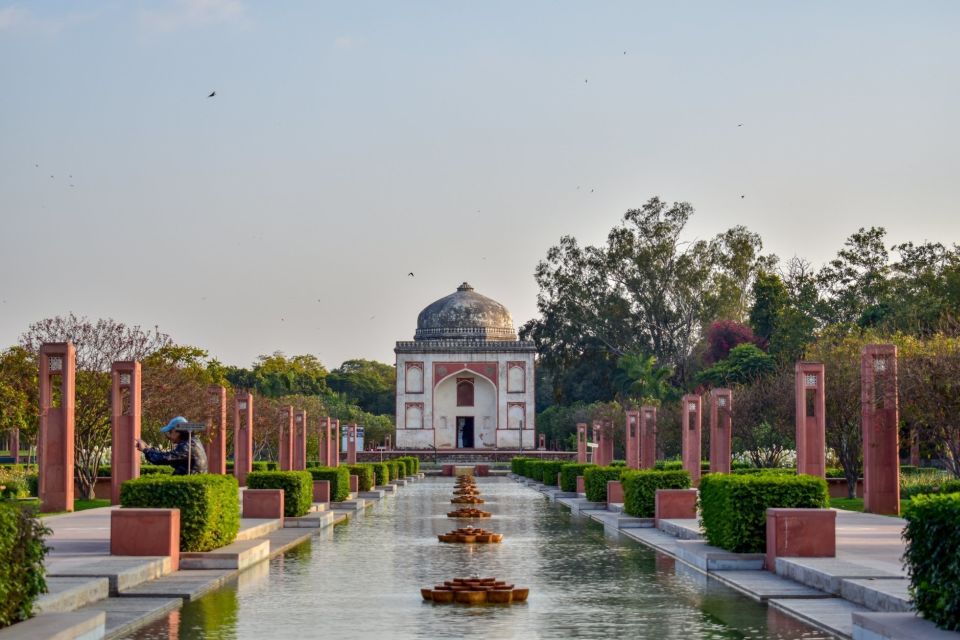
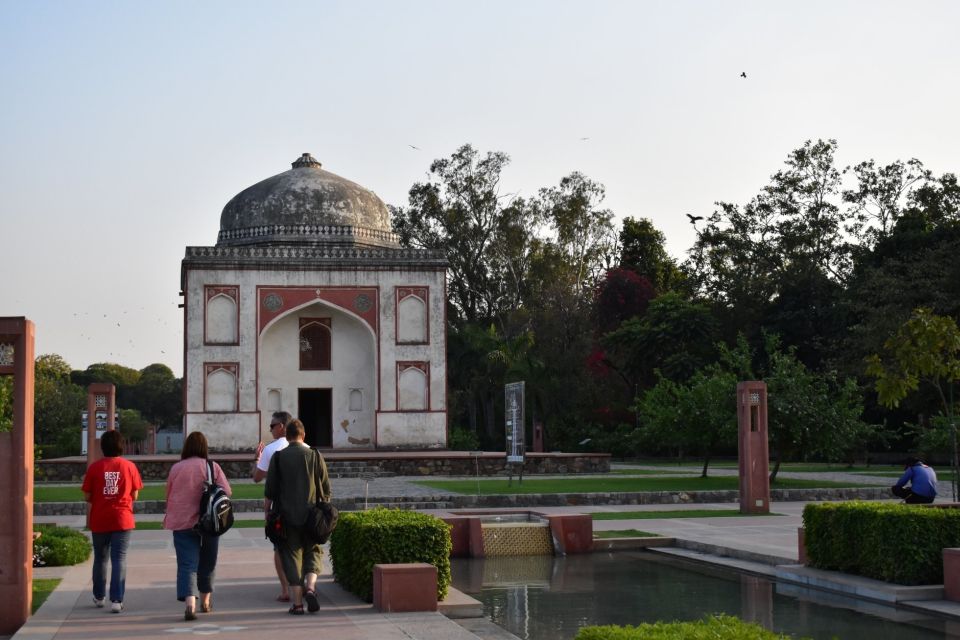
The final stop is Sunder Nursery, a heritage park filled with Mughal-era monuments and lush garden areas. This is the moment where the tour shifts from visual intensity to calm strolling.
You get the best of both worlds here:
- heritage through monuments and historic garden layout
- nature time through greenery and slower pacing
This is also a smart end point. If you did the monument park first and finished with more street walking, you’d probably feel it in your feet. Ending with a garden park gives you space to decompress, take a more unhurried walk, and actually enjoy the surroundings.
One detail worth keeping in mind: a recent group noted the botanical-garden areas felt newly refreshed, which fits how Sunder Nursery can change in feel from visit to visit. Even if it isn’t fully restored the same way on your day, the overall “reset” effect is the point.
Tip for getting the most out of it: don’t race to the final view. Let the garden pacing work. If you walk slowly enough here, you’ll start noticing how the monuments and paths guide your attention.
Price and value: why $36 can feel fair in Delhi
At $36 per person for about 5 hours, the value comes from more than the sites. You’re paying for:
- an English live guide (the real difference-maker between seeing and understanding)
- air-conditioned transport between spaced-out stops
- entry/guided time across multiple environments: archaeology park, art alley, mural district, heritage gardens
- a small-group format (max 12), which keeps the experience from turning into a crowded shuffle
If you were to piece this together yourself—taxis, guide hire, and the time cost of managing logistics—it often adds up fast. Here, you also get a cleaner arc: old heritage → modern art → heritage gardens, with breaks that keep the day enjoyable rather than exhausting.
This is also a tour style that tends to suit solo travelers, couples, and friends who want structure without feeling trapped. It’s not described as a huge sightseeing marathon, and the walking/driving balance sounds built for people who want to see a lot without feeling wrecked afterward.
Children are allowed (ages 6 to 11, and you book a child rate), so it’s potentially good for families who can manage moderate walking in parks.
Who should book (and who might want a different plan)
You’ll like this tour if:
- you want street art with context, not just casual photos
- you enjoy heritage parks where you can walk at a human pace
- you prefer a small-group experience where questions actually get answered
- you’re interested in a tour that signals support for local creative culture and eco-minded café stops
You might consider a different option if:
- you’re expecting a very deep museum-style breakdown of one single major monument (this is spread across multiple areas)
- you have limited tolerance for outdoor walking, since you’ll be moving through parks and mural streets
- you strongly need every advertised stop to run on a specific schedule; some versions may differ in minor third-party add-ons (like the recycled-products charity stop mentioned as absent in one recent run)
Should you book this Delhi streets-and-gardens tour?
My honest take: if you want a balanced day that stitches together archaeology, public art, and garden calm, this is a strong pick. The mix is the value. You’re not choosing between stone and street life—you’re getting a guided way to see how Delhi tells stories in both.
Book it if you like:
- guided walking in heritage spaces
- outdoor art that you can experience at street level
- ending somewhere green and quiet enough to feel like a reset
Skip or swap it if you’re chasing only one theme (pure archaeology only, or pure street art only). In that case, you’ll likely feel like you’re splitting your attention.
If your schedule allows, I’d say go for it—especially with the small group size and the clear rhythm of old site, art corridor, murals, then Sunder Nursery’s calm.
FAQ
How long is the Delhi art, history and heritage parks tour?
The tour lasts 5 hours total.
What places will we visit?
You’ll visit Mehrauli Archaeological Park, Lodhi Art District, and Sunder Nursery, plus time in a tucked-away alley with street art and cafés along the way.
Is pickup included, and where do I meet the group?
Yes. You’ll be picked up at a centrally located hotel in Delhi. Plan to wait in the hotel lobby about 5 minutes before your scheduled pickup.
What should I wear or bring?
Wear comfortable shoes for walking and dress modestly. The tour is designed for time outdoors.
How big is the group?
The group size is small, with a maximum of 12 people.
Is the tour wheelchair accessible?
Yes, the tour is listed as wheelchair accessible.