REVIEW · NEW DELHI
Glories of the Past-3 Day Tour to Delhi Agra Fatehpur-Taj & More
Book on Viator →Operated by Magic Carpet Tours · Bookable on Viator
Mughal sights and city scenes—packed, but smart. I love how the route mixes Delhi’s spiritual calm with big-draw monuments, then moves to Agra’s landmark trio and ends at Akbar’s Fort City. I also like that you get certified guidance plus air-conditioned transfers and bottled water, so the story of these places actually clicks, not just photos. One thing to think about: the schedule is tight, and meals aren’t included beyond light snacks in the car—so you’ll want to plan around that.
This is priced at $195 per person for about three days, and what you’re really paying for is time-saving logistics: pickup from Delhi/Noida/Gurugram/Ghaziabad/Faridabad, guided monument visits, and a private group setup (you won’t be shuffled with strangers). It’s best if you want a guided overview that still gives real time at major sites.
If you’re the type who wants long, slow hangs at just one or two places, you might feel a little rushed. But if you like variety and a guide who answers questions without hand-waving, this one has a strong track record—especially around Fatehpur Sikri.
In This Review
- Key things to know before you go
- What $195 covers: transfers, guided visits, and ticket choices
- Pickup in Delhi, Noida, Gurugram, Ghaziabad, and Faridabad: less stress, more time
- Day 1 in Delhi: Bangla Sahib peace to Qutub Minar scale
- Gurudwara Bangla Sahib: a quiet reset in the middle of the city
- Khari Baoli: the spice market you can smell from a block away
- India Gate: a fast look at a major war memorial
- Humayun’s Tomb: Persian-Mughal architecture with UNESCO weight
- Lotus Temple: unity and peace, without the tourist pressure
- Qutub Minar: the 73-meter skyline moment
- Day 2 to Agra: Agra Fort, Itmad-ud-Daula, and Mehtab Bagh sunset views
- Agra Fort: red sandstone power and empire scale
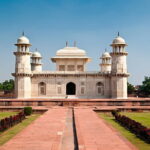
- Itmad-ud-Daula: the Baby Taj that’s easier on your feet
- Mehtab Bagh: where you catch the Taj from across the river
- Day 3: Taj Mahal time plus Fatehpur Sikri’s Akbar-era dream city
- Taj Mahal: marble poetry with a 2-hour window
- Fatehpur Sikri: a long stop that rewards attention
- Why the guides matter here: Ali and Meharaj’s real impact
- Practical tips for a smoother 3-day pace (and fewer sore feet)
- Should you book this Delhi–Agra–Fatehpur Sikri tour?
- FAQ
- How long is the tour?
- What’s the price per person?
- Does the tour include pickup?
- Are monument entry tickets included?
- What’s included in the vehicle during the tour?
- Is there a guided component?
- Are meals included?
- Is the tour private?
- FAQ
- What is the cancellation policy?
Key things to know before you go
- Private group setup means you’re not stuck in a large mixed crowd, and your guide can adjust pacing for your comfort.
- Air-conditioned transfers + bottled water keep day-to-day travel from draining all your energy.
- Delhi’s day is a contrast run: Gurudwara peace, spice-market chaos, then Mughal-scale monuments.
- Agra isn’t just Taj Mahal: Agra Fort, Itmad-ud-Daula (the Baby Taj), and Mehtab Bagh for Taj views.
- Fatehpur Sikri is where the guides shine, with strong feedback on English and clear history explanations.
- Monument entry is option-based: tickets are included only if you select the entry-ticket option.
What $195 covers: transfers, guided visits, and ticket choices
At $195 per person for a ~3-day plan, this tour is built around value-for-time. You’re not only paying for transportation; you’re paying to have someone coordinate the route, guide you at the key sights, and keep the pace workable across Delhi, Agra, and Fatehpur Sikri.
Here’s the practical part: guided tour is included, and in-car refreshments (bottled mineral water plus light snacks) are included too. Monument entry tickets are included only if you choose that option, so make sure you know which setup you booked. If you don’t select entry tickets, you’ll likely be paying on-site for admission items.
Also note the tour is described as private with a customized feel, but your days still follow a set rhythm. Think of it as structured like a best-of tour, but paced for your group.
You can also read our reviews of more tours and experiences in New Delhi



Pickup in Delhi, Noida, Gurugram, Ghaziabad, and Faridabad: less stress, more time
This is the kind of itinerary that lives or dies by the first hour. The tour includes hotel or airport pickups across Delhi, Noida, Gurugram, Ghaziabad, and Faridabad, which matters because driving between these areas can waste a lot of time without local help.
You’ll travel in a comfortable air-conditioned vehicle, with bottled water and light snacks onboard. That combo is especially useful on the Agra day, because you’re covering distance and your energy matters once you start walking.
If you hate early-morning chaos, tell yourself this: the easiest way to enjoy architecture tours is to remove friction first. Pickup does that work for you.
Day 1 in Delhi: Bangla Sahib peace to Qutub Minar scale

Delhi day one has a neat trick: it starts calm, gets aromatic, then gets monumental.
Gurudwara Bangla Sahib: a quiet reset in the middle of the city
You begin at Gurudwara Bangla Sahib, a serene Sikh place of worship associated with Guru Har Krishan. The visit is about 30 minutes, and the tone here is different from sightseeing mode. Expect devotion, cleanliness, and that sense of community service you can feel even if you don’t know the language.
Drawback to plan for: dress and behavior rules at places of worship can be stricter than at standard monuments. The tour includes entry, but you still want to dress respectfully and be ready to follow basic site guidance.
Khari Baoli: the spice market you can smell from a block away
Next is Khari Baoli, often described as Asia’s largest spice market. You get around 30 minutes, and it’s exactly what you’d hope: saffron, cardamom, and dried chili aromas mixing with crowds and shop activity. It’s not a “museum stop.” It’s a sensory one.
Practical tip: wear shoes you can stand in, and don’t plan to carry fragile items during this segment.






India Gate: a fast look at a major war memorial
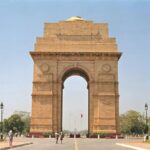
You’ll pause at India Gate for about 15 minutes. It’s a short stop, but it’s a useful one: it sets context for modern India right in central Delhi before you switch back into Mughal-era grandeur.
Because it’s brief, treat it as a photo + orientation moment, not a long linger.
Humayun’s Tomb: Persian-Mughal architecture with UNESCO weight
Then you hit Humayun’s Tomb for about 1 hour. This is a UNESCO World Heritage site and one of the city’s big architectural statements—a blend of Persian and Mughal design. The visit is guided, which helps because the patterns and layout make more sense when someone walks you through what you’re seeing.
Lotus Temple: unity and peace, without the tourist pressure
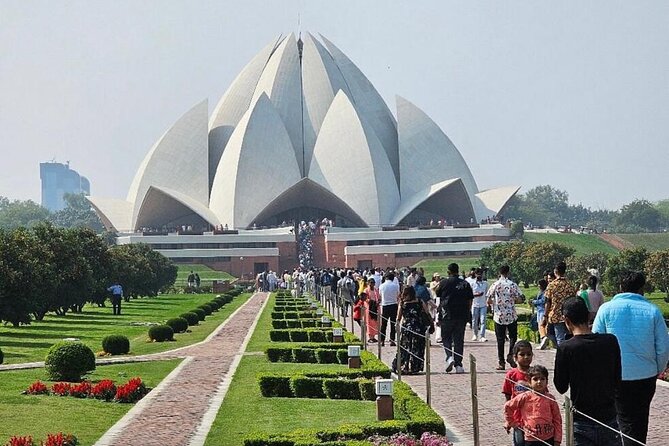
The Lotus Temple follows for around 30 minutes. The standout here is the flowerlike architecture and the fact it’s open to all faiths. Even if you’re not attending a service, it’s a chance to slow down and reset.
Qutub Minar: the 73-meter skyline moment
The day ends at Qutub Minar (about 45 minutes). This 73-meter minaret dates to the 12th century and shows Indo-Islamic architecture with intricate carvings and Quranic verses. The surrounding ruins also matter; it’s part monument, part historical neighborhood.
Watch-outs: this is a lot of walking in one day. If you tend to get tired fast, keep an eye on hydration and don’t let your pace be dictated by the group photo line.
Day 2 to Agra: Agra Fort, Itmad-ud-Daula, and Mehtab Bagh sunset views
Day two is the big shift from Delhi to Agra. You get pickup in Delhi and then about 4 hours driving to Agra, with the on-board snacks and water doing real work here.
Agra Fort: red sandstone power and empire scale
First stop: Agra Fort, around 1 hour. It’s described as a red sandstone saga of empires, and when you’re inside, you feel why. Forts aren’t just walls here; they’re built-up power statements, and the views help explain the “why” behind the location.
You’ll have an included admission ticket for this stop.
Itmad-ud-Daula: the Baby Taj that’s easier on your feet
Next is Itmad-ud-Daula, about 45 minutes. You’ll hear it called the Jewel Box or even the Baby Taj, and that’s not just marketing. The scale is smaller, which makes it easier to appreciate details without feeling like you’re constantly rushing.
A guided visit makes a difference here, because the design choices are the story.
Mehtab Bagh: where you catch the Taj from across the river
You end with Mehtab Bagh, about 1 hour, a riverside garden known as the Moonlight Garden. The real draw is the mirrored Taj views, especially toward sunset. If you care about photography (and most people do here), you’ll understand why this stop is paired with the Taj on the overall route.
Practical consideration: sunset plans depend on timing. The tour includes admission for this stop, but the actual light depends on the day and schedule execution. Still, it’s one of the most “worth it” segments because it gives you a different perspective than the main monument.
Day 3: Taj Mahal time plus Fatehpur Sikri’s Akbar-era dream city

Day three is where you either love Mughal architecture… or you fall for it. You start with the headline and then move into a complex site that needs context.
Taj Mahal: marble poetry with a 2-hour window
You get about 2 hours at the Taj Mahal, with an included admission ticket. It’s iconic for a reason, but what makes a guided visit worthwhile is understanding the design logic, not just the postcard view.
Tour pacing matters here. Two hours can feel like plenty or not enough depending on crowds and your pace, so keep your expectations flexible. Your best plan is to see it once slowly, then take a second pass for photos.
Fatehpur Sikri: a long stop that rewards attention
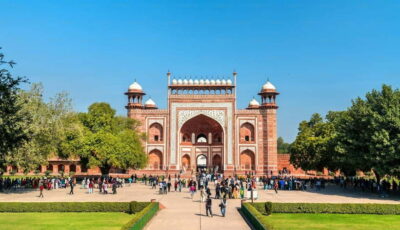
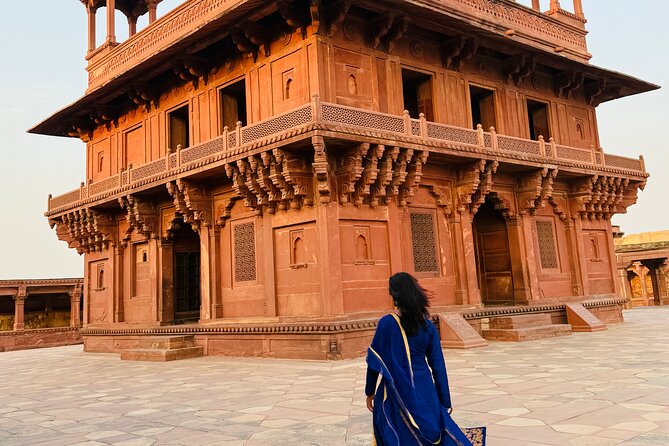
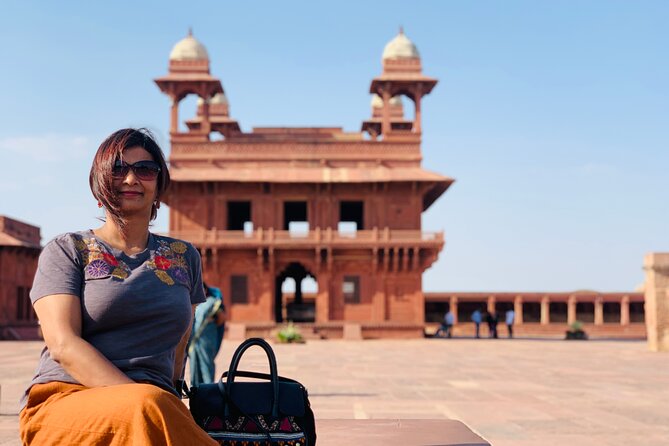
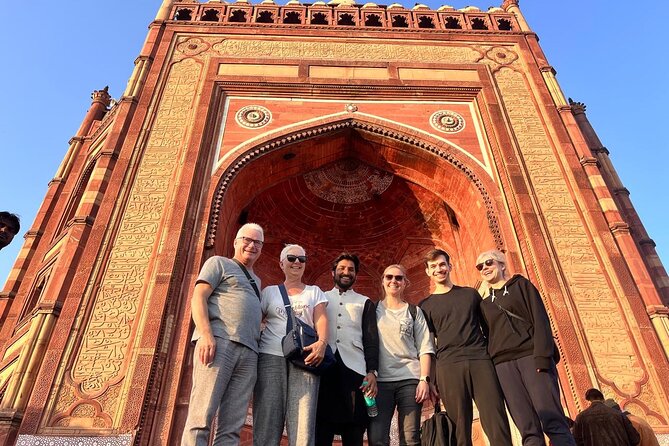
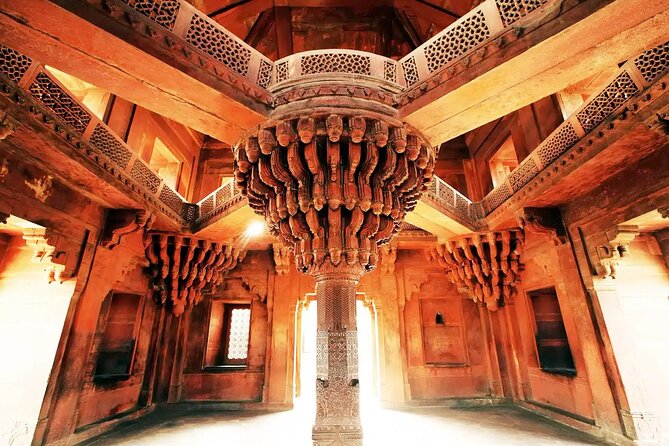
Then it’s Fatehpur Sikri—about 4 hours—and admission is free as listed for this stop. This is Emperor Akbar’s red sandstone city on the edge of the Aravalli hills, with grand courtyards and quiet arches that feel like you’re walking through a power-and-faith moment from another era.
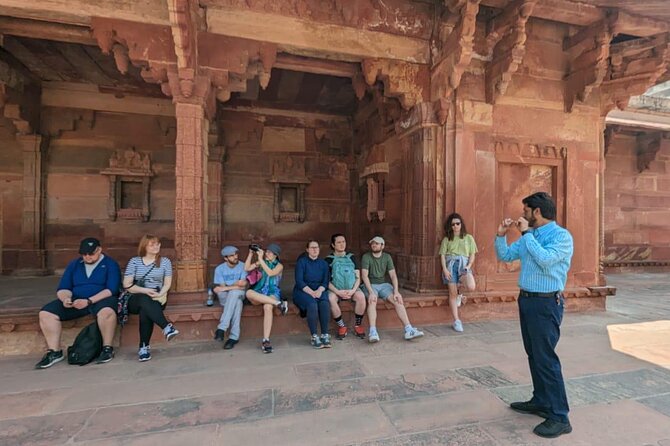
This is also the stop where guide quality shows up fast. The provided feedback highlights Meharaj and Ali specifically for clear explanations, strong English, and thoughtful photo support for families. If you’re the type who asks questions, Fatehpur Sikri is where your guide can really earn their keep.
Why the guides matter here: Ali and Meharaj’s real impact
This tour’s best reviews aren’t about the monuments alone. They’re about how the guides brought them to life.
- Meharaj gets repeated praise at Fatehpur Sikri, with guests noting he explained history in an engaging way and was very willing to answer questions in detail. That matters because Fatehpur Sikri can feel like a maze if you’re not being oriented.
- Ali is highlighted for excellent English and professional, friendly guiding. One review also points out that he took time to capture numerous family photos, which is a nice extra if your priority is both history and keepsakes.
In short: this tour works best when you treat it like a guided conversation, not a checklist. Ask about what you’re seeing—your guide will likely have a strong answer ready.
Practical tips for a smoother 3-day pace (and fewer sore feet)
You can make this tour feel relaxed with a few basics.
- Wear comfortable walking shoes for Qutub Minar and Agra Fort. Humayun’s Tomb and Fatehpur Sikri also involve more strolling than you might expect.
- Use the included bottled water and light snacks proactively. Even with those, meals aren’t included beyond the car—so plan on eating on your schedule.
- Bring a camera plan: Taj Mahal photography is a main event, and Mehtab Bagh gives you a different angle. If you want both, you’ll be glad you showed up ready.
- Plan for cultural respect at worship sites like Gurudwara Bangla Sahib and the Lotus Temple. The tour covers entry, but good manners always help.
- Set aside a little budget for gratuities. Guides and drivers aren’t included with gratuities per the provided info.
One more honesty note: this is a three-day highlight route. You’ll see a lot. That’s the appeal. It’s also why it’s not ideal if you want deep, slow study with hours of free time at every stop.
Should you book this Delhi–Agra–Fatehpur Sikri tour?
I’d book this if:
- you want Delhi + Agra + Fatehpur Sikri in one organized, guided package
- you value air-conditioned transfers and don’t want to manage logistics on your own
- you care about getting context at major Mughal sites (not just standing and snapping)
- you like the idea of a guide who can handle questions and help with photos, as reflected in feedback about Meharaj and Ali
I’d think twice if:
- you prefer long stays at fewer sites instead of a packed best-of route
- you need meals included (the tour includes water and light snacks only)
- you’re unsure whether you selected the monument entry-ticket option, since admission inclusion depends on that choice
If your goal is to see the classics—and understand them—this tour is a strong fit. It’s structured, guided, and built to keep you moving without feeling like you’re on your own.
FAQ
How long is the tour?
The tour runs for about 3 days.
What’s the price per person?
The listed price is $195.00 per person.
Does the tour include pickup?
Yes. Pickups are offered from hotels and also from the airport areas in Delhi, Noida, Gurugram, Ghaziabad, and Faridabad.
Are monument entry tickets included?
Monument entry tickets are included if you choose the entry-ticket option. Some stops also specify admission ticket included, while others list free admission.
What’s included in the vehicle during the tour?
You’ll get bottled mineral water and light snacks as part of in-car refreshments.
Is there a guided component?
Yes. The tour includes a guided tour with a certified guide.
Are meals included?
No. Meals and beverages are not included, except for the in-car refreshments.
Is the tour private?
Yes. It’s described as a private tour/activity, meaning only your group will participate.
FAQ
What is the cancellation policy?
The tour offers free cancellation, with a full refund if you cancel up to 24 hours in advance. If you cancel within 24 hours, the amount you paid is not refunded.