REVIEW · NEW DELHI
Golden Triangle Tour: 3 Days, 3 Iconic Cities–Delhi,Agra & Jaipur
Book on Viator →Operated by QT India Tours · Bookable on Viator
Taj sunrise in three days. This Golden Triangle tour strings together Delhi, Agra, and Jaipur with guided sightseeing and included monument entry, so you spend less time figuring out tickets and more time seeing the sights—starting with the Taj Mahal at sunrise.
I also like the practical comfort: you get a private air-conditioned vehicle between cities, plus 2 nights in 4 or 5-star hotels with daily breakfast. The main drawback to plan for is simple: lunch and dinner are not included, so budget for meals on top of the tour price.
In This Review
- Key points worth knowing
- Day 1 in Delhi: Old Delhi rickshaws, Jama Masjid, Humayun’s Tomb, and Qutub Minar
- A practical heads-up for Day 1
- Evening drive to Agra: when your day ends, your sleep starts
- Day 2 in Agra: Taj Mahal sunrise plus Agra Fort in a tight, well-timed loop
- Where Fatehpur Sikri fits (and why it’s worth the detour)
- Fatehpur Sikri and the drive to Jaipur: trading one kind of wonder for another
- Day 3 in Jaipur: Amber Fort, City Palace, Hawa Mahal, and the stories behind the pink
- Jantar Mantar in Jaipur and the long drive back to Delhi
- What makes the included hotels, guides, and tickets feel like value
- Pace, meals, and a few smart ways to get the most out of each day
- Should you book this Golden Triangle tour?
- FAQ
- Which cities are included in this Golden Triangle tour?
- How long is the Golden Triangle Tour?
- Is pickup offered, and do I get dropped off at the end?
- Are the Taj Mahal and other monument tickets included?
- Is the Taj Mahal visit at sunrise included?
- Does the price include meals?
- Where do we stay overnight?
- Do we have private transport and a guide?
- Is free cancellation available?
Key points worth knowing
- Taj Mahal sunrise timing keeps the visit special and photo-friendly
- Monument tickets included across Delhi, Agra, and Jaipur
- Private transport with air-conditioning for the long drives
- Local guide time in every city to make the architecture and stories click
- Old Delhi spice-market rickshaw ride adds a real street-level feel
- Amber Fort + City Palace + Hawa Mahal covers Jaipur’s big icons efficiently
Day 1 in Delhi: Old Delhi rickshaws, Jama Masjid, Humayun’s Tomb, and Qutub Minar
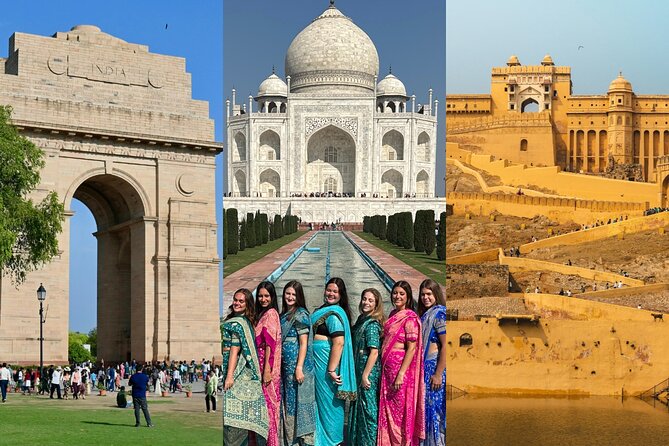
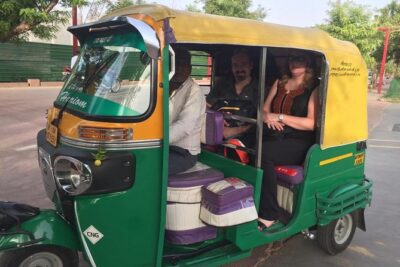
Delhi on this tour is built like a smart sampler: you get the Mughal-era gravitas, the street-level chaos, and a UNESCO site—all in one day. You start in Old Delhi, where the itinerary includes a Jama Masjid visit and an Old Delhi rickshaw ride through the spice market area. That rickshaw segment matters because it’s not just a photo stop. You’re moving through the lanes, surrounded by stalls and scents, and it’s a fast way to get your bearings for what Old Delhi feels like.
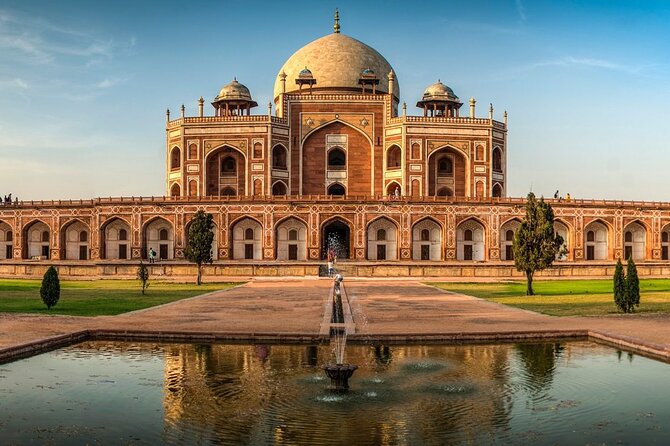
From there you move into more planned, garden-and-monument style sightseeing with Humayun’s Tomb. Even if you’re not a “history person,” this stop works because the layout and design are easy to appreciate while your guide connects it to later Mughal architecture. Then you shift to wide, ceremonial Delhi with a drive along the Rajpath area and passes by major landmarks like the President’s official residence.
Late-day highlights include Qutub Minar, a towering UNESCO World Heritage site, plus Raj Ghat, the memorial for Mahatma Gandhi. That combination is a good balance: one stop is about early Indo-Islamic architecture; the other is about India’s independence movement and peaceful resistance. It’s a thoughtful way to close out a day that starts with crowded lanes and ends with quiet reflection.
You can also read our reviews of more tours and experiences in New Delhi



A practical heads-up for Day 1
You’ll walk some, and Delhi traffic can vary. The tour structure helps, but it’s still a full day. Wear shoes you can handle on stone and uneven ground.
Evening drive to Agra: when your day ends, your sleep starts
After Delhi sightseeing, you’re driven to Agra and check in for an overnight stay. The tour schedule gives you a long chunk of travel time and then leaves the evening open—so you can reset, hydrate, and be ready for a very early morning.
This is one of the best choices about a 3-day Golden Triangle: you don’t cram a second late-day destination after Taj sunrise. Instead, the pacing helps you protect your energy for the part that really needs it.
Agra itself is where the emotional payoff lands. You’ll be in the right place to catch the sunrise the next morning, and you won’t waste time doing a rushed same-day arrival.
Day 2 in Agra: Taj Mahal sunrise plus Agra Fort in a tight, well-timed loop
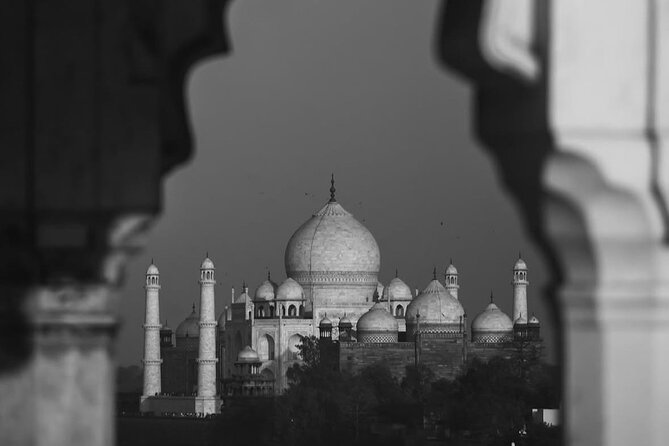
Day 2 starts with the big headline: Taj Mahal sunrise. The timing is the point. Early light softens the scene and makes it easier to enjoy details without midday crowds and glare. The tour allots up to 3 hours for the Taj visit window, which is important because it gives you room to see the main views, adjust for how long lines and entry flow take, and still have time to slow down.
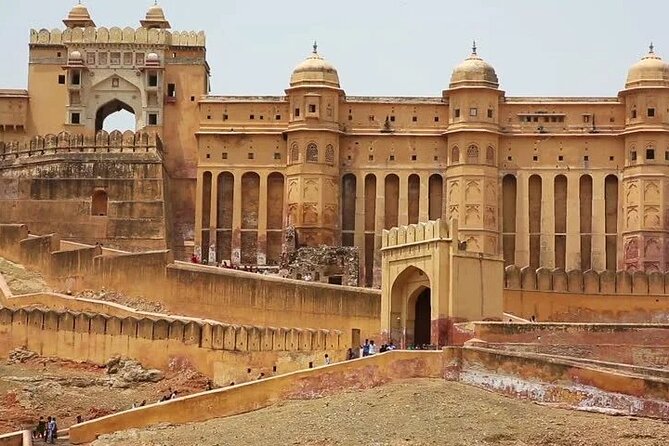
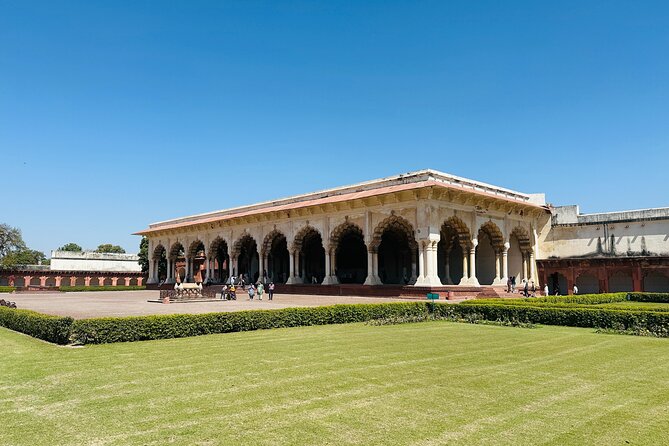
After sunrise, you return to the hotel for breakfast and checkout. Then the focus shifts to Agra Fort, another UNESCO World Heritage site. This is a useful contrast to the Taj. The Taj is all about romance and symmetry, but the fort is about power, walls, and Mughal-era scale. With a guide explaining what you’re looking at, Agra Fort often feels less like “more buildings” and more like the logic behind the city’s grandeur.
The day also includes an Arts & Life stop centered on local artisans—specifically traditional handicrafts such as marble inlay work and tapestry-type production. I like this because it connects what you see in monuments to how materials and patterns are made. Even if you don’t plan to buy anything, it gives you a clearer eye for the craftsmanship you’ll notice later.
Where Fatehpur Sikri fits (and why it’s worth the detour)
On the way onward, the tour stops at Fatehpur Sikri, described as an abandoned city and another UNESCO World Heritage site. This place works best as a “wait, how did they build a whole city here?” moment. It’s dramatic, eerie in spots, and it breaks up the Delhi-Agra-Jaipur loop with something different.






Fatehpur Sikri and the drive to Jaipur: trading one kind of wonder for another
Fatehpur Sikri is the kind of stop that can feel like a detour if you treat it like a checkbox. But with an hour on the ground, you can still get the core experience: standing in a complex built for imperial ambition, then looking at the way it sits and empties out.
Then you continue to Jaipur in the evening and check in for the night. That arrival time matters. It keeps the sightseeing energy for Day 3, which is when Jaipur’s most famous sights line up.
Day 3 in Jaipur: Amber Fort, City Palace, Hawa Mahal, and the stories behind the pink
Jaipur is where you see Rajasthan’s royal look-up-close, and this tour does a clean job hitting the biggest names without turning it into a blur.
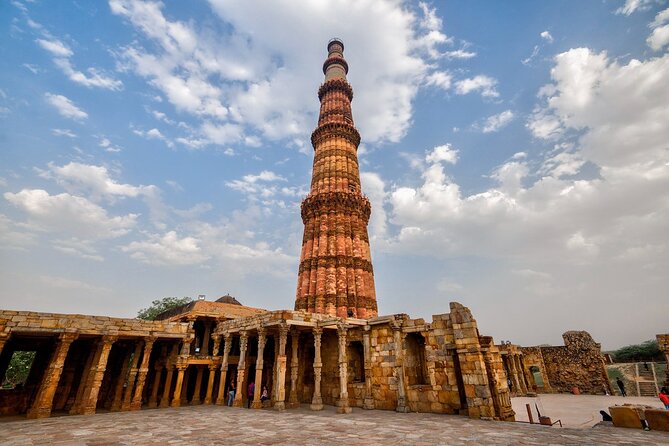
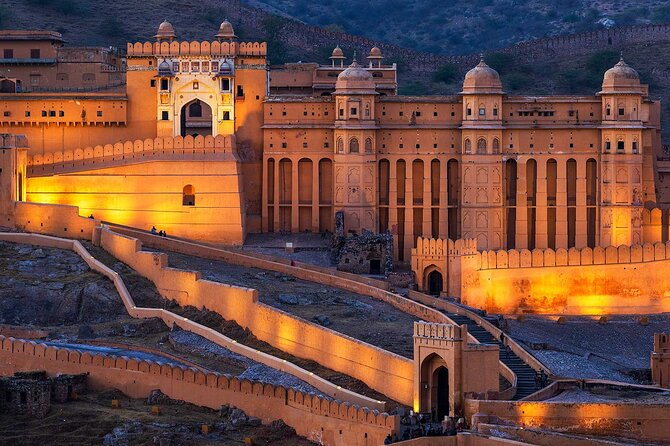
You start with Amber Fort. The stop is about 2 hours, which is a good length for seeing both the overall fort layout and the interior details. The tour description highlights what to watch for: intricate carvings and mirror work, plus courtyards and the mix of Hindu and Rajput architecture. If you’re the type who enjoys noticing craftsmanship, Amber Fort is usually a highlight. If you’re not, you’ll still come away with a strong sense of why Jaipur’s “fort and palace” identity is so visual and distinctive.
Next is City Palace of Jaipur, another about 2 hours. City Palace has a museum side, plus beautiful courtyards and gardens. The best value here is that it’s a living royal framework rather than one isolated building. With a guide, you can connect how Mughal and Rajput elements blend instead of treating it as random decorative styles.
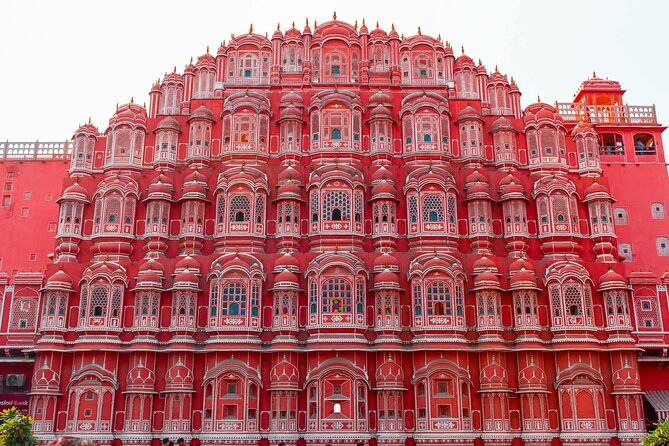
Then comes Hawa Mahal (Palace of Wind). It’s brief—around 30 minutes—but that brevity is part of the tradeoff. You don’t need long to understand why it’s iconic. The façade with 953 small windows is a visual lesson in design for privacy and observation, especially in a royal context. It’s also the kind of spot where photos happen fast because the building shape grabs attention immediately.
The tour also includes a stop at a water palace set in the middle of Man Sagar Lake. Even without extra time, it gives you that “Jaipur isn’t all forts” angle—there’s a softer, scenic side too.
Jantar Mantar in Jaipur and the long drive back to Delhi
After the fort-palace cluster, you get one of Jaipur’s most unique cultural-science stops: Jantar Mantar. It’s an 18th-century astronomical observatory with stone instruments used to measure time and track stars. Plan on about an hour here. The reason this works on a short trip is that it’s not just “look at old stuff.” It gives you a different way to understand the city’s ambition—thinking in measurements, angles, and astronomy, all built in stone.
Finally, after Jaipur, you’re driven back to Delhi. The drop-off window includes about 4 hours on the road. That’s a long ride, so I’d treat the end of Day 3 as travel time, not sightseeing time. You’ll finish strong at Jantar Mantar, then let the car do the last leg.
What makes the included hotels, guides, and tickets feel like value
At $226.68 per person for 3 days, the key question is: what are you buying besides the name Golden Triangle? Here, you’re not just paying for transportation. You’re also paying for coordination.
You get:
- 2 nights in 4 or 5-star hotels (based on your selection)
- Private air-conditioned vehicle between cities
- Professional local guides in Delhi, Agra, and Jaipur
- Breakfast daily
- Tickets to monuments throughout the route
- Complementary water
That ticket inclusion is the big financial piece people often underestimate. When monument entry is covered, you avoid the constant “how much extra is this going to be?” mental math. The private vehicle also helps you stay on schedule, especially between Delhi, Agra, and Jaipur—those distances add up.
The guide component matters too. In the feedback I received, guides like Huzi and Saad were praised for explaining architecture clearly in a calm way, and for helping with photos during the day. That’s not a small detail. When you know what you’re looking at—fort forms, tomb design, the purpose behind window patterns—you enjoy the moments more than you would on your own with only signage.
Pace, meals, and a few smart ways to get the most out of each day
This is a fast, packed 3-day tour by design. You’ll hit major sites daily, and you’ll spend travel time between cities, so the “value” comes from structure, not from lingering forever.
Two things to plan around:
1) Lunch and dinner are not included. Breakfast is covered, but you’ll need to budget for the rest of your day. If you’re the type who wants predictable meals, pick a mindset early: quick lunch most days, sit-down dinner only when you feel like it.
2) Taj Mahal sunrise is early. That’s the best way to experience it, but it means you’ll feel the early-morning wakeup. Bring a light warm layer if you’re sensitive to cool morning air, and keep water in mind—especially before long walking sections.
Photo lovers should also know this: with sunrise and iconic façades like Hawa Mahal and Taj views, there’s plenty of incentive to capture images. One of the praised parts of the tour is that guides help with photos while you’re there, which saves time and frustration.
Should you book this Golden Triangle tour?
I’d book this if you want a well-run, ticketed, guide-led Golden Triangle that minimizes decision fatigue. It’s a strong fit for first-timers who want Delhi’s major sights, Agra’s Taj sunrise moment, and Jaipur’s forts and palaces without turning the trip into a logistics project.
I’d think twice if you prefer long stays in fewer places. This route is designed to cover the big icons fast, and you’ll feel that pace. If your travel style is slow and deep, you might want a longer itinerary with more flexible days.
If you’re aiming for the classic first-time India combo—Delhi to Agra to Jaipur—with private transport, included monument entry, and guides who explain what you’re seeing—this one is a practical choice.
FAQ
Which cities are included in this Golden Triangle tour?
The tour covers Delhi, Agra, and Jaipur over 3 days.
How long is the Golden Triangle Tour?
It runs for about 3 days.
Is pickup offered, and do I get dropped off at the end?
Pickup is offered, and you’re also dropped off at your desired location at the end of the tour after the drive back to Delhi.
Are the Taj Mahal and other monument tickets included?
Yes. Tickets to monuments are included.
Is the Taj Mahal visit at sunrise included?
Yes, the tour includes sunrise at the Taj Mahal.
Does the price include meals?
Breakfast is included daily, but lunch and dinner are not included.
Where do we stay overnight?
You stay 2 nights in 4 or 5-star hotels based on your selection.
Do we have private transport and a guide?
Yes. You get a private air-conditioned vehicle and professional local guides in Delhi, Agra, and Jaipur.
Is free cancellation available?
Yes. You can cancel for a full refund up to 24 hours in advance of the experience start time.