REVIEW · NEW DELHI
Old Delhi: Khari Bawli – Asia’s Largest Spice Market
Book on GetYourGuide →Operated by Crystal India Holidays · Bookable on GetYourGuide
Old Delhi hits fast, in the best way. This guided Khari Baoli walk lets you take in the sights and smells of Asia’s biggest spice market, and I really like how the guide keeps it practical by explaining what you’re seeing and how spices (and teas) fit into everyday Indian cooking and traditional uses. The photo-friendly lanes and colorful stalls are another real win, but do note it’s active walking in a crowded market area, so plan your pace.
You’ll start with hotel pickup in a private, air-conditioned vehicle, then meet an English-speaking guide who leads you into the trade lanes of Khari Baoli Road. Expect help with translations if you want to buy spices, plus bottled water and light refreshments to keep you comfortable during the 3–4 hour route.
In This Review
- Key highlights you’ll feel right away
- Getting Into Old Delhi: Hotel Pickup and a Smooth Start
- Khari Baoli Road: What Makes Asia’s Biggest Spice Market Work
- Walking Through the Spice Lanes: Sights, Smells, and Real-World Uses
- Tea Tasting and Learning by Looking
- Shopping Without the Headache: Translation Help and Cash Planning
- Photo Stops in Iconic Old Delhi Light
- Timing It Right: What 3–4 Hours Feels Like
- Price and Value: Why $23 Can Actually Make Sense
- Who This Tour Is Best For
- Should You Book This Khari Baoli Spice Market Tour?
- FAQ
- How long is the Khari Baoli spice market tour?
- What is the price per person?
- Where does the tour start?
- Is hotel pickup and drop-off included?
- Do I need to walk during the tour?
- What’s included in the tour?
- What language will the guide speak?
- Is tea tasting included?
- What should I bring?
- Is cancellation free if plans change?
Key highlights you’ll feel right away
- Asia’s largest spice market on Khari Baoli Road, focused on what people actually buy and use
- Guided explanation in English (plus multiple other languages available) so you’re not just standing and guessing
- Tea sampling and spice education, including uses in Indian cuisine and traditional medicine
- Hotel pickup and drop-off by private vehicle, so you lose less time to transit
- Photo-ready street scenes with iconic Old Delhi architecture and colorful displays
- Shopping support, including assistance translating local language when buying spices
Getting Into Old Delhi: Hotel Pickup and a Smooth Start
Old Delhi can feel like a place where time evaporates fast. That’s why I like starting with hotel pickup in a private, air-conditioned vehicle: you get to the market area with less stress and fewer logistics, and you still have energy for the walking.
You’ll meet your guide after pickup and then head toward Khari Baoli Road. Since the experience is private, you can ask questions right away instead of trying to decode everything on your own. It also helps you set expectations: this is not a sit-down tour—it’s a walking experience designed for the sensory side of Old Delhi.
One more practical note: the tour provides bottled water and light refreshments. Even with the guide keeping things moving, you’ll appreciate the small support when you’re around lots of spice stalls and tight lanes.
You can also read our reviews of more shopping tours in New Delhi


Khari Baoli Road: What Makes Asia’s Biggest Spice Market Work
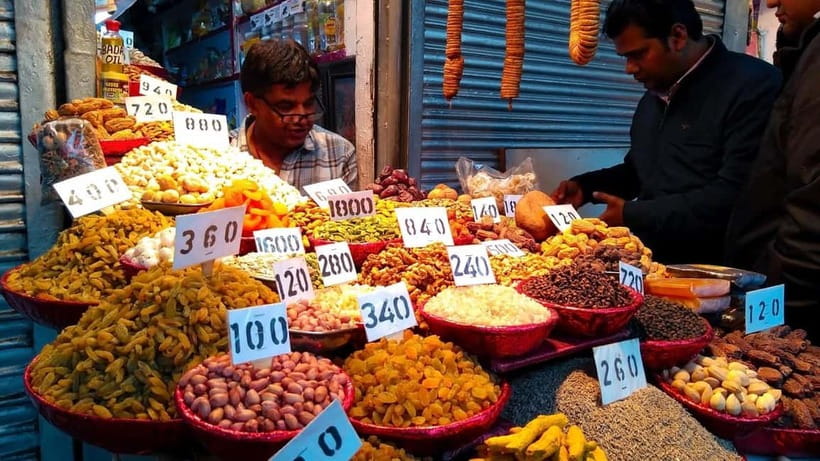
Khari Baoli isn’t just a tourist stop; it’s a living market where merchants sell and trade everyday ingredients. As you walk the lanes, you’ll see piles and displays of dried goods—spices, herbs, teas, and dried fruits—arranged in a way that’s meant for browsing and buying, not for museum viewing.
A good guide makes a difference here. Your guide will explain the history and role of Khari Baoli Road in shaping Delhi’s culinary and trade traditions. The point isn’t to turn it into a lecture; it’s to help you understand why the market looks the way it does and why certain products get attention.
You’ll also get a sense of Old Delhi’s street life and architectural charm as you move along. Even if you’ve been to markets before, this one has a particular intensity because the goods are tightly concentrated and the visual rhythm is constant—signs, textures, colors, and the steady flow of people.
Walking Through the Spice Lanes: Sights, Smells, and Real-World Uses
This tour is built around the “show me” side of travel. Instead of only talking about spices, you walk past them, see how they’re presented, and learn what they’re used for.
As you move from stall to stall, you’ll learn about the culinary traditions tied to what’s on display. That includes how different spices and herbs show up in Indian cooking, as well as how they’re used in traditional medicine. I like this balance because it gives you a fuller picture: you’re not just buying ingredients that look cool, you’re learning what local people associate them with.
You’ll also get time to interact with shopkeepers. That matters because markets often make more sense once you hear how locals explain their products. Even if you’re not buying much, these short exchanges help you understand what’s common, what’s specialty, and what people reach for day to day.
Yes, the sensory input is strong. That’s part of the appeal. But the guide’s job is to keep you grounded—so you can enjoy the experience without feeling overwhelmed.
Tea Tasting and Learning by Looking
One of the most memorable moments is when you get to sample exotic teas. It’s not presented like a fancy tasting flight; it’s more practical, tied to what the market sells and why people drink it.
What makes the tea stop valuable is the way it connects to the wider theme of the tour: spices and teas aren’t separate worlds in Indian kitchens. They often overlap in usage and in how people think about flavor and wellbeing.
If you’re someone who likes to travel by food and everyday culture, this is a strong fit. You get to taste, then immediately place that taste into context with the guide’s explanations about ingredients you’ve been seeing for the past part of the walk.
Shopping Without the Headache: Translation Help and Cash Planning
If you want to buy spices, this tour tries to remove the biggest friction points.
First, you’ll have translation assistance with local language when purchasing spices at shops. That means you can ask what you actually want to know—how something is used, what it’s good for, and what you’re getting—rather than relying on guesswork.
Second, you’re clearly told to bring cash. That’s a simple but important detail in older market areas. Having the right payment method avoids the awkward moment of realizing you can’t easily complete the purchase you planned.
My practical advice: if you’re shopping, go in with a short list. Decide what you want to cook at home (or gift to friends), and then use the guide to help you translate your needs into what merchants recommend. You’ll get better results without spending the whole tour negotiating.
You can also read our reviews of more tours and experiences in New Delhi





Photo Stops in Iconic Old Delhi Light
You’ll have plenty of chances to capture the market’s energy: colorful spice displays, close-up textures, and Old Delhi street scenes. The tour specifically calls out photo opportunities, and it makes sense because Khari Baoli’s lanes naturally form strong visuals.
A guide also helps with timing. When you’re walking with a group and stopping for explanations, you’ll be in the right place for photos without having to constantly stop, turn around, or ask strangers for direction.
Bring sunglasses and a hat if you’re going during brighter parts of the day. Between the sun and the close-range looking, it helps you keep the experience enjoyable rather than squinting through it.
And if you’re worried about photos being “too chaotic,” don’t be. A good approach is to focus on one type of shot at a time: one round of spice close-ups, then one round of architecture and street life, then a final look at the overall lane views.
Timing It Right: What 3–4 Hours Feels Like
A 3–4 hour duration is just long enough to get real meaning from the market without turning it into a half-day slog. You’re not spending hours on transit, since the experience includes hotel pickup and drop-off in a private vehicle.
Walking is required in the market area, and the lanes can be crowded. For me, that’s the main consideration with this tour: you should wear comfortable shoes and accept that your legs will do the work while your guide does the translating and explaining.
The upside is that you’ll leave with more than photos. You’ll have a clearer mental map of what Khari Baoli sells, why it matters, and how the products connect to daily food culture.
This also works well for people who like guided structure but still want freedom. You’ll get stops and explanations, but you still get to wander and look for yourself while the guide stays nearby to answer questions.
Price and Value: Why $23 Can Actually Make Sense
At around $23 per person for a 3–4 hour private-guided experience with pickup, English-language service, bottled water, light refreshments, and translation help, this is one of the more logical “value” tours in Old Delhi.
Here’s why the value holds up:
- You’re paying for a guide to interpret what you’re seeing (history, culinary uses, traditional medicine uses).
- You’re paying for convenience (hotel pickup and drop-off in a private, air-conditioned vehicle).
- You’re paying for practical support (translation help if you buy spices).
- You’re also paying for experiences (tea sampling and photo stops).
If you tried to do this alone, you could still see Khari Baoli, but you’d spend extra time figuring out what matters, what’s reasonable to buy, and how to communicate your questions. This tour compresses that learning curve into a few hours—without forcing you into a heavy schedule.
Who This Tour Is Best For
This experience is a strong match if you:
- Want a food-focused Old Delhi experience instead of only sightseeing.
- Like markets but want clarity on what you’re looking at.
- Plan to buy spices and want help with translation.
- Enjoy learning through senses—seeing, smelling, tasting—paired with simple explanations.
It’s also a good option if you’re traveling with someone who wants structure. The private group format means you’re not stuck with a one-size-fits-all pace.
One note from real experiences: a recent booking praised the guide for being very friendly, listening to guests’ wishes, and even being able to explain things in German. That’s a good sign if you value communication and a guide who adjusts to your questions.
Should You Book This Khari Baoli Spice Market Tour?
I’d book it if your goal is to leave Khari Baoli understanding it, not just passing through it. The combination of guided context, tea sampling, photo time, and shopping support makes the price feel fair—and the hotel pickup keeps the day from feeling like logistics day.
Skip it (or think twice) if you know you dislike crowded walking routes. The tour is designed for people who can handle market foot traffic and close-range browsing. If that’s you, you can still enjoy Old Delhi, but you’ll probably want a slower plan or a less walking-heavy option.
If you’re ready to see Old Delhi through spices and street trade, this is one of the easiest ways to get real value in a few hours.
FAQ
How long is the Khari Baoli spice market tour?
The tour lasts 3 to 4 hours.
What is the price per person?
It costs $23 per person.
Where does the tour start?
You’ll get your pickup arranged from your Delhi hotel.
Is hotel pickup and drop-off included?
Yes. Hotel pickup and drop-off are included in a private, air-conditioned vehicle.
Do I need to walk during the tour?
Yes. Walking is required in the market area.
What’s included in the tour?
Included items are hotel pick-up and drop-off in a private, air-conditioned vehicle, an expert English-fluent guide, bottled water and light refreshments, and assistance with translating local language if you purchase spices.
What language will the guide speak?
The live tour guide is available in English, Spanish, French, German, Italian, Japanese, Hindi.
Is tea tasting included?
Yes. The tour includes sampling exotic teas.
What should I bring?
Bring comfortable shoes, sunglasses, a hat, and cash.
Is cancellation free if plans change?
Yes, you can cancel up to 24 hours in advance for a full refund.