REVIEW · NEW DELHI
Private 3 Day Delhi ,Agra ,Jaipur Golden Triangle Tour
Book on Viator →Operated by Akbran Tours · Bookable on Viator
Golden Triangle, tight and doable. This private 3-day route strings together Delhi and Agra and Jaipur with hotel pickup, private transfers, and a guide so you do not lose hours on logistics. I like that it is built for first-timers who want the big sights without the planning headache.
I also like two practical details: sunrise Taj Mahal entry with skip-the-line access, and the fact that you get a private guide in each city. One real consideration: this is a fast pace with an early morning and long drives, and lunch and dinner are not included, so you will want a meal budget and flexibility.
The comfort side is solid: an air-conditioned car, bottled water, and daily hotel drop-off and pick-up. Also, the route includes enough breaks to keep you moving (including a planned stop for washroom needs on the highway), which matters when you are covering three major cities.
In This Review
- Key highlights in plain terms
- How this 3-day Golden Triangle keeps your trip from getting messy
- Day 1 in Delhi: Humayun’s Tomb, Lotus Temple, India Gate, then Old Delhi
- Agra night: how to prepare for a 6:00 a.m. Taj Mahal
- Day 2: Taj Mahal at sunrise, Agra Fort, then Fatehpur Sikri
- Day 3 Jaipur: Amber Palace, Jal Mahal photos, Hawa Mahal, City Palace, Jantar Mantar
- Jaipur step well and crematorium chhatriyan: the quieter side of royal design
- Price and what you really get for the money
- Cars, timing, and comfort: what your schedule feels like
- What people praise most, and how you can benefit
- Who this private Golden Triangle is perfect for
- Should you book this 3-day private route?
- FAQ
- What is included in the tour price?
- Do I get hotel pickup and drop-off?
- Will I visit Taj Mahal in the morning?
- Is the Lotus Temple always open?
- What kind of vehicle do I ride in?
- Can I get a full refund if I cancel?
Key highlights in plain terms
- Hotel pickup and drop-off daily so you spend less time figuring out where to meet
- Sunrise Taj Mahal visit for softer light and an efficient morning start
- Skip-the-line Taj Mahal entry plus included monument entrance fees across Delhi, Agra, and Jaipur
- Private guide in each city to help with context and the language barrier
- Old Delhi highlights like Jama Masjid and Chandni Chowk, with optional rickshaw-style touring
- Two nights in a three-star hotel on twin sharing, plus breakfasts included
How this 3-day Golden Triangle keeps your trip from getting messy
The Golden Triangle is famous for a reason. In just three days, you see the Mughal grandeur of Agra, the political monuments and old-city chaos of Delhi, and the palace-and-fort world of Jaipur. The difference here is that you are not trying to build that map in your head while fighting transport timing and ticket lines.
What makes this plan work is the structure: you move city to city in a private air-conditioned car, and you get a guide for the sightseeing blocks rather than vague audio-walk directions. That means you can ask questions at the right moments, not at 9 p.m. when you are tired and the internet signal is doing its own thing.
Value-wise, the big win is that you are paying for time. Entrance fees are included, and Taj Mahal is handled with skip-the-line access. If you have ever watched other people form lines while you wonder what you missed, you will appreciate how much smoother this feels.
You can also read our reviews of more private tours in New Delhi


Day 1 in Delhi: Humayun’s Tomb, Lotus Temple, India Gate, then Old Delhi
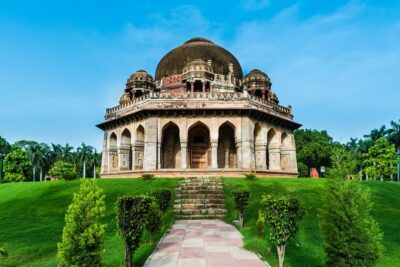
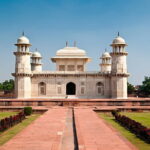
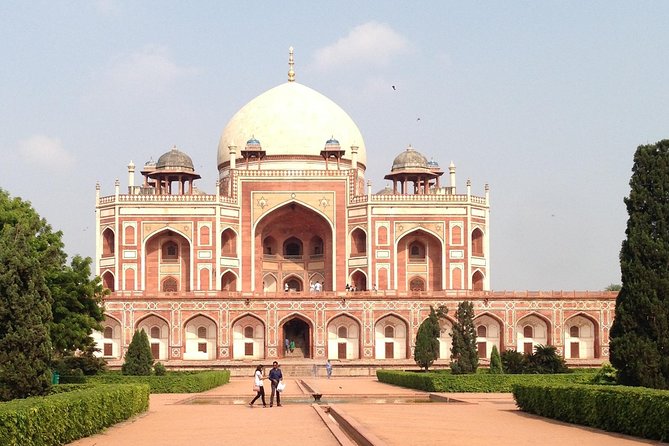
Your day starts with pickup from your hotel or the airport at a set pre-arranged time. From there, you go straight to Humayun’s Tomb, a major Mughal landmark often described as a key early step toward later Taj Mahal style. The fact that admission is included, and you have a guide, helps you read the site instead of just taking photos.
Next is Lotus Temple, the white, flower-shaped Bahá’í House of Worship. Plan around one detail: it remains closed on Monday, so the day you choose matters. You still get time here on other days, and it is a great mental reset after the tomb architecture.
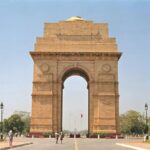
Then comes India Gate, a war memorial connected to Indian soldiers who died between 1914 and 1921. It is not a long stop (about 30 minutes), but it is one of those places that gives you a quick sense of modern India before you jump into the old-city world.
After that, you have short photo stops outside major government buildings, including the President’s House designed by British architect Edward Lutyens in 1912. These are quick and straightforward: good for context, not meant to eat up the schedule.
Lunch is built in as a local restaurant break, then you roll into Old Delhi.
Chandni Chowk is next, one of the city’s oldest markets. You get a brief look (about 30 minutes), but it is enough to understand why people come hungry for shopping and street life. From there, you visit Jama Masjid, a huge mosque that can hold more than 25,000 people at once.
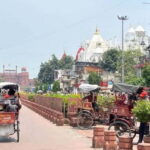
This is also where the experience can feel extra real: you can add a tri-cycle style rickshaw ride through narrow lanes after the mosque visit. The entrance is included for Jama Masjid, but that rickshaw ride is not included—so if you want it, treat it like an optional extra.
You end Old Delhi with a quick stop at Red Fort and then move out toward Agra. The route uses the Yamuna Expressway, and you stop en route at a highway hotel for washrooms. Expect a longer driving block (roughly 3 to 4 hours total, traffic dependent), then check in to your Agra hotel for the night.
Agra night: how to prepare for a 6:00 a.m. Taj Mahal
Once you arrive in Agra, you check in and rest. There is not much else scheduled, and that is a good thing. You will want sleep more than snacks on this kind of itinerary because the next morning is early.
Practical tip: if sunrise is a priority, you should pack for comfort the night before. You will likely be moving quickly in the morning, and you do not want to waste time hunting for a hat, water, or a layer when the air is cooler than you expect.
Also, breakfasts are included for Day 2. So on Day 1, it is fine if your main meal is just a basic lunch stop and then an easier dinner at your own pace after check-in. Your schedule is set up so you do not have to make complicated decisions late in the day.
If you are traveling with someone who needs a slower pace, this is still workable because the evenings are mostly free in Agra and Jaipur. The early morning is the big time anchor, and everything else fits around it.
Day 2: Taj Mahal at sunrise, Agra Fort, then Fatehpur Sikri
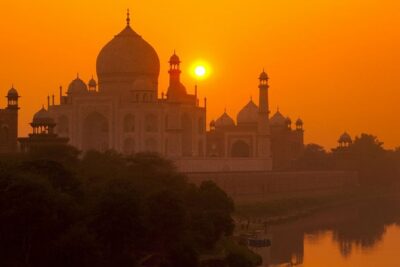
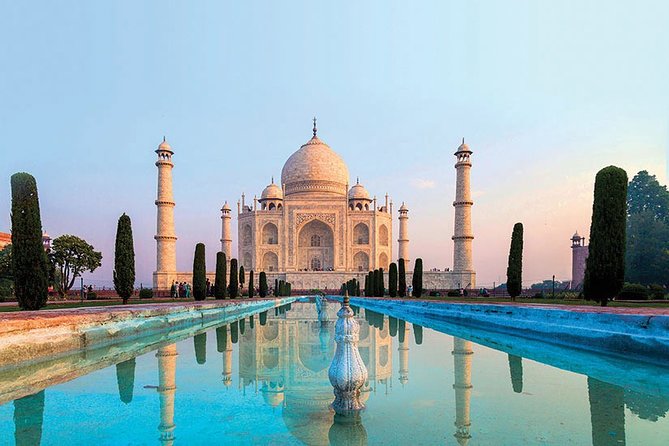
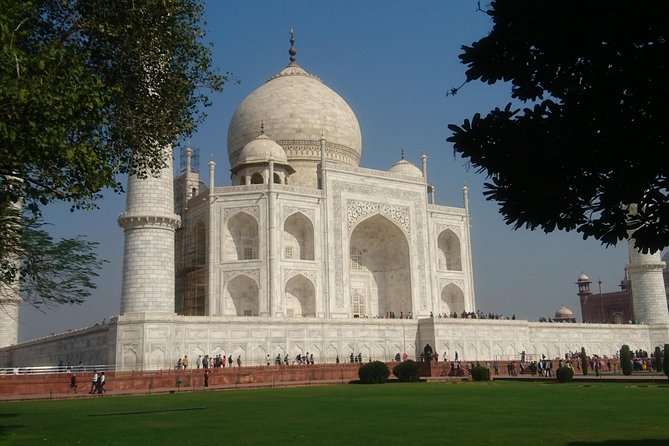
Day 2 is the headline. Your driver meets you at your hotel around 6:00 a.m. with your private guide, and you visit the Taj Mahal in sunrise light. This timing is not random. Sunrise makes the marble look brighter and softer as the sun hits the white surfaces, and it also tends to feel calmer than later hours.
A guide matters here because Taj Mahal can look like pure beauty from far away, but it becomes more meaningful when someone explains the design choices and symbolism while you are still standing in front of the place. Skip-the-line entry is included, which saves a chunk of time that you can use to actually look instead of shuffle.
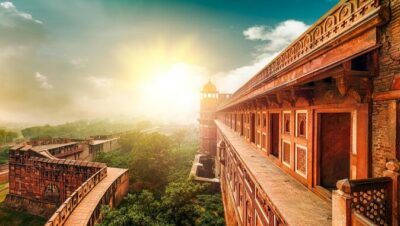
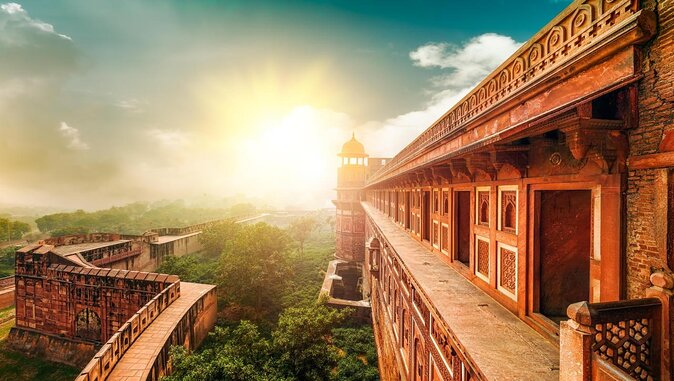
After Taj, you go back to your hotel for breakfast. Then you check out and head to Agra Fort, the royal residence area where the Mughal royal family lived. This stop is shorter (about an hour), but it gives you the power-and-politics side of Mughal rule, not just the love-story monument.
From Agra, you drive to Fatehpur Sikri, a former capital of the great Mughals. The drive is about an hour, then you spend around two hours exploring palace structures built in red stone. The site is famous for its scale and distinct layout, and a guide helps you connect the dots when you are moving between courtyards and buildings.
Your day still has one more major step: after Fatehpur Sikri, you drive onward to Jaipur and transfer to your Jaipur hotel for an overnight stay. This is a long day on paper, but the structure keeps it manageable: short, focused sightseeing blocks and transport organized between them.
Day 3 Jaipur: Amber Palace, Jal Mahal photos, Hawa Mahal, City Palace, Jantar Mantar
You start Day 3 with breakfast at the hotel, then meet your driver and guide. First stop is Amber Palace, a hilltop fort known for its artistic style, large ramparts, and cobbled paths. Admission is included, and it is a strong start because Amber sets the tone for why Jaipur looks the way it does: forts and palaces built to impress.
After Amber, you stop at Jal Mahal, the Water Palace. You get photo time from outside (about 15 minutes). It is brief, but it works as a visual break between the heavy fort textures and the more ornate city monuments.
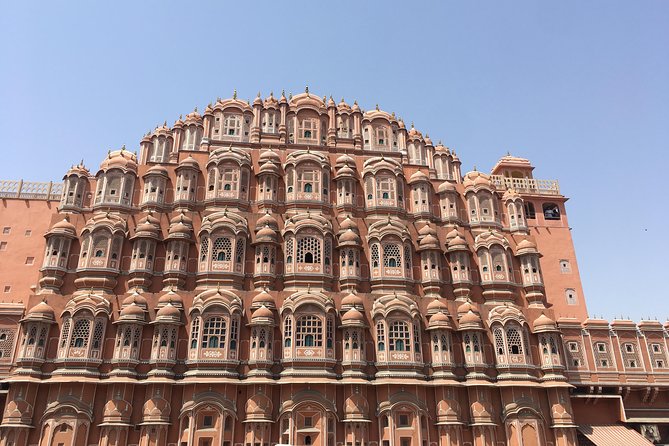
Next is Hawa Mahal, the Palace of Wind. It is built from red and pink sandstone in 1799, originally designed so palace women could view street life through windows while staying out of sight. You are told about the famous 953 small windows, and that detail alone changes how you look at the facade.
City Palace is next, the administrative and ceremonial seat of the Maharaja of Jaipur. It now functions as a museum, and it includes courtyards and multiple buildings used for different purposes. This stop runs about an hour, giving you enough time to see why it is more than one big building.
Then comes Jantar Mantar, the astronomical observatory with old astrological instruments and the largest sun dial in the world, built in 1734. Even if math is not your favorite subject, this is one of those places where design meets measurement, and a guide helps you understand how these tools worked.
Lunch is scheduled after your monuments time, then you have more Jaipur stops that are less “first photo stop” famous but still worth it.
You can also read our reviews of more tours and experiences in New Delhi





Jaipur step well and crematorium chhatriyan: the quieter side of royal design
Not every Golden Triangle plan includes these, and that is why they feel special in a good way.
Panna Meena ka Kund is a stepwell near Amber Fort. It was built for people in Amer to collect water later used at nearby temples. You also get context that women came to the well, so it is not just architecture—it is a small window into everyday life and how water shaped the city.
Then you visit Gaitore Ki Chhatriyan, the royal crematorium grounds of the Kachwaha Rajput dynasty. Maharaja Jai Singh II chose the site in the 18th century. The chhatriyan are short stops (about 15 minutes each), but they add a different mood to the trip: less parade, more memorial.
By the end of the sightseeing day, you head back toward New Delhi. You stop for lunch in a local restaurant on the way, then drive back and get dropped at your hotel or the airport.
Price and what you really get for the money
This tour costs $119.15 per person, and the value comes from what is bundled rather than what is optional. You get two nights in a three-star hotel on twin sharing, private guides in each city, bottled water, and admission for monuments across Delhi, Agra, and Jaipur. Taj Mahal is handled with skip-the-line entry, which is usually where time goes to disappear on your own.
Breakfasts are included (2). That is not just food—it reduces decision-making in the mornings when you are moving fast.
Now the important trade-offs. Lunch and dinner are not included, and that means you need to budget for at least a few meals during the trip. The tri-cycle rickshaw ride in Old Delhi is also not included, so you will pay for that separately if you choose it. Gratuities are optional.
One seasonal cost to know: if you travel on Christmas or New Year Eve, there can be mandatory gala dinner charges paid directly to the hotels.
If you are traveling with a small group, group discounts may also apply, which can make the per-person value even better.
Cars, timing, and comfort: what your schedule feels like
The transportation is private and air-conditioned. Car type depends on group size: a sedan for 1 to 2 people, a 7-seater SUV for 3 to 5, and a 12-seater mini bus for 6 to 10. That matters because you are not sharing a cramped vehicle with strangers for long stretches.
Transfers are approximate and depend on the time of day and traffic. You should treat the driving times as planning targets, not promises. The Delhi to Agra drive is about 3.30 hours in the schedule, and Agra to Jaipur is roughly 4 hours, but real life traffic can stretch things.
Timing anchors your day. Taj Mahal is scheduled for sunrise with pickup around 6:00 a.m. That is early, but it is also why you get the best light and a smoother entry with skip-the-line access.
Dress code is smart casual. Also, the tour operates in all weather, so you should pack something rain-friendly or sun-friendly based on the season you go.
Finally, the driver and guide being fully vaccinated is listed as part of the provider’s care standards, which can help some travelers feel more comfortable.
What people praise most, and how you can benefit
In the feedback you shared, the biggest repeat theme is service that feels personal and efficient. Names that come up include drivers like Raza and Prem, and guides such as B.L. Kumavat in Jaipur and Deepak Kumar in Agra. The common thread is English-speaking guidance and a helpful attitude that makes the schedule feel smoother.
You can get the best version of this experience by doing two simple things. First, ask questions at each stop, especially at Taj Mahal and the fort sites, where context changes the whole experience. Second, keep your expectations realistic: this is a three-city sprint, so you will not have hours of free wandering in every monument.
Also, one practical win from the feedback: hotel quality is mentioned as clean and comfortable, with staff doing a good job. That matters because after long driving days, your hotel sleep is the real fuel for the next morning.
Who this private Golden Triangle is perfect for
This tour fits best if you want a first-time-friendly introduction to India’s major highlights without juggling tickets and timing. The private guide model helps when the language barrier could otherwise slow you down.
It is also a good fit for couples and small groups who like structure. You get a plan with built-in stops, and you still have some breathing room in the evenings.
The main mismatch is for anyone who wants a very slow pace or deep independent exploration with no early mornings. If you hate sunrise starts, or you dislike long car stretches, you might find the schedule demanding.
Should you book this 3-day private route?
I would book it if you want a clear plan, included tickets, and private guidance across Delhi, Agra, and Jaipur. At this price point, the biggest value is not the sightseeing list—it is how the logistics are handled: pickup and drop-off, transport in an air-conditioned vehicle, hotel nights with breakfast, and skip-the-line help for Taj Mahal.
I would think twice if you are on a strict meal budget, dislike early starts, or want lots of unstructured time. This trip moves, and the only way it stays enjoyable is if you embrace that pace.
If your goal is to see the Golden Triangle while keeping your brain free for enjoying the monuments, this is a strong, practical option.
FAQ
What is included in the tour price?
The tour includes two nights of three-star hotel accommodation on twin sharing, a private guide in each city, bottled water, monument entrance tickets across Delhi, Agra, and Jaipur, skip-the-line entry for Taj Mahal and other monuments, and breakfast (2). Lunch and dinner are not included.
Do I get hotel pickup and drop-off?
Yes. You get hotel pickup and hotel drop-off each day, and the driver meets you at your hotel or New Delhi airport at a set pre-arranged time.
Will I visit Taj Mahal in the morning?
Yes. Taj Mahal is scheduled for sunrise, with the driver meeting you around 6:00 a.m.
Is the Lotus Temple always open?
No. Lotus Temple remains closed on Monday, so your schedule may need to reflect that.
What kind of vehicle do I ride in?
Car type depends on group size: sedan for 1–2 people, a 7-seater SUV for 3–5 people, and a 12-seater mini bus for 6–10 people. It is air-conditioned.
Can I get a full refund if I cancel?
Yes. You can cancel up to 24 hours in advance for a full refund. If you cancel less than 24 hours before the start time, the amount paid is not refunded.