REVIEW · NEW DELHI
Small- Group Delhi Slum Walking Tour
Book on Viator →Operated by Pete For India Travel · Bookable on Viator
Railway tracks lead to real life in Delhi. This Small-Group Delhi Slum Walking Tour through Sangam Colony and Pandav Nagar is a hands-on way to understand day-to-day survival and local ambition, guided by people who live the story. You’ll also stop by an educational and vocational training center and get the option of sharing a cup of tea with a local family.
I especially like the small group size, capped at 9 travelers, which makes it easier to ask questions and actually talk with residents. I also love that the tour includes community-facing stops like a fruit market and temple areas, not just a walk-and-leave photo moment.
One consideration: it runs on foot in an informal settlement, and the experience depends on good weather, so you should plan to dress for outdoors and expect a more human-scale pace than a standard sightseeing loop.
In This Review
- Key things to know before you go
- A Small-Group Walk Through Sangam Colony and Pandav Nagar
- Why This Tour Feels Different: Local Guide + Real Community Impact
- Price and Value: What $23.47 Buys You in Delhi
- Meeting Point, Timing, and How to Show Up Ready
- Stop-by-Stop: Pandav Nagar’s Tracks, Temples, and Fruit Market Life
- Sangam Colony Walk: Daily Life Along the Railway Edge
- The Educational and Vocational Centre Visit in Pandav Nagar
- The Optional Tea Break and Why Small Moments Matter
- Safety and Respect: How to Make This a Positive Exchange
- Accessibility, Walking Pace, and Who This Tour Suits
- Weather and Flexibility: Plan for the Outdoors
- Should You Book This Delhi Slum Walking Tour?
- FAQ
- How long is the Small-Group Delhi Slum Walking Tour?
- What is the group size limit?
- What will I do during the tour?
- Are drinks included?
- Is there hotel pick-up or drop-off?
- What is the cancellation policy and what happens with poor weather?
Key things to know before you go

- Max 9 people keeps the group intimate and discussion-friendly
- Sangam Colony + Pandav Nagar shows both everyday life and long-term support projects
- Railway-track sections give a clearer sense of how the community is shaped by the rail line
- Tea or cold drink with a local family turns learning into real conversation
- Eighty percent of proceeds supports a local non-profit and community work
A Small-Group Walk Through Sangam Colony and Pandav Nagar

Delhi can feel like a blur of monuments and metro lines. This tour slows everything down and puts the spotlight where most guidebooks don’t: life around Sangam Colony and Pandav Nagar in West Delhi.
You start at Main Patel Rd, Block B, Baljit Nagar (Shadipur area). Then you move through community spaces where daily routines happen right in front of you—near temples, local industries, and fruit market activity, with some sections on both sides of the railway track where you can watch Indian trains pass by.
This isn’t a “look and wonder” experience. It’s guided, explained, and grounded in how people live, work, and plan for the future.
And if you’re the type who likes asking questions, you’ll find room for that. The tour is built for conversation with a local guide from the area, not a loud lecture.
You can also read our reviews of more walking tours in New Delhi



Why This Tour Feels Different: Local Guide + Real Community Impact
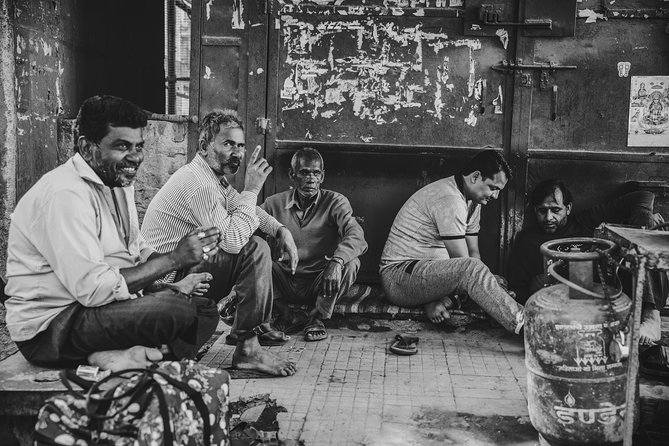
A lot of “slum tours” get discussed like a dare. This one aims for something more responsible: local context, local hosting, and a direct link to community projects.
First, the guide is from the area. That matters. You’re not just hearing generic facts about poverty—you’re hearing stories and explanations tied to the neighborhood’s real geography and daily rhythm. In past groups, guides like Sunny and Abhishek have been praised for showing up, organizing the walk, and acting like a host rather than a tour-bot.
Second, the tour is connected to ongoing work. The visit includes an educational and vocational training center in Pandav Nagar. That’s not just sightseeing; it’s part of the community’s long-term effort.
Third, money matters here. The tour states that 80% of proceeds benefit a local non-profit organization. So your ticket isn’t only paying for logistics and interpretation. It’s contributing to a local safety net and skills pathway.
Price and Value: What $23.47 Buys You in Delhi

At around $23.47 per person, this is priced like a mid-budget activity for Delhi. But the value comes from what’s included, not just the cost.
You’re paying for:
- a local guide from the area
- a guided walking experience over roughly 2 to 3 hours
- visits that include slum areas, temple areas, and a fruit market
- time at the educational and vocational training center
- cold drinks / black tea / milk tea
Even the timing helps. Two to three hours is short enough to fit into a busy itinerary, but long enough to make stops meaningful rather than rushed. If you’re staying only a couple of days in Delhi, it’s also a focused way to add a perspective you can’t get from monuments alone.
One more practical point: the stops don’t add extra ticket cost. The tour info notes admission is free for the visited areas, so you’re not hit with separate gate fees.
Meeting Point, Timing, and How to Show Up Ready
The tour starts and ends back at the meeting point: Main Patel Rd, Block B, Baljit Nagar, Shadipur, New Delhi, Delhi 110008. There’s no hotel pick-up, so plan your route in advance.
It’s described as near public transportation, which is helpful. Still, give yourself buffer time. The tour runs by a local schedule, and one past group mentioned a late guide and confusion early on. I’d treat that as a reminder: arrive a bit early and keep your phone handy in case the team needs to coordinate.
Bring:
- comfortable shoes for walking through an informal settlement
- a light layer or sun protection depending on the season
- patience. This is a human conversation kind of tour, not a checklist sprint
You’ll also want to hold onto the mobile ticket on your phone for smooth entry.
Stop-by-Stop: Pandav Nagar’s Tracks, Temples, and Fruit Market Life
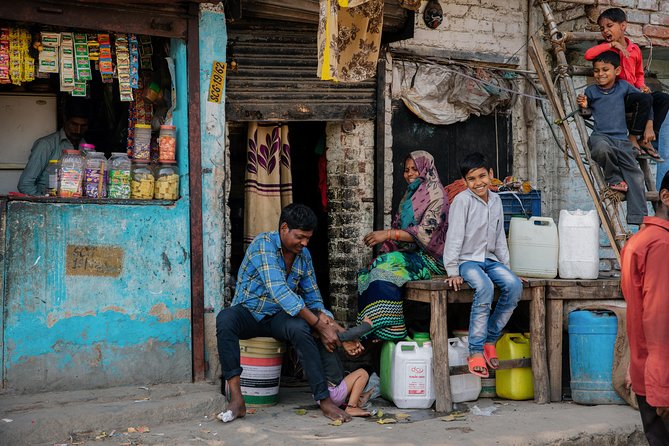
The tour’s main structure runs through Pandav Nagar and then Sangam Colony, with a return to Pandav Nagar for the center visit.
Stop 1: Pandav Nagar (about 1 hour)
This is where you get your bearings. You’ll walk through areas described as a small slum in West Delhi, including sections on both sides of the railway track. That rail line isn’t just background noise—it’s part of how the settlement is arranged and how people move through the space.
During this first segment, you’ll also encounter:
- different industries
- temples
- fruit markets
What I like about starting here is that it gives you variety fast. You’re not only seeing housing. You’re seeing work, worship spaces, and everyday commerce. That variety helps you understand socioeconomic context in a real way: the neighborhood isn’t just described as “poverty,” it’s shown as a functioning local economy with daily roles.
A drawback to keep in mind: because this area includes market and temple zones, you’ll likely see lots of activity. That can be fascinating, but it also means you should expect a more chaotic, less controlled environment than a standard museum route.






Sangam Colony Walk: Daily Life Along the Railway Edge
Stop 2: Sangam Colony (about 30 minutes)
Then you shift to Sangam Colony, described as a small settlement built on both sides of the railway track. This stop is shorter, but it tends to carry weight because the surrounding environment is so distinctive.
The best part of this section is what your guide helps you notice. You’ll learn not just what the homes look like, but the larger “how it works” behind the place—how people survive, how they adapt, and how community life forms around constraints.
One past participant said the experience avoided morbid fascination and instead felt uplifting and humbling. That’s a good yardstick for how this stop is intended to feel. If you go in expecting a spectacle, you’ll miss the point. If you go with curiosity and respect, you’ll get a clearer picture of resilience.
Also, the rail setting adds a constant reminder of proximity to infrastructure. Seeing Indian trains pass while you’re standing close to the tracks is a vivid, reality-check detail that sticks with you.
The Educational and Vocational Centre Visit in Pandav Nagar
Stop 3: Pandav Nagar educational centre (about 25 minutes)
After the walking segments, you visit the center where the organization runs educational and vocational training. This stop helps balance the story. Slums are often shown as hardship only. Here, you see a slice of what the community is building for change.
The tone is different from the outside-walk sections. It’s still part of the same network of places—same neighborhood logic—but the focus shifts toward learning and skills.
If you’re trying to understand “why this place matters beyond news headlines,” this is the anchor. You’ll leave with at least one concrete example of support that isn’t only relief—it’s education and work preparation.
One small timing note: it’s about 25 minutes. So you won’t get a deep, classroom-style tour with lengthy explanations. Plan to treat it as a guided introduction—enough to understand the mission, not enough to become an expert in the program.
The Optional Tea Break and Why Small Moments Matter
The tour includes a refreshment break with options like cold drinks, black tea, or milk tea. It also mentions an exchange with residents and an optional tea break with a local family.
This is where the tour can turn from informative to personal. When you share tea with people you’re meeting in their own context, you get more than facts. You hear a little about values, daily routines, hopes, and humor—things that don’t fit neatly into a formal lecture.
One past group praised the experience of meeting children, residents, and even pets, with the guide acting as a strong ambassador. I’d take that as a hint: the human connections here are part of the product.
Practical tip: keep your tone warm and simple. If someone offers tea, accept it if you can. Ask questions that invite stories rather than comparisons. And remember: photographs and conversations should be sensitive to what people feel comfortable with. If the guide doesn’t say it’s okay, assume it isn’t.
Safety and Respect: How to Make This a Positive Exchange
This tour is designed to be well organized and, based on the feedback, generally felt safe and welcoming. Still, you’re in a real community, not a controlled tourist zone. Your job is to act like a visitor who understands boundaries.
What helps most:
- follow your guide’s lead at every turn
- keep your questions thoughtful and not prying
- avoid treating people like exhibits
- be aware of crowding around markets and home areas
One participant specifically said they felt safe and welcomed with a guide named Sunny. Another called the experience completely safe and well organized. That’s reassuring, but I’d still take the basics seriously: go with your guide, don’t wander, and stick with the group.
The other side of respect is mindset. If you approach the tour trying to confirm stereotypes, you won’t learn much. If you approach it trying to understand how systems, infrastructure, and opportunity interact at neighborhood level, you’ll get far more.
Accessibility, Walking Pace, and Who This Tour Suits
The tour notes that most people can participate, which suggests the route is manageable. But it’s still a walking tour across neighborhood areas and home-adjacent spaces, so you’ll want reasonable mobility and comfort with outdoor conditions.
This tour is a good fit if you:
- want a grounded view of urban life beyond Delhi’s monuments
- enjoy guided cultural context from a local guide
- care about supporting community work, not just checking a box
- like conversation and the chance to share tea
It’s less ideal if you:
- hate walking for a couple hours
- need a quiet, low-stimulation experience
- want a purely sightseeing-style route with major viewpoints
Also note the group size cap of 9 people. If you prefer a quieter experience, this limit helps a lot.
Weather and Flexibility: Plan for the Outdoors
The experience explicitly requires good weather. If weather turns, you’ll be offered a different date or a full refund. That’s a helpful safety valve, especially in a city where rain can change the feel of outdoor walking fast.
So, when you book, keep an eye on your calendar. Pick a day where you have enough flexibility to shift if needed.
Should You Book This Delhi Slum Walking Tour?
If you want a Delhi experience that goes beyond monuments and shopping streets, I think this is a strong choice. The combination of small-group size, local guide leadership, and a visit to an educational and vocational centre makes it more balanced than many “slum tour” formats.
I’d especially recommend it if your goal is learning—real context about how people live, work, and plan for the future. The inclusion of fruit market and temple areas also helps you understand the neighborhood as a living place, not only a hardship story.
Book it if:
- you’re comfortable asking questions respectfully
- you want the tea-break conversation piece
- you like tours where your money supports local programs (80% proceeds to a local non-profit)
Skip or rethink it if:
- you’re looking for major landmark photos
- you can’t do outdoor walking in changing conditions
- you’d feel uncomfortable in a community setting
If you book, show up early at Main Patel Rd, Block B, Baljit Nagar (Shadipur), wear shoes you can walk in, and come ready to listen. The best moments here are usually the quiet ones, when your guide explains what you’re seeing and a cup of tea turns strangers into temporary neighbors.
FAQ
How long is the Small-Group Delhi Slum Walking Tour?
It lasts about 2 to 3 hours.
What is the group size limit?
The tour has a maximum of 9 travelers, keeping it small.
What will I do during the tour?
You’ll walk through Sangam Colony and Pandav Nagar, visit local areas such as temples and a fruit market, stop at a local educational and vocational training center, and spend time with a local guide from the same area.
Are drinks included?
Yes. The tour includes cold drinks and black tea or milk tea.
Is there hotel pick-up or drop-off?
No. There is no hotel pick-up/drop. The tour starts and ends at the meeting point on Main Patel Rd.
What is the cancellation policy and what happens with poor weather?
You can cancel for a full refund up to 24 hours before the experience start time. If the tour is canceled due to poor weather, you’ll be offered a different date or a full refund.