REVIEW · NEW DELHI
3-Day Golden Triangle Luxury Tour from Delhi to Agra and Jaipur
Book on Viator →Operated by THE GOLDEN MEMORIES · Bookable on Viator
Three days, three cities, one grand wow. This Golden Triangle luxury tour connects Delhi, Agra, and Jaipur with a private car, professional guides, and a Taj Mahal sunrise visit that sets the tone for the whole trip.
I like the way the AC private driver keeps the schedule smooth across long road stretches. I also really value the small on-the-ground conveniences, like water and the golf cart/battery bus return from Taj Mahal parking that helps after your morning walk.
The only real consideration is pace. You’ll move through many major stops in a short window, and there are stairs at places like Chand Baori (reachable by 3,500 steps), so plan for some real walking and heat.
In This Review
- Key highlights at a glance
- Why the Golden Triangle tour works so well in 3 days
- Day 1 in Delhi: Humayun’s Tomb, Qutub Minar, and Old Delhi by rickshaw
- The drive to Agra via Yamuna Expressway and your “free” evening
- Day 2 in Agra: sunrise Taj Mahal, Agra Fort, and Baby Taj
- Day 2 into Jaipur: from Mughal monuments to Rajasthan’s highlights
- Day 3 in Jaipur: Hawa Mahal photos, Amber Palace, Jal Mahal, City Palace, and Jantar Mantar
- What you’re really paying for: luxury comfort, guides, and included value
- Timing notes that can change your route: Friday and Monday closures
- Who this luxury Golden Triangle tour is best for
- Should you book this 3-day luxury Golden Triangle tour from Delhi?
- FAQ
- FAQ
- Are monument entrance fees included?
- Is the Taj Mahal visit included, and is it really at sunrise?
- What’s included for the Taj Mahal parking-to-entrance convenience?
- How do hotels work for this tour?
- What’s the daily sightseeing pace like?
- What if my travel days fall on closures?
- What vehicle will I use?
Key highlights at a glance
- Private driver + air-conditioned vehicle for Delhi, Agra, and Jaipur
- Sunrise Taj Mahal visit (weather-dependent) with parking-to-entrance help on return
- All major icons, in a practical order: Qutub Minar, Amber Fort, Hawa Mahal, City Palace, Jantar Mantar
- Old Delhi flavor with a Chandni Chowk shopping walk and an Old Delhi rickshaw ride
- Optional entrance-fee coverage so you can decide how you want to budget
- Two hotel nights with breakfast available in the hotel-included option
Why the Golden Triangle tour works so well in 3 days
The Golden Triangle is famous for a reason: it stacks three different “faces” of India in one tight route. Delhi gives you Mughal and colonial-era landmarks plus a look into daily city life in Old Delhi. Agra is pure Mughal grandeur, anchored by the Taj Mahal. Jaipur brings you royal architecture and a different pace of sightseeing through fort-palaces, stepwells, and observatories.
What makes this 3-day version feel worth it is the internal rhythm. You’re not just seeing monuments; you’re getting time blocks that let each place land. On top of that, the private transport means you’re not watching the clock while waiting on a bus full of strangers.
That said, don’t treat this like a slow vacation. You’re covering a lot, and your “rest time” is mostly built into hotel evenings and short breaks between major sights.
You can also read our reviews of more tours and experiences in New Delhi



Day 1 in Delhi: Humayun’s Tomb, Qutub Minar, and Old Delhi by rickshaw
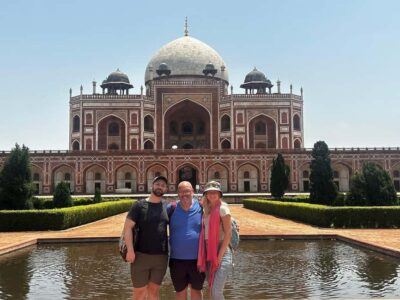
Delhi day one is a strong mix of iconic heritage and city energy. You’ll start at Humayun’s Tomb, a UNESCO World Heritage site built in 1569 as the final resting place of Emperor Humayun. The setting is calmer than you’d expect in a mega-city, and it’s a good way to ease into Mughal architecture before the rest of the day gets more “fast and full.”
Next comes Qutub Minar, another UNESCO highlight. This soaring victory tower/minaret complex is the kind of sight that makes you stop scrolling your phone. You’ll usually walk through the surrounding area at an easy pace, and the tall scale is the whole point.
Then you’ll shift to a quieter contrast with the Lotus Temple (but note it’s closed on Mondays). Designed to support tranquil worship, it’s a different architectural style than the Mughal-heavy sites, and it’s a nice reset between big-ticket sights.
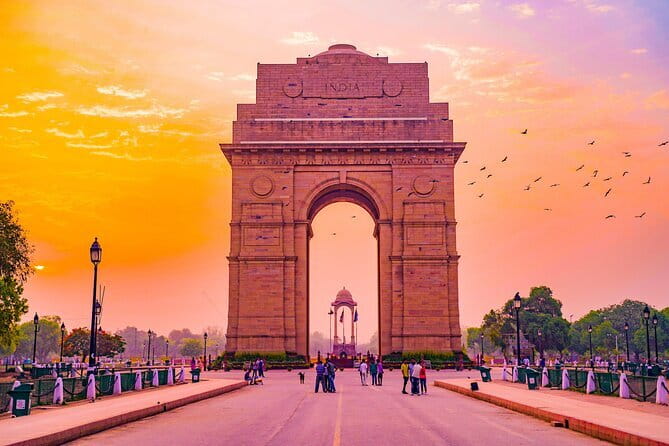
After that, you get classic Delhi “big monument” photo moments—India Gate, Rashtrapati Bhavan, and Parliament House—all short stops. This is where the guide helps you connect what you’re seeing to what happened here: India Gate, for example, is a memorial arch designed by Lutyens, tied to soldiers from multiple early-20th-century conflicts.
The Old Delhi portion is where the day gets fun. You’ll visit Agrasen Ki Baoli (stepwell complex) for a quick look, then head into Chandni Chowk, known for spice shops, dried fruits, silver jewelry, and busy side streets. You’ll also do an Old Delhi rickshaw ride—a short experience, but one that breaks up the intensity of sightseeing and gives you a better sense of how the lanes feel.
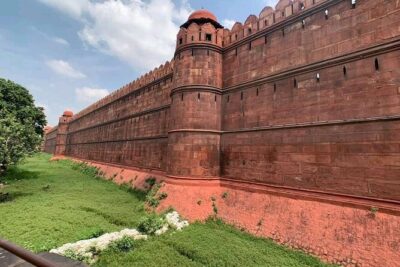
One practical note: the day includes a Red Fort stop as well, and while the time can be brief, it’s still worth seeing the fort’s exterior in daylight. If you’re sensitive to crowds, plan to keep your mindset flexible here—Old Delhi is not a slow walk kind of place.
The drive to Agra via Yamuna Expressway and your “free” evening
After the Delhi sightseeing block, you’ll have time for lunch at a local restaurant before heading out on the Yamuna Expressway toward Agra. The transfer is about three hours, but traffic can stretch that, as it always does in and around Delhi.
Once you arrive in Agra, you check into your hotel and your late-day is free at leisure. I like this design because it lets you cool off, freshen up, and avoid the common mistake of trying to “do one more thing” immediately after a long drive. For many first-timers, Agra evening is also the moment you can adjust your expectations for sunrise the next day.
If you’re the kind of person who plans snacks and water obsessively, you’re covered here: bottled water is included for the tour, which helps on road days.
Day 2 in Agra: sunrise Taj Mahal, Agra Fort, and Baby Taj

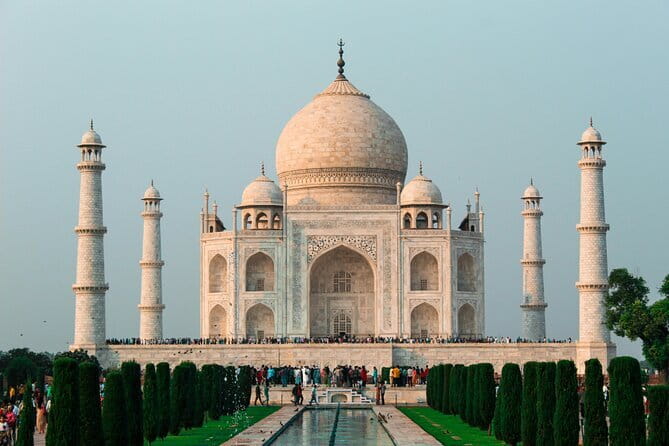
This is the day you’ll remember. The tour’s Taj Mahal visit is scheduled for sunrise, with the time dependent on weather conditions. If you can handle an early start, you’ll usually get the best lighting and calmer conditions for photos and first impressions.
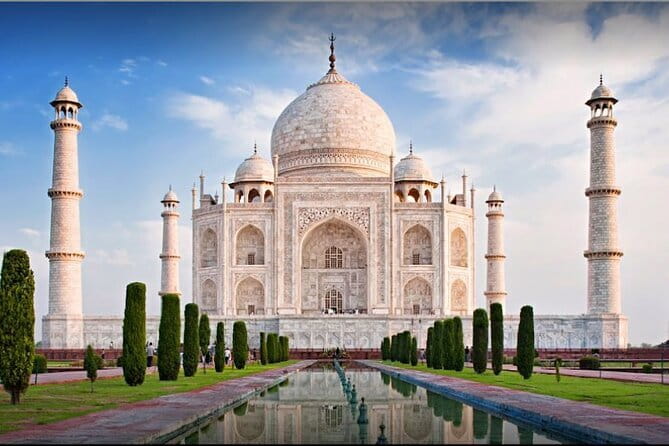
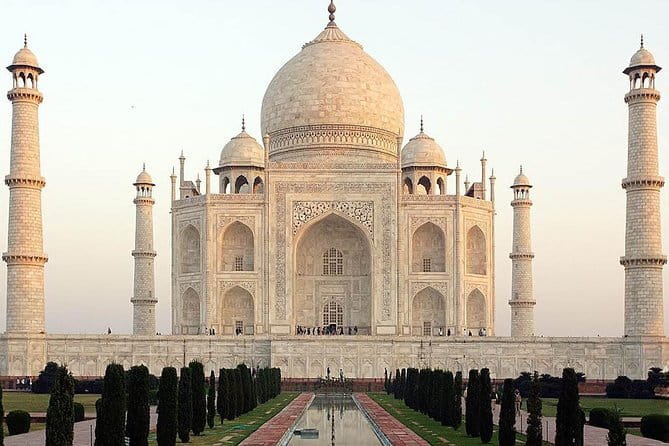
Taj Mahal itself is a UNESCO World Heritage site, built in the 17th century by Emperor Shah Jahan as a mausoleum. You’ll spend about 2.5 hours, which is a healthy amount: long enough to notice details in the white marble and gardens, but not so long that it becomes museum fatigue.
One comfort detail that matters: the tour includes a battery bus/golf cart return ride from parking back toward the entrance area. You’re still going to walk inside, but this reduces the “back-end” slog, especially after standing around for views.
After Taj, you’ll visit Agra Fort, another UNESCO site. It’s a historical fort along the Yamuna, known as the residence of Mughal emperors until 1638. At around 1.5 hours, it’s a good pace for taking in fort walls and main sections without rushing.
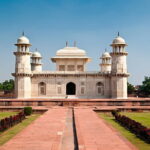
Then comes Itmad-ud-Daula, often called Baby Taj. Plan on about an hour. This one works for people who love fine detail: it’s less “one big wow” and more “slow looking.” The gardens and marble work reward time.
Before you head onward to Jaipur, there’s a detour to Chand Baori in Abhaneri. This is a massive stepwell, and the big number is the point: you reach it via 3,500 steps. The tour gives you about an hour here, which is just enough to see the structure clearly—though if stairs are a concern, you may want to go carefully and pace yourself.
Day 2 into Jaipur: from Mughal monuments to Rajasthan’s highlights
Once you reach Jaipur, you check in at your hotel and overnight there. The sightseeing isn’t full-on “all afternoon” on day two, which is smart. Jaipur is where the tour adds more architectural stops on day three, so getting a proper night of rest helps you enjoy those.
On that note, if you’re traveling in warmer months, I’d treat day two as your recovery buffer. The route includes long drives, and Jaipur walking is real. This is one of those tours where wearing breathable layers pays off fast.
You can also read our reviews of more tours and experiences in New Delhi




Day 3 in Jaipur: Hawa Mahal photos, Amber Palace, Jal Mahal, City Palace, and Jantar Mantar
Day three is Jaipur’s greatest hits, laid out in a logical sequence.
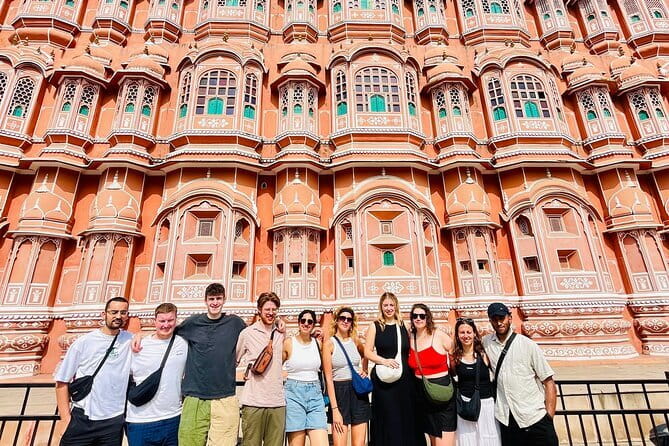
You start with a photo stop at Hawa Mahal (Palace of Winds). It’s Jaipur’s iconic pink, honeycombed facade rising in several storeys. You only get about 15 minutes, but it’s enough for photos and a quick understanding of why this is a landmark for both architecture and city identity.
Next comes Panna Meena ka Kund, a stepwell with symmetrical stairs built in the 16th century. It’s another short stop—about 15 minutes—but it’s worth it if you like structures that are both functional and decorative.
Then you’ll spend around 2 hours at Amber Palace. This UNESCO-listed fort-palace is known for intricate marble designs and mirrored walls, plus the dramatic fortified setting. If you’re only choosing one major Jaipur site from the day, this is the one.
After Amber, you get a photo stop at Jal Mahal (Water Palace). The palace sits in/near Man Sagar, and it’s especially good for quick scenic photos rather than a long visit. You’ll have about 15 minutes, which keeps you moving without cutting out the “wow” frame.
After lunch-time energy (or timing depending on the day’s pacing), you’ll visit City Palace of Jaipur, which served as an administrative and ceremonial seat. It’s about an hour, and it’s where the royal legacy feels less like scenery and more like a functioning cultural center.
Finally, you end at Jantar Mantar, a UNESCO World Heritage Site. This observatory is built as a set of geometric instruments designed to monitor the movement of stars and planets. It’s about an hour, and even if astronomy isn’t your thing, the shapes and scale are hard to forget.
Later, you’ll drive back to Delhi/Gurugram/Noida (or airport/hotel drop-off if that’s what you arrange). The drive takes about 5 hours, and you’ll typically return around 9pm on day three.
What you’re really paying for: luxury comfort, guides, and included value
At $190.50 per person for a 3-day Golden Triangle circuit, the value depends on what you choose for hotels and entrance fees. This isn’t a “cheap and cheerful” tour, and that’s clear in the inclusions: private transport, professional private guides, and a comfortable AC car throughout.
Here’s what I consider the strongest value points:
- Private car end-to-end: You’re not constantly regrouping or waiting. It also helps with pacing, since your guide can keep the order tight.
- Hotel nights (if you pick the hotel option): The tour can include 2 nights twin-sharing with breakfast. That matters because Golden Triangle hotels often aren’t quick to book last-minute.
- Guide time that makes the monuments make sense: UNESCO sites can feel like “pretty buildings” if you don’t have context. A real guide changes the experience from sightseeing to understanding.
- Taj Mahal return transport from parking: The included battery bus/golf cart return is the kind of small comfort that makes the morning feel less tiring.
Now, two caution items on value:
- Entrance fees aren’t automatically included for every stop. Many monument entries list admission not included, and the overview notes entrance fees can be included as an optional add-on. If you want fewer surprises, ask for the entrance-fee option when you book.
- Your day count is tight. This tour is built for people who want the highlights without months of planning. If you prefer slow travel and long café breaks, you might feel rushed.
Also worth noting: you get bottled water, all taxes and handling charges, and hotel/airport pickup and drop-off. That keeps the trip from turning into a “spot the extra charge” scavenger hunt.
Timing notes that can change your route: Friday and Monday closures
India’s major sights run on real-world schedules, and this tour accounts for that.
- Taj Mahal is closed on Fridays. If your tour starts on Thursday, the order may flip to avoid losing your Taj visit.
- Lotus Temple is closed on Mondays. Your Delhi day will adjust around that.
Also remember: Taj Mahal sunrise is subject to weather conditions. If it’s foggy or conditions are poor, your exact timing may shift.
Finally, transfers are listed as approximate. Traffic is real, so I’d treat timing as “best case,” not a guarantee to the minute.
Who this luxury Golden Triangle tour is best for
This fits best if you want big-name sights with fewer planning hassles.
I’d especially recommend it for:
- First-timers to India who want the Golden Triangle done with private guidance
- Couples celebrating something, since the trip is designed to feel smooth and special (one itinerary success story included an anniversary)
- Small groups or families who prefer air-conditioned comfort and a driver handling the road stress
- Photo-focused travelers who care about seeing Taj Mahal in the morning light
If you hate early mornings, stairs, and tight time blocks, it might feel like too much. But if you can handle a busy schedule, this is the kind of trip that makes the whole route feel well managed instead of chaotic.
Should you book this 3-day luxury Golden Triangle tour from Delhi?
If your goal is to see Delhi, Agra, and Jaipur efficiently—without wrestling for tickets, planning drives, or figuring out what matters—then yes, I’d book it. The private driver, professional guides, and structured sightseeing days are exactly what make a 3-day Golden Triangle work.
I’d skip or reconsider if:
- You want lots of downtime and a slow pace
- You have limited mobility or you know stairs are a problem (especially with the stepwell route at Chand Baori)
- You’re not comfortable with early starts for the Taj Mahal sunrise slot
If you do book, do two things to get the best result: wear comfortable walking shoes, and confirm how monument entry fees will be handled for the sights you care about most.
FAQ
FAQ
Are monument entrance fees included?
Not automatically for every stop. Many sights list admission ticket not included, and entrance fees are described as an optional add-on.
Is the Taj Mahal visit included, and is it really at sunrise?
The tour includes a sunrise Taj Mahal visit, but timing is subject to weather conditions.
What’s included for the Taj Mahal parking-to-entrance convenience?
A battery bus/golf cart return ride from parking to the Taj Mahal area is included.
How do hotels work for this tour?
If you choose the option including hotels, it includes 2 nights on twin sharing with breakfast. There’s also an option to book without hotels, where you arrange your own lodging; the first night is in Agra and the second in Jaipur.
What’s the daily sightseeing pace like?
It’s a packed highlights route with multiple major stops each day, plus driving time between cities. You’ll have hotel check-in and leisure time in the evenings, but sightseeing blocks are busy.
What if my travel days fall on closures?
Taj Mahal is closed on Fridays, and Lotus Temple is closed on Mondays. The itinerary order may shift (for example, starting Thursday can change the city order to protect the Taj visit).
What vehicle will I use?
Car size depends on group size: a four-seater sedan for 1 to 2 people, a six-seater MPV for 3 to 4 people, and a ten-seater van for 5 to 10 people.