REVIEW · NEW DELHI
3 Days Golden Triangle Private Tour
Book on Viator →Operated by Perfect India Trip · Bookable on Viator
Three days, three cities, zero guesswork. This private Golden Triangle run strings together the big-name sites between Delhi, Agra, and Jaipur, with guided commentary so you don’t have to research every corner before you go. You can also pick from different time slots, which helps when you’re trying to fit sightseeing around jet lag or other plans.
I really like two things about the way this is set up. First, you get a smart hit list of UNESCO World Heritage stops (Qutub Minar, Humayun’s Tomb, Agra Fort, Jantar Mantar, and more), plus classic Delhi and Old Delhi highlights. Second, the guide-led mix of monuments and street-level moments—like Chandni Chowk, Jama Masjid, and a rikshaw ride through Old Delhi—gives you more than just photo stops.
One thing to consider: the days are tightly packed, with early starts for the Taj Mahal timing and long car transfers between cities. If you hate a schedule, this style of itinerary may feel like too much motion.
In This Review
- Key Highlights Worth Noting
- Why This Golden Triangle Loop Works in Only 3 Days
- Day 1 in Delhi: Qutub Minar, Humayun’s Tomb, and Old Delhi on a Rikshaw
- Qutub Minar and the scale of early Delhi
- Lotus Temple: modern calm with iconic design
- India Gate, Parliament, and Rashtrapati Bhavan: seeing the civic Delhi
- Agrasen Ki Baoli: the stepwell you’ll remember
- Humayun’s Tomb: Mughal grandeur with a slower pace
- Chandni Chowk and Jama Masjid: Old Delhi’s best energy
- Rikshaw ride and Red Fort: the day finishes strong
- Lunch and drive to Agra
- Day 2 Agra Push: Taj Mahal Timing, Agra Fort, and Baby Taj
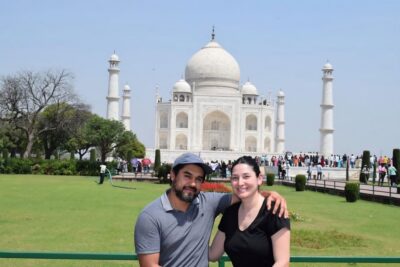
- Taj Mahal at sunrise: guided time that helps
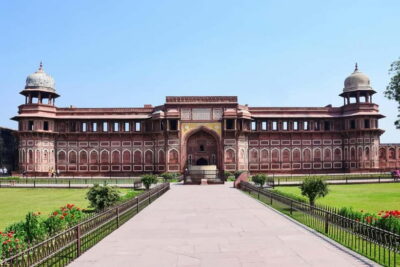
- Agra Fort: UNESCO walls with layered Mughal stories
- Itmad-ud-Daula (Baby Taj): smaller, sharper, and easier to appreciate
- Chand Baori, Abhaneri: 3,500 steps and a different kind of wow
- Jaipur arrival: arrive, check in, and reset
- Day 3 Jaipur Highlights: Jal Mahal, City Palace, Jantar Mantar, Hawa Mahal
- Panna Meena ka Kund: the stepwell near Amber Fort
- Jal Mahal: a palace sitting on the lake
- City Palace of Jaipur: ceremonial residence turned living museum
- Jantar Mantar: UNESCO astronomical instruments
- Hawa Mahal: quick exterior views done right
- Return to Delhi
- Getting Around: Private AC Transport, Pickup, and Flexible Time Slots
- Price and What You Actually Get for $20 Per Person
- Who This Private Tour Is Best For
- Book It or Skip It? My Practical Take
- FAQ
- What cities are covered on this 3-day Golden Triangle tour?
- How do you get around between Delhi, Agra, and Jaipur?
- Are monument entrance tickets included?
- Is this tour private or shared with other groups?
- Does the tour include a guide?
- Is Taj Mahal included, and what timing is planned?
- Can I cancel for a full refund?
- What happens if weather is bad?
Key Highlights Worth Noting

- A true Golden Triangle sweep in 3 days: Delhi, Agra, and Jaipur with guided stops in each city
- UNESCO-heavy itinerary without the planning headache: major monuments are built into the route
- Old Delhi by foot and rikshaw: markets, mosques, and streets you can actually feel
- Taj Mahal with guided time focused on seeing it well, not just walking in and out
- Private air-conditioned vehicle with fuel, tolls, and parking handled during the tour
- Guide flexibility: the tour is designed to adjust your pacing and order when it makes sense
Why This Golden Triangle Loop Works in Only 3 Days

The Golden Triangle sounds like a marketing phrase. Here, it’s a practical idea: you’re compressing three massive cities into a short trip without having to stitch together separate day tours.
What helps is the structure. Each day is built around a cluster of sights, then you move on to the next city. That saves your energy for the landmarks that actually need attention, like the Taj Mahal’s strict timing and the way Delhi sites can spread across different neighborhoods.
Also, this is set up as a private tour for only your group. That matters in India because you’re dealing with traffic, temple and mosque rules, and the occasional line that can be long even when you’re early. With a dedicated guide and driver, you’re not trying to coordinate with strangers while you’re sweating through the day.
You can also read our reviews of more private tours in New Delhi



Day 1 in Delhi: Qutub Minar, Humayun’s Tomb, and Old Delhi on a Rikshaw
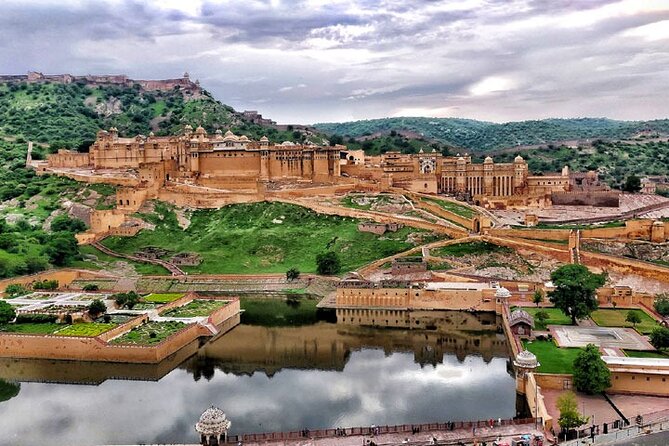
Day 1 is a big “Delhi sampler,” and it’s smartly sequenced. You start with landmarks that are easier to grasp early, then you slide into Old Delhi for the sights and sounds that feel most distinctly Delhi.
Qutub Minar and the scale of early Delhi
Qutub Minar is your first stop, and it’s a great opener. This UNESCO site dates back to 1193 under the Delhi Sultanate, and the minaret’s spiral staircase is part of what makes it so iconic. The admission ticket is listed as free, so you’re not starting the trip with extra costs.
Why it works: it gives you context for how old Delhi is before you jump into later Mughal-era splendor.
Lotus Temple: modern calm with iconic design
Next is Lotus Temple, built in 1986. The flower-like architecture is what you’ll notice first, but it also offers a quieter, more open-feeling stop compared to the crowded market areas later.
The admission is free. With a guide, you’ll likely get a bit of the background while you walk around the structure.
Practical note: even with shorter time blocks, treat it as a proper place of worship. Dress and behavior matter here.
India Gate, Parliament, and Rashtrapati Bhavan: seeing the civic Delhi
Then you move to India Gate, the war memorial dedicated to British Indian soldiers, followed by stops near Parliament House and Rashtrapati Bhavan, the President of India’s residence. These aren’t “hold your breath” monuments like the Taj Mahal, but they help you understand Delhi’s layout and the sense of power in the capital.
These stops are free and fairly quick, which is useful because Day 1 is long.
You can also read our reviews of more tours and experiences in New Delhi





Agrasen Ki Baoli: the stepwell you’ll remember
A more unexpected stop is Agrasen Ki Baoli. This medieval stepwell is described as about 60 meters long and 15 meters wide. It’s conserved as a national monument, and because it’s not as famous as the Taj Mahal, you often feel like you’ve found something a little off the mainstream trail.
Time is short here, but it’s one of the best “small but meaningful” stops of the day.
Humayun’s Tomb: Mughal grandeur with a slower pace
Humayun’s Tomb takes center stage next. It’s associated with the Mughal Emperor Humayun, with the monument ordered in 1558 by Empress Bega Begum. Admission is included, and the stop runs about an hour.
Why it matters: it’s a Mughal-era masterpiece that helps bridge your brain between earlier Sultanate forms (like Qutub Minar) and the full emotional drama you’ll see in Agra.
Chandni Chowk and Jama Masjid: Old Delhi’s best energy
After the more formal monuments, the tour swings into Old Delhi with Chandni Chowk. You get a full hour in this market area—spices, dried fruits, silver jewelry, and saris are specifically called out, which hints at what you’ll actually see if you slow down and browse.
Then comes Jama Masjid, one of the largest mosques in India, built between 1650 and 1656 by Shah Jahan. This stop has entrance included and a full hour.
The value here is your timing and guide help. You’ll understand what you’re looking at, and you’ll also know how to move respectfully through a place that’s active, not just staged for tourists.
Rikshaw ride and Red Fort: the day finishes strong
A rikshaw ride through Old Delhi is included after Jama Masjid. It’s a short 30-minute stretch, but it’s perfect for squeezing “movement and atmosphere” into a tight day. You’ll also hear the story of how Delhi became Shahjahan’s capital in 1638, with Jahanara helping shape a lively market square. It’s a fun way to connect history to street layout.
Then you wrap up with Red Fort, a medieval fort tied to Mughal emperors for nearly 200 years until 1856. Admission isn’t listed as required for this stop, and it’s a shorter visit.
Lunch and drive to Agra
You’ll have time for lunch near Yamuna Expressway, then you travel to Agra (about 3 hours). Once you arrive, the plan is check-in and evening at leisure. That downtime is important, because Agra morning will be early and the following day is still packed.
Day 2 Agra Push: Taj Mahal Timing, Agra Fort, and Baby Taj
Day 2 is where the itinerary goes from “very good” to “this is why you came.” The plan is early enough to see the Taj Mahal at sunrise, then it leans into guided time inside the complex and nearby major monuments.
Taj Mahal at sunrise: guided time that helps
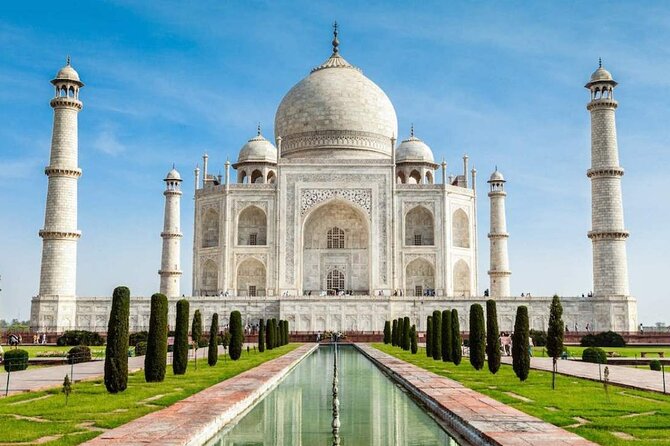
The tour specifically says you’ll get up early to catch the sunrise view of the Taj Mahal. There’s about a two-hour guided visit inside, and admission is included.
Why the guide matters here: the Taj Mahal is famous, but it’s also huge. A good guide helps you focus on what to look for—details, layout, and the story behind what you’re seeing—so you don’t wander for hours without absorbing much.
Practical idea: bring sunglasses and plan on a warm-up period. Early morning can be cool, then you’ll heat up fast once you’re back in the open.
Agra Fort: UNESCO walls with layered Mughal stories
Next you visit Agra Fort, another UNESCO World Heritage site. Admission and guided time are included, and you’ll have about an hour.
You’re not just looking at walls. The tour is framed around the fort’s past and architecture, including the different areas inside the complex. It’s a strong contrast to the Taj Mahal’s marble softness.
Itmad-ud-Daula (Baby Taj): smaller, sharper, and easier to appreciate
Then it’s Itmad-ud-Daula, often called Baby Taj. This stop includes entry and runs around 30 minutes.
This is a smart inclusion because it slows the pace a bit. The complex is known for gardens and outbuildings around the main structure, so you get a taste of Mughal design without the intensity of the Taj Mahal crowd.
One guide name that shows up in the feedback is Mohammed Kadir, praised for helping with photos and explaining history around Baby Taj. Even if your guide isn’t him, it signals the style this operator aims for: practical help, clear context, and photo-minded assistance.
Chand Baori, Abhaneri: 3,500 steps and a different kind of wow
After Agra, the plan adds Chand Baori in Abhaneri, a stepwell described as having about 3,500 steps. The site dates back to the 8th and 9th centuries.
This stop is included with entry and about an hour. It’s also a nice change of pace from the Taj Mahal bubble. A stepwell is architecture you can feel. The geometry and the drop become part of the experience.
Jaipur arrival: arrive, check in, and reset
From Chand Baori, you travel to Jaipur and check into your hotel. The schedule gives you about five hours for Jaipur transition and evening time, then you stay overnight. That buffer is useful because Day 3 is Jaipur’s “greatest hits” day.
Day 3 Jaipur Highlights: Jal Mahal, City Palace, Jantar Mantar, Hawa Mahal
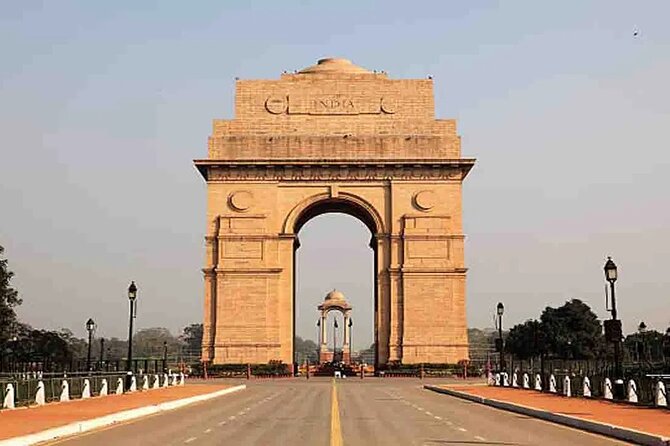
Jaipur is built for walking, but not all of it is a “walk all day” plan. Day 3 mixes short stops, a big UNESCO site, and photo-friendly monuments, which keeps fatigue in check.
Panna Meena ka Kund: the stepwell near Amber Fort
You start with Panna Meena ka Kund, a stepwell near Amber Fort. The stop is brief—about 15 minutes—with entry marked as free.
Even though it’s short, it’s a good warm-up. Stepwells make sense in Rajasthan because they connect to the region’s water story. You’ll see the theme again later in the week.
Jal Mahal: a palace sitting on the lake
Next is Jal Mahal, a palace in the center of Man Sagar Lake. It’s described as having 18th-century renovations by Maharaja Jai Singh II.
The entrance is included. The time is about 30 minutes, so this is mainly a viewpoints-and-photo stop rather than a long interior visit.
City Palace of Jaipur: ceremonial residence turned living museum
Then you go to City Palace of Jaipur, originally built in 1721 as the Maharaja of Jaipur’s official and ceremonial residence. Admission is included, and the visit runs about an hour.
This is a strong stop if you want something more grounded than “just monuments.” You’ll see how power and culture were staged in the royal era, and you’ll also get a sense of how the palace functions today because it’s still a residence.
Jantar Mantar: UNESCO astronomical instruments
Jantar Mantar is next, and it’s a UNESCO site. It’s described as a set of nineteen architectural astronomical instruments built by Sawai Jai Singh II.
Admission is included, and you have about an hour. This is a good place to slow down and look carefully. The whole point is that these instruments are designed to measure the sky, not just decorate a courtyard.
Hawa Mahal: quick exterior views done right
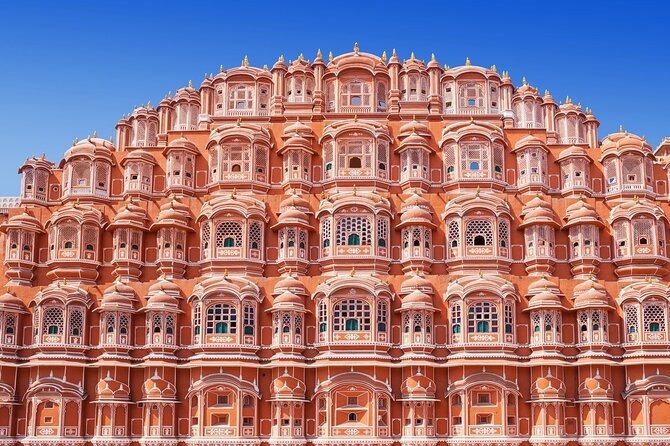
Then it’s Hawa Mahal, the Palace of Winds. The red and pink sandstone look is the star, and the exterior is where you’ll spend most of your short time—about 15 minutes.
It’s a quick stop, and it works well at the end of the day because you’ll likely have more photos to take as you move on.
Return to Delhi
Finally, you head back to New Delhi, with about a five-hour trip back. The tour also notes you can be dropped at the Jaipur airport if that fits better.
Getting Around: Private AC Transport, Pickup, and Flexible Time Slots
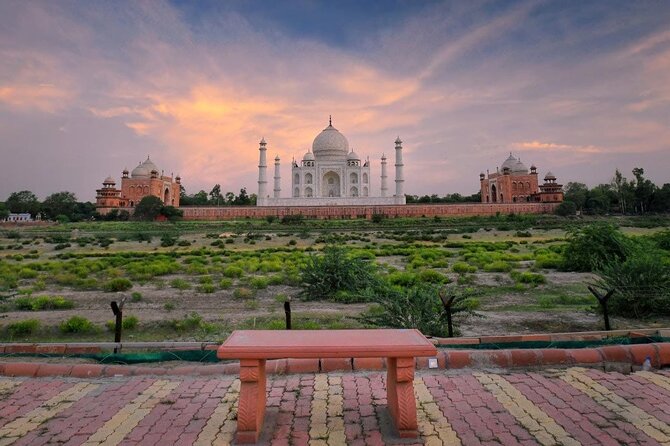
The logistics are a big part of the value here. The tour includes pickup and drop-off assistance and transport in an air-conditioned private vehicle. Fuel, tolls, and parking charges during the tour are covered, which prevents the all-too-common problem of surprise fees popping up mid-journey.
It’s also marked as having mobile ticket support. That’s not flashy, but it saves time when you’re trying to get into sites efficiently.
The flexibility is real too. The tour description says you can choose different time slots throughout the day. That helps when you need to anchor the Taj Mahal timing to sunrise, but also keep your other stops from feeling like they happen at the most inconvenient moments.
Price and What You Actually Get for $20 Per Person
On paper, $20 per person is the kind of price that makes you pause. In tours like this, the final value depends heavily on which package option you choose.
Here’s what the inclusions list tells me to check before you commit:
- Entrance tickets are included only if you choose an all-inclusive option
- Hotel accommodation is included only if you choose the option that adds hotels
- Dinner (2) and breakfast (2) are listed as included, so ask what’s included for your specific package type
- Live guide service in each city is included in the standard inclusions
So yes, the headline price is tempting. But I’d treat it like a starting point and confirm the package details so you don’t end up paying extra later for entrances or lodging.
If you choose the option that includes guides and transport, the value is strong because you’re saving time on organization, and you’re getting commentary across three cities. That’s the real benefit: you’re paying for direction and a smooth flow, not just for moving from A to B.
Who This Private Tour Is Best For
This tour is a good fit if you:
- want major Golden Triangle sites without spending hours planning each day
- like having a guide explain what you’re seeing while you walk
- prefer the privacy of traveling as your own group, not mixing with strangers
- value a mix of monuments and Old Delhi street experience
It might be less ideal if you:
- hate early mornings (the Taj Mahal sunrise timing is a core part of the plan)
- want lots of free time to wander without structure
- are traveling with a very strict budget and don’t want to think about which option includes entrances and hotels
Book It or Skip It? My Practical Take
I’d book this if you want an organized Golden Triangle trip where the hardest parts—timing, routing, and site entry—are handled. The itinerary does a solid job of balancing big “bucket” monuments with Delhi’s Old City texture and Jaipur’s major architectural hits.
I’d reconsider if you’re the type who wants to control every hour yourself. The schedule is built for momentum. If you love stopping often for side streets, you might find the day feels a bit compressed.
FAQ
What cities are covered on this 3-day Golden Triangle tour?
The tour covers New Delhi, Agra, and Jaipur.
How do you get around between Delhi, Agra, and Jaipur?
You travel by a private air-conditioned vehicle. Pickup and drop-off assistance is included, and fuel, tolls, and parking charges during the tour are covered.
Are monument entrance tickets included?
Entrance tickets are included if you choose an option where all-inclusive monument entry is selected. If not, entrance fees may not be included.
Is this tour private or shared with other groups?
It’s a private tour/activity. Only your group participates.
Does the tour include a guide?
Yes. A live tour guide service is included in each city for the monument stops.
Is Taj Mahal included, and what timing is planned?
Taj Mahal is included, and the plan is to see it early in the morning for sunrise, with about a two-hour guided visit inside.
Can I cancel for a full refund?
Yes. Free cancellation is available up to 24 hours in advance of the experience’s start time for a full refund.
What happens if weather is bad?
The experience requires good weather. If it’s canceled due to poor weather, you’ll be offered a different date or a full refund.