Three days, three icons, zero guesswork. This Golden Triangle-style tour packs Delhi, Agra, and Jaipur into a private, guide-led schedule that’s built for people who want the highlights without map chaos. Two things I really like are the early-morning Taj Mahal approach (plus the battery bus ride back-and-forth from the parking area) and the way the experience is set up with a dedicated guide who’s happy to help with photos and videos during key moments like the Taj.
The one drawback to keep in mind is simple: this is a tight schedule, so you’ll spend plenty of time on the road in an air-conditioned vehicle between cities and sites.
In This Review
- Key Highlights You’ll Actually Feel
- Golden Triangle in 3 Days: Why This Works for Most People
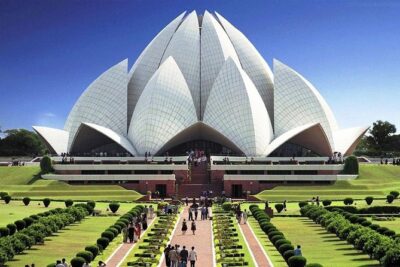
- Delhi Day 1: From Lotus Temple Calm to Old Delhi Energy
- Lotus Temple and Qutub Minar: Big Delhi Icons, Clear Starting Points
- India Gate, Parliament, Rashtrapati Bhavan: Landmarks With National Meaning
- Humayun’s Tomb, Chandni Chowk, and Jama Masjid: Mughal Beauty Meets Market Life
- Red Fort and the Lunch-to-Agra Transition
- Agra at Dawn: Taj Mahal First, Then Forts and Marble Tombs
- Taj Mahal: More Than a Photo Stop
- Agra Fort: Red Sandstone and the “Hidden Spots” Feel
- Itmad-ud-Daula: Marble Details in About 30 Minutes
- Jaipur Day 2: Jantar Mantar, City Palace, Hawa Mahal, and More
- Jantar Mantar: Science Meets Stone (With Plenty of Time)
- City Palace: A Big Central Stop
- Hawa Mahal: The Palace of the Winds
- Jal Mahal and a Step Well Surprise
- Day 3 Back to Delhi: A 5-Hour Finish
- Transport, Tickets, and Hotel Options: What You’re Really Buying
- Guides and the Photo Factor
- Taj Mahal Battery Bus: Small Time Saver, Big Comfort
- Hotel nights are optional
- What’s included vs not
- Price and Value Check: Why $16 Can Make Sense (With One Important Catch)
- Who Should Book This Golden Triangle Tour?
- Should You Book This 3-Day Luxury Golden Triangle Tour?
- FAQ
- FAQ
- What cities does the Golden Triangle tour include?
- How long is the tour?
- Where does the representative meet you in Delhi?
- Is this tour private?
- What is included for meals?
- Are monument entrance fees included?
- Is the Taj Mahal visit early morning?
- Is there transportation and a driver?
- Is accommodation included?
- What is the cancellation policy?
Key Highlights You’ll Actually Feel
- Dawn Taj Mahal visit with the right timing for photos and a calmer start
- Private guide + AC car so you’re not juggling taxis and tickets all day
- Entrance fees handled for the included monuments if you choose the paid-entry option
- Old Delhi market stop at Chandni Chowk with shopping for spices, jewelry, and more
- Jaipur’s main landmarks in one sweep from Jantar Mantar to Hawa Mahal and beyond
Golden Triangle in 3 Days: Why This Works for Most People
If you want India’s classic trio—Delhi, Agra, and Jaipur—this kind of package is built for you. The “value” isn’t just the price tag. It’s the fact that someone else lines up the timing, the route between cities, and the guided stops, so your day feels like a series of meaningful hits instead of a logistics test.
You also get real structure. The tour is private (only your group), it starts with a representative meeting you at the Delhi airport or railway station, and it runs with a professional guide for the sightseeing. Add an air-conditioned vehicle and bottled water, and the whole thing becomes easier to manage, especially if this is your first time in the region.
That said, “3 days” means you’ll move quickly. You can still enjoy it—just don’t plan to linger forever in every spot. I like this style for travelers who value momentum and clear priorities over slow wandering.
You can also read our reviews of more tours and experiences in New Delhi



Delhi Day 1: From Lotus Temple Calm to Old Delhi Energy
Delhi on this route is a mix: modern-spiritual, Mughal-era, then straight into Old Delhi’s market streets. You’ll start with comfortable, iconic landmarks and gradually build toward the denser, more sensory parts of the city.
Lotus Temple and Qutub Minar: Big Delhi Icons, Clear Starting Points
The Lotus Temple stop gives you about two hours, with admission included. It’s a great opener because it’s visually distinctive and peaceful-feeling, and it doesn’t require you to know a lot of context to appreciate the design and atmosphere.
Then you head to Qutub Minar for around two hours. This is one of Delhi’s best-known monuments, and it’s also a good “orientation” stop for understanding the city’s older layers. It’s not just one structure either—you’ll have time to look around and notice the surrounding elements as well.
India Gate, Parliament, Rashtrapati Bhavan: Landmarks With National Meaning
Next comes India Gate (again, about two hours). It’s described as a victory monument tied to people who died in World War I. Even if you’re not reading every plaque, it’s worth the time because it anchors how Delhi presents modern national identity in stone.
After that, you’ll pass Parliament House (Sansad Bhavan) and Rashtrapati Bhavan, the president’s official residence. The architecture and symbolism are the point here—these stops help you understand why Delhi feels like both a historic capital and a working government hub.
If you’re short on time, these are good “see-it-now” moments. If you love deep reading, you might want extra time later, but the tour keeps things moving.
Humayun’s Tomb, Chandni Chowk, and Jama Masjid: Mughal Beauty Meets Market Life
Humayun’s Tomb is next, with about one hour and admission included. This is one of those Mughal-era sites that rewards slow looking, especially if you pay attention to symmetry and layout rather than just “big wow” moments.
Then you pivot hard into Chandni Chowk, the Old Delhi shopping area. Here the tour gives about one hour, and it’s listed as admission-free. This is where the streets turn practical: you’ll see markets with spices, dried fruit, silver jewelry, colorful saris, and lots of small shops. It’s a good stop for buying a few simple things, but it’s also a reality check—expect crowds and narrow lanes.
After that, you visit Jama Masjid (about one hour, admission included). This is one of the largest mosques in Delhi, built by Shah Jahan between 1650 and 1656. It’s a powerful architectural stop, and it also makes the Old Delhi day feel complete: history, religion, and everyday city life all in one stretch.
You can also read our reviews of more tours and experiences in New Delhi




Red Fort and the Lunch-to-Agra Transition
The tour also includes the Red Fort area, described as a historic Mughal residence and now housing museums. Your time here depends on the day’s flow, but it’s a key Delhi finale.
Then you get a break for lunch at a local restaurant and a drive via expressway toward Agra, with a three-hour block mentioned during the Yamuna Sports Complex portion. This matters because it’s when the tour switches gears—from sightseeing to travel—without leaving you stranded.
Agra at Dawn: Taj Mahal First, Then Forts and Marble Tombs
Agra is the “romance and scale” city of the Golden Triangle. The big advantage here is timing: you’ll go to the Taj Mahal early morning to catch the dawn view. You also get the battery bus/golf cart return ride from parking to the Taj, which saves time and energy when footpaths get long.
Taj Mahal: More Than a Photo Stop
You get about two hours at the Taj Mahal, and admission is included. The early start is the key. Even if you love crowds, morning light usually makes the experience better—less haze, more glow, and often a calmer feel before the midday crush.
If your guide is the type who helps with photos (names you may see attached to this tour experience include Riyaz and Ali), you’ll likely get practical pointers for where to stand and how to frame the best angles. Some guides also take videos for you rather than just pointing. That’s worth it because the Taj is all about perspective.
Tip for your day: wear comfortable shoes and plan to move slowly. The site is impressive, but it’s also large. Give yourself small moments to just look up and not only through a camera screen.
Agra Fort: Red Sandstone and the “Hidden Spots” Feel
After the Taj, you visit Agra Fort for about two hours, with admission included. It’s described as built from red sandstone marble, and the tour notes that there are “secret spots” in the fort area (plus the idea that some areas become accessible through movement around the site).
This stop is the best counterweight to the Taj’s perfect symmetry. Fort time feels more rugged and layered—like the city’s defensive and administrative life, not only its artistic side.
Itmad-ud-Daula: Marble Details in About 30 Minutes
Next is Itmad-ud-Daula, scheduled for about 30 minutes and admission included. The standout here is detail. It’s described as the first Mughal structure built completely from marble, the first to make extensive use of pietra dura, and the first tomb built on the Yamuna’s banks in a sequence that came to define Mughal tomb style.
If you love carvings, inlays, and close-up beauty, you’ll appreciate this more than you might expect from a short time window. If you’re “Taj-only,” this could feel like bonus time—but it’s a good one.
Then you check in to your Agra hotel for overnight stay, and the rest of the day is free for leisure after arrival. That free time is underrated value because it gives you room to eat on your own and pace your recovery.
Jaipur Day 2: Jantar Mantar, City Palace, Hawa Mahal, and More
Jaipur is the color-and-craft city of the Golden Triangle. The tour’s Jaipur day is designed to cover the headline sights with guided time blocks, so you’re not spending your day asking where to go next.
Jantar Mantar: Science Meets Stone (With Plenty of Time)
The day includes breakfast (two breakfasts are listed across the tour), then you head to Jantar Mantar for about two hours with admission included. Jantar Mantar is one of the more interesting stops for people who like “not what I expected.” It’s a different kind of landmark—less about a single building and more about a whole system of structures.
City Palace: A Big Central Stop
City Palace follows, with about two hours and admission included. The tour describes it as a grand attraction in Jaipur, now serving as a museum. This is where you get the feeling of Jaipur as an ongoing cultural and royal legacy, not only a place of monuments.
Hawa Mahal: The Palace of the Winds
Then comes Hawa Mahal (Palace of the Winds), about two hours and admission included. It’s described as Jaipur’s most beautiful landmark with a distinctive façade. Even if you don’t read every detail, the shape and the “reason” behind the design make it a memorable visual stop.
Jal Mahal and a Step Well Surprise
After Hawa Mahal, you visit Jal Mahal for about two hours. The tour notes it’s a landmark in a water setting, sometimes called the Water place, and that it offers a lovely view.
Then you end with Panna Meena ka Kund, about 15 minutes, free admission, described as a step well near Amber Fort. It’s short, but it’s a nice change of pace from the grand palace imagery. Step wells can be surprisingly photogenic and visually fun, and this is an easy add-on if you’re still energized.
Day 3 Back to Delhi: A 5-Hour Finish
On the final day, the plan is to return to Delhi, or you can be dropped off at Jaipur airport, with about a five-hour journey back to Delhi mentioned. This is a clean wrap-up because it avoids cramming one more major sight into your last hours.
If you’re the type who likes a “buffer” day, this last-day pacing is good. You’ll still see plenty during the previous two days, then you get a straightforward exit.
Transport, Tickets, and Hotel Options: What You’re Really Buying
This tour is built around a few practical comforts: pickup, a private air-conditioned vehicle, and professional private tour guides for the excursions. It also uses a mobile ticket, and parking fees are included.
Guides and the Photo Factor
One theme in the experiences shared for this tour is that guides help with photos in a way that makes sightseeing less stressful. Names like Riyaz, Ali, Salman, and Mohsan appear in the feedback linked to this experience. Even if you don’t meet the same guide, the tour’s approach seems consistent: a dedicated guide rather than a rotating crowd handler.
Taj Mahal Battery Bus: Small Time Saver, Big Comfort
The battery bus/golf cart return ride from parking to the Taj Mahal is included. That matters because it cuts down on fatigue and helps keep your Taj time focused on the monument itself, not long walking in heat or uneven surfaces.
Hotel nights are optional
The tour lists 2 nights of accommodation on twin sharing with breakfast if you book the option including hotels, with 4- or 5-star accommodation available depending on your selection. If you’re not booking hotels through the package, you’ll want to arrange lodging yourself.
What’s included vs not
Included items are listed clearly: transport, bottled water, breakfast (2), parking fees, and entrance fees for sights mentioned if you choose the monument-ticket option. Lunch and dinner are not included, so you’ll plan your own meals each day.
That’s not a bad thing. It gives you freedom to eat local rather than being stuck with whatever is convenient for a group. Just keep in mind you’ll need to budget time and money for meals.
Price and Value Check: Why $16 Can Make Sense (With One Important Catch)
This tour shows a price of $16.00 per person, which is unusually low for a private, guide-led, multi-city package. That’s why you should think like a smart shopper: the value depends on what’s included in your specific booking option.
Here’s what is supported in the tour info:
- You get a private driver with an air-conditioned vehicle
- You get professional private tour guides for excursions
- You may get monument entrance fees included if you select the option that covers tickets
- You get battery bus for Taj Mahal return
- You get 2 breakfasts and potentially 2 hotel nights if you choose the hotels option
So, yes, it can be a good deal—especially if your option includes entrances and hotels. But if you’re comparing prices, always verify what your ticket selection covers. The tour itself makes it clear that entrance fees are tied to your chosen selection for sights mentioned.
Who Should Book This Golden Triangle Tour?
I’d point this tour toward travelers who:
- Want the Golden Triangle’s big hits without planning every route change
- Like having guides to explain what you’re seeing (and help with photos)
- Prefer a private group format with pickup and dedicated transport
- Don’t mind a packed pace for the sake of seeing more in less time
It’s also a good fit for adult travelers visiting with family. One of the strongest impressions from the feedback is that the experience reduces planning stress while still giving meaningful sightseeing time.
If you want a slow, unhurried India trip with lots of free wandering, you might feel rushed here. But for many people—especially first-timers—it’s a strong way to get oriented fast.
Should You Book This 3-Day Luxury Golden Triangle Tour?
I think you should book it if your priority is seeing Delhi + Agra + Jaipur with a guide, smooth transport, and an early dawn Taj Mahal plan. The included guide time, Taj support (including the battery bus ride), and the fact that hotel nights and entrance fees can be bundled are the main reasons this can feel like good value.
Before you click confirm, do one quick check: make sure you understand which option you’re choosing for monument entrance fees and whether you’re also choosing the hotel + breakfast package. The sightseeing is great, but the real cost-effectiveness depends on what’s covered in your selected bundle.
FAQ
FAQ
What cities does the Golden Triangle tour include?
It includes sightseeing in New Delhi, Agra, and Jaipur.
How long is the tour?
The duration is 3 days (approx.).
Where does the representative meet you in Delhi?
The representative meets you at the Delhi Railway station/Airport.
Is this tour private?
Yes. It’s described as a private tour/activity with only your group participating.
What is included for meals?
Breakfast is included (listed as Breakfast (2)). Lunch and dinner are not included.
Are monument entrance fees included?
Entrance fees for sights mentioned are included if you select the option that includes monument entrance fees.
Is the Taj Mahal visit early morning?
Yes. You’ll be picked up early morning to catch the dawn view of the Taj Mahal.
Is there transportation and a driver?
Yes. You get a private driver with an air-conditioned vehicle throughout the tour.
Is accommodation included?
Accommodation is included only if you book with the option including Hotels: 2 nights on twin sharing with breakfast.
What is the cancellation policy?
The experience offers free cancellation. You can cancel up to 24 hours in advance for a full refund. Within 24 hours, no refund is provided.